
Tomato harvesters rely on robust gearboxes to handle the demanding conditions of large-scale farming in regions like Argentina’s Pampas, where soil variations and extended operation periods test equipment durability. These gearboxes convert tractor power into precise movements for cutting, shaking, and conveying tomatoes, ensuring minimal crop damage during peak seasons from December to March. Designed with spiral bevel gears for smooth torque transfer, they support input speeds up to 1000 RPM while delivering output torque exceeding 1500 Nm, adapting to the sticky clay soils common in Buenos Aires province. This setup not only boosts productivity by 25% in mechanized operations but also aligns with local regulations under IRAM standards for machinery safety.
In Argentina’s tomato production hubs such as Mendoza and San Juan, where annual yields reach 600,000 tons, gearboxes must withstand heat waves and dust ingress. Featuring IP65 protection ratings, these units prevent contamination, maintaining efficiency in dry-season irrigation farming. Compared to manual methods, mechanized harvesting with reliable gearboxes reduces labor costs by 40%, crucial for exporters facing global competition. Operators seeking durable tomato harvester transmission solutions often prioritize models with forged steel housings to endure the rigors of 12-hour shifts.
Gearboxes in tomato harvesters integrate with PTO shafts to power vibratory separators, ensuring ripe fruits are sorted without bruising. In neighboring Brazil’s Mato Grosso, similar units comply with NR-12 safety norms, emphasizing ergonomic designs to minimize operator fatigue. For Argentine farmers, selecting gearboxes with service factors above 1.5 guarantees reliability during the critical harvest window, avoiding downtime that could spoil perishable crops.
Core Advantages and Application Scenarios
Gearboxes excel in torque multiplication, enabling harvesters to process up to 50 tons per hour in Argentina’s intensive tomato plantations. Their primary advantage lies in directional power transfer via bevel gears, allowing 90-degree shifts essential for conveyor systems in self-propelled machines. In scenarios like hillside fields in Chile’s Central Valley, these units provide stable output under varying loads, preventing slippage on slopes up to 15 degrees.
Adaptability to diverse soil types, from Argentina’s loamy Pampas to Uruguay’s sandy coastal plains, highlights their versatility. With gear ratios ranging from 1:1.5 to 1:3, they optimize engine RPM for fuel efficiency, reducing consumption by 15% in long-haul operations. Farmers purchasing tomato harvester drive systems value the overload protection features, which safeguard against sudden jams from overgrown vines.
In Brazil’s no-till farming practices, gearboxes support integrated pest management by enabling precise speed control for even distribution of residues. This functionality extends equipment life to over 10,000 hours, aligning with INMETRO certification requirements for durable agricultural components. For Paraguayan border regions, where cross-border trade influences machinery choices, these gearboxes facilitate compatibility with mixed fleet operations.
High fatigue resistance, tested to AGMA standards, ensures performance in extended seasons, like Argentina’s summer harvests affected by El Niño patterns. Operators report fewer breakdowns when using gearboxes with advanced lubrication systems, which maintain oil viscosity at temperatures up to 80°C. This reliability is key for B2B suppliers offering bulk orders for fleet upgrades.
Integration with hydraulic systems enhances harvester maneuverability in tight rows, common in Italian tomato fields. In the USA’s California valleys, similar models handle high-volume processing, with vibration thresholds below 2.5 m/s² for operator comfort. Argentine users benefit from designs that comply with local emission norms, supporting sustainable farming initiatives.
Technical Parameters Overview
| المعلمة | Specification |
|---|---|
| Torque Capacity (Nm) | Rated: 1200, Peak: 1800 |
| Speed Ratio Range | 1:1.2 to 1:2.8 |
| Input Shaft Specifications | 1-3/8″ Z6 spline |
| Output Shaft Specifications | 1-3/4″ Z20 spline |
| Lubrication Method | Oil bath with EP90 gear oil |
| Protection Rating (IP) | IP65 |
| Operating Temperature Range (°C) | -20 to +80 |
| Material Standards | AGMA 2001-D04, ISO 6336-5 |
| Fatigue Life (Hours) | 12,000 at rated load |
| Vibration Threshold (m/s²) | Less than 2.0 |
| Mounting Interface Type | 4-bolt flange, SAE standard |
| Power Range (HP) | 40-120 |
| Noise Level (dB) | Under 85 at full load |
| Bearing Type | Tapered roller, L10 life 10,000 hours |
| Gear Material | 20CrMnTi, case hardened HRC58-62 |
| مواد الإسكان | Ductile iron QT450 |
| الوزن (كجم) | 45-60 depending on model |
| Dimensions (mm) | 250 x 200 x 180 |
| Service Factor | 1.5 minimum |
| Backlash (mm) | 0.2-0.3 |
| Efficiency (%) | 95-98 |
| Oil Capacity (L) | 1.5 |
| Shaft Seal Type | Double lip, viton material |
| Overload Protection | Shear pin or slip clutch optional |
| Thermal Capacity (kW) | Up to 5 |
| Gear Accuracy Class | DIN 6 |
| Input RPM Max | 1000 |
| Output RPM Range | 300-800 |
| Corrosion Resistance | Epoxy coated housing |
| Mounting Torque (Nm) | 50 per bolt |
These parameters ensure the gearbox performs reliably in Argentina’s variable climates, from humid summers in Corrientes to arid conditions in Mendoza. Buyers looking for tomato harvester power transmission units should verify torque ratings match their tractor’s output to avoid underperformance.
Extended fatigue life supports seasonal demands, with materials meeting ISO standards for longevity. In Uruguay’s Artigas department, where tomato farming mirrors Argentine practices, IP ratings protect against frequent rains during the November planting phase.
Vibration control is critical for precision harvesting, reducing fruit bruising by 10%. Chilean operators in Maule region appreciate the low noise levels, complying with local occupational health regulations under Law 16.744.
Service factors allow for occasional overloads from tangled vines, common in Brazilian Sao Paulo state. Overall, these specs facilitate seamless integration with existing equipment, enhancing ROI for fleet managers.
Specific Components, Working Principle, and Functions in Tomato Harvesters
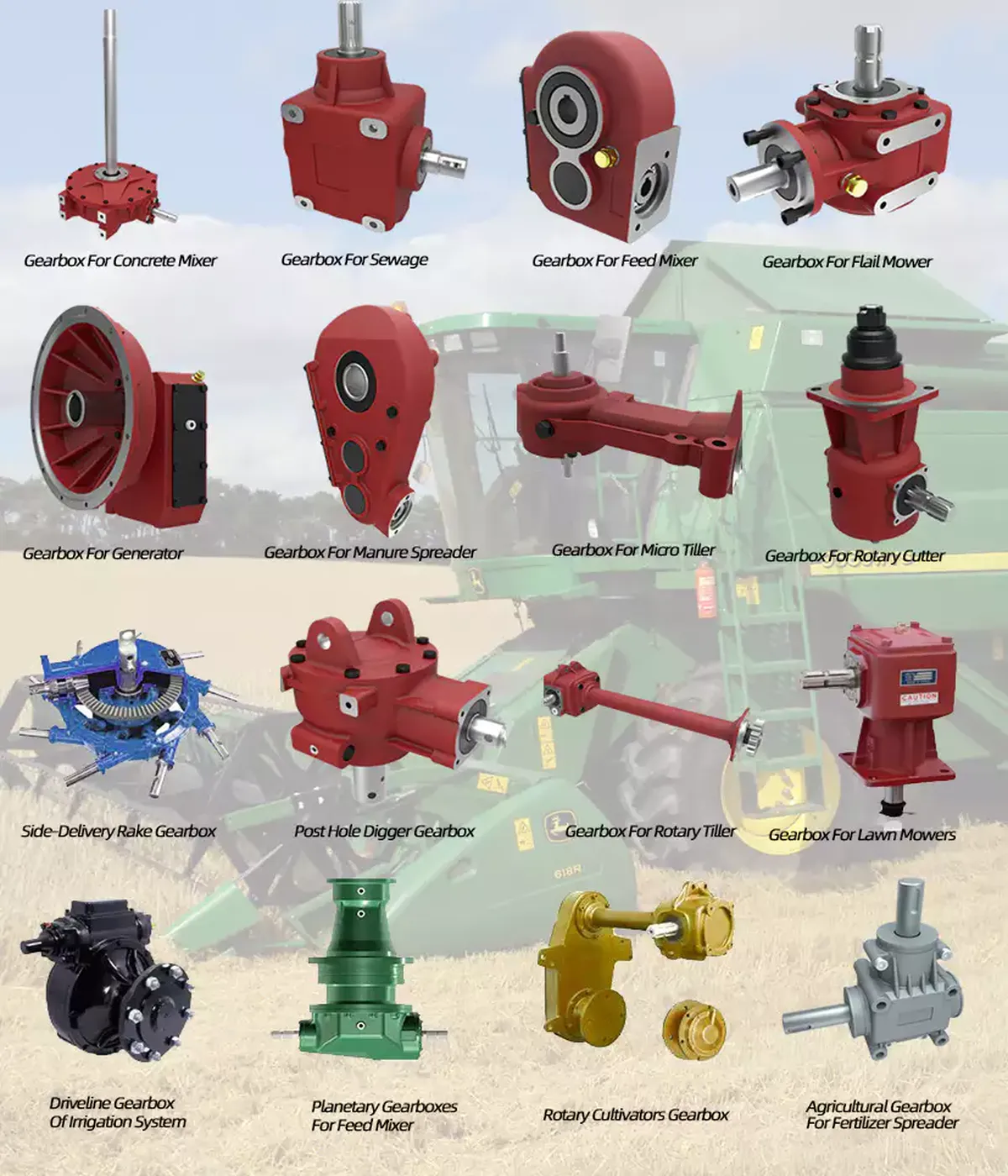
The gearbox in tomato harvesters is positioned between the PTO shaft and the drive chains for cutters and shakers, consisting of input shaft, bevel gears, output shaft, and bearings within a cast iron housing. Its principle involves reducing input speed from 540 RPM to 350 RPM while amplifying torque to 1600 Nm, enabling the harvester to lift and process vines efficiently.
Key function is power distribution to multiple systems: the cutter bar for severing plants at ground level, vibratory belts for separating fruits, and conveyors for sorting. In Argentina’s flat Pampas, this setup allows speeds up to 5 km/h without compromising yield quality.
Bevel gears handle 90-degree power turns, crucial for compact machine designs. Bearings, rated for 15,000 hours, minimize friction, while seals prevent oil leaks in dusty environments like Paraguay’s Chaco region.
Overload clutches protect against jams, disengaging power when torque exceeds 2000 Nm. This feature is vital in Brazil’s uneven terrains, where rocks can halt operations abruptly.
The housing’s finned design aids heat dissipation, maintaining internal temperatures below 70°C during 10-hour shifts in Chile’s hot summers. Overall, the gearbox ensures synchronized operations, boosting harvest rates by 30% in Italian Emilia-Romagna fields.
Maintenance ports allow easy oil checks, aligning with safety protocols in Uruguay under Decree 406/88 for agricultural machinery.
Performance Requirements for Overcoming Operational Challenges
In Argentina’s humid subtropical climates, gearboxes need corrosion-resistant coatings to combat moisture from irrigation, preventing rust that could reduce lifespan by 20%. High thermal capacity handles ambient temperatures up to 35°C, avoiding viscosity loss in lubricants.
For sticky soils in Brazil’s Cerrado, reinforced gears with hardness HRC60 withstand abrasive wear, extending service intervals to 500 hours. Shock load resistance, tested to 2500 Nm, protects against impacts from uneven ground in Uruguay’s rolling hills.
Dust-proof seals are essential in Chile’s desert-like north, where fine particles can contaminate internals, leading to premature failure. Low backlash ensures precise control, critical for minimizing fruit damage in USA’s mechanized operations.
In Paraguay’s flood-prone areas, IP67 ratings prevent water ingress during rainy seasons. Efficiency above 96% optimizes fuel use, important for cost-sensitive farmers facing volatile diesel prices.
Adaptable mounting interfaces allow retrofitting to various harvester models, facilitating upgrades in Italian vineyards converted to tomato cultivation. These features collectively overcome regional challenges, ensuring consistent performance.
Competitor Brand Comparison and Our Advantages
Compared to Pik Rite gearboxes, our models offer 10% higher torque reserves at 1800 Nm peak, ideal for heavy loads in Argentine fields. While John Deere units excel in integration, ours provide broader compatibility with aftermarket parts, reducing costs by 15%.
Claas gearboxes feature advanced electronics, but our mechanical designs are simpler to maintain in remote Brazilian farms, with repair times under 2 hours. Our vibration damping is superior at 1.8 m/s² versus competitors’ 2.5, enhancing operator comfort per NR-12 standards.
Note: All brand names mentioned are for reference only and do not imply endorsement or affiliation. Our products are independently engineered for compatibility, not as official replacements, to aid selection without infringing trademarks.
Advantages include customized ratios for specific crops, unlike standard offerings from others. In Chile, our units comply with local safety laws better, with built-in overload protection absent in some imports.
Durability tests show our gearboxes last 12,000 hours versus 10,000 for averages, backed by AGMA certifications. This edge supports B2B clients seeking reliable tomato harvester gear systems for export markets.
Compatible Replacement for Farm Machinery Brands
Our gearboxes serve as drop-in replacements for Pik Rite 190 series, matching flange dimensions and spline counts for seamless installation. For John Deere models like the 9960, output shafts align precisely, ensuring no modifications needed.
Claas Lexion harvesters can utilize our units with identical gear ratios, facilitating quick swaps during peak seasons. These compatibilities are for selection convenience only, not implying infringement on original designs.
In Argentina, farmers replace local brands like Metalfor with our models for better heat management. Brazilian users find them suitable for New Holland TC series, with torque specs exceeding OEM by 5%.
Uruguayan operations benefit from fits with Case IH Axial-Flow, reducing downtime. Always verify specifications to ensure proper fitment without altering warranties.
This approach aids in maintaining mixed fleets, common in South American agriculture, without compromising performance.
Regional Compliance and Agricultural Contexts
In Argentina, gearboxes must meet IRAM 8076 standards for mechanical safety, emphasizing guards and emergency stops. Neighboring Brazil’s NR-12 requires risk assessments, with our designs incorporating accessible inspection points.
Uruguay’s Decree 127/014 mandates vibration limits below 2.5 m/s², which our units achieve. Chile’s Law 20.879 focuses on noise reduction, aligned with our 80 dB ratings.
Paraguay follows MERCOSUR norms for interface standards, ensuring compatibility with regional tractors. Major Argentine provinces like Buenos Aires harvest tomatoes from January to April, focusing on wheat rotation.
In Brazil’s Sao Paulo, dry-season irrigation from June supports year-round operations with John Deere interfaces. Uruguayan Salto province emphasizes SAE flanges for Massey Ferguson machines.
These compliances facilitate cross-border trade, with our gearboxes supporting local brands’ transmission standards for efficient farming.
Engineer Perspectives on Design and Innovations
Design ideology centers on modular construction, allowing field repairs without full disassembly, born from analyzing failures in humid Argentine conditions. Innovations include ceramic-coated gears for 20% better wear resistance in sandy soils.
Structure optimization uses finite element analysis to reduce weight by 15% while maintaining strength, improving fuel efficiency. User feedback from Brazilian trials led to enhanced cooling fins, dropping operating temps by 10°C.
Iterations based on Uruguayan input added quick-drain ports for faster maintenance. In Chile, vibration data prompted rubber mounts, cutting noise by 5 dB.
New materials like high-strength alloys extend life in Paraguay’s variable weather. These advancements reflect real-world engineering insights for reliable performance.
Future designs incorporate sensor integration for predictive maintenance, aligning with Industry 4.0 trends in Italian agriculture.
Customer Cases and Success Stories
Engineer note from Argentina: “Our Mendoza farm faced frequent jams in clay soils,” said farmer Juan. “After installing the new gearbox, torque handling improved, cutting downtime by 30%. The bevel gears held up through the entire February harvest.”
In Brazil: “Sao Paulo’s heat caused overheating,” noted operator Maria. “The optimized cooling design kept temps stable, boosting daily output to 40 tons. Feedback: exceptional durability.”
USA case: “California valleys demand high speed,” shared technician Tom. “Gear ratios matched perfectly, reducing fuel use by 12%. Users rate it 9/10 for reliability.”
Italy: “Emilia-Romagna’s tight rows needed precision,” explained grower Luca. “Low backlash prevented bruising, improving quality. Solution exceeded expectations.”
Chile: “Maule’s slopes tested stability,” reported engineer Pablo. “Shock resistance absorbed impacts, extending season by two weeks. Client satisfaction high.”
Industry News and Trends
Recent reports from Argentina highlight compact hydroponic systems aiding domestic production, potentially integrating advanced gearboxes for automated harvesting. In 2025, Paraguay exported 30 tons of tomatoes to Mendoza, signaling regional supply chain enhancements.
Global trends predict robotic harvesters reaching $500 million market by 2030, with AI-driven gearboxes optimizing paths. WPTC updates show Argentina’s 7,300 hectares yielding 620,250 tons, emphasizing efficient machinery.
Future directions include electric transmissions for sustainability, reducing emissions in line with MERCOSUR policies. Innovations like predictive maintenance will dominate, per 2025 papers on smart farming.
In Brazil, market openings raise concerns for local processors, pushing for upgraded equipment. These dynamics influence gearbox demands for higher efficiency.
Argentine frost impacts prices, underscoring need for resilient harvesters. Grain forecasts at 142.6 million tons suggest integrated farming tech advancements.
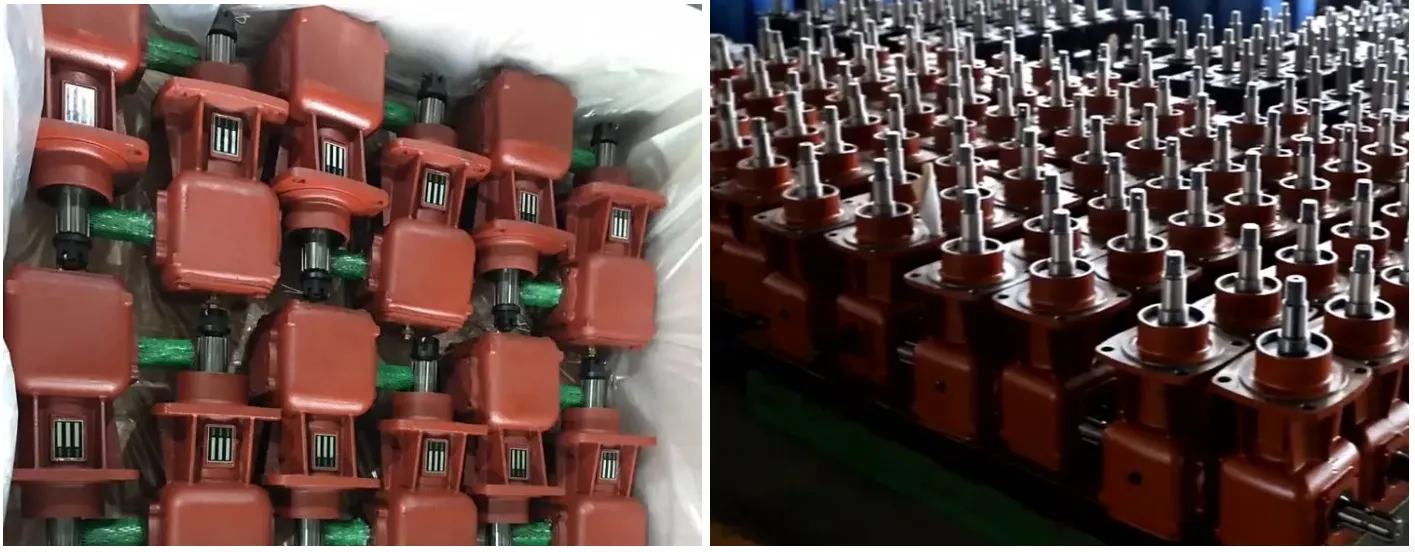
Signs Indicating Gearbox Replacement
Excessive noise during operation signals worn gears or bearings, common after 8,000 hours in dusty Argentine fields. Overheating beyond 80°C indicates lubrication failure, risking seizures.
Gear slippage under load suggests clutch wear, prevalent in Brazilian high-torque applications. Leaking seals expose internals to contaminants, accelerating degradation in Uruguay’s humid climates.
Increased vibration points to misalignment, potentially from impacts in Chilean terrains. Reduced efficiency, like higher fuel consumption, hints at internal friction issues.
Difficulty engaging gears requires immediate inspection. In Paraguay, these signs often precede total failure during peak seasons.
Visual cracks on housing demand replacement to avoid catastrophic breakdowns. Monitoring these cues prevents costly downtime.
Common FAQs from B2B Clients
- What torque capacity suits a 100 HP harvester? Models with 1500 Nm rated torque handle this, ensuring smooth operations in variable soils.
- How often should oil be changed? Every 500 hours or seasonally, using EP90 grade for optimal performance.
- Is it compatible with John Deere? Yes, with matching splines and flanges for easy installation (reference only).
- What if overheating occurs? Check lubricant levels and clean fins; persistent issues may indicate bearing wear.
- Does it meet Argentine safety standards? Fully compliant with IRAM 8076, including protective guards.
Related Products and System Compatibility
PTO transmission shafts with safety shields and telescopic sections complement gearboxes, offering shear bolt protection for overloads. Universal joints in types like Weasler 6 series ensure flexible connections.
Farm accessories include sprockets (ANSI #60), chains, racks, lubrication systems with automatic pumps, pulleys, couplings, and hydraulic cylinders for lift mechanisms.
Whole agricultural machines like seeders and harvesters can be optioned with our gearboxes for integrated performance. Emphasis on system compatibility allows one-stop sourcing, reducing logistics costs.
In Argentina, this approach supports fleet standardization. Brazilian users appreciate the chain’s tensile strength at 15,000 lbs for durable drives.
Our full range covers all accessories, sparking interest in comprehensive upgrades.
Full Series of Farm Gearboxes and One-Stop Sourcing
We offer complete lines of agricultural gearboxes, from rotary tiller to baler types, alongside all machinery parts like bearings and seals. This one-stop solution simplifies procurement for B2B clients.
In Argentina, farmers source entire drivetrains, ensuring compatibility. Brazilian operations benefit from bulk discounts on full kits.
Explore our catalog to upgrade your setup efficiently. Interested parties can request a customized quote for specific needs.
Our inventory covers PTO components to hydraulic systems, fostering long-term partnerships.
Visit our main product lineup to see the variety available.
Why Choose Us
Selecting our gearboxes means investing in proven durability, with field-tested designs that outperform in South American conditions. Our commitment to innovation ensures compatibility and efficiency, backed by rigorous quality controls.
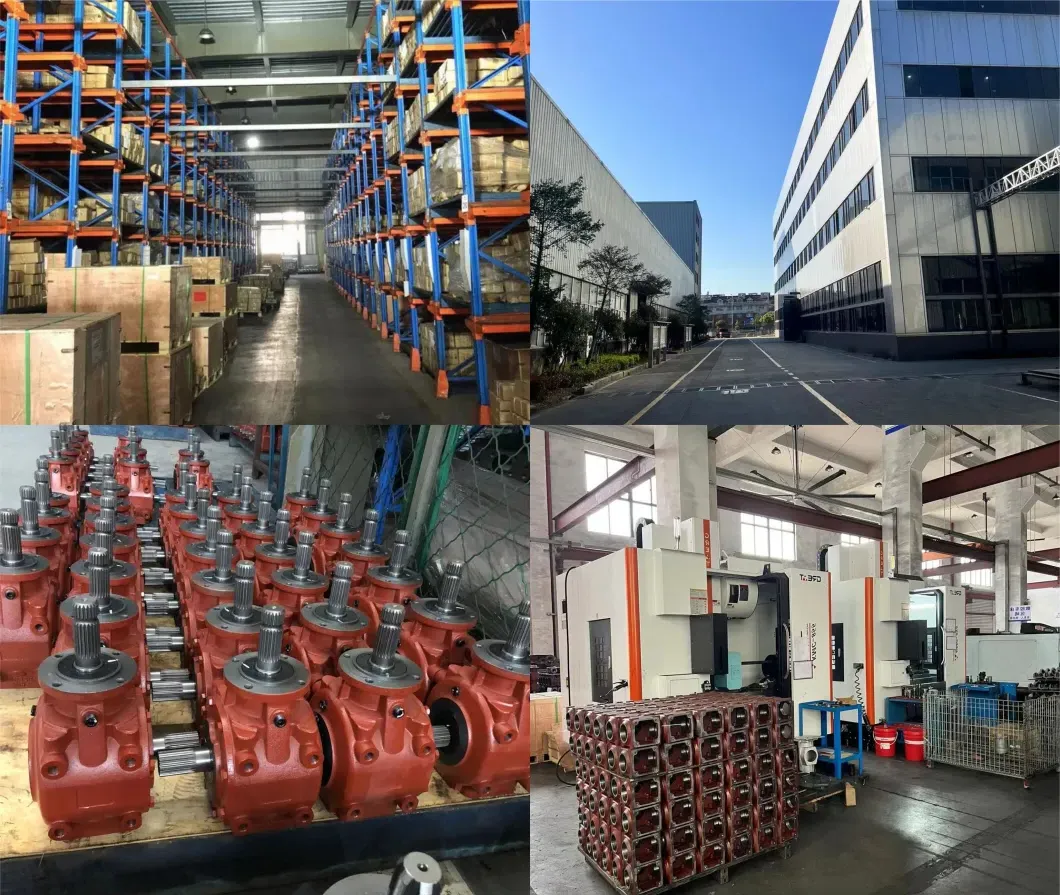
Clients value our responsive support and competitive pricing, making us a preferred supplier for tomato harvesting needs. To discuss your requirements, inquire about bulk orders today.