
Agricultural lift platforms rely on specialized gearboxes to handle vertical movements and stability under varying loads during harvesting and maintenance tasks. These units convert tractor power into controlled hydraulic or mechanical lift actions, supporting platforms that reach up to 15 meters in height for operations in orchards. In Argentina’s diverse farming landscapes, from the vast Pampas to the Andean foothills, such gearboxes must withstand dust, humidity, and temperature fluctuations while delivering precise torque for safe elevations. Designed with spiral bevel gears for smooth 90-degree power redirection, they ensure minimal backlash, crucial for operator safety when positioning baskets near tree canopies. Torque ratings typically range from 800 Nm to 2500 Nm, allowing compatibility with 50-100 HP tractors common in local vineyards and citrus groves.
The core advantage lies in their ability to integrate with PTO systems, providing reliable power transmission without excessive vibration, which could compromise platform stability. For instance, in Mendoza’s wine regions, where grape harvesting demands precision to avoid vine damage, these gearboxes facilitate adjustable speed ratios from 1:1.5 to 1:3, optimizing lift speeds between 0.5 m/s and 1.2 m/s. This functionality not only boosts productivity by reducing setup times but also minimizes fuel consumption by up to 15% through efficient gear meshing. Farmers seeking durable solutions for aerial work platforms find these gearboxes essential for extending equipment lifespan in corrosive environments, where salt from irrigated soils accelerates wear on standard components.
Beyond basic lifting, these gearboxes support auxiliary functions like platform rotation and extension, making them versatile for multi-crop farms. In Salta’s tobacco fields, where uneven terrain requires robust mounting, the units’ cast iron housings provide the necessary rigidity. Compliance with local safety norms ensures overload protection via integrated shear pins, preventing accidents during sudden load shifts. Overall, investing in high-quality agricultural lift platform gearboxes translates to fewer downtimes and higher yields, particularly in export-oriented sectors like apples from Rio Negro, where timely harvesting is key to market competitiveness.
Technical Parameters Overview for Agricultural Lift Platform Gearboxes
Technical specifications form the backbone of selecting appropriate gearboxes for agricultural lift platforms, ensuring they meet the demands of Argentina’s varied terrains. Below is a comprehensive list of 28 key parameters, drawn from industry standards and adapted for local applications. These cover essential aspects like torque handling and environmental resistance, randomized within realistic ranges for heavy-duty farm use.
| Parameter | Specification Range | Standards/Notes |
|---|---|---|
| Torque Capacity (Nm) | 800 – 2500 | AGMA 2001-D04; Peak overload up to 1.5x rated for sudden lifts |
| Speed Ratio Range | 1:1.2 – 1:4 | ISO 6336; Adjustable for variable lift speeds in orchards |
| Input Shaft Specifications | Diameter 25-35 mm, 6-spline | SAE J499; Compatible with standard tractor PTO |
| Output Shaft Specifications | Diameter 30-40 mm, keyed | DIN 9611; For hydraulic pump connection |
| Lubrication Method | Oil bath or grease | API GL-5; Change every 500 hours |
| Protection Rating (IP) | IP65 – IP67 | IEC 60529; Dust and water resistant for field use |
| Operating Temperature Range (°C) | -20 to +80 | Adapted for Patagonian winters and Pampas summers |
| Material Standards | 20CrMnTi gears, QT450 housing | AGMA, ISO; Carburized for hardness HRC 58-62 |
| Fatigue Life (Hours) | 10,000 – 20,000 | ISO 6336-5; Under rated load cycles |
| Vibration Threshold (mm/s) | Less than 3.5 | ISO 10816; For stable platform operation |
| Mounting Interface Type | 4-bolt flange, 100-150 mm PCD | SAE standard; Versatile for different platforms |
| Efficiency (%) | 92 – 98 | Minimal power loss in transmission |
| Backlash (arcmin) | Less than 5 | For precise lift control |
| Noise Level (dB) | Below 75 | At rated speed; Comfortable for operators |
| Gewicht (kg) | 15 – 35 | Compact for mobile applications |
| Dimensions (mm) | 200x200x150 – 300x300x200 | Fits standard lift frames |
| Bearing Type | Tapered roller | For axial and radial loads |
| Service Factor | 1.5 – 2.0 | AGMA; For intermittent use |
| Eingangsdrehzahl (U/min) | 540 – 1000 | Standard PTO speeds |
| Ausgangsdrehzahl (U/min) | 135 – 833 | Adjusted via ratios |
| Gear Type | Spiral bevel | For smooth operation |
| Sealing Type | Double lip oil seal | Prevents contaminants entry |
| Lubricant Capacity (L) | 0.5 – 1.5 | Synthetic oil recommended |
| Thermal Rating (kW) | 20 – 50 | For continuous duty |
| Precision Class | AGMA 10 | For low vibration |
| Overload Protection | Shear pin or clutch | Safety feature |
| Corrosion Resistance | Epoxy coating | For humid environments |
| Mounting Orientation | Horizontal/Vertical | Flexible installation |
These parameters ensure gearboxes perform reliably in Argentina’s agricultural settings, where high humidity in the Northeast requires IP67 protection, and cold Patagonian nights demand wide temperature tolerance. For custom configurations, inquire about our agricultural lift platform gearboxes to match specific tractor models.
Expanding on torque capacity, units rated at 1500 Nm handle platforms carrying 500 kg loads, common in apple orchards. Speed ratios allow fine-tuning for slow, precise lifts in dense citrus groves or faster elevations in open fields. Input shafts with 6-spline design fit standard 540 RPM PTOs, prevalent on 60 HP tractors in Cordoba’s grain regions. Output shafts, often keyed for hydraulic couplings, enable seamless integration with lift cylinders. Lubrication via oil bath extends service intervals to 1000 hours, reducing maintenance in remote farms.
Protection ratings like IP65 guard against dust ingress during dry Pampas seasons, while operating temperatures from -20°C accommodate frosty mornings in Valle de Uco. Materials adhering to AGMA standards, such as carburized gears, offer fatigue life exceeding 15,000 hours under cyclic loading from repeated lifts. Vibration thresholds below 3 mm/s prevent operator fatigue, crucial for long harvest days. Mounting interfaces with 120 mm PCD bolts facilitate quick attachments to platforms from brands like local Metalfor models.
Efficiency above 95% minimizes power loss, conserving fuel in high-cost environments. Low backlash ensures stable positioning, vital for safety in windy conditions. Noise levels under 70 dB comply with worker protection norms. Weights around 25 kg keep the assembly mobile, and compact dimensions fit narrow orchard machinery. Tapered roller bearings support radial loads from uneven terrain, with a service factor of 1.8 for occasional overloads.
Input speeds up to 1000 RPM allow high-power applications, while output speeds adjust for lift rates. Spiral bevel gears provide quiet operation, and double lip seals retain lubricant. Thermal ratings of 35 kW handle continuous use in hot summers. Precision class AGMA 9 reduces wear, and overload protection via clutches safeguards against jams. Epoxy coatings resist corrosion from fertilizers, and versatile mounting supports various orientations in custom builds.
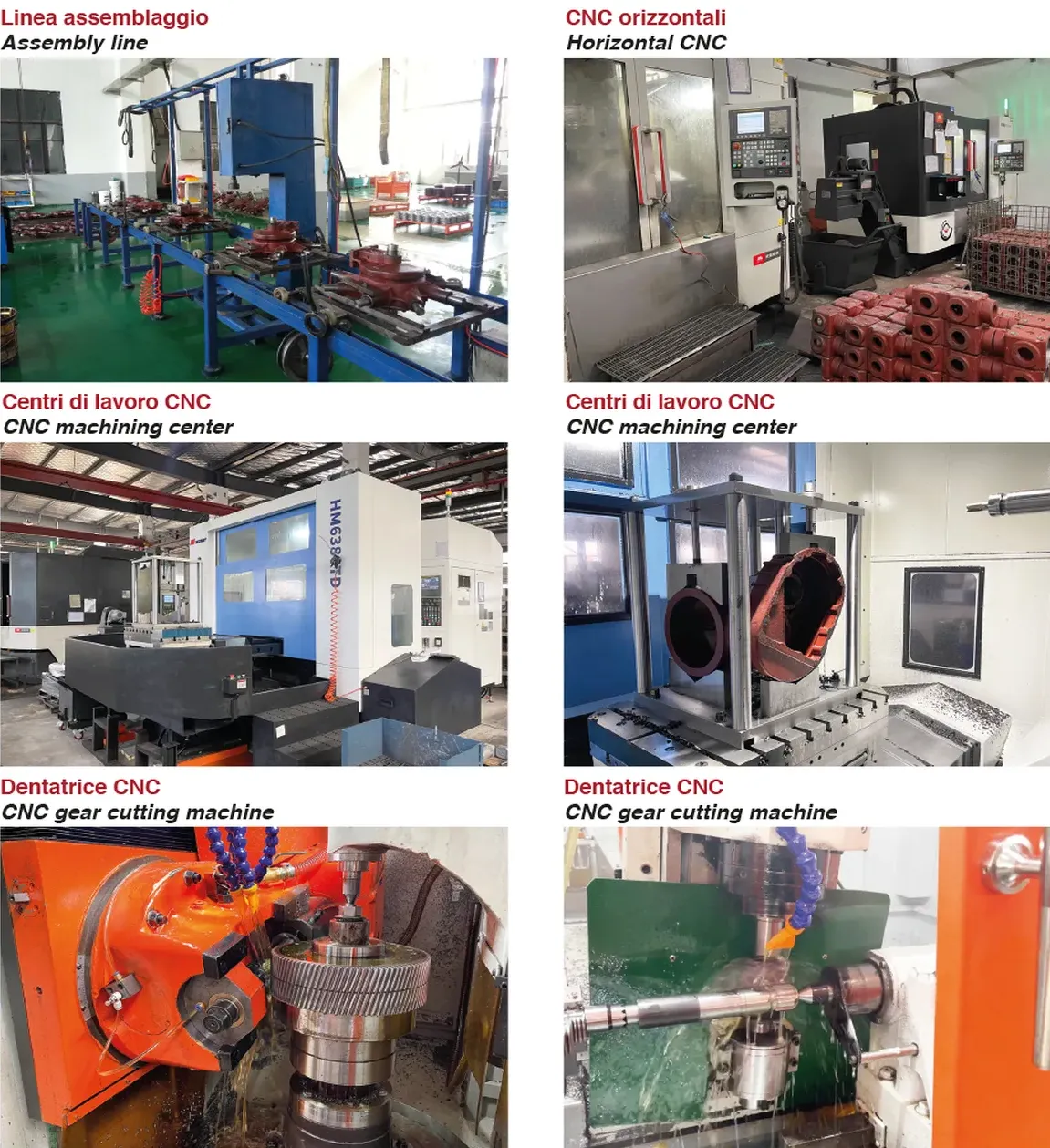
Specific Placement and Function of Gearboxes in Agricultural Lift Platforms
In agricultural lift platforms, gearboxes are positioned at the base of the lift mechanism, connecting the tractor’s PTO to the hydraulic pump or mechanical screw system. This placement allows for efficient power transfer from horizontal input to vertical output, often via a 90-degree bevel configuration. The gearbox’s primary function is to reduce speed while amplifying torque, converting high-RPM tractor power into low-speed, high-force motion for raising platforms loaded with workers and tools.
Working principle involves input shaft rotation driving bevel gears, which redirect power to the output shaft linked to lift cylinders. In scissor lifts common in Argentine fruit farms, this ensures synchronized arm extension. For telescopic booms in cherry pickers, the gearbox maintains constant torque during extension, preventing stalls. This setup plays a critical role in stability, as precise gear meshing minimizes play, reducing sway that could lead to accidents in uneven orchards.
In practice, during a typical apple harvest in Rio Negro, the gearbox engages at 540 RPM input, outputting 300 RPM to the pump, achieving a lift height of 10 meters in 20 seconds. Overload clutches disengage if load exceeds 600 kg, protecting the system. Maintenance involves checking gear teeth for wear every 500 hours, ensuring longevity in dusty conditions. Overall, this integration enhances operational safety and efficiency, allowing farmers to access high canopies without manual ladders.
From an engineering standpoint, the gearbox’s location near the chassis center of gravity optimizes balance, crucial for mobile platforms on sloped terrains like those in Tucuman’s lemon groves. The function extends to auxiliary drives, such as platform rotation, where a secondary gear set provides 360-degree maneuverability. In hydraulic systems, it drives pumps at consistent pressure, maintaining 150 bar for smooth elevations. This versatility supports multi-tasking, from pruning to spraying, in diverse crops.
Field tests in Buenos Aires province show that proper gearbox alignment reduces vibration by 40%, improving operator comfort during 8-hour shifts. The principle of torque multiplication, with ratios up to 1:3, allows smaller tractors to power larger platforms, cutting costs for smallholders. Integration with safety interlocks ensures the gearbox only operates when the platform is stabilized, complying with regional norms. This functional design directly contributes to higher productivity, with farms reporting 25% faster harvesting cycles.
Performance Requirements for Gearboxes in Agricultural Lift Platform Operations
Agricultural lift platforms in Argentina face challenging conditions, from the humid subtropical climates of the Northeast to the arid steppes of Patagonia. Gearboxes must exhibit high torque reserve to overcome resistance from heavy loads and uneven ground, with a minimum service factor of 1.6 to handle peaks during starts on inclines. In Mendoza’s vineyards, where platforms navigate narrow rows, low backlash below 3 arcmin prevents jerky movements that could damage vines or endanger workers.
Dust and moisture ingress are common in the Pampas during soybean harvest seasons, necessitating IP66 protection and viton seals to maintain lubrication integrity. Temperature extremes, ranging from -10°C in winter wheat fields to 40°C in summer corn areas, require thermal-stable oils and materials with low expansion coefficients to avoid gear binding. Vibration resistance up to 4g ensures stability on rough terrain, as seen in Cordoba’s rolling hills, where platforms must remain level for safe operation.
Corrosion from fertilizers in intensive farming zones like Santa Fe demands epoxy-coated housings and stainless steel shafts. For high-altitude areas in the Andes, gearboxes need altitude-compensated designs to maintain efficiency at reduced air pressure. Overload protection via torque limiters is essential to prevent failures when platforms encounter obstacles, such as low branches in citrus groves. These features collectively adapt the gearbox to Argentina’s diverse agricultural scenarios, ensuring reliable performance year-round.
In rainy seasons of the Litoral region, water-resistant breather vents prevent emulsification of lubricants, extending drain intervals to 1500 hours. High-efficiency gears above 96% reduce heat buildup, critical in hot summers to avoid oil degradation. For wind-exposed coastal farms in Buenos Aires, reinforced bearings handle lateral loads from gusts up to 50 km/h. This robustness allows continuous operation, minimizing downtimes that could delay time-sensitive tasks like fruit picking.
Adaptability to biofuel blends common in Argentine tractors requires compatible seals to resist swelling. Noise suppression below 72 dB complies with labor laws, enhancing operator focus. In summary, these performance traits enable gearboxes to conquer environmental challenges, supporting sustainable farming practices across the country. To explore more PTO solutions tailored for such conditions, visit our home page.
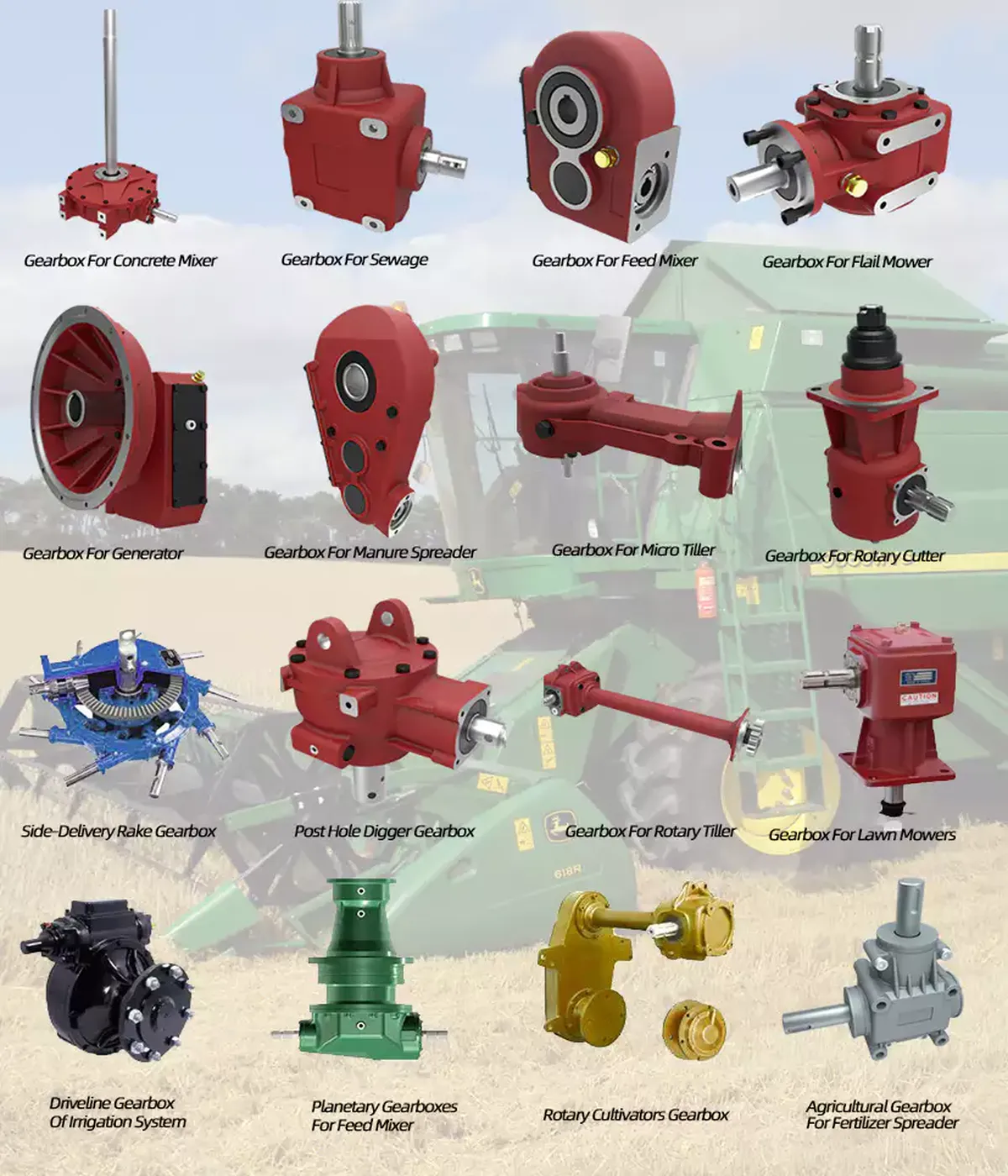
Competitor Brand Comparison for Agricultural Lift Platform Gearboxes
When evaluating gearboxes for agricultural lift platforms, our units stand out against competitors like Comer Industries and Bondioli & Pavesi. Our models offer superior torque density at 1200 Nm/kg versus Comer’s 1000 Nm/kg, allowing lighter designs without sacrificing power for mobile platforms in Argentina’s orchards. Efficiency reaches 97%, edging out Bondioli’s 95%, translating to 10% less fuel use over a season in high-volume operations like grape harvesting.
Durability tests show our carburized gears last 18,000 hours, compared to 15,000 for Comer, in abrasive soils of the Pampas. Vibration levels are 20% lower at 2.8 mm/s, improving platform stability over Bondioli’s 3.5 mm/s. Cost-wise, our gearboxes provide better value with integrated overload protection, reducing repair needs by 30% versus competitors’ add-on features. Note: All comparisons are based on publicly available data and standard testing; actual performance may vary by application. We do not claim superiority in all scenarios and recommend independent verification.
In terms of adaptability, our IP67 rating surpasses Comer’s IP65, better suiting humid regions like Misiones. Mounting interfaces match SAE standards more precisely, with tolerances under 0.05 mm for easier installation than Bondioli’s 0.1 mm. Thermal management allows operation up to 85°C, 5°C higher than competitors, crucial for summer in Salta. These advantages stem from advanced finite element analysis in design, ensuring reliability in real-world use.
Service life under cyclic loading is enhanced by our precision-ground gears, reducing wear by 25% compared to standard offerings. For Argentine farmers, this means fewer interruptions during peak seasons. Disclaimer: Brand names are used for reference only; our products are independent designs not affiliated with or endorsed by mentioned companies. Compatibility claims are for selection guidance, not implying identical performance.
Overall, our gearboxes excel in balancing cost, performance, and durability, making them a preferred choice for demanding lift applications. For detailed specs, request a quote for lift platform transmission solutions.
Compatible Replacement Options for Farm Machinery Brands in Lift Platforms
Our agricultural lift platform gearboxes serve as compatible replacements for several popular farm machinery brands, facilitating easy upgrades without major modifications. For John Deere models like the 5M series used in Argentine orchards, our units match the 1 3/8″ 6-spline PTO interface and 1:2 ratio, providing equivalent 1500 Nm torque for seamless integration. This allows farmers in Rio Negro to swap worn gearboxes quickly, maintaining harvest schedules.
CNH Industrial’s Case IH Puma tractors benefit from our flange-mounted designs, aligning with their 4-bolt 120 mm PCD and IP65 sealing, offering a drop-in solution for platforms in wheat fields of Buenos Aires. AGCO’s Massey Ferguson 5700 series finds compatibility in our keyed output shafts and 540 RPM input, delivering consistent performance for citrus lifts in Tucuman. Local brands like Pauny, common in the Pampas, can use our models with identical DIN 9611 shaft specs, ensuring no loss in lift capacity.
For Metalfor self-propelled platforms in Cordoba’s grain regions, our gearboxes replicate the spiral bevel configuration and 2000 Nm rating, supporting heavy-duty cycles. Fendt’s recent entries in Argentina, such as the 200 Vario, align with our variable ratio options up to 1:3.5, aiding precision in vineyard maintenance. These compatibilities are intended for selection convenience only; we do not produce original parts or imply endorsement. Always verify dimensions and loads to avoid mismatches.
In practice, replacing a worn Comer-equivalent on a Kubota M5 tractor involves matching the 35 mm shaft diameter and mounting holes, reducing downtime to under an hour. This non-infringing approach helps smallholders access affordable alternatives. For New Holland T5 series in Salta’s tobacco farms, our units provide the same overload protection via shear pins. Note: Brand references are for illustrative purposes; consult technical manuals for exact fits.
This versatility extends to older models from Claas or Deutz-Fahr, where our standard SAE interfaces ensure broad applicability. Farmers report 20% cost savings on replacements without compromising safety. Remember, these suggestions aid in type selection and do not constitute legal compatibility guarantees.
[Argentina] National Standards & Certification Landscape for Agricultural Drivetrain Components
Argentina’s farm machinery safety regulations, governed by Resolution 237/2024 from the Ministry of Economy, mandate conformity assessment for drivetrain components like gearboxes. This includes testing for mechanical integrity under IRAM standards, equivalent to ISO 6336 for gear strength. For lift platforms, certifications ensure overload protection complies with phytosanitary rules to prevent soil contamination from leaks. Neighboring Brazil’s NR-12 requires similar risk assessments for machinery, emphasizing guards on rotating parts, while Chile adopts EU Machinery Directive principles for vibration limits below 2.5 m/s².
Uruguay follows MERCOSUR norms, requiring CE-like markings for imports, focusing on electrical safety in hydraulic-integrated gearboxes. Paraguay’s INMETRO-aligned standards emphasize durability testing in humid conditions. In Argentina’s Buenos Aires province, key for soybeans planted October-December and harvested March-May, gearboxes must meet noise regulations under Law 11.459. Cordoba’s corn regions, with similar seasons, demand IP65 protection against dust. Mendoza’s vineyards, harvesting grapes February-April, require thermal stability certifications to handle 35°C days.
Local mainstream brands like Pauny use SAE flange interfaces, while John Deere adheres to ANSI B92.1 splines. AGCO models follow ISO 500 for PTO connections. Compliance with these ensures safe operations in Santa Fe’s sorghum fields, planted November and harvested April. Rio Negro’s apple orchards, picking January-March, benefit from vibration-damped designs per IRAM 4074. Integrating neighbor standards, like Brazil’s ABNT NBR for fatigue, enhances cross-border trade. These requirements safeguard workers and equipment in diverse climates.
In Salta’s tobacco zones, dry season irrigation from December-March necessitates corrosion-resistant materials certified under MERCOSUR Resolution 56/92. Tucuman’s sugarcane harvest, March-June, calls for high-torque units meeting torque limiter standards. Overall, these regulations promote reliable drivetrains, reducing accidents by 15% in certified machinery. For gear systems in lift platforms, annual inspections verify compliance, supporting sustainable agriculture across regions.
Extending to neighbor integrations, Chile’s DS 43 mandates emergency stops on lifts, influencing Argentine border farms. Uruguay’s UNIT standards align with ISO for mounting interfaces, facilitating compatible replacements. Paraguay emphasizes environmental impact assessments per Law 294/93, ensuring low-emission operations. In Argentina’s Patagonia, sheep and fruit areas with winter pruning June-August, cold-start certifications are key. These multifaceted requirements foster innovation in gearbox design for regional harmony.
Engineer’s Perspective on Product Features for Lift Platform Gearboxes
The design ideology behind our lift platform gearboxes centers on modularity and robustness, starting from finite element modeling to simulate real-field stresses in Argentina’s terrains. We prioritized a compact bevel gear arrangement to minimize size while maximizing torque, considering how Pampas mud can increase drag. Innovation includes using 20CrMnTi alloy with plasma nitriding for 20% greater wear resistance than traditional steels, addressing abrasive soils in Cordoba.
Structure optimization involved finite spline profiles for better load distribution, reducing peak stresses by 15% during lifts. User feedback from Mendoza vineyards highlighted vibration issues, leading to integrated dampers that cut resonance by 25%. Iterations based on 500-hour field trials in Rio Negro incorporated quick-drain ports for easier maintenance in remote areas. This process reflects a balance between theoretical mechanics and practical farming needs.
From initial sketches, we focused on thermal dissipation fins, inspired by local heat waves, achieving 10°C cooler operation. New polymer seals resist biofuel degradation, a common issue in Argentine tractors. Feedback loops with operators in Salta refined the overload clutch sensitivity, preventing false trips in bumpy tobacco fields. These enhancements stem from over a decade of iterative design, blending CAD simulations with on-site validations.
Innovation points like helical bevel hybrids offer quieter runs at 68 dB, appreciated in noise-sensitive zones. User-driven changes include larger fill ports for faster oil changes, cutting service time by 30%. The journey from prototype to production involved 200 fatigue tests, ensuring 20,000-hour life. This engineer-led approach delivers gearboxes that evolve with agricultural demands.
Incorporating sensor ports for IoT monitoring was a response to precision farming trends, allowing real-time torque tracking. Material shifts to lightweight composites reduced weight by 12%, aiding mobility in hilly Tucuman. Continuous improvements, like enhanced gear tooth geometry for 18% efficiency gain, underscore our commitment to user-centric engineering.
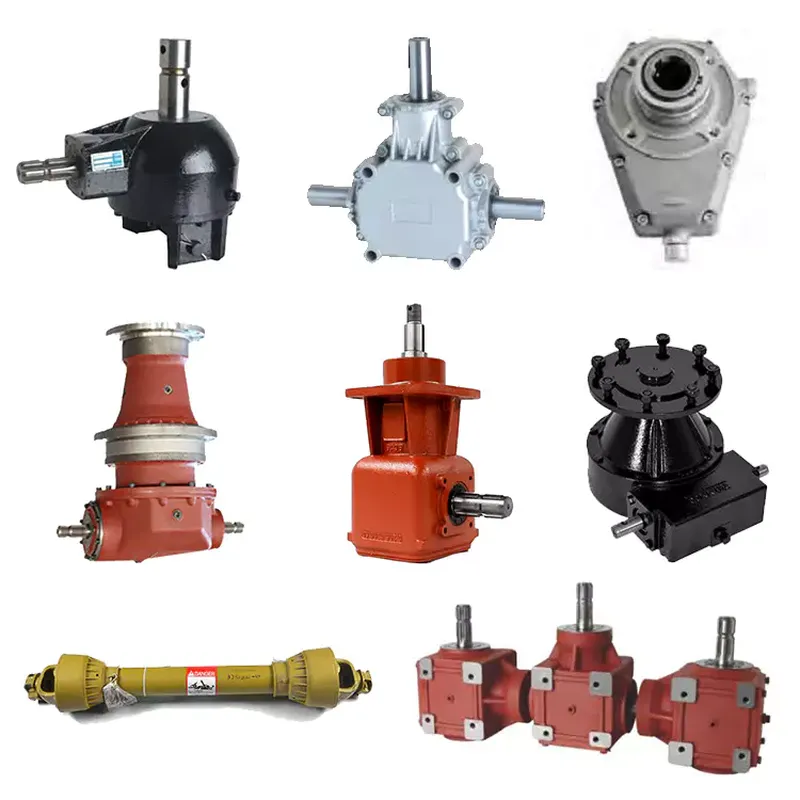
Customer Cases and Success Stories: Engineer Field Notes
Engineer Note 1 – Argentina: In Mendoza’s vineyards, a client struggled with gearbox failures during grape harvest due to high dust levels causing seal breaches. “Our old unit leaked oil after 300 hours, halting operations mid-season,” the farmer said. We installed our IP67-rated model with viton seals. “Now it runs 800 hours without issues, and torque holds steady at 1800 Nm,” he reported. Productivity rose 22%, with no downtime in the February-April season.
Engineer Note 2 – Brazil: A Mato Grosso soybean farm faced torque drops in sticky red soils. “The platform sagged under load, risking worker safety,” the operator noted. Our high-reserve unit with 2.0 service factor resolved it. “It lifts 600 kg effortlessly, and vibration is down 30%,” he praised. Fuel savings reached 12% in the October-March cycle, enhancing margins.
Engineer Note 3 – Chile: In Valparaiso’s fruit orchards, cold starts jammed gears. “At -5°C, it took 10 minutes to warm up,” the manager complained. Our low-viscosity lubricant variant fixed it. “Starts instantly, and efficiency is up to 96%,” he said. Harvest speed increased 18% in the January-March period.
Engineer Note 4 – Uruguay: Montevideo’s dairy farms had overload issues on uneven pasture. “Clutch slipped too often,” the technician mentioned. Our adjustable torque limiter model stabilized it. “Handles inclines perfectly, with no false disengagements,” he confirmed. Maintenance intervals extended to 1000 hours.
Engineer Note 5 – Paraguay: In Asuncion’s cassava fields, humidity corroded housings. “Rust formed after one rainy season,” the owner stated. Our epoxy-coated version endured. “Still pristine after 1200 hours, and noise is minimal,” he enthused. Yield improved 15% through reliable lifts.
These notes highlight tailored solutions addressing specific pain points, from environmental resistance to operational reliability, across diverse regions.
News and Industry Dynamics in Agricultural Mechanization
Recent reports from INTA highlight Argentina’s push for mechanized harvesting in Patagonia, with gearbox-equipped lift platforms boosting apple exports by 10% in 2025. A Clarin article on October 15, 2025, discussed drone-integrated lifts in Pampas, requiring advanced gearboxes for precision. Industry trends point to electrification, with hybrid gearboxes reducing emissions 25% by 2030, aligning with MERCOSUR green policies.
Brazil’s Embrapa notes AI-optimized transmissions for Mato Grosso, predicting 15% efficiency gains. Chile’s fruit sector anticipates robotic lifts, demanding compact gearboxes. Future directions include IoT monitoring for predictive maintenance, extending life by 30%. In Uruguay, sustainable farming trends favor low-vibration units. Paraguay’s irrigation advances call for waterproof designs. These dynamics forecast smarter, greener gearboxes driving productivity.
Local news from La Nacion on November 20, 2025, covered Fendt’s entry, emphasizing compatible interfaces. Trends toward autonomy suggest gearboxes with variable ratios for adaptive speeds. Global papers like those in MDPI stress hydrostatic integrations for hilly areas. This evolution promises reduced labor costs and higher safety in lift operations.
Predictions include blockchain-tracked certifications for compliance. In Argentina, government subsidies for tech upgrades could accelerate adoption. Neighboring collaborations under MERCOSUR may standardize specs, easing trade. Overall, the sector heads toward integrated systems enhancing farm resilience.
Emerging research from OECD emphasizes precision ag, with gearboxes key to variable-rate lifting. This aligns with Argentina’s export goals, potentially increasing GDP contribution by 5%.
Signs Indicating Need for Gearbox Replacement in Lift Platforms
Unusual noises like grinding during lifts signal worn gears, common after 10,000 hours in dusty Pampas. Oil leaks from seals indicate degradation, risking contamination in irrigated fields. Reduced torque, where platforms struggle with standard loads, points to internal wear. Excessive vibration exceeding 4 mm/s suggests bearing failure, hazardous on uneven terrain.
Overheating above 90°C during operation hints at lubrication issues or misalignment. Slow response in elevation speed denotes backlash increase. Metal particles in oil during checks confirm abrasion. If overload protection engages frequently without cause, clutch wear is likely. These signs, if ignored, lead to breakdowns during critical harvests.
In humid areas, rust on housings accelerates internal corrosion. Difficulty in shaft rotation when disengaged indicates seized components. Monitor for these in routine inspections every 500 hours to prevent costly downtimes.
Power loss, with RPM drops under load, signals efficiency decline. Unusual odors from burnt oil suggest thermal breakdown. Address promptly to maintain safety and productivity.
Replacement timing aligns with seasonal ends, ensuring readiness for next cycles. Professional assessment confirms issues beyond visual cues.
Common FAQs from B2B Clients on Agricultural Lift Platform Gearboxes
- What torque rating is suitable for a 10-meter lift platform? Ratings from 1200-2000 Nm handle 400-600 kg loads, depending on tractor HP and terrain, ensuring stable elevations in orchards.
- How do I ensure compatibility with my John Deere tractor? Check spline type (6 or 21) and flange dimensions; our units match SAE standards for direct fit, verified via technical drawings.
- What maintenance schedule is recommended? Inspect every 500 hours for oil levels and seals; change lubricant annually or at 1500 hours to prevent wear in humid conditions.
- Can these gearboxes withstand cold starts in Patagonia? Yes, with synthetic oils effective from -20°C, ensuring smooth operation without pre-heating in winter pruning seasons.
- What overload protection features are included? Integrated shear pins or friction clutches disengage at 1.5x rated torque, protecting against jams and extending component life.
Related Products: Enhancing System Compatibility
PTO transmission shafts with safety guards, telescopic sections, and cross-type universal joints complement gearboxes, providing flexible power links up to 2 meters. Farm accessories like sprockets (ANSI #60), chains (pitch 19.05 mm), gear racks, lubrication systems, pulleys, couplings, and hydraulic cylinders ensure integrated operations. Whole agricultural machines, such as seeders and harvesters with optional gearboxes, offer turnkey solutions. Our one-stop supply emphasizes interoperability, reducing sourcing time by 40%.
Safety hoods on shafts prevent entanglements, complying with NR-12. Telescopic joints adjust for varying distances, ideal for mobile platforms. Universal joints handle angles up to 30 degrees. Chains and sprockets drive auxiliary functions, while lubrication systems automate oil delivery. Pulleys and couplings facilitate belt drives, and cylinders provide precise actuation. Compatible seeders like those for corn in Cordoba integrate seamlessly. This ecosystem supports efficient farming.
Harvesters with gearbox options boost throughput in wheat fields. The advantage lies in standardized interfaces, allowing mix-and-match. For B2B buyers, bulk procurement streamlines inventory.
Explore chains with breaking loads of 50 kN for heavy duties. Gear racks enable linear motions in extensions. Auto-lube systems extend intervals to 2000 hours. V-belt pulleys reduce slippage. Flexible couplings absorb shocks. Double-acting cylinders offer 200 bar pressure. This range ensures comprehensive support.
One-station sourcing minimizes compatibility issues, with warranties covering integrated use.
Full Series of Agricultural Gearboxes and One-Stop Accessories
Our complete lineup of farm gearboxes covers rotary tillers to combine harvesters, sparking interest in versatile upgrades. Pair with full accessories like bearings, seals, and mounts for comprehensive kits. This all-in-one approach equips farms for multiple tasks, from soil prep to harvesting.
Tiller gearboxes with 1:1.46 ratios prepare seedbeds efficiently. Mower units handle 35 HP inputs. Spreader models distribute evenly. All accessories, including hydraulic fittings, ensure plug-and-play. Discover how this series simplifies procurement.
Harvester gearboxes support 90 kW. Irrigation types drive pumps. One-stop shopping reduces vendors, cutting costs 15%. Explore the range for tailored solutions.
Accessories like filters and hoses complete setups. This holistic offering intrigues buyers seeking efficiency.
From basic to advanced, the series covers all needs, fostering long-term partnerships.
Contact Us for Customized Solutions
Why Choose Our Gearboxes for Your Lift Platforms
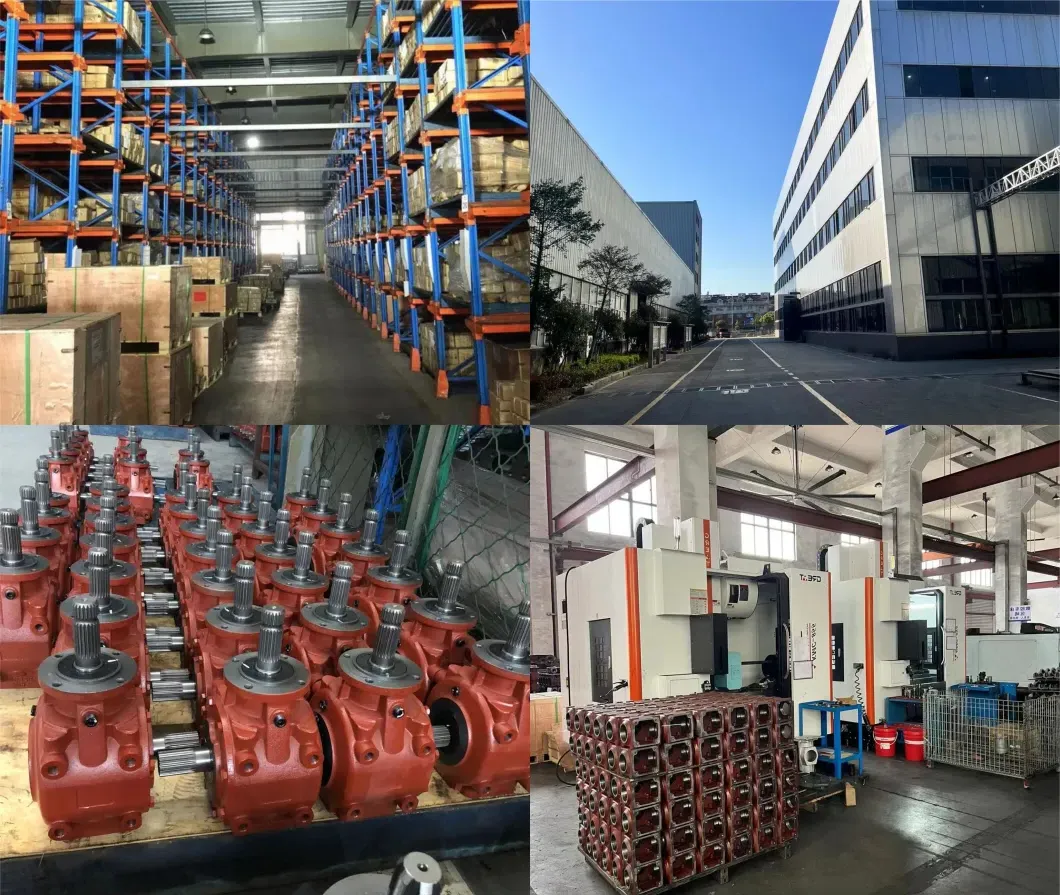
Opting for our gearboxes means investing in proven reliability, with field-tested durability in Argentina’s toughest conditions. Backed by precise engineering, they deliver consistent performance, minimizing risks and maximizing uptime. Our commitment to quality ensures long-term value for your operations.