
Produktbeschreibung
Advance Constructional Transmissions YD13
Description
YD130 hydraulic transmission is a fixed-shaft multi-speed hydraulic transmission, with speed and torque
variable combined as integral, electrical- or mechanical hydraulic controlled. Speeds are 6 forward 3
backward, 4 forward 3 backward or 3 forward 3 backward via corresponding shifting handle.
Anwendung
YD130 hydraulic transmission is widely used in construction vehicles such as grader, loader, tractor and
scraper etc.
Main Data
Maximum engine power: 130kW
Maximum engine speed: 2600r/min
Max. output torque of turbine shaft: 1000N.m
Gear: 6 forward 3 backward, 4 forward 3 backward or 3 forward 3 backward
Shifting method: electrical- or mechanical-hydraulic control
Input mode: the torque converter may be directly connected to SAE2#, 3# (only 305 converter)
flywheel casing, or flange and universal joint connection via mechanical method.
Output mode: flange, double outputs
305 or 320 torque converter is optional.
Positions for PTO: ratio for PTO1 is 1, for PTO2 is -1.
| Eingangsleistung | 130KW |
| Input Rev | 2600r/min |
| Turbine moment | 1000N.m |
| Torch Ratio | 1.5~3 |
| Center Distance | 500mm |
The detailed specification is as following table:
| Drive Ratio (i) | |||||||||
| Ahead | Astern | ||||||||
| 1 | 2 | 3 | 4 | 5 | 6 | 1 | 2 | 3 | |
| 4/3Ahead 3Astern1) | 3.91 | 2.304 | 0.964 | 0.617 | 3.91 | 2.304 | 0.964 | ||
| 4.425 | 2.25 | 1.0 | 0.64 | 4.425 | 2.25 | 1.0 | |||
| 4.531 | 2.304 | 0.964 | 0.617 | 4.531 | 2.304 | 0.964 | |||
| 5.9 | 2.304 | 0.964 | 0.617 | 5.9 | 2.304 | 0.964 | |||
| 6/5Ahead 3Astern2) | 4.531 | 2.9 | 2.304 | 1.475 | 0.964 | 0.617 | 4.531 | 2.304 | 0.964 |
| 5.292 | 3.387 | 2.304 | 1.475 | 0.964 | 0.617 | 5.292 | 2.304 | 0.964 | |
| 5.9 | 3.775 | 2.304 | 1.475 | 0.964 | 0.617 | 5.9 | 2.304 | 0.964 | |
1.You may email us through the Alibaba messaging system if you have a question or would like to submit a comment.
2.Generally, email will be responded to within 24 hours; except on every Sunday and holidays. We will reply as soon as we back in office.
3.Though we pride ourselves on fast order processing and shipping, sometimes delays may occur. Please be patient, and keep in touch with us via email.
Should you be dissatisfied with our service for any reason, please contact us.
Company Website: chinaadvance
| Anwendung: | Industrie |
|---|---|
| Funktion: | Change Drive Torque, Speed Changing |
| Härte: | Hardened |
| Power: | 130kw |
| Weight: | 400kg |
| Dimension: | 106*96*43cm |
| Anpassung: | Verfügbar | Kundenspezifische Anfrage |
|---|
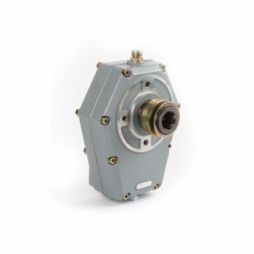
Hauptvorteile der Verwendung von Gehrungsgetrieben für platzsparende Konstruktionen
Gehrunggetriebe bieten im Hinblick auf platzsparende Bauweise mehrere wesentliche Vorteile:
Kompakte Bauweise: Winkelgetriebe sind mit Kegelrädern ausgestattet, die die Bewegung in einem 90-Grad-Winkel innerhalb eines einzigen Getriebegehäuses übertragen. Dadurch entfällt die Notwendigkeit zusätzlicher Komponenten oder komplexer Übertragungssysteme, was zu einer kompakteren Gesamtkonstruktion führt.
Effiziente Raumnutzung: Die durch Winkelgetriebe ermöglichte 90-Grad-Bewegungsumkehr sorgt für eine optimale Raumausnutzung in Anwendungen, bei denen eine Änderung der Bewegungsrichtung erforderlich ist. Diese effiziente Raumnutzung ist besonders in beengten oder schwer zugänglichen Umgebungen von Vorteil.
Integration in kleine Räume: Gehrunggetriebe eignen sich hervorragend für den Einbau in Maschinen, Anlagen und Systeme mit begrenztem Platzangebot. Dank ihrer kompakten Bauweise lassen sie sich auch in beengten Bereichen montieren, ohne dass die Leistung beeinträchtigt wird.
Reduzierter ökologischer Fußabdruck: Durch den Wegfall zusätzlicher Komponenten oder externer Bewegungsänderungsmechanismen tragen Gehrungsgetriebe zur Reduzierung des Gesamtplatzbedarfs des Systems bei. Dies ist besonders vorteilhaft in Anwendungen mit begrenztem Platzangebot.
Erhöhte Flexibilität: Die platzsparende Bauweise von Gehrunggetrieben ermöglicht es Ingenieuren und Konstrukteuren, vielseitigere und anpassungsfähigere Systeme zu entwickeln. Komponenten lassen sich effizienter anordnen, und der eingesparte Platz kann für andere Funktionselemente genutzt werden.
Modulare Montage: Gehrunggetriebe können in modulare Konstruktionen integriert werden, in denen sich mehrere Komponenten einfach zusammenfügen und miteinander verbinden lassen. Dieser modulare Ansatz trägt zusätzlich zur Platzersparnis bei und ermöglicht individuelle Anpassungen.
Kosteneffizienz: Die kompakte Bauweise von Winkelgetrieben ermöglicht Kosteneinsparungen bei Material, Fertigung und Montage. Die vereinfachte Konstruktion reduziert zudem das Risiko von Ausfällen oder Wartungsproblemen, die bei komplexeren Systemen auftreten können.
Insgesamt bieten Winkelgetriebe eine platzsparende Konstruktion, die in einer Vielzahl von Anwendungen von Vorteil ist, von Industriemaschinen bis hin zu Robotern, wo eine effiziente Nutzung des verfügbaren Platzes entscheidend ist.
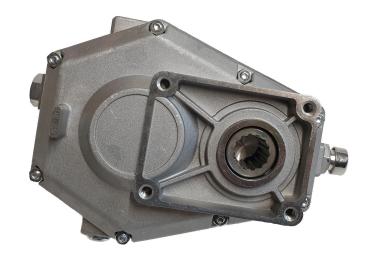
Minimizing Backlash and Ensuring Accurate Motion Transfer in Miter Gearboxes
Miter gearboxes are meticulously designed to minimize backlash and ensure precise and accurate motion transfer between the input and output shafts. Backlash refers to the slight movement or play between the gear teeth when the direction of rotation is changed. Minimizing backlash is essential for maintaining positional accuracy, reducing vibration, and achieving smooth motion in mechanical systems.
Several design features and engineering considerations contribute to minimizing backlash in miter gearboxes:
- High-Quality Gearing: Miter gearboxes use high-quality bevel gears with precisely machined teeth and tight manufacturing tolerances. This ensures a snug fit between the gear teeth, reducing the potential for any free movement or play.
- Preload and Gear Mesh Arrangement: Engineers carefully calculate and implement gear preloading, which involves applying a slight force between the gear mesh. This eliminates any clearance between the gear teeth, effectively reducing backlash.
- Bearing Arrangement: Proper bearing selection and arrangement play a critical role in minimizing backlash. High-quality bearings with minimal axial play are chosen to support the gear shafts and maintain precise alignment.
- Housing and Casing Rigidity: The gearbox housing is designed to provide optimal rigidity and support to the internal components. This helps prevent deflection or deformation that could contribute to backlash.
- Lubrication: Adequate lubrication is essential to reduce friction and wear between the gear teeth. Proper lubrication helps maintain the gear mesh and minimizes any irregular movement.
By incorporating these design principles and techniques, miter gearboxes are able to achieve accurate motion transfer with minimal backlash. This is particularly important in applications where precision positioning, synchronization, and reliable motion control are critical, such as robotics, CNC machinery, and automation systems.
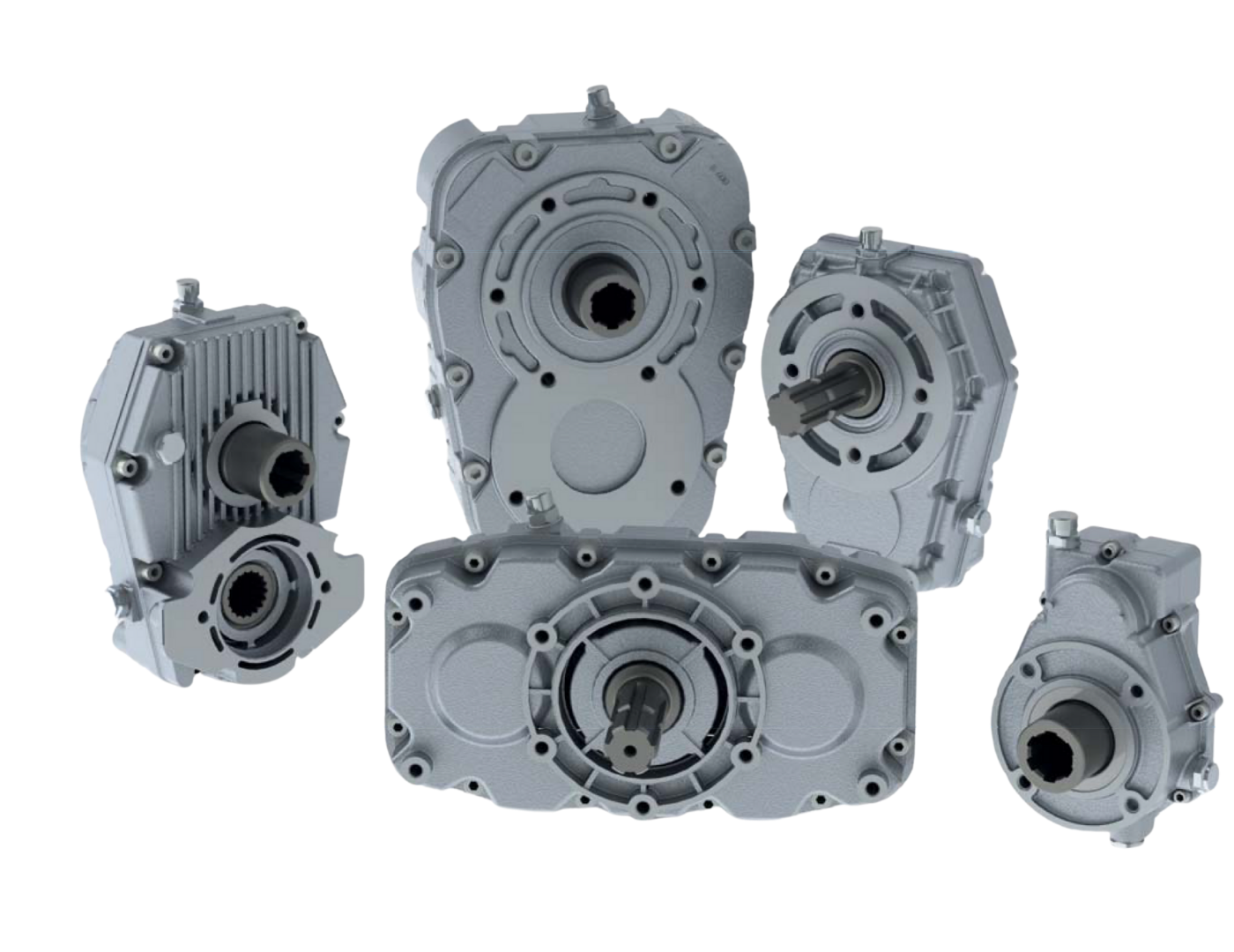
Transmission of Motion at a 90-Degree Angle by Bevel Gears in a Miter Gearbox
Bevel gears in a miter gearbox are specifically designed to transmit motion at a 90-degree angle between intersecting shafts. This is achieved through the unique tooth profile and arrangement of the bevel gears.
Bevel gears have conical-shaped teeth that taper towards the apex of the cone. In a miter gearbox, two bevel gears with identical tooth profiles are mounted on shafts that intersect at a 90-degree angle. The orientation of the teeth allows the gears to mesh smoothly and transmit motion from one shaft to another while changing the direction of rotation by 90 degrees.
As one bevel gear rotates, its conical teeth engage with the teeth of the second bevel gear, causing the second shaft to rotate perpendicular to the first shaft. The gear ratio and tooth configuration determine the speed and torque relationship between the input and output shafts.
Overall, the precise design of bevel gears and their arrangement in a miter gearbox enables efficient and reliable transmission of motion at a right angle, making them well-suited for applications that require changes in direction within mechanical systems.


editor by CX 2023-11-15