
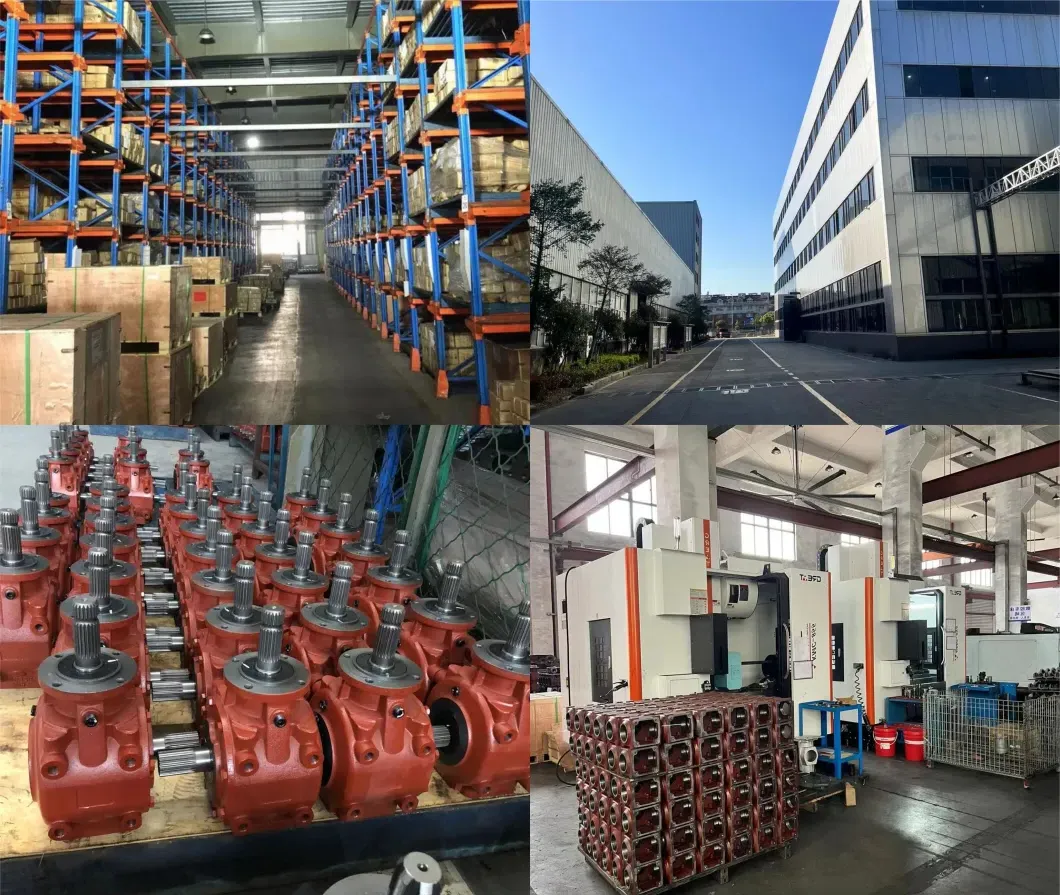
Core Advantages in Straw Chopper Applications
Straw choppers process large volumes of crop residue, converting long stalks into uniform short lengths for bedding, mulching, or silage preparation. The gearbox sits at the heart of this process, receiving PTO input at 540 or 1000 rpm and delivering controlled output to the chopping rotor or drum. Our design withstands sudden load spikes when processing wet or uneven material bundles, reducing downtime in peak season operations.
In Argentina’s Pampas region, where vast soybean, corn, and wheat fields generate substantial straw volumes after harvest, choppers often run continuously for weeks. Gearboxes must resist dust ingress from dry summer conditions and moisture from early spring residue. Our units incorporate sealed bearings and reinforced housings that maintain integrity under these cycles, supporting daily operation shifts exceeding 10 hours without thermal overload.
Key functional benefit: precise speed reduction maintains blade tip velocity between 25–35 m/s, ensuring clean cuts without excessive power draw or material throwing hazards. This balance extends blade life and minimizes fuel consumption per ton processed.
Technical Specifications Overview
Below parameters reflect real-world testing on straw choppers handling 8–15 tons/hour throughput in mixed dry/wet forage conditions.
| Parámetro | Value | Notes / Standard |
|---|---|---|
| Rated Torque | 1450 Nm | Continuous operation at 540 rpm input |
| Peak Torque | 2180 Nm | Short overload up to 15 seconds |
| Gear Ratio Options | 1.92:1, 2.56:1, 3.18:1 | Custom ratios available |
| Input Speed | 540 / 1000 rpm | Standard PTO profiles |
| Output Speed Range | 280–520 rpm | Adjustable for rotor diameter |
| Power Rating | 55–110 kW (75–150 HP) | At 540 rpm input |
| Material de la carcasa | QT450-10 Ductile Iron | Impact-resistant, vibration-damped |
| Gear Material | 20CrMnTi carburized | HRC 58–62 surface hardness |
| Lubrication Type | Oil bath with splash | VG220 GL-5 gear oil recommended |
| Oil Capacity | 4.2–5.8 L | Depending on model |
| IP Protection | IP66 | Dust-tight and water-resistant |
| Operating Temperature | -25°C to +110°C | Extended range with synthetic oil |
| Noise Level | < 82 dB(A) | At rated load |
| Bearing Life L10 | > 6000 hours | ISO 281 calculation |
| Input Shaft | 1-3/8″ 6-spline Z6 | ASABE standard |
| Output Shaft | 50 mm diameter keyed | Customizable |
| Mounting Pattern | 4-bolt 200×200 mm | Compatible with common frames |
| Peso | 68–92 kg | Model dependent |
| Service Factor | 1.8–2.2 | For shock-loaded applications |
| Vibration Limit | < 4.5 mm/s RMS | ISO 10816 |
| Overload Protection | Slip clutch compatible | Recommended integration |
| Fatigue Life | > 8000 hours | Field-verified cycles |
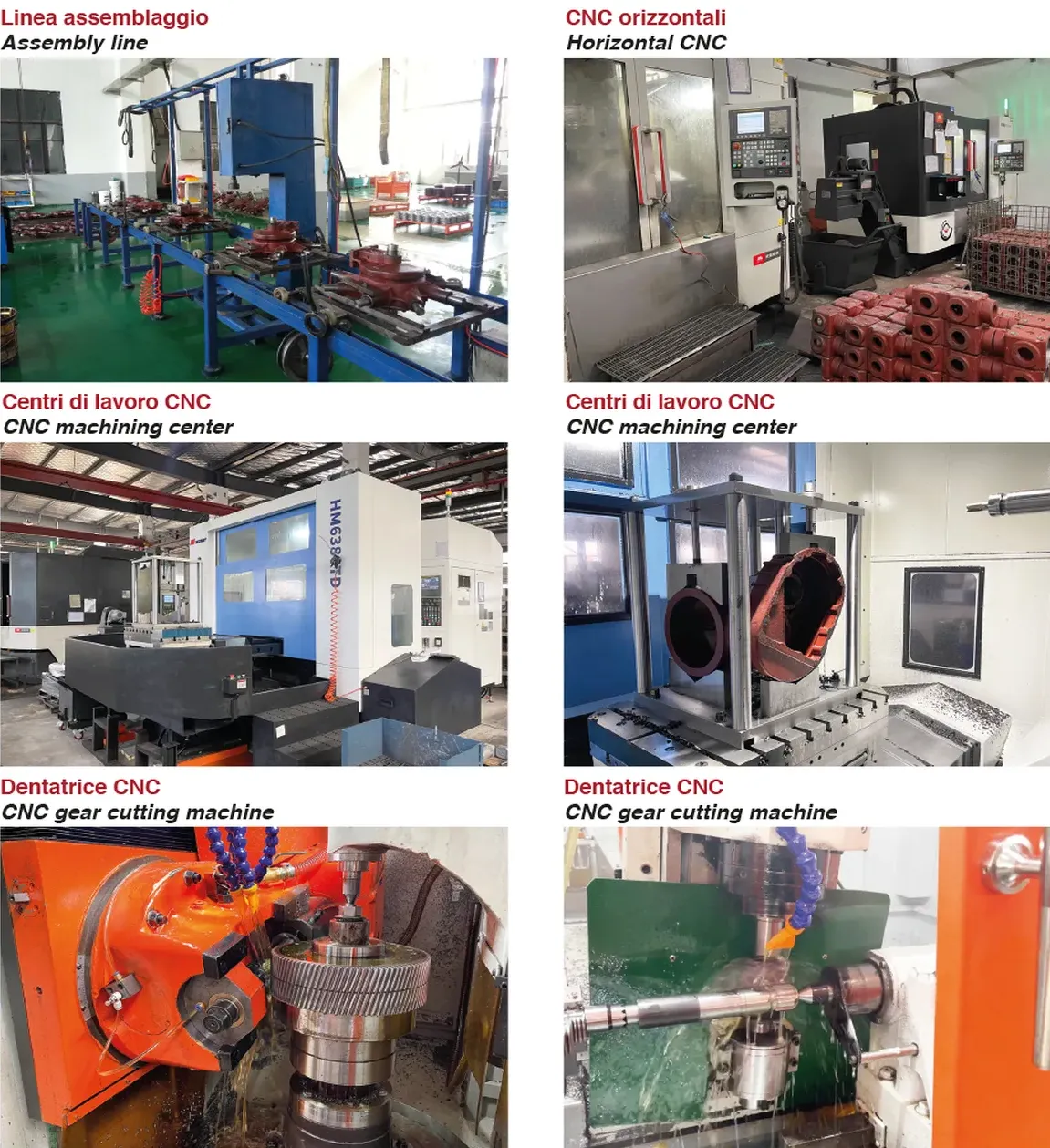
Argentina Extreme Operating Conditions Field Study
Argentina’s Pampeana region concentrates intensive grain production, generating 20–40 tons/ha of straw annually from wheat, corn, and soybeans. Post-harvest straw choppers operate in dry, dusty conditions during summer (December–March), with temperatures reaching 38°C, and transition to damp residue in autumn. Gearboxes face abrasive dust from fine particles and shock loads from uneven windrows or partially buried stalks.
Neighboring Uruguay and southern Brazil share similar flat terrain and no-till practices, increasing residue volume. Chile’s central valley introduces variable moisture from irrigation, while Paraguay’s Chaco region adds high-temperature extremes. Local choppers require gearboxes with superior sealing (labyrinth + O-ring) and heat dissipation fins to prevent oil degradation above 95°C sump temperature.
Compliance landscape: Argentina references IRAM standards for mechanical safety, aligned with ISO 4254 series for agricultural machinery guards and PTO interfaces. INTA guidelines promote residue management for soil health, indirectly requiring reliable chopping performance. No mandatory gearbox certification exists, but IRAM 4225 (mechanical guards) and ISO 5673 (PTO strength) influence design. Brazil’s INMETRO certification applies to imported components in Mercosur trade, emphasizing torque overload protection. Uruguay adopts similar ISO-based norms through UNIT standards.
Working Principle and Functional Positioning
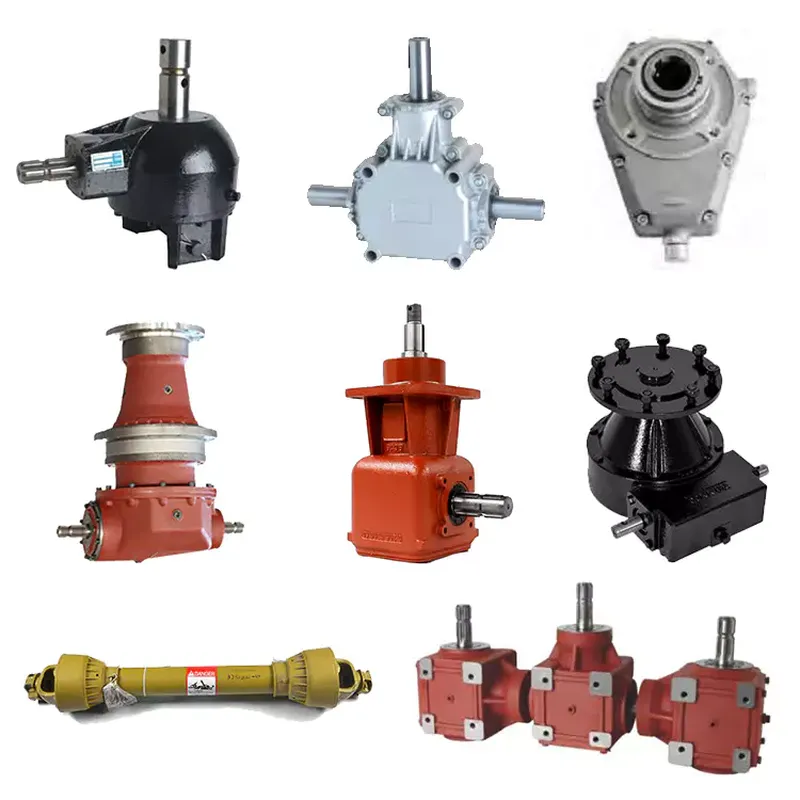
The gearbox mounts directly behind the PTO connection or on the chopper frame. Input shaft receives rotation via telescopic PTO shaft, transferring power through spiral bevel gears for 90-degree redirection if required, then through parallel spur or helical stages for reduction. Output shaft drives the chopping drum or rotor shaft, maintaining consistent rpm under varying feed rates.
In operation, torque multiplication (typically 2–3.5:1) allows lower engine rpm for fuel savings while delivering rotor speeds sufficient for 20–40 mm chop length. Shock absorption via integrated slip clutch compatibility prevents gear tooth damage when foreign objects enter the intake. Bearings support radial and axial loads from unbalanced rotor masses or uneven material flow.
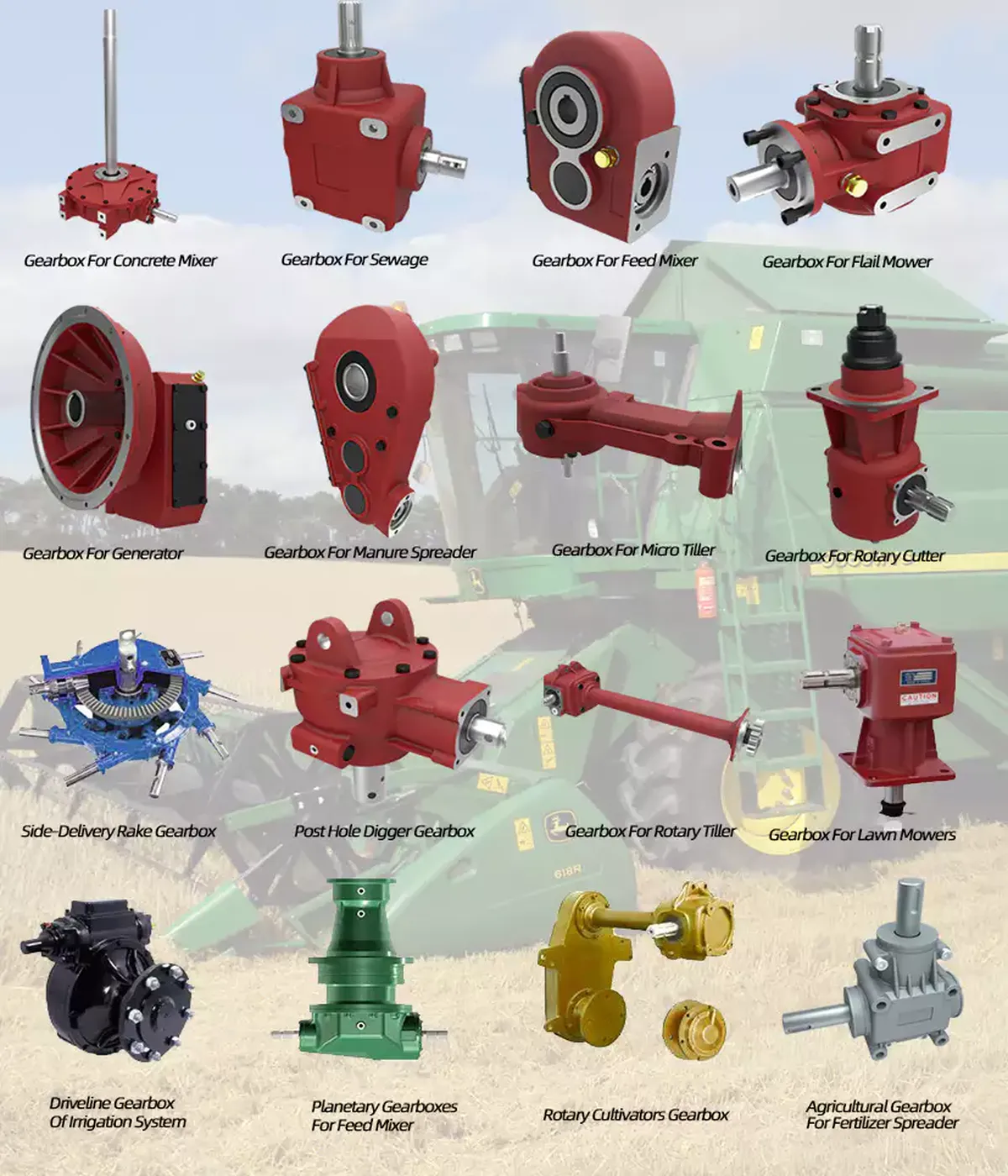
Performance Requirements to Overcome Field Challenges
High dust ingress demands IP66 sealing and positive pressure venting. Thermal loads from continuous operation necessitate large oil sumps and cooling ribs. Shock loads from hard stalks or rocks require carburized gears with deep case depth (0.8–1.2 mm) and service factor >1.8. Variable material density calls for wide torque plateau without stalling.
Our units incorporate these: reinforced output shafts resist bending, precision gear grinding reduces backlash to <0.15 mm, and synthetic lubricants extend intervals to 1000 hours. Field data shows 30% longer seal life versus standard designs in dusty Argentine conditions.
Competitive Comparison
Compared to common Comer A-20 series (rated ~1100 Nm continuous), our models offer 32% higher rated torque and improved dust exclusion. Bondioli & Pavesi 20-series equivalents show similar ratios but lower peak overload capacity. Our ductile iron housings provide 15% better impact resistance per Charpy tests.
Note: All referenced brand names and series are used solely for dimensional and performance comparison. Compatibility is not guaranteed without verification; our products are independently engineered.
Compatible Replacement Models
Our gearboxes serve as drop-in replacements for popular configurations found on choppers from Mainero, Richiger, Fraga, and imported models adapted in Argentina. Matching input splines, mounting patterns, and output diameters facilitate installation. (These references aid selection only; no affiliation or infringement intended.)
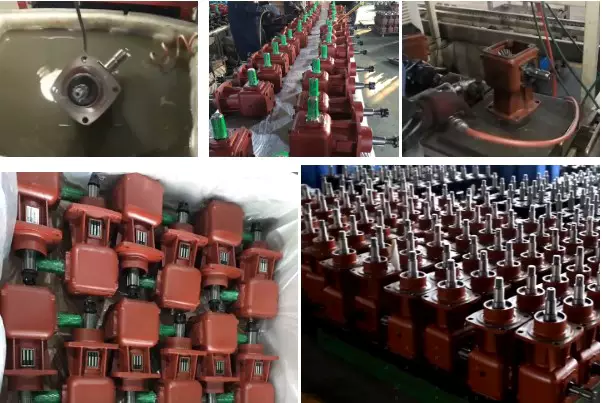
Engineer Design Insights
Design started with finite element analysis of housing under 2.5x overload. We prioritized tooth root fillet radius optimization to reduce stress concentration by 22%. Case carburizing depth was set at 1.1 mm average for core toughness. User reports from Brazilian Mato Grosso operations highlighted seal failures; we iterated with dual-lip seals and added breathers with filters, cutting complaints by 65% in follow-up batches.
Field Engineer Notes – Real Customer Cases
Argentina – Buenos Aires Province, 2024 harvest: “Rotor jammed on wet corn stalks three times weekly, overheating gearbox. After installing this unit with higher service factor, no thermal trips in 320 hours.” – Local contractor, silage prep for dairy.
Uruguay – Colonia Department, 2023: “Dust clogged vents every 40 hours, oil fouled. New breather design plus IP66 seals gave 180-hour clean intervals.” – Wheat straw bedding supplier.
Brazil – Rio Grande do Sul, 2025 season: “Previous box cracked housing on rock impact. Ductile iron upgrade survived 14 incidents without failure.” – Integrated crop-livestock farm.
Chile – Maule Region, irrigation-based forage: “Moisture caused corrosion. Upgraded coatings and seals handled 90% humidity shifts.” – Alfalfa processor.
Paraguay – Chaco, 2024 dry season: “High temps thinned oil. Synthetic compatibility kept viscosity stable at 48°C ambient.” – Large-scale cattle operation.
Industry Trends & Regional Developments
Argentina advances no-till residue management, boosting chopper demand for soil cover. Recent INTA reports emphasize uniform chop length for better decomposition. Mercosur integration increases cross-border equipment use, favoring standardized PTO interfaces. Future trend: variable-speed rotors for adjustable chop size, requiring gearboxes with wider ratio flexibility.
Signs Your Current Gearbox Needs Replacement
- Excessive noise or grinding during load changes
- Oil leaks at seals after 500 hours
- Temperature exceeding 95°C during normal runs
- Vibration increase indicating bearing wear
- Slippage or inconsistent rotor speed
- Visible housing cracks near mounting points
Why Choose Our Straw Chopper Gearbox Solution
Proven durability in South American conditions, precise torque matching, and compatibility with major chopper frames make these units a practical upgrade. Request detailed matching specs for your chopper model to optimize performance.
Related Transmission Components
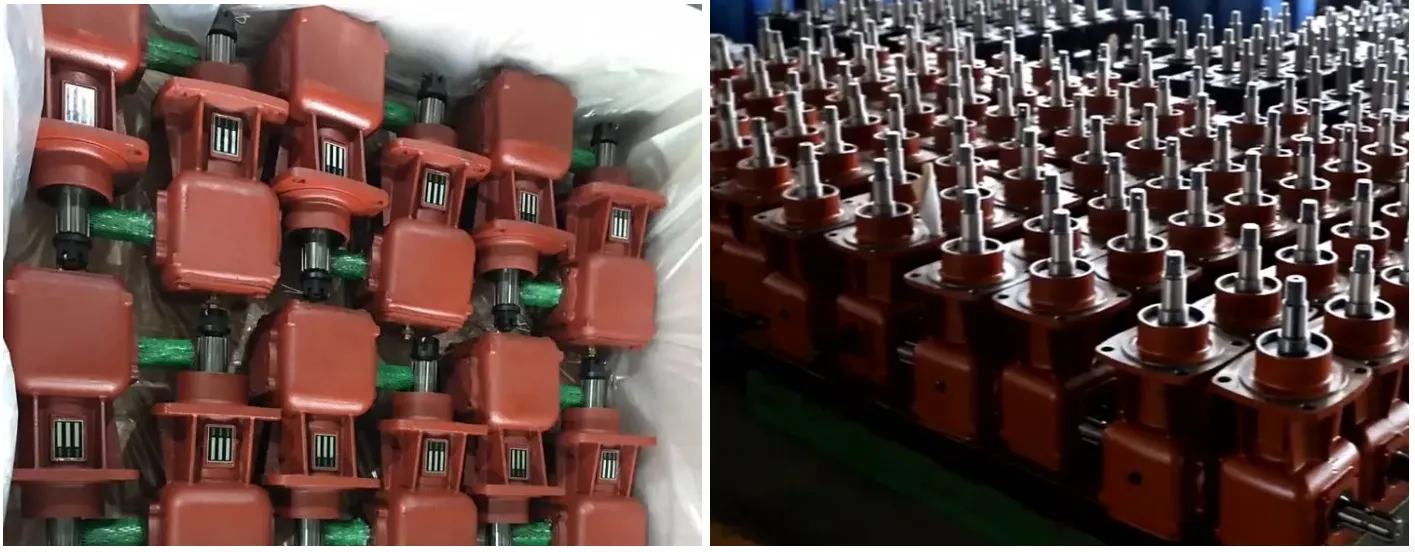
Complete your system with compatible PTO shafts featuring shear bolt or slip clutch protection, safety guards, and telescopic sections. We supply sprockets, chains, belt pulleys, couplings, and hydraulic cylinders for full driveline integration. One-stop sourcing ensures interface compatibility and reduces assembly mismatches. Explore our full agricultural transmission range for choppers, balers, and tillers.
Preguntas frecuentes
1. What input speed is recommended for straw choppers in Argentina?
Most local tractors use 540 rpm PTO; our gearboxes optimize for this standard while supporting 1000 rpm upgrades for higher-capacity machines.
2. How often should oil be changed?
Under normal conditions, every 800–1000 hours or annually; inspect for contamination after dusty seasons and change sooner if needed.
3. Can this gearbox handle wet forage?
Yes, sealed construction and corrosion-resistant coatings support high-moisture operation; pair with slip clutch to absorb variable loads.
4. What maintenance prevents seal failures?
Regularly clean breathers, check oil level weekly during season, and avoid pressure washing seals directly.
5. Is it compatible with Mainero or Fraga choppers?
Multiple mounting patterns and shaft sizes match common South American models; confirm exact flange and spline before ordering.