
Description du produit
Basic Info.
| Model | 704 Wheel Tractor | |
| Drive Type | 4WD/2WD | |
| Overall MachineDimensions(length*width*height and location) | mm | 3300*1600*1640 |
| Wheelbase | mm | 1950 |
| commonly used wheel tracks | mm | 1200 |
| wheel tracks(front wheel/rear wheel) | mm | 1100-1300(adjustable) |
| Minimum ground clearance and location | mm | 310(bottom of front axle) |
| Minimum usage quality | kg | 1700 |
| standard weight(front/rear) | kg | 50/60 |
| number of gears(forward/reverse) | / | 8+8 shuttle side gear |
| Maximum design theoretical speed | km/h | 31.46 |
| Engine and main clutch connection method | / | direct |
| type of rollover protection device(cab or safety frame) | / | security framework |
| Engine model | / | 495 |
| Engine structure type | / | In-line,direct injection,water-cooled,four-stroke |
| engine manufacturer | / | HangZhou 70 Hp |
| engine air intake method | / | turbocharging |
| number of engine cylinders | / | 4 |
| engine standard power | kw | 51.5 |
| engine standard speed | r/min | 2400 |
| engine cooling method | / | water cooling |
| steering system type | / | fully hydraulic |
| steering system steering control mechanism | / | steering wheel |
| steering system steering mechanism type | / | front wheel steering |
| tyre model | front wheel:750-16 rear wheel:11.2-28 | |
| Suspension device type | / | Rear three-point suspension |
| number of hydraulic output groups | / | two |
| working device safety valve full opening pressure | MPa | 17.5-18.0 |
| number of splinesof PTO shaft | / | 6 |
| PTO shaft standard speed | R/min | 540/720 |
Paramètres du produit
704 TRACTOR
Tractor A self-propelled engine used to pull and drive work machinery to complete various mobile operations. Can also do fixed work power. It is composed of engine, transmission, walking, steering, hydraulic suspension, power output, electrical instruments, driving control and traction systems or devices.
The engine power is transmitted from the transmission system to the driving wheel to make the tractor run. In real life, it is common to use the rubber belt as the medium of power transmission. Agricultural, industrial and special purpose tractors according to function and use; According to the structure type of wheel, crawler, boat tractor and self-propelled chassis.
Features
1.It is equipped with famous and excellent engines, with large torque reserve, strong power and low fuel consumption.
2.Full hydraulic steering system, flexible and light to operate.
3.Middle shift gear, easy to operate.
4.8+2 gear shift, reasonable speed matching, high working efficiency and strong adaptability.
5.The new miniature LCD instrument is developed according to the harsh working conditions of construction machinery and has high reliability.
REAL SCENE SHOOTING
Although the tractor is a more complex machine, its type and size are different, but they are composed of 3 parts of the engine, chassis and electrical equipment, each of which is indispensable.
Tractor engine
It is the device that generates the power of the tractor, and its role is to convert the heat energy of the fuel into mechanical energy to output power. Most of the farm tractors produced use diesel engines.
Tractor chassis
It is the device that transmits power to the tractor. Its role is to transfer the power of the engine to the driving wheel and the working device to make the tractor travel, and to complete the mobile operation or fixed role. This function is achieved through the mutual cooperation and coordination of the transmission system, walking system, steering system, braking system and working device, and at the same time, they constitute the skeleton and body of the tractor. Therefore, we refer to the above 4 systems and 1 device as chassis. That is to say, in the whole of the tractor, all other systems and devices other than the engine and electrical equipment are collectively referred to as the tractor chassis.
Tractor electrical equipment
It is a device to ensure that the tractor uses electricity. Its role is to solve lighting, safety signals and engine starting.
Profil de l'entreprise
HangZhou Qingcha Machinery Manufacturing Co., Ltd. is located in the ash high-tech park of Xihu (West Lake) Dis. Town, HangZhou City,HangZhou. It has been committed to the research and development and production of internal combustion counterbalanced forklifts, battery counterbalanced forklifts, OMV intelligent omnidirectional forklifts,wheel loader,mini dumper,mixer,backhoe loader,excavator ,tractor and mini digger.
Since its inception, the company has always been to build China’s most cost-effective high-quality construction machinery for the purpose of continuous research and development and innovation, the company has large CNC cutting machine, vertical machining center, horizontal gantry milling machine and other equipment more than 40 sets, to achieve all the key components Self-made, providing a strong guarantee for the quality of the product.
For the long-term development of the company, the company regards the quality as the life of the company, establishes a perfect quality assurance system, and has passed the IS09001 international quality system certification.
In the near future, HangZhou Forklift will become 1 of the CHINAMFG R&D, production and export construction machinery bases in the industry, contributing to the prosperity of the domestic and international logistics market and the promotion of innovation and development in the construction machinery industry.
FAQ
1.What services would you offer if I buy from you?
Our trained Professional service team offers high-quality in-time service in a very friendly way. For a good customer.
2.Can you supply the machine with your customer requirement?
We have strong technology team, are able to do adjustment design for customers according to users’ most requirements.
3.Are you the factory?
Yes, the factory Founded in 2015 year.
Location at: Intersection of Huibu Xihu (West Lake) Dis. Avenue and CHINAMFG Avenue in Xihu (West Lake) Dis. Town, HangZhou City, HangZhou.
| Taper: | Wheel Tractor |
|---|---|
| Usage: | Farm Tractor, Garden Tractor, Lawn Tractor |
| Certification: | ISO, CE |
.shipping-cost-tm .tm-status-off{background: none;padding:0;color: #1470cc}
| Frais d'expédition : Frais de transport estimés par unité. | concernant les frais de livraison et le délai de livraison estimé. |
|---|
| Mode de paiement: |
|
|---|---|
| Paiement initial Paiement intégral |
| Devise: | US$ |
|---|
| Retours et remboursements : | Vous pouvez demander un remboursement jusqu'à 30 jours après la réception des produits. |
|---|
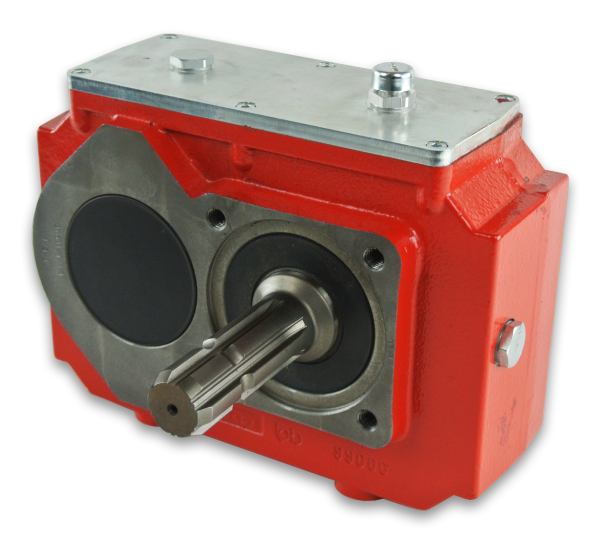
Challenges in Using Miter Gearboxes
While miter gearboxes offer various advantages, they also come with certain challenges that need to be addressed:
Lubrification: Proper lubrication is crucial for miter gearboxes to minimize friction, heat, and wear between gear teeth. Ensuring consistent and sufficient lubrication in the gearbox can be challenging, especially in enclosed or hard-to-reach spaces.
Maintenance: Miter gearboxes require periodic maintenance to ensure their optimal performance and longevity. Maintenance tasks may include checking and replenishing lubrication, inspecting gear teeth for wear, and addressing any misalignment or mounting issues that may arise over time.
Backlash: Backlash, or the clearance between gear teeth, can impact the accuracy of motion transfer. Excessive backlash can lead to reduced precision and positioning errors in applications that require high accuracy.
Complex Design: Miter gearboxes have a more intricate design compared to some other gearbox types, which can make manufacturing, assembly, and maintenance more complex. This complexity may also result in higher manufacturing and maintenance costs.
Efficiency Loss: Miter gearboxes can experience efficiency losses due to factors such as friction and misalignment. These losses can reduce the overall efficiency of power transmission, leading to energy wastage.
Space Constraints: In some applications, space limitations can pose a challenge when integrating miter gearboxes, especially when larger gear ratios are required to achieve the desired motion direction change.
Shock Loads: Applications subject to sudden shock loads or high impact forces can pose challenges for miter gearboxes. Adequate measures, such as using shock-absorbing components or designing for higher durability, may be required to address these challenges.
Alignment and Mounting: Proper alignment and mounting of miter gearboxes are critical to ensure smooth operation and prevent premature wear. Achieving precise alignment can be challenging, especially in installations with limited access or complex geometries.
Cost Considerations: The design complexity and manufacturing requirements of miter gearboxes can contribute to higher costs compared to simpler gearbox types. Balancing the benefits of miter gearboxes with the associated costs is essential during the selection process.
Addressing these challenges often requires careful engineering, proper maintenance practices, and consideration of specific application requirements. Despite the challenges, miter gearboxes remain valuable components in various industries where their unique motion direction-changing capabilities are advantageous.
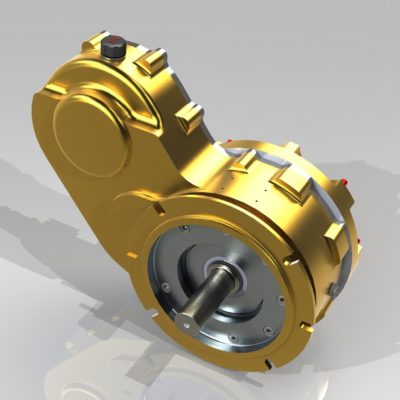
Industries courantes utilisant des réducteurs à engrenages coniques et leurs applications
Les réducteurs à engrenages coniques trouvent des applications dans diverses industries grâce à leur capacité à modifier le sens de rotation de 90 degrés. Voici quelques exemples d'industries où ils sont couramment utilisés :
- Automobile: Les réducteurs à engrenages coniques sont utilisés dans les applications automobiles pour la transmission de puissance entre différents composants, tels que les systèmes de direction et les arbres de transmission.
- Impression: Les machines d'impression utilisent des réducteurs à onglet pour modifier le sens de déplacement du mécanisme d'alimentation du papier, assurant ainsi un alignement précis du papier.
- Manutention et convoyeurs : Les réducteurs à onglet sont utilisés dans les systèmes de convoyage pour faciliter le transfert de matériaux à angle droit.
- Fabrication: Divers procédés de fabrication nécessitent des changements de direction du mouvement, comme dans les chaînes de montage et les équipements automatisés.
- Robotique : Les réducteurs à onglet sont utilisés en robotique pour le contrôle du mouvement, permettant aux robots de se déplacer efficacement et avec précision dans différentes directions.
- Travail du bois : Les machines à bois utilisent des réducteurs à onglets pour changer la direction des outils de coupe, améliorant ainsi la précision et l'efficacité.
- Textile: Les réducteurs à onglet sont utilisés dans les machines textiles pour contrôler le mouvement des tissus et des fils pendant la fabrication.
- Machines-outils : Les réducteurs à onglets jouent un rôle dans les machines-outils nécessitant des changements de mouvement angulaire.
La conception unique des réducteurs à onglet les rend adaptés aux applications nécessitant des changements de mouvement précis à 90 degrés, permettant un fonctionnement plus fluide et plus efficace dans ces industries.
Boîte de vitesses à onglets : Fonction et mécanisme
Un réducteur à engrenages coniques, également appelé réducteur d'angle, est un type de réducteur qui transmet la puissance et inverse le sens de rotation entre des arbres se croisant à angle droit. Il est constitué d'un ensemble d'engrenages coniques dont les axes se croisent.
Dans les systèmes mécaniques, le rôle d'un réducteur à angle droit est de rediriger le mouvement de rotation d'un ou plusieurs arbres d'entrée vers un ou plusieurs arbres de sortie, en formant un angle droit. Ceci permet la transmission de puissance et la conversion de couple entre deux arbres non alignés. Les réducteurs à angle droit sont particulièrement utiles lorsque des contraintes d'espace ou des configurations mécaniques spécifiques imposent un changement de sens de rotation.
Le principe de fonctionnement d'un réducteur à engrenages coniques repose sur l'engrènement d'engrenages coniques. Ces engrenages possèdent des dents coniques qui leur permettent de s'engrèner en douceur à un angle de 90 degrés. Lorsque l'arbre d'entrée tourne, les dents de l'engrenage conique d'entrée s'engrènent avec celles de l'engrenage conique de sortie, ce qui entraîne la rotation de l'arbre de sortie perpendiculairement à l'arbre d'entrée. Le rapport de transmission et le nombre de dents des engrenages déterminent la conversion de vitesse et de couple entre les arbres d'entrée et de sortie.
Les réducteurs à engrenages coniques trouvent des applications dans divers secteurs industriels, tels que l'automobile, la mécanique, l'agriculture et la robotique, où des changements de direction de mouvement sont nécessaires. Ils sont souvent utilisés dans des équipements qui doivent transmettre de la puissance dans des virages ou des espaces restreints tout en conservant les caractéristiques de couple et de vitesse souhaitées.


editor by CX 2023-11-17