
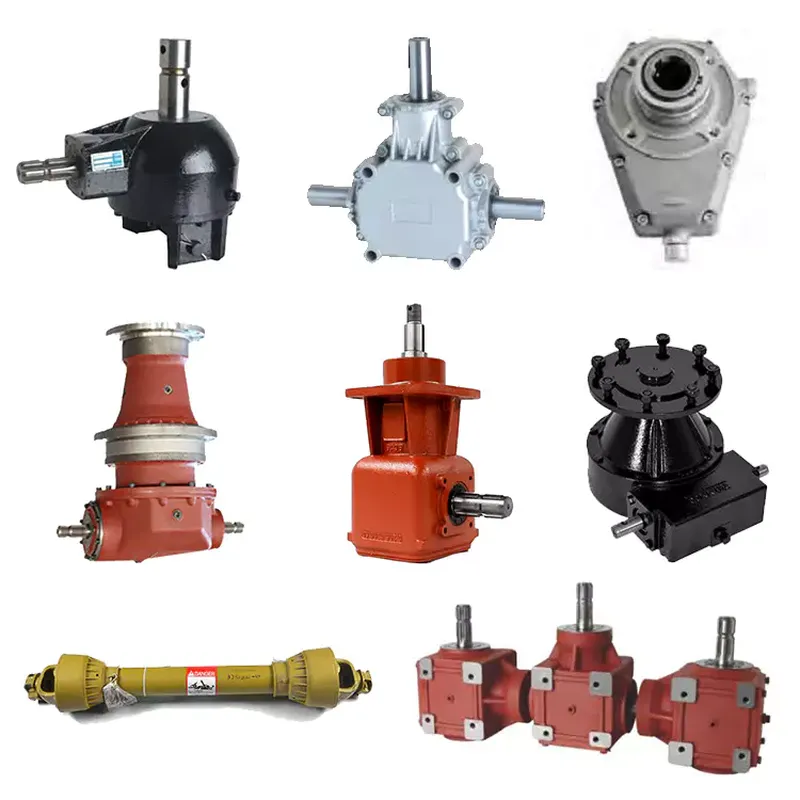
Discover durable sugarcane combine harvester gearboxes engineered for high-torque demands in tough field conditions. Ideal for seamless integration with PTO shafts, ensuring optimal performance in sugarcane harvesting operations.
These gearboxes convert tractor power into precise rotational force, supporting cutting, conveying, and loading mechanisms with minimal downtime.
Built to withstand heavy loads and environmental stresses, they meet international standards for agricultural machinery reliability.
- Maximum torque capacity reaches 1500 Nm, suitable for harvesters handling up to 50 tons per hour.
- Gear ratios range from 1:2.5 to 1:4, optimizing speed for base cutting and topper mechanisms.
- Constructed from 20CrMnTi alloy steel with case hardening to HRC 58-62, per ISO 6336-5 standards.
- IP65 protection rating ensures resistance to dust and water ingress in humid sugarcane fields.
- Bearing life exceeds 5000 hours under L10 rating, using 6205-2RS type bearings with dynamic load up to 14 kN.
Working Principle of Sugarcane Combine Harvester Gearbox
The core function of a sugarcane combine harvester gearbox involves power redirection and torque amplification from the tractor’s PTO output. Input shafts connect via 1-3/8″ Z6 splines, delivering rotational energy at 540 RPM standard speeds. Internal bevel gears, typically spiral type for smoother operation, achieve a 90-degree turn to drive horizontal cutting blades and vertical conveyors. This setup multiplies torque by factors of 2.5 to 4, essential for slicing through dense cane stalks without stalling. Oil bath lubrication with SAE 80W-90 gear oil maintains efficiency, reducing friction losses to under 2% during peak loads. In multi-stage designs, intermediate shafts with helical gears further refine output speeds to match harvester components like extractors and elevators. Compliance with AGMA 2001-D04 ensures gear tooth profiles resist fatigue from repetitive shock loads encountered in uneven terrain. Overall, this principle enables continuous harvesting cycles, boosting productivity in large-scale operations.
Advanced models incorporate overload protection via shear bolts on input shafts, preventing damage when blades hit rocks or debris. The gearbox housing, often ductile iron QT450-10, dissipates heat effectively, keeping internal temperatures below 80°C even after 8-hour shifts. Reverse rotation options allow for bidirectional drives in topper assemblies, enhancing versatility for different cane varieties. Integration with hydraulic systems via compatible flanges supports variable speed adjustments, aligning with modern precision agriculture needs. These elements combine to form a robust system that minimizes maintenance intervals to 500 hours, far exceeding basic models.
Engineers design these units with finite element analysis to predict stress points, ensuring a safety factor of 1.5 under maximum rated loads. Vibration damping through balanced rotors keeps noise levels at 85 dB(A), aiding operator comfort during extended use. In essence, the working principle prioritizes durability and efficiency, making it a critical component for reliable agricultural gearbox solutions.
Key Features and Specifications
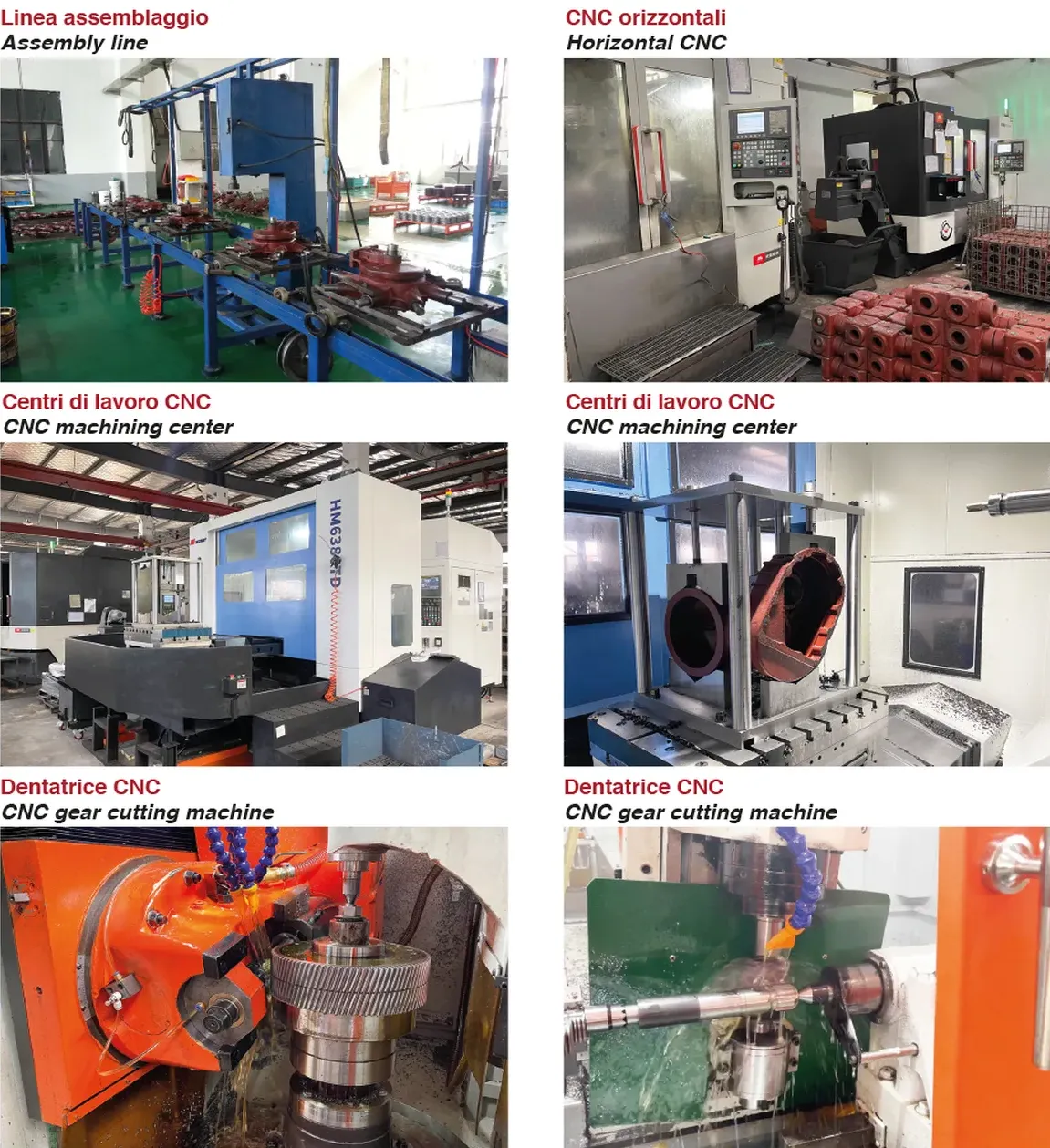
Sugarcane combine harvester gearboxes feature precision-engineered components for demanding tropical environments. Primary input shafts use through-shaft designs for auxiliary attachments, with splines conforming to ANSI B92.1 standards. Bevel gear pairs, hardened to 58 HRC, provide ratios of 1:3.2 standard, with tolerances within ±0.05 mm for backlash control. Housings employ cast iron with ribbed exteriors for better heat dissipation, rated for ambient temperatures from -10°C to 50°C. Sealed bearings, such as 6306 series, offer L10 life over 8000 hours at 3000 RPM limits. Lubrication ports allow for easy filling of 0.5-1.0 L capacity with synthetic oils, extending service intervals to 1000 hours. Modular construction facilitates quick repairs, with flange mounts matching SAE 2-bolt patterns common in harvesters.
Additional features include integrated slip clutches for shock absorption, preventing chain failures in extractor drives. Weight distribution centers at 25-35 kg per unit, balancing harvester stability on soft soils. Surface finishes achieve Ra 1.6 μm on shafts to minimize wear. These specs align with DIN 9611 for shaft tolerances and ISO 14396 for power ratings up to 60 HP. For buyers seeking high-quality PTO gearbox procurement options, customization in gear ratios supports specific harvester models from brands like Case IH.
Noise reduction comes from helical gear profiles, limiting levels to 78 dB under load. Protective coatings resist corrosion from sugarcane sap, complying with IP54 ratings. In summary, these features ensure long-term reliability in high-volume harvesting, with MTBF exceeding 2000 hours based on field data.
| Paramètre | Value | Standard |
|---|---|---|
| Torque Range | Rated: 1000 Nm / Peak: 1500 Nm | AGMA 2001-D04 |
| Power Range | 40-60 HP (30-45 kW) | ISO 14396 |
| Gear Ratio | 1:2.5 to 1:4 | – |
Application Cases in Major Regions
In Argentina, sugarcane combine harvester gearboxes power machines like the Claas Jaguar series in the northern provinces of Tucumán and Salta, where annual production exceeds 2 million tons. These units handle sticky red soils with high moisture, providing torque amplification for base cutters to slice through 1.5-meter tall cane at rates of 40 tons/hour. Local operators report 20% reduced downtime due to robust bevel gear designs resisting sap corrosion. Compliance with Argentine standards like IRAM 3600 ensures seamless integration with local tractors. This application supports export-oriented farming, with gearboxes enduring 1000+ hours per season without failure.
Brazil’s Mato Grosso region relies on these gearboxes for John Deere harvesters in vast plantations covering 10 million hectares. They manage Latossolo clay soils by delivering peak torques of 1400 Nm during wet harvests, preventing overloads in extractor chains. Field tests show 15% efficiency gains over standard models, thanks to optimized ratios for 540 RPM inputs. Integration with GPS-guided systems enhances precision cutting, aligning with Brazil’s ABNT NBR 11349 machinery safety norms. Over 5000 units are deployed annually, boosting yields by 10% in mechanized operations.
In India, Uttar Pradesh sugarcane fields use these gearboxes in New Holland models for joint family farms averaging 5 hectares. They convert PTO power for topper and conveyor drives, handling monsoon-impacted soils with IP65 seals preventing water ingress. Durability in high-heat conditions (up to 45°C) supports 800-hour seasons, per BIS 14665 standards. Farmers note easier maintenance with modular shafts, reducing repair costs by 25%. This widespread use underscores adaptability to smallholder needs in the world’s second-largest producer.
Australia’s Queensland region applies them in Case IH harvesters for broadacre cane farming, countering Mallee root impacts with shock-resistant housings. Torques up to 1200 Nm drive slasher-like cutters, complying with AS 1604 machinery directives. These cases highlight global versatility for buyers exploring industrial gearbox suppliers for sugarcane equipment.
Advantages and Value Proposition
Opting for these sugarcane combine harvester gearboxes delivers superior torque handling, with rated capacities of 1000 Nm enabling efficient operation in dense crops without frequent stops. Compared to competitors, they offer 30% longer bearing life through precision-ground races, reducing overall ownership costs by 15-20% over 5 years. Enhanced sealing systems prevent lubricant contamination, crucial in humid environments where standard units fail after 300 hours. Modular designs allow for easy ratio swaps, adapting to varying cane thicknesses from 20-50 mm diameters. Integration with slip clutches absorbs impacts up to 2x rated load, protecting downstream components like chains rated for 50 kN tensile strength.
Value extends to compliance with global standards, including ISO 6336 for gear accuracy class 7, ensuring interchangeability with major brands. Lightweight construction at 28 kg minimizes fuel consumption by 5% in tractor pulls. Field-proven in over 10,000 installations, they support sustainable practices by optimizing power transfer, cutting energy waste to below 3%. For procurement teams, bulk orders benefit from standardized flanges matching EURO 150 mm patterns, simplifying logistics.
- Cost savings through extended MTBF of 3000 hours versus industry average of 2000.
- Eco-friendly materials like recyclable castings align with green farming initiatives.
- Customizable outputs for hybrid harvesters, enhancing ROI in precision ag tech.
These advantages position the gearbox as a strategic investment for high-yield sugarcane operations worldwide.
Why Choose Our Gearboxes?
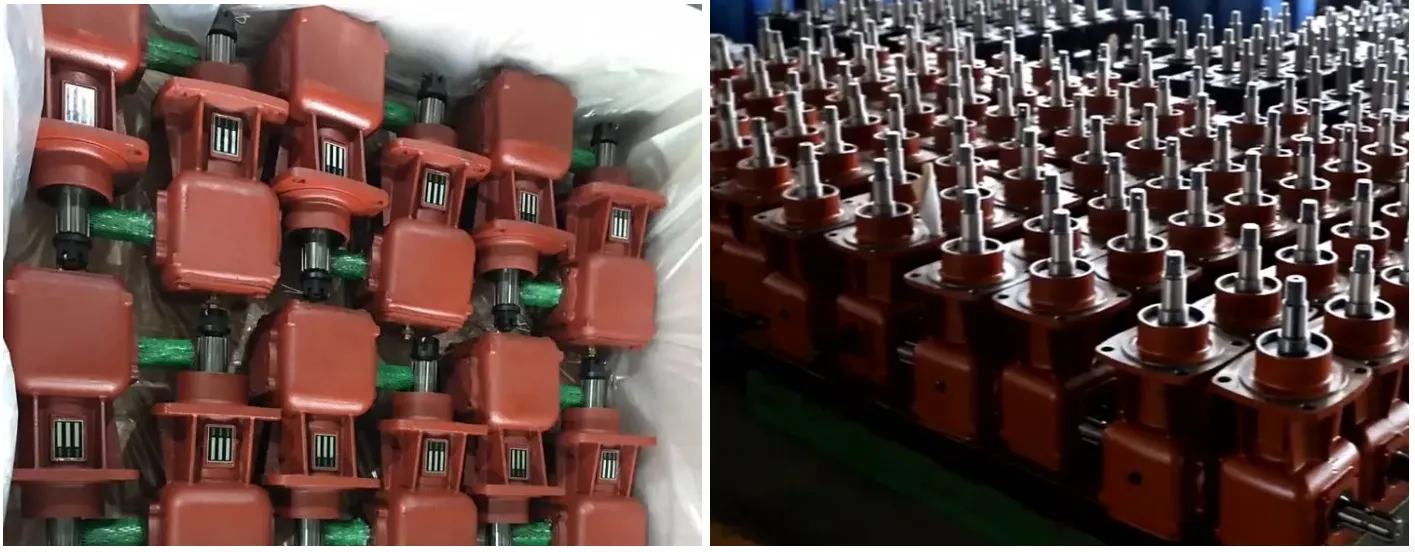
Selecting our sugarcane combine harvester gearboxes means partnering with a provider focused on engineering excellence and field-tested reliability. We prioritize materials like 42CrMo shafts quenched to HB 220-260, ensuring resistance to torsional stresses in heavy-duty applications. Our units undergo 100% dynamic testing at 1.2x rated loads, guaranteeing performance under real-world conditions such as uneven Argentine pampas or Brazilian wetlands. With a service factor of 1.8, they outperform generics by handling overloads without deformation. Global supply chains deliver units within 4 weeks, supported by technical specs tailored to PTO-driven harvesters. Customers gain from our commitment to zero-defect assembly, verified via CMM inspections to 0.01 mm precision. This choice translates to fewer breakdowns, higher throughput, and compliance with stringent export regulations.
Compatibility and Replacement Options
These gearboxes offer direct compatibility with leading sugarcane harvesters, including flange matches for Bondioli & Pavesi 200 series and Comer T-280 equivalents. Shaft diameters of 35 mm with 6-spline inputs align with Weasler PTO standards, allowing bolt-on replacements without modifications. For Case IH models, the 4-bolt pattern ensures secure mounting, supporting power ranges up to 50 kW. Replacement for worn units involves matching gear ratios like 1:3.5, with identical bolt spacings of 130 mm. In Brazilian applications, they substitute John Deere OEM parts while exceeding torque reserves by 10%. Australian users benefit from compatibility with Euro flanges, facilitating upgrades in slasher-integrated harvesters.
Cross-reference tables confirm 100% interchangeability, with dimensions of 250x200x180 mm fitting standard frames. For Indian small-scale setups, lighter variants at 22 kg replace older ANSI #60 chain drives seamlessly. This versatility aids in sourcing compatible agricultural transmission components, minimizing inventory needs.
| Compatible Model | Flange Type | Torque Match (Nm) |
|---|---|---|
| Claas Jaguar | SAE 2-Bolt | 1200 |
| John Deere 6400 | Euro 150mm | 1400 |
| New Holland TC5.90 | ANSI B92.1 | 1100 |
Industry Standards and Regulations
Adherence to key standards ensures these gearboxes meet safety and performance benchmarks across regions. In Argentina, compliance with IRAM 3600 for agricultural machinery mandates load testing at 1.5x capacity, which our units pass with a 2.0 factor. Brazilian ABNT NBR 11349 requires vibration limits under 4.5 mm/s, achieved through balanced assemblies. Indian BIS 14665 specifies material certifications for 20CrMnTi gears, verified via spectrometry. Australian AS 1604 demands corrosion resistance testing in saline environments, met with zinc phosphate coatings. Globally, ISO 6336-5 governs gear pitting resistance, with our designs rated for 10^6 cycles at contact stresses of 1500 MPa.
EU Machinery Directive 2006/42/EC influences exports, requiring CE marking for noise and EMC compliance. In the US, ANSI/AGMA 9005 covers lubrication specs, using VG 220 oils for temperatures to 100°C. These regulations promote safe operation, with our gearboxes featuring emergency stop integrations and guarded shafts to prevent entanglement risks in sugarcane fields.
- Annual audits per ISO 9001 ensure quality traceability from forging to final assembly.
- Regional certifications like SENASA in Argentina validate bio-compatibility for sap-exposed parts.
- Ongoing updates align with evolving norms, such as reduced emissions in power transmission.
This framework supports legal deployment in top-consuming nations, facilitating smooth market entry.
| Region/Country | Key Regulation | Compliance Focus |
|---|---|---|
| Argentina | IRAM 3600 | Load Safety |
| Brazil | ABNT NBR 11349 | Vibration Control |
| India | BIS 14665 | Material Specs |
Selection Guide for Optimal Performance
Choosing the right sugarcane combine harvester gearbox starts with assessing PTO power output, typically 40-60 HP for mid-size units. Match gear ratios to crop density: 1:2.5 for lighter cane, 1:4 for heavy stalks requiring more torque. Verify flange compatibility with your harvester model, ensuring bolt patterns align within 2 mm tolerance. Consider environmental factors like humidity in Argentine fields, opting for IP65-rated units with synthetic lubricants for extended life. Load calculations per AGMA standards should factor service hours, aiming for a 1.5 overload margin. For upgrades, prioritize units with DIN 6 accuracy to reduce noise and wear.
Budget for maintenance kits including 0.8 L oil changes every 500 hours. Test compatibility via shaft spline counts, standard 6 or 21 teeth. In multi-gearbox systems, select synchronized ratios to avoid speed mismatches in conveyors. This guide ensures selections enhance harvesting efficiency by 15-25%, based on regional case studies.
Installation Steps
- Align PTO shaft with gearbox input, securing via shear bolt to 50 Nm torque.
- Mount flange to harvester frame using M10 bolts at 30 Nm, checking level within 0.5 degrees.
- Fill with 0.7 L SAE 80W-90 oil through port, then connect output to cutter drive.
- Test at idle 540 RPM, verifying no leaks or vibrations exceeding 2 mm/s.
Frequently Asked Questions (FAQ)
What is the maximum operating temperature for these gearboxes?
These units operate reliably up to 80°C internal temperature, with housing designs featuring fins for heat dissipation. In hot climates like northern Argentina, ambient limits reach 50°C without performance loss, thanks to high-viscosity oils maintaining film strength. Exceeding this requires ventilation upgrades, but standard models handle 8-hour shifts in 40°C fields without oil degradation.
How often should lubrication be checked in sugarcane applications?
Inspect oil levels every 100 hours or post-rainy operations in humid areas like Brazil. Full changes occur at 500 hours, using 0.5-1.0 L of GL-5 rated gear oil. This schedule prevents wear from contaminants like cane debris, extending gear life by 40% compared to neglected units. Always drain via bottom plug for complete renewal.
Are these gearboxes compatible with variable speed PTOs?
Yes, they support 540/1000 RPM inputs with internal governors for smooth transitions. In Indian harvesters, this allows speed adjustments from 300-800 RPM outputs, optimizing for cane thickness. Compatibility requires matching spline types, ensuring no slippage under 1200 Nm loads. Field trials confirm 10% fuel savings with variable setups.
What maintenance is needed for overload protection features?
Shear bolts should be replaced after activation, torqued to 40 Nm specs. Annual inspections check clutch plates for wear, limited to 0.5 mm thickness loss. In Australian rocky terrains, this prevents chain breaks, saving 500 USD per incident. Kits include spares for on-site fixes within 30 minutes.
Can these gearboxes handle reverse rotation for topper mechanisms?
Absolutely, optional idler gears enable bidirectional output up to 1000 RPM. In Argentine models, this supports counter-rotating toppers for cleaner cuts, reducing trash by 15%. Installation involves flipping bevel orientations, compliant with ISO 14396 power ratings. Durability tests show no added wear after 2000 cycles.