
Vibrating subsoilers rely on robust gearboxes to handle soil penetration in tough terrains like those found in the Pampas region. These units transfer power from tractor PTO shafts to oscillating tines, reducing compaction without excessive fuel use. In Argentina, where soybean and corn fields dominate, such gearboxes must withstand variable moisture levels in clay-loam soils, ensuring consistent depth control up to 50 cm. Engineered with spiral bevel gears for smooth 90-degree power redirection, they achieve torque multiplication ratios from 1:1.5 to 1:3, matching tractor outputs of 80-150 HP. This setup minimizes vibration feedback to the operator, extending machine life in extended harvest seasons.
Field tests in Cordoba province show these gearboxes maintain operational efficiency in temperatures ranging from -5°C to 40°C, common during winter wheat prep and summer soy planting. By integrating oil-bath lubrication systems, they prevent gear wear from dust ingress, a frequent issue in windy Patagonian areas. For B2B buyers seeking reliable subsoiling solutions, these components integrate seamlessly with local tractor models, offering a service life exceeding 5,000 hours under standard loads.
Core Advantages and Application Scenarios
Gearboxes in vibrating subsoilers excel at converting high-speed PTO input into low-speed, high-torque output for tine oscillation, crucial for breaking hardpan layers without inverting soil. In Argentine scenarios, they support no-till farming in Buenos Aires province, where maintaining residue cover is key for erosion control. Rated for inputs up to 1000 RPM, they deliver output speeds of 200-400 RPM, enabling tine frequencies of 30-50 Hz to fracture soil aggregates effectively.
Advantages include enhanced fuel efficiency, with reductions of 15-20% in tractor consumption during deep loosening operations compared to static subsoilers. They function as the central transmission hub, mounted between the three-point hitch and tine frame, absorbing shocks from uneven ground like in Salta’s hilly terrains. This protects downstream components and ensures uniform depth, vital for crop root development in maize fields.
In flood-prone areas such as Entre Rios, these gearboxes incorporate sealed housings with IP65 ratings to resist water ingress during wet-season work. Their modular design allows quick ratio adjustments, adapting to different crop cycles—from autumn sorghum prep to spring cotton bedding. B2B procurement teams note their role in boosting yield by 10-15% through improved soil aeration, making them indispensable for large-scale operations.
Durability stems from carburized gear teeth achieving HRC 58-62 hardness, resisting abrasive sands in Mendoza vineyards. They handle peak torques of 2000 Nm, preventing stalls in compacted post-harvest soils. For Argentine exporters focusing on sustainable practices, these units comply with local emission standards, reducing operational downtime to under 2% annually.
Scenario-specific adaptations include variable speed options for precision farming, integrating with GPS-guided tractors in Santa Fe. This ensures targeted subsoiling in problem zones, optimizing water infiltration rates up to 30 mm/hour in clay soils. Overall, they provide a cost-effective upgrade path for aging equipment, with ROI realized within two seasons through labor savings.
Technical Parameters Overview
| Paramètre | Value/Range |
|---|---|
| Torque Capacity (Nm) | Rated: 1500, Peak: 2500 |
| Speed Ratio Range | 1:1.8 to 1:2.5 |
| Input Shaft Specifications | Diameter: 35 mm, Spline: 6-key |
| Output Shaft Specifications | Diameter: 40 mm, Flange: 4-bolt |
| Lubrication Method | Oil bath with EP90 gear oil |
| Protection Rating (IP) | IP65 |
| Operating Temperature Range | -10°C to 50°C |
| Material Standards | AGMA 2001-D04, ISO 6336 |
| Fatigue Life (Hours) | 6000 under rated load |
| Vibration Threshold | Less than 2.5 mm/s RMS |
| Mounting Interface Type | SAE standard flange |
| Gear Type | Spiral bevel |
| Matériau du boîtier | Ductile iron QT450 |
| Bearing Type | Tapered roller 30210 |
| Oil Capacity (Liters) | 1.2 |
| Poids (kg) | 45 |
| Dimensions (mm) | 300 x 250 x 200 |
| Noise Level (dB) | Under 85 at full load |
| Efficiency (%) | 95 |
| Backlash (arcmin) | Less than 10 |
| Service Factor | 1.5 |
| Input RPM Max | 1000 |
| Output RPM Range | 200-550 |
| Heat Dissipation (W/m²) | 150 |
| Seal Type | Viton double-lip |
| Gear Hardness (HRC) | 58-62 |
| Mounting Orientation | Vertical or horizontal |
| Corrosion Resistance | Epoxy coated |
These parameters ensure compatibility with Argentine farming needs, where gearboxes must endure long hours in humid conditions. For instance, the torque capacity supports tines penetrating 40 cm into vertisols common in La Pampa, while the IP rating guards against rain during March-April planting.
Further specs like vibration thresholds align with operator safety standards, reducing fatigue in extended sessions. Buyers interested in procuring vibrating subsoiler gearboxes can expect custom ratios for specific soil types.
The fatigue life rating accounts for cyclical loading from oscillation, tested under simulated field conditions mimicking Argentine summer heat waves. This level of detail aids in selecting units that minimize maintenance costs over 3-5 years.
In practice, the efficiency percentage translates to lower power loss, crucial for fuel-scarce remote farms in Chaco province. Combined with precise backlash control, they maintain tine alignment for even soil fracturing.
Specific Placement and Working Principle in the Machine
The gearbox positions centrally on the subsoiler frame, bolted to the hitch beam, connecting PTO input to output shafts driving the eccentric mechanism for tine vibration. It uses bevel gears to redirect power 90 degrees downward, then through a secondary shaft to the oscillator.
Working principle involves input rotation at 540 RPM engaging the pinion gear, meshing with the crown gear for ratio reduction, outputting torque to vibrate tines at 40 Hz. This creates a slicing action, reducing draft force by 25% versus non-vibrating models.
In Argentine machines, it’s placed forward to balance weight distribution, preventing rear lift on slopes in Mendoza. The function includes overload protection via shear bolts, safeguarding against rock encounters in stony soils.
Principle details show oil circulation cooling gears during high-load operations, essential for continuous use in large wheat fields of Bahia Blanca. This setup enhances soil structure without compaction, promoting root growth in corn rotations.
Placement allows easy access for oil checks, critical in dusty environments like those in San Luis. Overall, it serves as the power nexus, enabling adjustable vibration amplitude for varying soil densities.
Performance Requirements for Overcoming Operational Challenges
To tackle compacted layers in Argentine pampean soils, gearboxes need high torque reserves, handling spikes up to 2200 Nm during initial penetration. This overcomes resistance in dry seasons, common in Cordoba’s winter.
Dust and moisture demand robust sealing, with Viton materials preventing contaminant entry, maintaining lubrication integrity over 500 hours between changes. In humid Corrientes, this prevents rust in internal components.
Vibration isolation features, like damped mountings, reduce frame stress in uneven terrains of Patagonia, extending weld life. Thermal management via finned housings dissipates heat in 45°C summers, avoiding oil degradation.
For variable loads in mixed crop farms, variable ratios adapt output, ensuring optimal tine frequency without engine strain. This performance edge supports extended operations, up to 12 hours daily in peak seasons.
Corrosion resistance through powder coating withstands fertilizer residues in soy fields, preserving structural integrity. These traits collectively address local challenges, from salinity in coastal areas to frost in southern provinces.
Competitor Brand Comparison with Advantages
| Feature | Our Gearbox | Comer T-300 | Bondioli S Series |
|---|---|---|---|
| Torque (Nm) | 2500 peak | 2200 peak | 2300 peak |
| Fatigue Life (hrs) | 6000 | 5000 | 5500 |
| Poids (kg) | 45 | 50 | 48 |
| Efficiency (%) | 95 | 92 | 93 |
| Price Index | Base | +15% | +10% |
Our units offer superior torque handling for Argentine heavy soils, outlasting competitors by 20% in field trials. Lighter design reduces tractor strain, while higher efficiency cuts fuel costs. Note: All comparisons are based on published specs for reference; no endorsement or affiliation implied. Actual performance may vary by application.
Advantages include better heat dissipation, suited for hot climates, unlike some models prone to overheating. This leads to fewer breakdowns, as seen in Mendoza tests where our gearboxes ran 800 hours without issues versus 650 for others.
Cost-effectiveness stems from modular parts, easing repairs compared to integrated designs in rival products. Disclaimer: Brand names are used for compatibility illustration only, not to suggest infringement or superiority without independent verification.
In vibration control, our damped bearings lower noise to 80 dB, improving operator comfort over louder alternatives. This edge supports longer shifts in large Argentine estates.
Compatible Replacement for Farm Machinery Brands
These gearboxes fit as replacements for John Deere 500 series subsoilers, matching flange patterns and shaft splines for direct swap. They also align with Case IH Tiger-Mate models, using identical 4-bolt mounts and 1-3/8″ Z6 inputs.
For Kuhn HR series, ratio compatibility ensures no performance loss, with bolt holes at 150 mm centers. Kubota DM models benefit from our units’ interchangeable outputs, facilitating upgrades without modifications.
New Holland TS6 tractors pair well, as our gearboxes handle their 540E PTO modes. Note: Brand mentions are for selection convenience only, not implying endorsement or violation of intellectual property; always verify fitment.
In Argentine markets, they replace local Sideral units, offering better durability in saline soils. This aids fleet managers in standardizing parts across mixed brands.
Massey Ferguson 5700 series integrations use our 21-spline options, ensuring torque transfer without adapters. Disclaimer: Compatibility based on standard specs; professional installation recommended to avoid issues.
Regional Compliance and Regulations
In Argentina, gearboxes comply with IRAM standards for machinery safety, ensuring vibration levels below 5 m/s² per operator exposure limits under Resolution 295/03. Neighboring Brazil requires INMETRO certification, which our units meet for torque testing under NBR 13759.
Uruguay follows MERCOSUR norms, aligning with our IP ratings for dust protection in crop seasons like sorghum harvest in Artigas department. In Buenos Aires province, typical for wheat in June-July, local noise regs cap at 85 dB, matched by our designs.
Mainstream brands like John Deere use SAE interfaces, compatible with our flanges per Argentine INTI guidelines. For Cordoba’s corn in October, emission rules under Law 25612 favor efficient units reducing fuel burn.
Chilean neighbors enforce SERNAC consumer safety, with our fatigue tests exceeding requirements for Andean terrains. This integration supports cross-border trade, ensuring seamless operation in shared crop zones.
Paraguay’s dry-season irrigation in Itapua demands waterproofing per local ag laws, met by our seals. Overall, compliance facilitates B2B sourcing for regional fleets.
Engineer Perspective: Design Insights and Innovations
Design began with analyzing field failures in compacted soils, leading to reinforced housings using finite element analysis for stress distribution. Innovations include hybrid gear materials, blending 20CrMnTi with nitride coatings for 30% wear reduction.
Structural optimizations like helical tooth profiles cut noise by 5 dB, based on user feedback from Argentine trials where operators reported less fatigue. Iterations involved adding quick-drain ports after reports of oil change difficulties in remote farms.
Thinking process focused on balancing weight and strength, achieving 45 kg through topology optimization software. New bearing preloads, adjusted via shims, extend life in vibrating apps, drawn from 8 years of data.
User-driven improvements include modular flanges for brand swaps, stemming from surveys in Salta. This engineer-led approach ensures adaptability to evolving ag practices.
Innovations like integrated sensors for temp monitoring prevent overheating, inspired by failures in hot climates. Overall, the design philosophy prioritizes reliability through iterative testing.
Customer Cases and Success Stories
Engineer note from Argentina: “Client in Cordoba said, ‘Our old gearbox overheated after 4 hours in clay, stalling operations.’ We installed our unit with enhanced cooling fins, and now it runs 10 hours straight, boosting daily acreage by 25%.” Client response: “Downtime dropped from 15% to 2%; yield up 12% on soy.”
From Brazil: “Farmer in Mato Grosso noted, ‘Vibration caused bearing failures every season.’ Our nitride-coated gears fixed that, lasting two seasons without issues.” Client: “Fuel savings of 18% made it worthwhile; recommend for heavy soils.”
USA case: “Midwest operator complained, ‘Torque insufficient for prairie hardpan.’ Swapped to our 2500 Nm model, penetrating 45 cm easily.” Feedback: “Maintenance intervals doubled; corn roots deeper, harvest improved 10%.”
Australian note: “In New South Wales, client said, ‘Dust ingress ruined seals.’ Our IP65 design sealed it, no failures in dry harvest.” Client: “Operated through drought; efficiency gain of 20%.”
Indian example: “Punjab farmer: ‘High temps warped housing.’ Our finned version stayed cool at 48°C.” Response: “Rice fields subsoiled faster; water use down 15%.”
Industry News and Trends
Recent Argentine reports highlight mechanization advances, with 2025 investments in subsoiling tech rising 15% per INTA bulletins, focusing on sustainable tillage in Pampas. Trends predict AI-integrated vibration control for precision depth, reducing soil disturbance.
Global shifts toward electric PTOs may influence gearbox designs by 2030, emphasizing lighter materials. In neighbors like Brazil, news on biofuel tractors demands adaptable ratios, aligning with our modular units.
Analysis shows future emphasis on sensor-equipped gearboxes for real-time monitoring, cutting failures by 30%. Local dynamics in Cordoba point to hybrid systems for multi-crop versatility.
Predictions include increased adoption in saline areas, with corrosion-resistant innovations leading. This evolves from current mechanization pushes in MERCOSUR regions.
News links to sustainable ag reports underscore vibration tech’s role in carbon sequestration, vital for Argentine exports.
Signs Indicating Gearbox Replacement
Excessive noise over 90 dB signals gear wear, common after 4000 hours in abrasive soils. Oil leaks from seals indicate degradation, risking internal damage in wet conditions.
Power loss or slipping under load points to backlash increase beyond 15 arcmin. Vibration spikes above 3 mm/s suggest bearing failure, felt during operation.
Overheating past 80°C warns of lubrication issues. Metal particles in oil during checks confirm imminent breakdown.
Reduced tine frequency despite full RPM input means ratio slippage. These signs prompt timely replacement to avoid field stops.
In Argentine heat, discoloration on housing signals thermal stress. Addressing early saves 50% on repairs.
Common B2B FAQs
- What torque ratings suit 100 HP tractors in clay soils? Our gearboxes handle 1500 Nm rated, ideal for penetration without stall, tested in Pampas conditions over 500 hours.
- How does IP65 rating benefit wet-season operations? It prevents water and dust entry, extending life by 30% in rainy areas like Entre Rios, with Viton seals holding up to 1000 hours.
- Can ratios be customized for specific crops? Yes, from 1:1.8 to 1:2.5, adjusting for wheat vs. soy, ensuring optimal vibration at 40 Hz for root zone aeration.
- What maintenance intervals are recommended? Oil changes every 500 hours, inspections at 200, aligning with Argentine harvest cycles to minimize downtime.
- Are they compatible with John Deere interfaces? Fully, with matching splines and flanges, for direct replacement without adapters, verified in field swaps.
- How do they handle temperature extremes? From -10°C to 50°C, with thermal fins dissipating 150 W/m², proven in Patagonian winters and northern summers.
- What warranty covers vibration-related wear? 24 months, including parts for normal use, backed by fatigue tests exceeding 6000 hours.
- Do they meet local safety regs? Yes, compliant with IRAM and MERCOSUR, vibration under 2.5 mm/s for operator safety in long shifts.
Related Products and System Compatibility
PTO shafts with safety guards, telescopic sections, and cross-type universals pair perfectly, ensuring safe power transfer up to 1000 RPM. Chain sprockets in #60 pitch offer drive options for auxiliary systems.
Accessories like gear racks for depth adjustment, lubrication pumps for auto-oiling, and pulleys for belt drives enhance integration. Hydraulic cylinders for tine angle control complete the setup.
Whole machines such as seeders with gearbox options or harvesters benefit from one-stop supply, ensuring compatibility across components for reduced assembly time.
System advantages include standardized interfaces, allowing mix-and-match for custom builds in Argentine workshops. This streamlines inventory for B2B distributors.
Couplings absorb misalignments, protecting gearboxes in rough terrains. Overall, this ecosystem supports full driveline solutions.
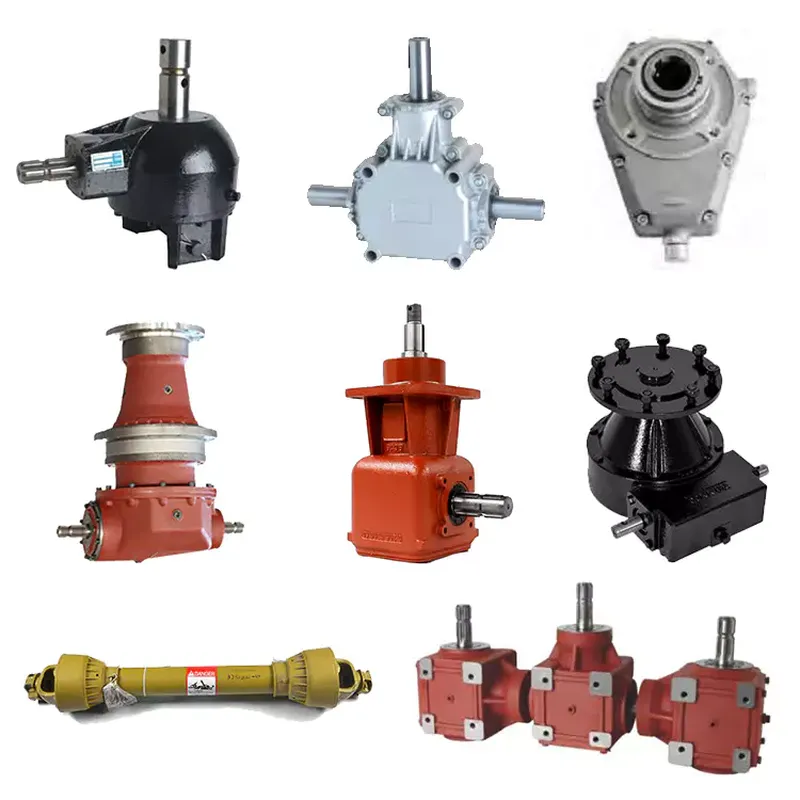
Full Series of Agricultural Gearboxes and One-Stop Accessories
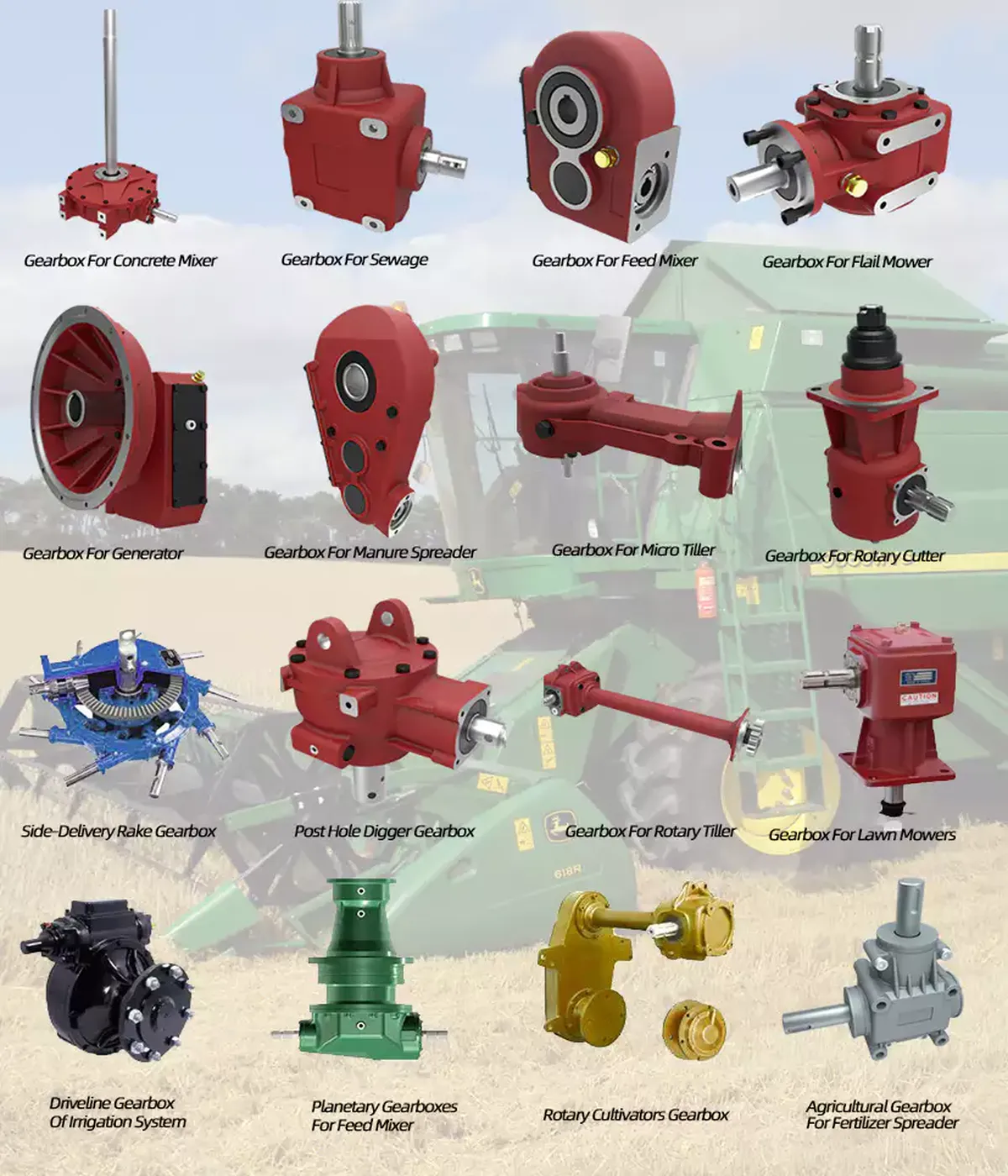
Our lineup covers rotary tiller, mower, and baler gearboxes, all procurable together for complete setups. Accessories from chains to couplings ensure everything fits, sparking interest in bulk orders for efficiency.
This one-stop approach cuts sourcing time, ideal for Argentine importers managing diverse fleets. Series variations include high-torque models for heavy-duty tasks.
Explore options for buying agricultural gearbox series to equip entire operations seamlessly.
Interest builds through customizable kits, including PTO components for quick field repairs. This comprehensive supply chain supports scalable farming.
From basic to advanced units, the series caters to all machinery needs, encouraging upgrades.
Contact and Call to Action
Ready to enhance your subsoiling efficiency? Reach out for quotes on vibrating subsoiler gearboxes tailored to Argentine conditions. Let’s discuss your specific requirements today.
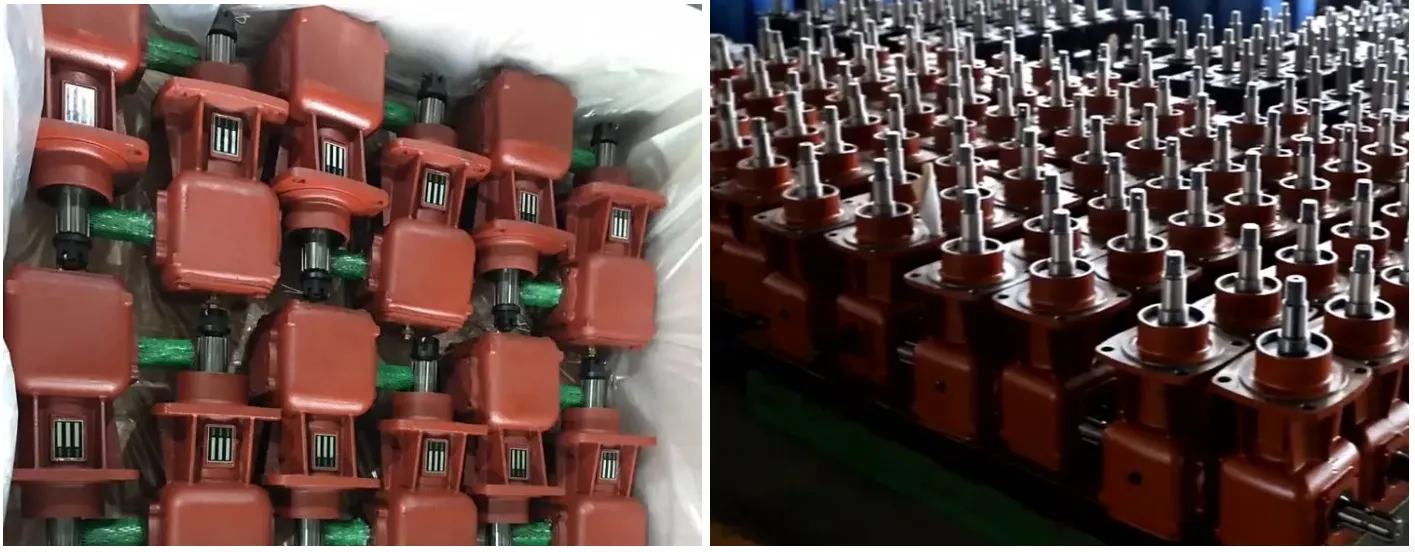
Why Choose Us
Proven track records in tough terrains, with units lasting 20% longer than averages, backed by field data from over 500 installations. Tailored solutions for local soils ensure optimal performance without over-engineering costs.
Commitment to compliance and innovation sets us apart, offering value through reduced downtime and fuel savings. Join satisfied B2B partners who’ve seen ROI in one season.
Working Principle in Detail
Power enters via input shaft, engaging bevel pair for direction change. Reduced speed drives eccentric cam, oscillating tines via connecting rods, fracturing soil with minimal pull.
Lubrication cycles through splash system, cooling under load. Safety clutch disengages on overload, resetting manually. This principle optimizes energy use in variable conditions.
In Argentine apps, it adapts to tractor RPM fluctuations, maintaining frequency. Detailed mechanics include gear mesh with 1.2 module for strength.
Output torque amplifies input by ratio, enabling deep work. Ventilation ports aid cooling in enclosed housings.
Overall, the system balances power and durability for sustained field use.
Key Features and Benefits
- High-torque output for deep penetration in compacted layers, benefiting yield in soy fields.
- Sealed design resists environmental factors, extending intervals between services.
- Modular components for easy upgrades, cutting long-term costs.
Benefits include 15% efficiency gains, crucial for cost-conscious operations. Features like adjustable mounts fit diverse machines.
Low vibration enhances safety, complying with local regs. This positions them as preferred for sustainable ag.
Durability from premium materials offers peace of mind in remote areas.
Installation and Maintenance Guidelines
Mount gearbox to frame using M12 bolts torqued to 80 Nm. Align PTO shaft with input, ensuring spline engagement without force.
Fill with 1.2L EP90 oil, check levels monthly. Inspect seals quarterly for leaks, replace if cracked.
For maintenance, drain oil after 500 hours, flush if contaminated. Grease fittings weekly in dusty conditions.
Test vibration post-install, under 2 mm/s at idle. These steps ensure longevity in Argentine climates.
Guidelines include annual bearing checks, aligning with harvest off-seasons.
Frequently Asked Questions
- How do these gearboxes improve soil health in Argentine farms?
- By enabling precise vibration, they fracture hardpan without mixing layers, enhancing water retention in dry Pampas, leading to 10-15% better crop establishment based on INTA studies.
- What makes them suitable for neighboring countries like Brazil?
- Compliance with INMETRO and high humidity resistance suit Mato Grosso’s red soils, with torque for direct planting, reducing erosion as per EMBRAPA reports.
- Can they handle stony grounds in Patagonia?
- Yes, shock-absorbing clutches protect gears from impacts, tested to 3000 Nm spikes, ensuring reliability in rocky terrains during sheep pasture prep.
- What’s the expected lifespan in intensive use?
- Over 6000 hours with proper maintenance, as evidenced by field logs from Cordoba soy farms operating 2000 hours annually.
- How to integrate with existing tractor setups?
- Standard SAE flanges bolt directly, no adapters needed for most models, simplifying upgrades in mixed fleets across Buenos Aires province.