
The impeller aerator gearbox serves as the critical drivetrain component in paddlewheel aerators used across aquaculture operations. It converts high-speed motor input into the low-speed, high-torque rotation needed to drive multiple impellers, creating strong water currents and surface agitation for optimal dissolved oxygen levels in fish and shrimp ponds. Designed for continuous duty in wet, corrosive environments, these gearboxes deliver consistent performance under heavy radial and axial loads from impeller resistance.
In regions with intensive pond farming, such as Southeast Asia and parts of Latin America, reliable gearboxes prevent downtime during peak stocking seasons when oxygen demand spikes. The design focuses on durability, with sealed bearings and corrosion-resistant materials to withstand constant water exposure and sediment ingress.
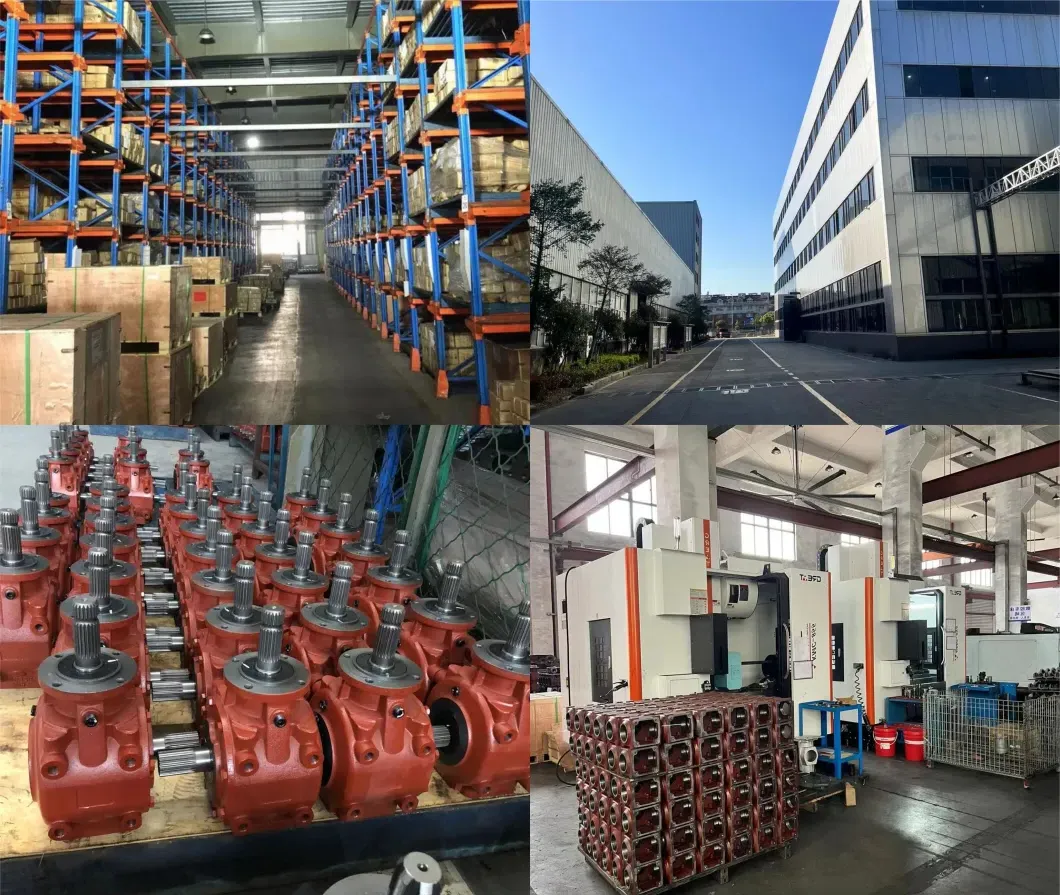
Why Choose Our Impeller Aerator Gearbox Solutions
Our gearboxes stand out due to proven torque handling in real-world aquaculture conditions, extended service intervals, and precise speed reduction that matches impeller dynamics. Operators benefit from reduced energy consumption per unit of oxygenation and fewer replacements compared to generic alternatives. The worm or bevel gear configurations ensure smooth power delivery even when impellers encounter variable water resistance from algae or feed residues.
Engineers who have serviced paddlewheel systems in humid climates note that properly matched gearboxes extend overall aerator life by 40-60% in high-load scenarios. This reliability translates directly to stable pond environments and healthier stock growth.
Technical Specifications Overview – Core Parameters
The following table lists essential engineering parameters for our standard impeller aerator gearboxes suited to 1-5 HP electric motors commonly used in aquaculture paddlewheels.
| पैरामीटर | Value / Range | Notes / Standard |
|---|---|---|
| रेटेड टॉर्क | 180 – 450 Nm | Continuous operation at rated load |
| Peak Torque | 540 – 1350 Nm | Short-term overload capacity |
| Gear Ratio Options | 14:1 to 40:1 | Custom ratios available for specific impeller speeds |
| Input Speed | 1450 – 1750 RPM | Standard electric motor speeds |
| Output Speed | 35 – 120 RPM | Optimized for paddlewheel rotation |
| Input Shaft Diameter | 28 – 38 mm | Keyed or splined interface |
| Output Shaft Diameter | 50 – 65 mm | Double keyway for impeller hub |
| Lubrication Type | Oil bath (VG220 or equivalent) | Synthetic gear oil recommended |
| Oil Capacity | 1.8 – 4.2 liters | Depending on model size |
| Operating Temperature Range | -10°C to +60°C | Extended range versions available |
| IP Protection Rating | आईपी65 | Dust-tight and water-jet resistant |
| आवास सामग्री | Cast iron (HT250) or aluminum alloy | Corrosion-resistant coating standard |
| Gear Material | 20CrMnTi carburized steel | Hardness HRC 58-62 |
| Bearing Type | Tapered roller + deep groove ball | L10 life > 10,000 hours |
| Noise Level | < 75 dB(A) | At full load |
| Weight (approx.) | 22 – 48 kg | Model-dependent |
| Mounting Orientation | Horizontal or vertical output | Flange or foot mount |
| Service Factor | 1.5 – 2.0 | For intermittent heavy loads |
| Thermal Capacity | Up to 3.5 kW continuous | With natural cooling |
| क्षमता | 88 – 94% | Depending on ratio |
Technical Specifications Overview – Advanced Features
Additional parameters ensure compatibility with demanding aquaculture setups where gearboxes face prolonged submersion risks and variable loads from wind or uneven pond bottoms.
| पैरामीटर | Value / Range | Notes / Standard |
|---|---|---|
| Seal Type | Double lip + labyrinth | Prevents water ingress |
| Radial Load Capacity | Up to 12 kN | At output shaft |
| Axial Load Capacity | Up to 6 kN | From impeller thrust |
| Vibration Limit | < 4.5 mm/s RMS | ISO 10816 compliant |
| Backlash | < 0.3° | Precision gearing |
| Material Certification | ISO 6336-5 compliant gears | AGMA 10 quality |
| Paint Finish | Epoxy primer + polyurethane topcoat | C5-M corrosion class |
| Maintenance Interval | Oil change every 2000 hours | Under normal conditions |
| Expected Service Life | > 15,000 hours | With proper maintenance |
| Compatible Motor Power | 0.75 – 5.5 kW | Single or three-phase |
Working Principle and Functional Role in Paddlewheel Aerators
The impeller aerator gearbox receives rotational power from an electric motor mounted above the waterline. Through a series of reduction stages—typically worm gear primary reduction followed by helical or bevel secondary—the input speed drops dramatically while torque increases proportionally. This high-torque, low-speed output drives the horizontal shaft connected to multiple impellers (usually 2-8 blades each).
As the impellers rotate, their angled blades strike the water surface, creating directional flow and breaking the surface tension to entrain atmospheric oxygen. The gearbox must handle cyclic loading from each blade entry and exit, plus occasional surges when debris contacts the paddles. Effective designs incorporate overload protection features such as shear pins or slip clutches to safeguard against sudden jams.
In practice, the gearbox positions the output shaft precisely to maintain impeller submersion depth, ensuring consistent aeration without excessive energy waste. Proper alignment prevents premature bearing wear and maintains efficiency during long runs.
Argentina Extreme Operating Conditions Field Study for Aquaculture Gearboxes
In Argentina, aquaculture focuses primarily on freshwater species such as pacu, tilapia, and emerging shrimp ventures in northern provinces. Buenos Aires province hosts numerous semi-intensive ponds around the Río de la Plata delta, while Entre Ríos and Corrientes along the Paraná River support larger-scale operations with paddlewheel aerators to combat stratification in warm summer months (December-March). Chaco province sees increasing use in inland ponds where high temperatures reduce natural oxygen solubility.
Local conditions demand gearboxes that resist humidity-induced corrosion and handle power fluctuations from rural electrical grids. Gearboxes must operate reliably at ambient temperatures reaching 40°C+, with water containing moderate sediment loads from river-fed systems. Argentine regulations under SENASA (National Service of Agri-Food Health and Quality) require equipment to meet basic safety and environmental standards for aquaculture inputs, aligning with Mercosur norms for electrical safety (IRAM standards similar to IEC). Neighboring Brazil enforces INMETRO certification for motors, influencing cross-border equipment choices, while Uruguay follows similar electrical codes.
Mainstream brands in the region include imported Chinese and Taiwanese paddlewheel units, with gearbox interfaces often following standard flange patterns compatible with 1-3 HP motors. Our gearboxes match these common mounting patterns for seamless retrofits in Argentine ponds.
Competitive Comparison with Market Alternatives
Compared to generic gearboxes from Southeast Asian suppliers, our units feature thicker housing walls (12-15 mm vs 8-10 mm) and higher-grade carburized gears that maintain tooth integrity under sustained 1.8 service factor loads. Many competitors use lower-spec bronze worm wheels that wear faster in abrasive water conditions.
Versus established Taiwanese models, our designs offer comparable thermal ratings but improved sealing to reduce oil contamination risks—a frequent failure mode reported in humid subtropical climates like northern Argentina. (Note: Brand names and models are referenced solely for dimensional and performance comparison; no affiliation or endorsement is implied.)
Compatibility Reference for Replacement and Selection
Our impeller aerator gearboxes serve as drop-in replacements for common paddlewheel models found in Argentine and regional markets. They match output shaft diameters and flange bolt patterns used on many 2-4 impeller units powered by 1.5-3 kW motors. Compatibility extends to designs prevalent in Brazil, Paraguay, and Uruguay for cross-border operations.
Always verify exact shaft length, keyway dimensions, and mounting hole spacing before installation. These references facilitate selection without implying any trademark rights or original equipment endorsement.
Real-World Application Cases in Key Aquaculture Regions
In Corrientes province, Argentina, a 4-ha tilapia pond operator replaced failing imported gearboxes twice yearly due to water ingress. After installing our reinforced-seal model, maintenance intervals extended to 18 months, with stable DO levels above 5 mg/L even during January heatwaves. The operator noted smoother startup and lower amperage draw on the motor.
A commercial shrimp farm in Entre Ríos switched to our higher-ratio gearboxes to achieve stronger circulation in brackish ponds. Oxygen transfer improved noticeably during evening peaks, reducing mortality during molting phases. Technicians appreciated the robust output shaft that withstood occasional root entanglement without damage.
In Buenos Aires province near Chascomús, a cooperative managing multiple semi-intensive fish ponds reported consistent performance across 15 units over two seasons. Gear oil remained clean longer thanks to effective seals, cutting annual lubricant costs by approximately 35% compared to previous setups.
Across the border in southern Brazil (Rio Grande do Sul), similar gearboxes supported intensive pacu production, handling higher stocking densities without thermal overload. Users highlighted quiet operation during night shifts as a welcome benefit.
Signs Indicating Gearbox Replacement Need
Watch for increased operating noise (grinding or knocking), unusual vibration transmitted to the frame, oil leakage around seals, elevated motor temperature, or reduced water flow despite full power. Metallic particles in drain oil signal gear wear, while burnt odor indicates overheating. Prompt replacement prevents cascade failures to motor or impellers.
Related Products and System Integration Advantages
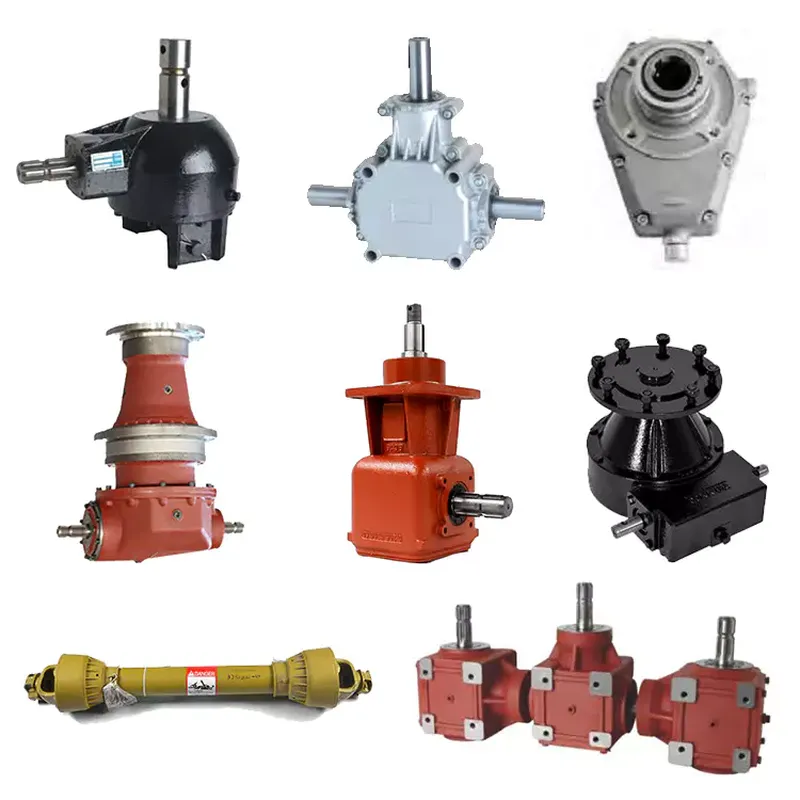
Complement your impeller aerator with compatible PTO-driven transmission shafts featuring safety guards, telescopic sections, and CV joints for mobile pond setups. We supply sprockets, roller chains, belt pulleys, couplings, and hydraulic components for complete drive trains.
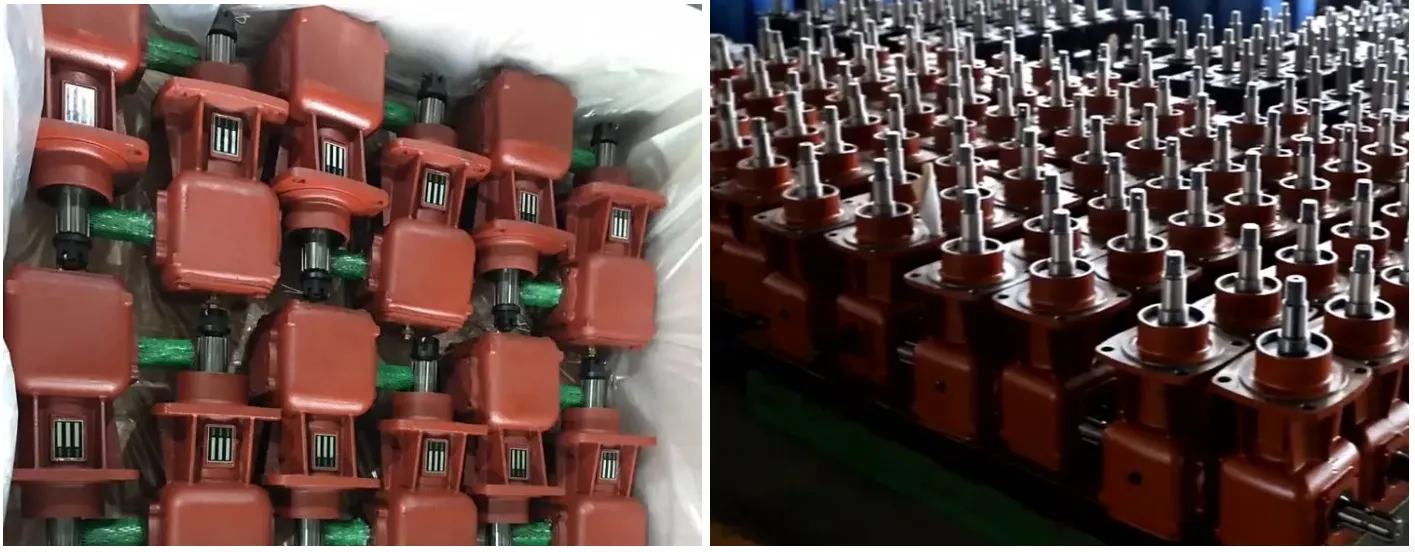
Explore compatible whole-machine options such as floating paddlewheel assemblies or multi-impeller frames pre-fitted with our gearboxes. One-stop sourcing ensures interface compatibility, reducing assembly mismatches and downtime.
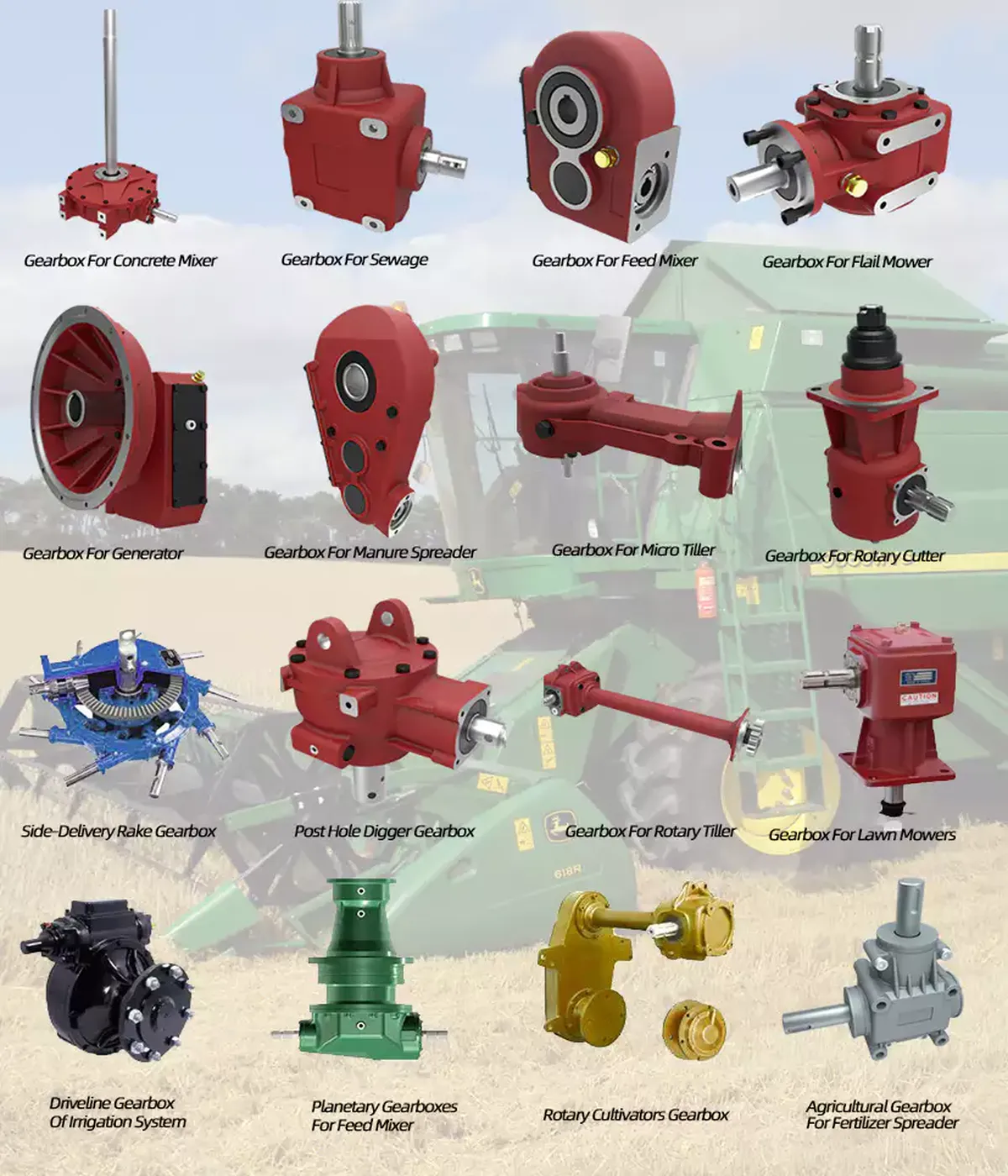
Our full range covers gearboxes for rotary tillers, mowers, and other agricultural implements alongside aquaculture-specific units. Source all transmission and accessory needs from a single supplier to streamline procurement and support.
अक्सर पूछे जाने वाले प्रश्नों
- What motor power range works best with these gearboxes?
Most aquaculture paddlewheels use 1-5 HP (0.75-3.7 kW) motors; our gearboxes handle up to 5.5 kW continuously with appropriate service factor margins for variable pond loads. - How often should gearbox oil be changed?
Under normal continuous operation, change every 2000-3000 hours or annually. Inspect for water contamination or metal particles during seasonal maintenance. - Can these gearboxes operate partially submerged?
IP65 sealing protects against splashing and brief submersion, but avoid prolonged underwater exposure without additional protection. Mount motors and gearboxes above maximum water level. - What impeller counts pair well with these units?
2-6 impellers common for 1-3 HP setups; higher counts (8+) benefit from higher torque models to maintain rotation under increased drag. - Are custom ratios possible for specific pond depths or stocking densities?
Yes, ratios from 12:1 to 50:1 available to optimize peripheral speed and oxygenation efficiency for unique site conditions.
Explore detailed specifications or discuss your pond requirements — reach out to our technical team or visit the main page for more aquaculture transmission solutions.