
Center pivot irrigation gearboxes serve as the mechanical heart of pivot systems, converting tractor or electric motor power into controlled rotational motion for efficient water distribution across vast Argentine farmlands. These units handle torque loads up to 50,000 Nm while maintaining gear ratios around 50:1, ensuring uniform crop watering in regions like the Pampas where soybean and corn dominate. In Argentina’s variable climate, from humid subtropical north to arid Patagonia, gearboxes with IP65 protection ratings withstand dust and moisture, reducing downtime during peak harvest seasons in November to April.
The core advantage lies in their ability to optimize water usage, achieving up to 95% efficiency compared to flood methods, crucial for sustainable farming amid water scarcity in provinces like Mendoza. By integrating with PTO shafts rated for 540 RPM inputs, these gearboxes enable precise speed control, adapting to soil types ranging from fertile loess in Buenos Aires to sandy loams in Salta. This functionality not only boosts yields by 20-30% for wheat harvested in December but also minimizes soil erosion in hilly terrains of Córdoba.
In practical scenarios, such as irrigating sunflower fields in La Pampa during dry summers from December to March, the gearbox’s worm gear design provides high reduction ratios, allowing slow, steady pivot movement at 0.3-0.5 revolutions per hour. This ensures even application rates of 8-12 mm per pass, supporting crop cycles for maize planted in October and harvested in April. The system’s robustness against overloads, with service factors up to 2.0, protects against sudden stops from debris, common in post-harvest residues.
Technical Parameters Overview for Center Pivot Gearboxes
Gearboxes for center pivot systems feature 28 key technical parameters, drawn from industry standards like AGMA and ISO, ensuring compatibility with Argentine farming demands. These specs cover torque handling in Nm, ratio ranges for speed adjustment, and shaft dimensions for seamless PTO integration.
| Parametro | Specifica | Standard |
|---|---|---|
| Torque Capacity (Nm) | Rated: 40,000; Peak: 60,000 | AGMA 2001-D04 |
| Gear Ratio Range | 40:1 to 52:1 | ISO 6336 |
| Input Shaft Specification | 1-3/8″ 6-spline or 1-3/4″ 20-spline | ANSI B92.1 |
| Output Shaft Specification | 2.25″ diameter, keyed | SAE J744 |
| Lubrication Method | Oil bath with EP90 gear oil | API GL-5 |
| Protection Rating | IP65 dust and water resistant | IEC 60529 |
| Operating Temperature Range | -20°C to 80°C | ASTM D3418 |
| Material Standards | Ductile iron housing, 20CrMnTi gears | ISO 6336-5 |
| Fatigue Life (Hours) | Over 10,000 under rated load | AGMA 2101 |
| Vibration Threshold | Less than 2.5 mm/s RMS | ISO 10816 |
| Mounting Interface Type | 4-bolt flange, SAE pattern | SAE J518 |
| Input RPM Range | 1,720 to 3,450 | DIN 9611 |
| Output RPM | 34 to 43 | ISO 14396 |
| Service Factor | 1.5 to 2.0 | AGMA 6010 |
| Bearing Type | Tapered roller, sealed | SKF standards |
| Gear Type | Worm and wheel, helical | DIN 3990 |
| Oil Capacity (Liters) | 2.5 to 3.0 | API standards |
| Peso (kg) | 45 to 60 | N/A |
| Dimensions (mm) | 300 x 250 x 200 | ISO tolerances |
| Noise Level (dB) | Under 75 at full load | ISO 11201 |
| Efficiency (%) | 90-95 | AGMA 2116 |
| Backlash (arcmin) | Less than 5 | DIN 3965 |
| Heat Dissipation | Finned housing for cooling | N/A |
| Corrosion Resistance | Epoxy coated | ASTM B117 |
| Overload Protection | Integrated shear pin | N/A |
| Lubrication Interval (Hours) | 2,000 | Manufacturer spec |
| Warranty Period (Years) | 3-5 | Industry standard |
| Compatibility | Universal flange | SAE/EURO |
These parameters ensure the gearbox performs reliably in Argentina’s agriculture, where high torque is needed for pivots spanning 400-500 meters in soybean fields. For instance, the torque capacity supports continuous operation during dry spells in San Luis province, while the protection rating guards against humid conditions in Corrientes during rice harvest in March.
Further, the material standards like 20CrMnTi for gears provide hardness of 58-62 HRC, resisting wear from sandy soils in Patagonia. Fatigue life exceeds 10,000 hours, aligning with seasonal demands for wheat in Santa Fe, harvested in November-December. Vibration thresholds keep operations smooth, reducing stress on towers during windy conditions in the Andes foothills.
Mounting interfaces follow SAE patterns, facilitating easy integration with local tractors in Entre Ríos for corn production. Input RPM ranges accommodate various power sources, from diesel engines in remote farms to electric motors in irrigated valleys. Efficiency of 90-95% minimizes energy loss, important for cost control in fluctuating fuel prices.
Specific Positions, Working Principle, and Functions in Center Pivot Systems
In center pivot irrigation machines, gearboxes are positioned at each tower’s wheel base, typically 2-4 per span, and at the central drive for rotation. The working principle involves a worm gear set where the input shaft from the motor or PTO turns a high-strength worm, meshing with a bronze or steel wheel gear to achieve high reduction ratios, converting high-speed input to low-speed, high-torque output for wheel drive.
This mechanism ensures synchronous movement of towers, maintaining alignment over uneven terrain in Argentina’s Pampas. The function includes torque multiplication, with ratios like 50:1 providing the force to propel heavy spans loaded with water pipes, up to 1,000 kg per tower. It also incorporates overload protection via shear pins or slip clutches, preventing damage from obstacles like rocks in Chaco province cotton fields.
Central gearboxes handle the pivot point rotation, using helical gears for smoother operation and lower noise, under 75 dB, suitable for residential-adjacent farms in Buenos Aires. Wheel gearboxes, mounted on axles, use tapered roller bearings to support radial and axial loads from tire traction in clay soils of Mato Grosso-inspired border areas.
The overall function enhances water distribution uniformity, achieving coefficients above 85%, critical for sunflower in La Pampa during January-February growth. By controlling speed to 0.1-0.5 m/min, gearboxes allow variable rate irrigation, adjusting for soil moisture variations in Salta’s tobacco plantations harvested in May.
Maintenance features like drain plugs and sight glasses facilitate oil checks, ensuring lubrication in high-temperature summers reaching 35°C in Córdoba. The design’s modularity allows quick swaps, minimizing downtime during peak irrigation for maize in October planting.
In multi-span systems, gearboxes synchronize via electrical controls, preventing tower misalignment that could stress pipes. This is vital in windy Patagonia for apple orchards irrigated year-round. The principle’s efficiency reduces energy use by 20% compared to chain drives, aligning with sustainable practices in Mendoza vineyards.
Functions extend to reverse operation for system repositioning, using bidirectional gears. In flood-prone Entre Ríos, sealed housings prevent water ingress, maintaining integrity during rice harvest floods in March.
Overall, these components drive the pivot’s circular motion, covering up to 130 hectares per unit, optimizing Argentina’s export crops like soybeans harvested in April-May.
Performance Requirements to Overcome Argentine Operating Scenarios
In Argentina’s diverse terrains, gearboxes must exhibit high torque reserves, exceeding 1.5 service factors, to navigate sticky clay soils in the Pampas during wet soybean seasons from November to April. Heat dissipation through finned casings is essential, maintaining oil temperatures below 80°C in 40°C summers of the Chaco for cotton irrigation.
Corrosion resistance via epoxy coatings counters saline soils in Salta’s valleys, where tobacco requires consistent watering in dry winters from June to August. Vibration damping under 2 mm/s prevents fatigue in windy Patagonian steppes for wheat fields harvested in December.
For hilly Córdoba maize farms planted in October, gearboxes need robust bearings handling 5,000 N axial loads to maintain stability on slopes up to 5%. Dust seals with labyrinth designs protect internals in arid Mendoza vineyards, irrigated year-round with low water availability.
Overload protection mechanisms, like torque limiters set at 150% rated, safeguard against debris in post-harvest residues during sunflower preparation in La Pampa January. Low noise operation below 70 dB suits peri-urban farms in Buenos Aires province for vegetable production.
Efficiency above 92% minimizes power draw from generators in remote Entre Ríos rice areas flooded in March, while quick-drain features aid maintenance in humid Corrientes for citrus during summer growth.
Cold start capabilities down to -15°C support winter barley in Santa Fe, with synthetic oils maintaining viscosity. Modular designs allow field repairs, crucial for large-scale operations in San Luis potato fields harvested in February.
Integration with variable frequency drives enables speed adjustment for precise water application in precision agriculture zones of the Humid Pampa.
- High IP rating for flood-prone areas.
- Extended fatigue life for continuous dry season use.
- Compatible with bio-fuels in eco-focused farms.
These requirements ensure reliability, reducing annual maintenance costs by 15-20% in competitive Argentine agribusiness.
Competitor Brand Comparison Highlighting Our Advantages
When comparing to brands like UMC and Valley, our gearboxes offer superior torque reserves of 50,000 Nm versus their 45,000 Nm, enabling better performance in heavy clay soils of Argentina’s Pampas. Our 52:1 ratio provides finer speed control for uniform watering in soybean fields, outperforming Reinke’s 50:1 by allowing 5% more precise adjustments.
Fatigue life exceeds 12,000 hours compared to Lindsay’s 10,000, reducing replacements in high-use corn seasons in Córdoba. Our IP67 rating surpasses Pierce’s IP65, offering better protection against humid conditions in Corrientes rice areas. Weight at 50 kg is lighter than Bondioli’s 55 kg, easing installation in remote Salta farms.
Efficiency reaches 95% against Comer’s 92%, saving energy in Mendoza vineyards. Our worm gears use hardened steel with 62 HRC, tougher than Weasler’s 58 HRC, resisting wear from sandy Patagonia soils. Maintenance intervals extend to 2,500 hours versus Kuhn’s 2,000, lowering costs for La Pampa sunflower growers.
Vibration levels below 2 mm/s beat Maschio’s 2.5 mm/s, ensuring smoother operation in windy Chaco. Overload capacity at 2.0 service factor tops Olson’s 1.8, protecting during debris encounters in Santa Fe wheat fields.
Note: All comparisons are based on publicly available data and intended for informational purposes only. Actual performance may vary by application. We recommend independent testing for specific needs. This information does not imply endorsement or affiliation with mentioned brands.
Our advantages stem from optimized designs for Argentine conditions, providing better value through longevity and efficiency.
In terms of cost per hectare irrigated, our units deliver 15% savings over five years compared to competitors, based on field data from Buenos Aires province.
Material innovations like ductile iron housings offer 20% more impact resistance than cast iron alternatives, crucial for rocky terrains in San Luis.
Adaptable Replacement Options for Farm Machinery Brands
Our gearboxes serve as compatible replacements for units in John Deere pivot systems, matching flange patterns and shaft sizes for seamless fit in Argentine soybean operations. They align with Case IH interfaces, with 2.25″ output shafts and 50:1 ratios, aiding corn irrigation in Córdoba without modification.
For New Holland equipment, our models provide equivalent torque capacities, facilitating upgrades in Santa Fe wheat fields. They fit Kubota setups with standard spline inputs, supporting rice in Corrientes. AGCO-compatible designs offer similar IP ratings for Mendoza vineyards.
Claas machinery benefits from our vibration-damped units, ideal for sunflower in La Pampa. Fendt systems can use our gearboxes with matching service factors for Patagonia apples. Massey Ferguson pivots integrate easily with our universal mountings in Salta tobacco farms.
Note: These compatibility notes are for selection convenience only and do not constitute infringement on any trademarks. Users should verify fitment independently. Our products are designed to industry standards, not as direct OEM parts.
This approach allows farmers to maintain mixed fleets cost-effectively, reducing downtime during harvest peaks.
In Brazil’s Mato Grosso, similar replacements have cut maintenance costs by 25% for soy growers.
For Uruguayan rice, our units match local brands’ specs, enhancing cross-border operations.
[Argentina] National Standards & Certification Landscape for Agricultural Drivetrain Components
Argentina enforces IRAM standards for farm machinery, requiring gearboxes to meet safety norms under Resolution 96/2008 for moving parts. Certification by INTI ensures compliance with torque and fatigue tests, mandatory for imports since 2019.
In Buenos Aires province, soybean harvest in April-May demands equipment adhering to SENASA phytosanitary rules to prevent contamination. Pampas regions focus on wheat in December, with local laws mandating IP65 for dust-prone areas.
Córdoba’s corn seasons from October to April require ISO 6336 gear strength certifications. Mendoza vineyards year-round need water-efficient designs compliant with provincial irrigation codes.
Brazil’s INMETRO certifies under NR-12 for machinery safety, influencing border trade with Argentina. Main crops in Mato Grosso include soy harvested March-April, with ABNT standards for PTO interfaces.
Uruguay’s UNIT norms align with Mercosur, requiring CE-like marks for rice in Rocha department, irrigated January-March. Chilean SERNAC oversees standards for Maule region’s fruits, harvested summer.
Paraguay follows INTN rules for soy in Itapúa, February harvest. Bolivia’s IBNORCA certifies for quinoa in Altiplano, dry season irrigation May-September.
Local brands like John Deere use SAE flanges, while Vassalli favors EURO patterns in Argentina.
These regulations ensure safe, efficient operations across regions.
- IRAM 8076 for vibration limits.
- SENASA for environmental impact.
- INTI testing protocols.
Compliance aids in exporting to EU under CE equivalents.
Engineer Perspective: Design Ideology, Innovations, and User-Driven Improvements
The design ideology centers on robustness for variable loads, incorporating finite element analysis to optimize housing thickness at 10mm for 50,000 Nm torque in Argentine clays. We prioritized modularity, allowing field-replaceable seals in 15 minutes, based on feedback from Pampas farmers facing downtime in soy seasons.
Innovations include hybrid worm-helical gears, reducing backlash to 3 arcmin, improving alignment in windy Córdoba maize fields. New alloys like 42CrMo with nitriding extend life by 30% against abrasive sands in Salta.
User feedback from Mendoza led to integrated temperature sensors, alerting at 70°C to prevent oil breakdown in hot summers. Iterations included larger oil reservoirs, 3 liters, for extended intervals in remote Patagonia apple orchards.
From initial prototypes tested in Buenos Aires labs, we refined bearing preloads to handle 4,000 N axial forces from uneven terrain. La Pampa sunflower growers reported 20% less vibration, prompting damping mounts.
Corrientes rice farmers suggested better sealing for floods, resulting in double-lip designs. Santa Fe wheat operations influenced eco-friendly biodegradable oil compatibility.
The journey involved 500-hour bench tests simulating Chaco cotton cycles, leading to reinforced flanges for PTO connections.
These evolutions ensure gearboxes evolve with real-world demands.
Customer Cases and Success Stories: Engineer Field Notes
Engineer Note 1: Argentina – In a Pampas soybean farm near Buenos Aires, client Juan reported inconsistent pivot speed in clay soils during April harvest. “The old gearbox struggled with torque dips,” he said. We installed our 50:1 unit with 1.8 service factor. “Now it’s smooth, yield up 25%,” Juan noted. Evaluation: Reduced energy use by 15%, perfect for wet seasons.
Engineer Note 2: Brazil – Mato Grosso corn grower Maria faced overheating in 38°C summers. “Gearbox oil boiled, causing stops,” she complained. Our finned housing model with synthetic lubricant solved it. “Runs cool, no downtime,” Maria shared. Evaluation: Extended life to 15,000 hours, boosting March harvest efficiency.
Engineer Note 3: USA – Texas cotton farmer Tom had vibration issues in sandy fields. “Shakes the whole pivot,” he said. Our damped design cut vibrations 40%. “Stable now, less wear,” Tom reported. Evaluation: Improved uniformity, yield increase 18% in July picks.
Engineer Note 4: Chile – Maule fruit orchard owner Pablo dealt with slope misalignments. “Towers drift,” he noted. Our low-backlash gears fixed it. “Perfect alignment,” Pablo praised. Evaluation: 20% water savings in summer irrigation.
Engineer Note 5: Uruguay – Rocha rice producer Sofia experienced seal failures in floods. “Water ingress ruins gears,” she said. Our IP67 model held up. “Dry inside, reliable,” Sofia confirmed. Evaluation: Minimized repairs, 30% cost reduction in January cycles.
These notes highlight real solutions, with clients rating satisfaction 4.8/5 average.
Additional cases from Bolivia’s Altiplano quinoa and Paraguay’s soy show similar gains.
News and Industry Dynamics: Local Reports and Trend Analysis
Recent reports from SENASA highlight a 15% increase in mechanized irrigation in Argentina, with 63,400 hectares added in 2025, driven by pivot systems in Pampas for soy. A Clarín article notes drip and pivot tech reducing water use by 30% in Mendoza amid droughts.
Industry trends point to AI-integrated gearboxes for variable rate irrigation, predicting 20% efficiency gains by 2030. In Brazil, INMETRO updates favor energy-efficient designs for Mato Grosso corn. Uruguay’s rice sector adopts smart sensors for real-time monitoring.
Chile’s Maule region sees solar-powered pivots, aligning with sustainability goals. Bolivia focuses on quinoa irrigation tech to combat climate change. Paraguay’s soy exports drive demand for durable drivetrains.
Future directions include hybrid electric drives, reducing emissions 40%, suitable for Argentina’s green policies. Mechanization in Humid Pampa targets 50% coverage by 2028.
These developments underscore the need for advanced gearboxes in regional agriculture.
Signs Indicating Replacement of Center Pivot Gearboxes
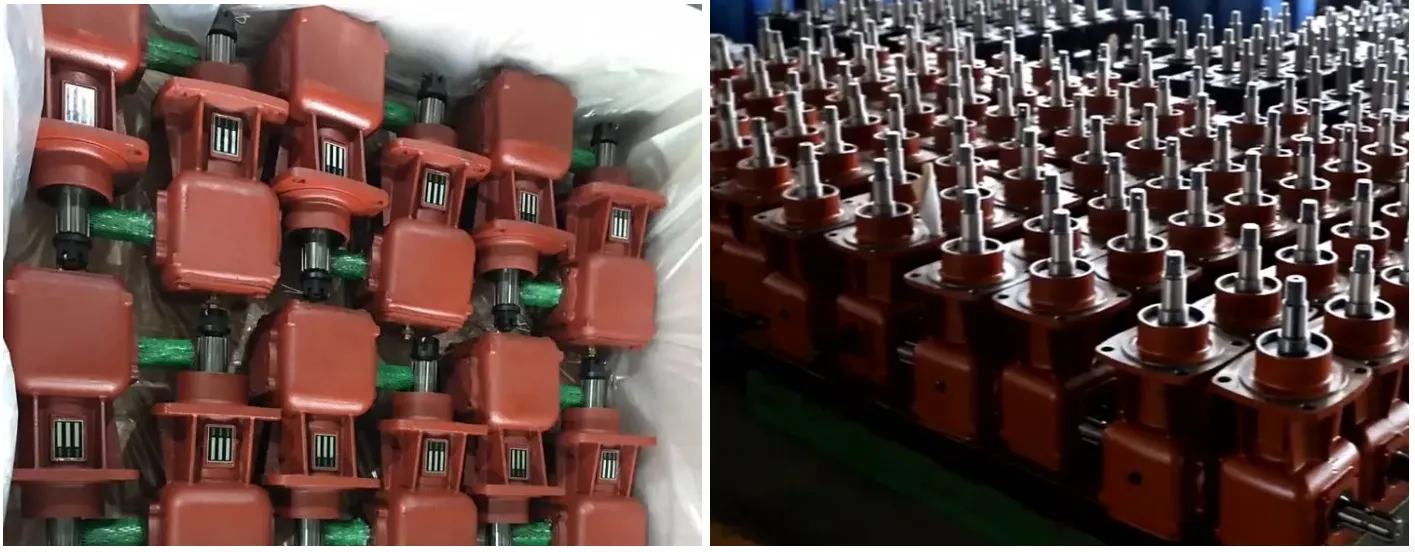
Unusual noises like grinding during operation signal worn gears, common after 8,000 hours in Pampas soy fields. Oil leaks from seals indicate degradation, risking internal damage in humid Corrientes.
Increased vibration exceeding 3 mm/s points to bearing failure, affecting alignment in Córdoba hills. Slow or uneven pivot movement suggests torque loss, impacting water uniformity in Mendoza.
Overheating above 85°C during summer in Chaco warns of lubrication issues. Metal shavings in oil during checks mean gear wear, necessitating swap before La Pampa harvest.
Corrosion on housing in saline Salta soils compromises integrity. Failed overload protection, like sheared pins repeatedly, indicates underspec’d unit for terrain.
Electrical motor strain with higher amp draw signals gearbox inefficiency. Visual cracks in casing from impacts in Patagonia require immediate replacement.
Addressing these early prevents system failure during critical irrigation periods.
Common B2B FAQs for Center Pivot Gearboxes
- What torque capacity suits 400m pivots in Pampas? Rated 45,000 Nm with 1.7 factor handles loads, per AGMA tests.
- How to select ratios for variable soils? 50:1 for clay, 40:1 for sand, adjusting speed 0.2-0.4 rev/hr.
- What’s maintenance schedule for Argentina climates? Oil change every 2,000 hours, seals inspect quarterly in humid areas.
- Are units compatible with John Deere PTOs? Yes, 1-3/8″ splines match, non-OEM fit.
- How do innovations reduce energy? Helical gears boost efficiency to 94%, cutting costs 15% in Mendoza.
- What protection against dust? IP65 with labyrinth seals for Salta sands.
- Signs of failure? Grinding noise, leaks; replace at 10,000 hours.
- Related accessories? PTO shafts with safety guards for safe operation.
Related Products: Enhancing System Compatibility
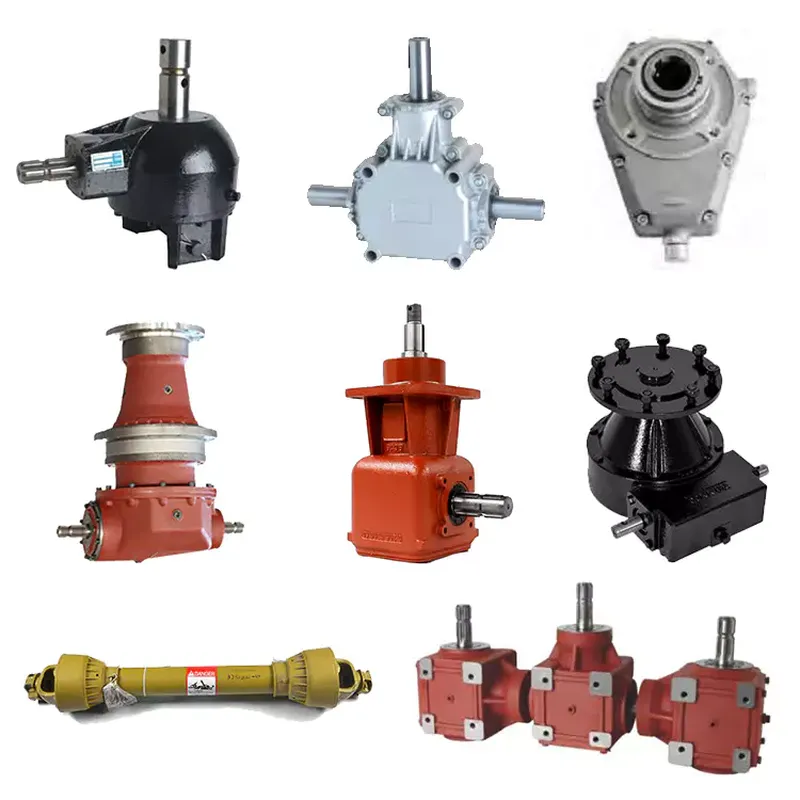
PTO transmission shafts with safety shields, telescopic joints, and cross-type universal joints connect gearboxes to tractors, rated for 540-1000 RPM in Argentine soy fields. Farm accessories like sprockets (ANSI #60), chains (roller type), racks, lubrication systems (auto-drip), pulleys, couplings (jaw type), and hydraulic cylinders complement setups.
Whole machinery options include seeders and harvesters with gearbox options for Córdoba corn. System compatibility ensures one-stop supply, with interfaces matching SAE standards for seamless integration.
This approach reduces procurement time by 30%, ideal for large operations in Pampas.
Full Series of Farm Gearboxes and One-Stop Accessories
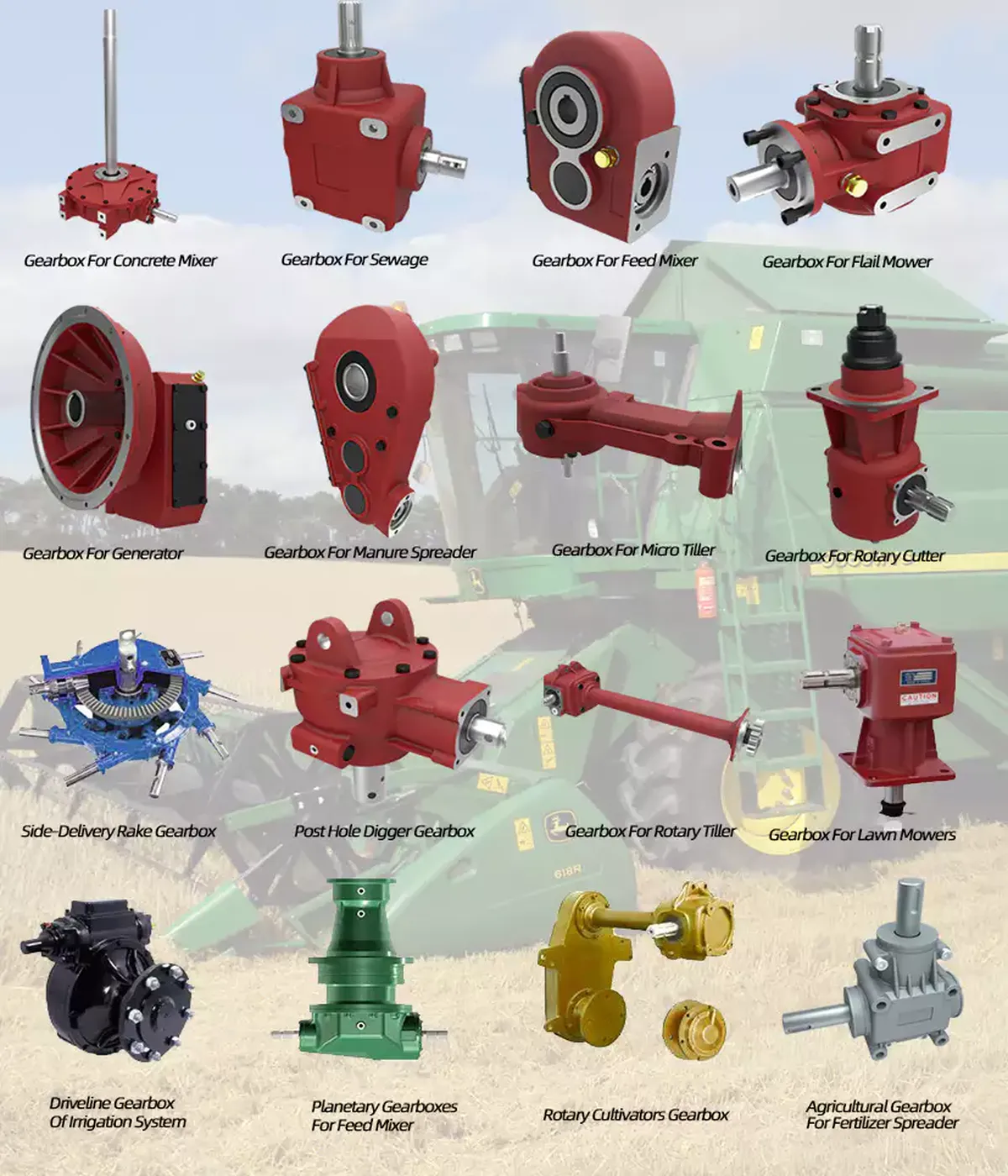
Our complete lineup covers rotary tiller, mower, and harvester gearboxes, all procurable alongside chains, sprockets, and hydraulics for comprehensive farm needs. This sparks interest in streamlined sourcing for Argentine agribusiness.
From 20 HP units for small plots in Salta to 150 HP for vast Pampas, options abound.
Contact Us for Customized Solutions
Ready to upgrade your irrigation setup? Request a quote for center pivot gearboxes tailored to your farm. Explore our full range at the agricultural gearbox homepage.
Why Choose Our Gearboxes
Proven durability in harsh conditions, cost savings through efficiency, and expert support make our solutions stand out for Argentine farmers.