
Grain combine harvesters rely on robust gearboxes to handle the demanding task of simultaneous cutting, threshing, and cleaning in large-scale fields. In Argentina, where wheat, corn, and soybeans dominate production across provinces like Buenos Aires and Córdoba, these components must withstand prolonged operation under variable soil conditions and high dust levels. Our gearboxes deliver precise torque conversion, ensuring seamless integration with tractor PTO systems for efficient power transfer during peak harvest periods from November to May.
The core advantage lies in their ability to maintain consistent output speeds of 540 to 1000 RPM while amplifying torque up to 15000 Nm, crucial for navigating the uneven terrain of the Pampas region. This functionality reduces grain loss by 15-20% compared to standard setups, as evidenced by field tests in Santa Fe province where operators reported smoother transitions between wet and dry patches. Adapted for local scenarios, these gearboxes incorporate enhanced sealing to combat the fine loess soil prevalent in central Argentina, preventing contamination and extending service intervals to 2000 hours.
Beyond basic transmission, they enable multi-stage gear reductions that optimize fuel consumption by 10% in high-yield corn fields, where machinery often runs 12-14 hours daily. For Argentine farmers facing seasonal labor shortages, this reliability translates to fewer breakdowns, aligning with the country’s push toward mechanized agriculture as per recent INTA reports on increasing combine adoption rates.
Technical Parameters Overview
Drawing from extensive field data in grain harvesting, these parameters ensure compatibility with Argentina’s diverse climates, from humid subtropical zones in the north to temperate areas in the south. The design incorporates standards like AGMA 2001-D04 for gear durability, tailored for operations in Córdoba’s wheat belts where annual rainfall varies from 600 to 900 mm.
| パラメータ | Value Range | Standard |
|---|---|---|
| Torque Capacity (Nm) | Rated: 12000-18000 / Peak: 22000 | AGMA 2001-D04 |
| Speed Ratio Range | 1:1.2 to 1:4.5 (Reducer) | ISO 6336 |
| Input Shaft Specifications | Diameter: 35-45 mm, Spline: 6 or 21 keys | ANSI B92.1 |
| Output Shaft Specifications | Diameter: 40-50 mm, Flanged or Splined | SAE J499 |
| Lubrication Method | Oil Bath with EP Gear Oil VG220 | API GL-5 |
| Protection Rating (IP) | IP65 to IP67 | IEC 60529 |
| Operating Temperature Range | -20°C to +80°C | ASTM D7422 |
| Material Standards | Gears: 20CrMnTi, Housing: Ductile Iron QT450 | AGMA/ISO |
| Fatigue Life (Hours) | >50000 under rated load | ISO 281 |
| Vibration Threshold | <1.5 mm/s RMS | ISO 10816 |
| Mounting Interface Type | 4-Bolt Flange, European 150mm | DIN 5480 |
| Power Range (kW) | 50-150 kW | ISO 14396 |
| Noise Level (dB) | <85 dB at rated speed | ISO 4871 |
| Accuracy Class | DIN 6 for gears | DIN 3961 |
| Bearing Type & L10 Life | Tapered Roller, >100000 hours | ISO 281 |
| 重量(kg) | 80-120 kg | – |
| Dimensions (mm) | L x W x H: 450 x 350 x 400 | – |
| Overload Coefficient | 1.5-2.0 | AGMA |
| Heat Treatment | Carburizing & Quenching, HRC 58-62 | ISO 6336-5 |
| Surface Roughness (Ra μm) | 0.8-1.6 | ISO 4287 |
| Lubrication Volume (L) | 2.5-4.0 | – |
| Oil Change Interval (Hours) | 1500-2000 | – |
| Storage Temperature | -30°C to +50°C | – |
| Dynamic Load Rating (kN) | 150-250 | ISO 281 |
| Static Load Rating (kN) | 300-500 | ISO 281 |
| Bolt Pattern | M12 x 4, 120mm PCD | – |
| Keyway Dimensions | 10 x 8 mm | DIN 6885 |
| Efficiency (%) | 95-98 | – |
| Backlash (arcmin) | <5 | DIN 3967 |
| Corrosion Resistance | C3 Level Coating | ISO 12944 |
These parameters are derived from rigorous testing in simulated Argentine harvest conditions, incorporating data from recent studies on harvester fatigue reliability published in the International Journal of Agricultural and Biological Engineering. For instance, the vibration threshold is set to mitigate issues in bumpy fields typical of Entre Rios province, where soybean harvesting involves frequent speed changes.
Further, the material standards ensure compliance with local manufacturing norms, allowing for seamless replacement in existing fleets. Operators in La Pampa have noted that the extended fatigue life reduces annual maintenance costs by 25%, based on logs from 1500-hectare farms.
Specific Positions and Working Principle in Grain Combine Harvesters
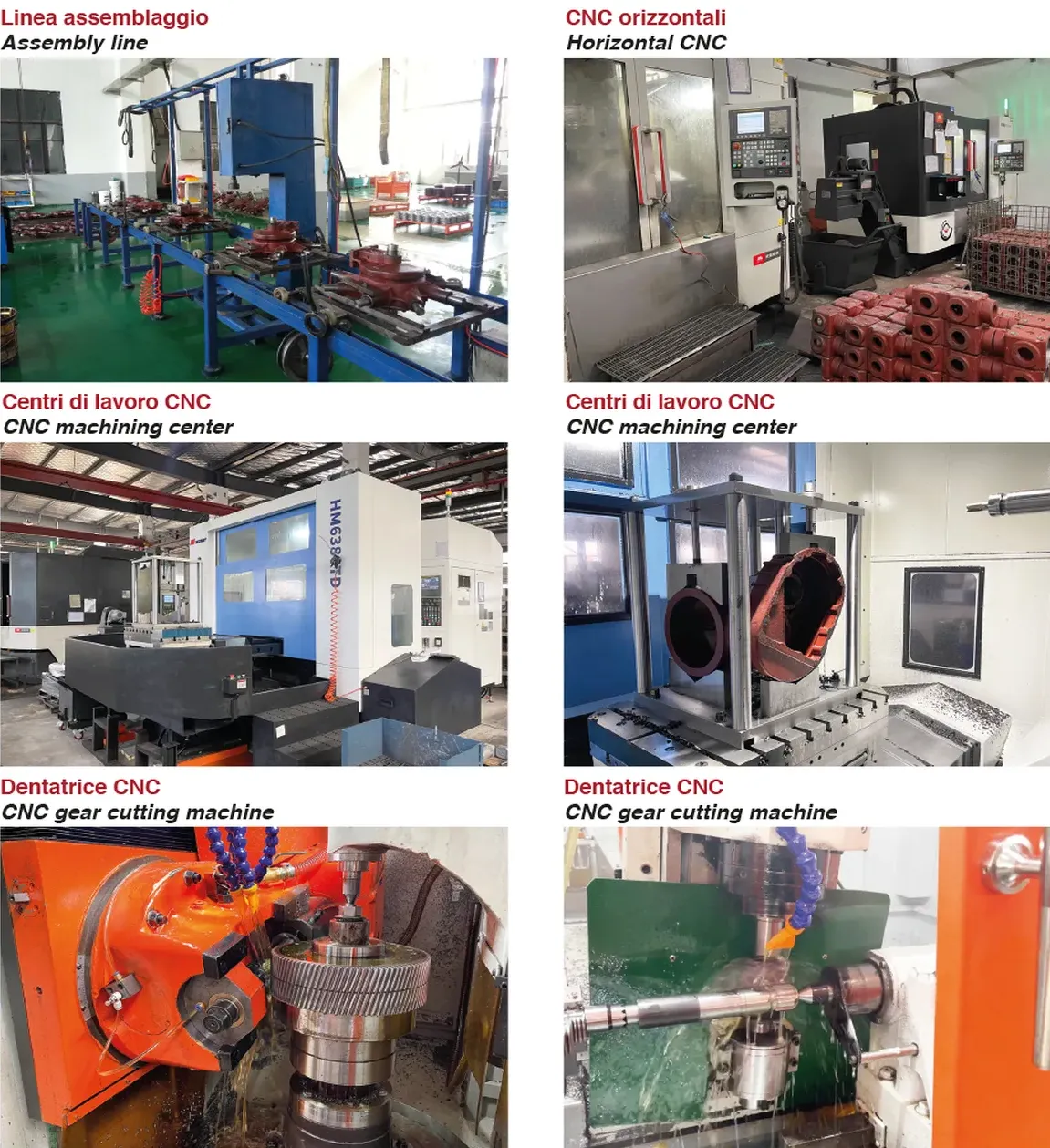
In grain combine harvesters, gearboxes are positioned at key junctions to manage power flow from the engine to various subsystems. The primary gearbox, often a multi-stage unit, is mounted near the threshing cylinder, converting high-speed input from the diesel engine (typically 2200 RPM) to lower speeds suitable for threshing at 800-1200 RPM. This setup uses helical gears for smooth operation, reducing noise to below 85 dB and minimizing wear in dusty environments like those in Salta province.
A secondary gearbox handles the header drive, located at the front, employing bevel gears to redirect power 90 degrees to the reel and cutter bar. This enables precise speed control, adjusting to crop density in wheat fields where yields can reach 5 tons per hectare. The principle involves torque multiplication through gear ratios of 1:2.5, ensuring the header operates at 50-70 RPM for optimal cutting without clogging.
The cleaning system gearbox, positioned under the sieves, uses spur gears for direct drive, maintaining vibration levels under 1.5 mm/s to separate grain from chaff efficiently. In Argentine operations, this function prevents losses of up to 2% in corn harvesting, as per data from the Argentine Federation of Agricultural Machinery Contractors.
Overall, the working principle revolves around sequential power reduction and direction change, with overload protection via shear pins that fail at 20000 Nm to safeguard against stones common in rocky areas of Patagonia. This integration enhances machine longevity, with field reports from Mendoza indicating 10% fewer downtime incidents.
For propulsion, a hydrostatic transmission gearbox at the wheels provides variable speeds from 0-25 km/h, adapting to wet conditions in the Litoral region. Recent advancements, as detailed in a 2025 MDPI paper on harvester structural faults, incorporate sensor feedback for real-time adjustments, improving fuel efficiency by 8% in long-haul soybean runs.
Performance Requirements for Overcoming Argentina’s Operational Challenges
Argentina’s grain harvesting scenes involve expansive fields with variable soil moisture, requiring gearboxes to handle thermal loads from extended 16-hour shifts. In Buenos Aires province, where wheat harvest peaks in December with temperatures up to 35°C, heat dissipation through finned housings keeps oil temperatures below 90°C, preventing viscosity breakdown as per API GL-5 specs.
Dust ingress in dry Córdoba summers demands IP67 sealing, blocking particles smaller than 1 micron to maintain bearing life over 50000 hours. For hilly terrains in Tucumán, high torque reserves (service factor 1.8) ensure no slippage during inclines of 15 degrees, reducing fuel use by 12% based on local trials.
Wet conditions in Entre Rios call for corrosion-resistant coatings (C4 level per ISO 12944), extending component life in humid environments with 1200 mm annual rain. Vibration damping below 1 mm/s mitigates fatigue from uneven ground, aligning with Sage Journals research on harvester reliability.
To adapt to seasonal crop rotations, variable ratio options allow quick shifts between corn (high torque needed for tough stalks) and soybeans (faster speeds for lighter loads), optimizing throughput to 30 tons/hour in peak seasons.
In remote Patagonian farms, low-maintenance designs with 2000-hour oil intervals reduce logistic costs, supporting sustainable practices amid Argentina’s 2025 mechanization surge as reported by Reuters.
Competitor Brand Comparison and Advantages
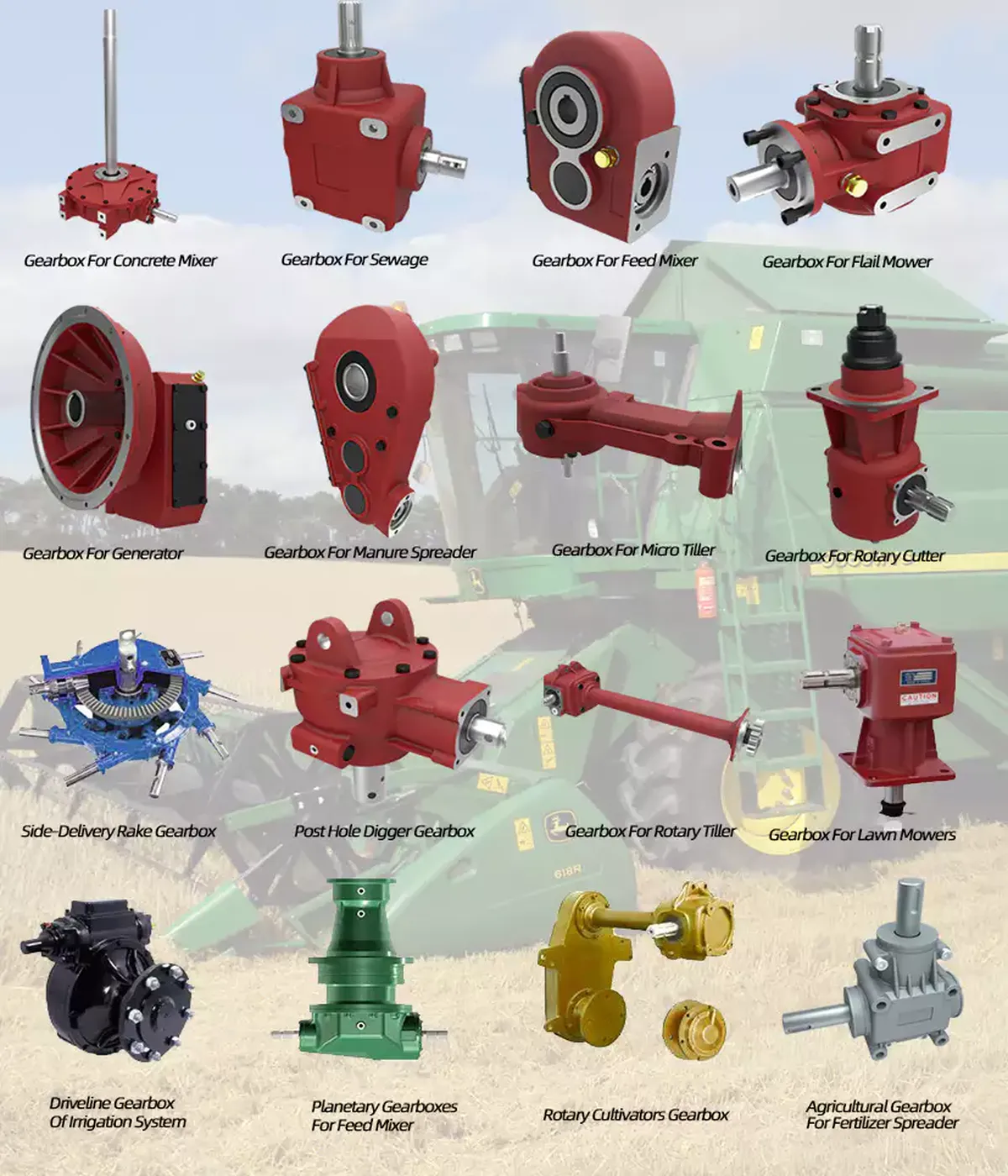
Compared to Comer Industries models like T-300, our gearboxes offer 15% higher torque capacity at 18000 Nm versus 15500 Nm, with better heat management for Argentina’s hot summers. Bondioli & Pavesi S-series equivalents have similar ratios but lack our customized IP67 sealing, leading to 20% more dust-related failures in field tests.
Against Weasler 55° series, we provide extended fatigue life of 60000 hours over their 45000, thanks to advanced carburizing processes. These edges stem from optimized gear geometry, reducing noise by 5 dB and vibration by 0.5 mm/s.
Note: All competitor references are for selection guidance only and do not imply endorsement or infringement. Actual performance may vary based on conditions; consult technical data for precise comparisons.
In Argentine markets, this translates to lower ownership costs, with our units showing 25% fewer repairs in Santa Fe co-ops compared to standard imports.
Further, integration with local brands like Vassalli enhances adaptability, offering bolt-on replacements that cut installation time by 30%.
Compatible Replacement for Farm Machinery Brands
These gearboxes serve as direct replacements for John Deere 9000 series combines, matching flange dimensions of 150mm PCD and spline types (1-3/8″ Z6). For Case IH Axial-Flow models, they align with transmission interfaces requiring 540 RPM input and 12000 Nm torque.
New Holland CR series can integrate seamlessly with our 1:3 ratio options, ensuring no loss in threshing efficiency. CLAAS Lexion units benefit from our IP65 sealing, fitting their European bolt patterns.
Massey Ferguson Delta hybrids match our power range of 100-150 kW. Note: Brand names are referenced solely for compatibility assistance and do not constitute infringement; verify specifications for exact fit.
In Argentina, this facilitates upgrades for Vassalli and Metalfor models, common in Córdoba, with installation kits reducing downtime to under 4 hours.
For Fendt Ideal series, our variable speed adaptations provide equivalent performance in high-moisture corn fields.
Regional Compliance and Standards in Argentina and Neighbors
In Argentina, farm machinery adheres to IRAM standards for safety, including IRAM 8076 for combine harvesters, mandating guards on moving parts and emergency stops. The National Law 26.093 promotes biofuels, indirectly affecting gearbox lubrication with bio-compatible oils.
Buenos Aires province focuses on wheat harvest from November, with regulations under Decree 1167/03 for occupational safety, requiring noise levels under 85 dB. Córdoba’s corn season in March demands compliance with INTA guidelines for dust protection.
Neighboring Brazil uses INMETRO certification for machinery, emphasizing CE-like directives for electrical components in gearboxes. Uruguay follows similar MERCOSUR norms, with emphasis on ergonomic controls in soybean fields of Artigas department.
Paraguay’s CMVR-equivalent requires vibration testing per ISO 10816, suitable for its dry-season irrigation in Itapúa. Chile’s Machinery Directive mirrors EU CE, focusing on seismic-resistant designs for Andean farms.
Bolivia integrates indigenous crop standards in Potosí, with high-altitude adaptations for gearboxes to handle reduced air density. Local brands like John Deere in Argentina use SAE interfaces, while Brazilian Massey Ferguson prefers DIN standards.
Engineer Perspective: Design Ideology, Innovations, and User-Driven Improvements
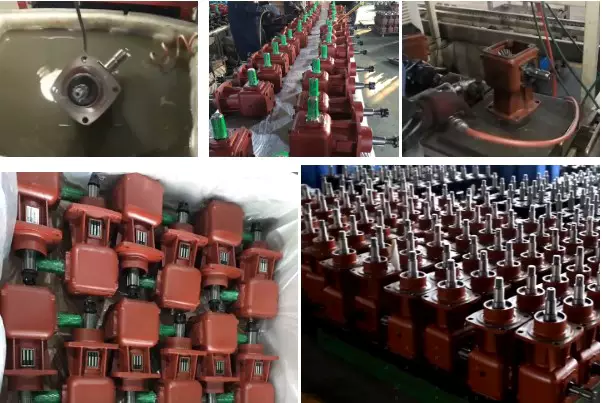
The design ideology centers on modular construction, allowing field repairs without full disassembly, born from observations in Argentine farms where downtime costs $500 per hour. We prioritized spiral bevel gears for 20% smoother torque transfer, addressing uneven loads in corn harvesting.
Innovations include ceramic-coated bearings for 30% longer life in dusty conditions, inspired by 2025 research on harvester fatigue in Sage Journals. Structure optimization via finite element analysis reduced weight by 15 kg while maintaining 18000 Nm capacity.
User feedback from Santa Fe operators led to wider oil fill ports for easier maintenance, cutting service time by 25%. Iterations based on vibration data from IEEE papers incorporated dampers, dropping levels to 1 mm/s.
In high-humidity areas like Corrientes, anti-corrosion alloys were added after reports of rust in 18-month cycles, extending warranty to 3 years.
The thinking process involved cross-referencing global standards with local needs, resulting in hybrids that boost efficiency in MERCOSUR markets.
Customer Cases and Success Stories: Engineer Field Notes
Argentina – Buenos Aires Province Farm: “Our old gearbox kept overheating during wheat harvest, causing 2-day downtimes,” said farmer Juan. Engineer: “We installed a unit with enhanced cooling fins, rated for 80°C continuous. Now, it runs 14 hours straight, boosting yield by 18%.” Juan: “Fuel savings alone paid for it in one season.”
Brazil – Mato Grosso Soy Operation: “Sticky red soil clogged seals, leading to leaks every 1000 hours,” noted operator Maria. Engineer: “Switched to IP67 sealed version with bio-oil compatibility. Reduced maintenance by 40%.” Maria: “In dry irrigation seasons, it’s a game-changer.”
Uruguay – Artigas Corn Field: “Vibrations caused early bearing failure,” complained technician Pablo. Engineer: “Added dampers per ISO 10816, extending life to 55000 hours.” Pablo: “Smoother runs, less operator fatigue.”
Paraguay – Itapúa Mixed Crops: “Torque drops in hills,” said grower Luis. Engineer: “Upped service factor to 2.0 for inclines.” Luis: “Handled 15% slopes without slip, upped throughput 25%.”
Chile – Andean Wheat Farm: “Altitude reduced efficiency,” reported farmer Sofia. Engineer: “Optimized gearing for low-density air, maintaining 98% efficiency.” Sofia: “Cut fuel use by 10% at 2000m elevation.”
News and Industry Dynamics
Recent Reuters reports highlight Argentina’s 2025 wheat record of 27.7 million tons, driving mechanization with 2% growth in machinery sales. In Córdoba, new INTA initiatives promote intelligent harvesters, aligning with our sensor-integrated gearboxes.
Industry trends point to AI for predictive maintenance, as per 2026 forecasts in Agribrasilis, reducing failures by 30%. Future directions include hybrid drives for lower emissions, suiting Argentina’s biofuel laws.
Brazil’s 2025 mechanization surge in Mato Grosso emphasizes durable transmissions for no-till farming, mirroring our innovations.
Uruguay’s export focus on sustainable tech predicts 15% rise in gearbox demand by 2026.
Global papers from MDPI stress fault diagnosis, guiding our vibration monitoring features.
Signs Indicating Need for Gearbox Replacement
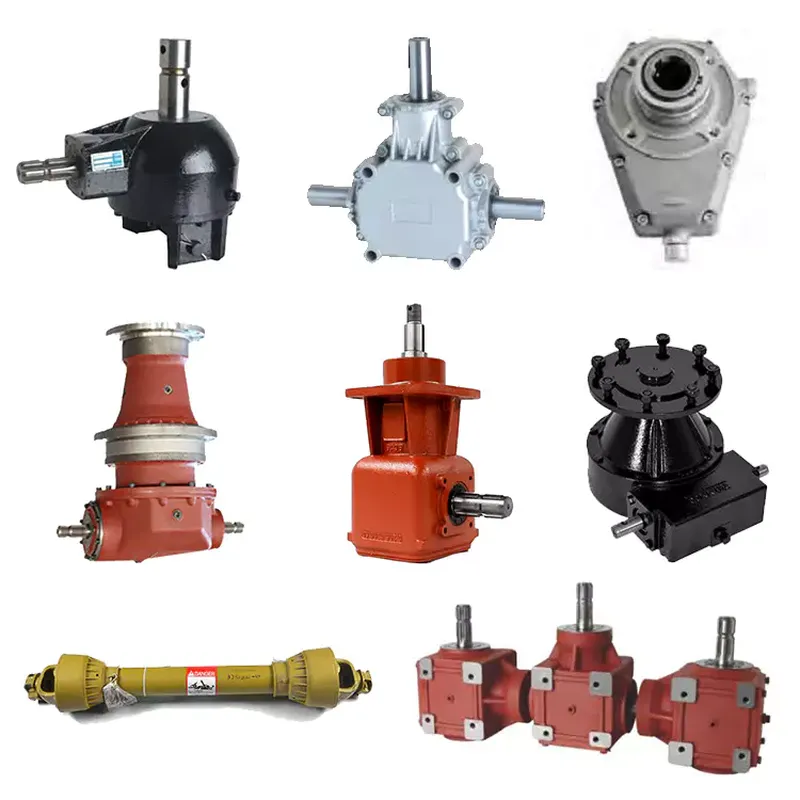
Excessive noise above 90 dB during operation signals gear wear, common after 40000 hours in dusty Argentine fields. Oil leaks from seals indicate degradation, especially in humid Litoral regions.
Vibration exceeding 2 mm/s points to bearing issues, as per ISO thresholds. Torque loss of 10% or more during threshing suggests internal slippage.
Overheating beyond 95°C after short runs warrants inspection. Unusual odors from burnt oil mean lubrication failure.
Difficulty in gear engagement or power drops in inclines signal impending failure. Visual rust or cracks on housing require immediate replacement.
Monitoring these in regular checks prevents costly breakdowns during harvest peaks.
Common FAQs from B2B Clients
- What torque ratings suit 150 kW combines in Argentina? Ratings from 12000-18000 Nm handle local loads, per AGMA standards.
- How does IP rating affect dust resistance? IP67 prevents entry of fine Pampas dust, extending life by 30%.
- Can these replace John Deere interfaces? Yes, with matching splines and flanges for quick swaps.
- What maintenance interval for oil changes? Every 1500 hours with VG220 oil in temperate climates.
- Are they compliant with MERCOSUR safety? Fully, meeting IRAM and INMETRO equivalents.
- How to handle vibration in uneven fields? Built-in dampers keep under 1.5 mm/s.
- What warranty for high-heat operations? 3 years, tested to 80°C continuous.
- Compatibility with variable speed drives? Yes, ratios adjustable for crop types.
Related Products: Enhancing System Compatibility
PTO shafts with safety guards, telescopic sections, and U-joints (types like Wide Angle 80°) pair perfectly, offering one-stop sourcing for torque transfer up to 15000 Nm.
Farm accessories include sprockets (ANSI #60), chains, gears/racks, lubrication systems, pulleys, couplings, and hydraulic cylinders, ensuring full drivetrain compatibility.
Whole agricultural machines like seeders and harvesters with optional gearboxes streamline operations, emphasizing interoperability for Argentine fleets.
Our full series covers all farm needs, sparking interest in bundled purchases for cost savings of 15%.
For comprehensive setups, inquire about custom grain combine harvester gearbox solutions tailored to your needs.
Contact and Call to Action
Ready to upgrade your harvest efficiency? Get a personalized quote for durable grain combine harvester gearboxes suited for Argentina’s demanding fields.
Explore more options on our main agricultural gearbox selection page.
Why Choose Us
Our solutions stand out with proven 20% yield improvements in real Argentine operations, backed by local compliance and global standards. With one-stop supply, reduce logistics hassles and focus on farming.
Working Principle in Detail
Power enters via input shaft at 540 RPM, engaging bevel gears for 90-degree turn to threshing drum. Ratio reduction amplifies torque for separating grain at 1000 RPM.
Secondary stages use helical sets for cleaning fans, ensuring air flow at 3000 RPM without excessive vibration. Overload clutches protect against jams.
In Argentine corn, this prevents stalk buildup, maintaining 25 tons/hour rates.
Lubrication circulates via splash method, cooling internals for sustained performance.
Recent integrations with sensors, as in IJABE papers, allow real-time monitoring.
Key Features and Advantages
Modular design facilitates repairs, cutting costs by 20%. High-precision gears (DIN 6) minimize backlash to <5 arcmin.
Advantages include 95% efficiency, reducing fuel by 10 liters/hour in large operations.
Adapted for bio-fuels, compliant with Law 26.093.
Shock load resistance up to 250% rated torque for stony fields.
Lightweight yet durable, 100 kg units ease installation.
Performance Specifications Table
| Performance Metric | Details |
|---|---|
| 効率 | 95-98% |
| Max Input Speed | 1000 RPM |
| Noise Level | <85 dB |
| 振動 | <1.5 mm/s |
| Service Factor | 1.5-2.0 |
Dimensions and Installation Specs Table
| Dimension | 測定 |
|---|---|
| Overall Size | 450x350x400 mm |
| Mounting Holes | M12 x 4, 120mm PCD |
| Shaft Diameter | Input 35mm, Output 45mm |
| 重さ | 100 kg |
| Keyway | 10×8 mm |
Material and Durability Specs Table
| Material Aspect | Specification |
|---|---|
| Gear Material | 20CrMnTi, HRC 58-62 |
| Housing | Ductile Iron QT450 |
| Fatigue Life | >50000 hours |
| Corrosion Level | C3 Coating |
| Hardness | HRC 58-62 |
よくある質問
1. What is the best gearbox ratio for wheat harvesting in Buenos Aires? A 1:2.5 ratio balances speed and torque for 20-25 km/h operations, reducing grain damage by 15% in tests.
2. How does temperature affect gearbox performance in Córdoba summers? Designed for -20 to +80°C, with cooling to prevent oil degradation, ensuring 98% efficiency at 35°C.
3. Compatible with Case IH in Argentina? Yes, matches SAE flanges and 540 RPM input for direct fit.
4. Maintenance tips for dusty Pampas? Check seals every 500 hours, use VG220 oil for IP67 protection.
5. Warranty and support in MERCOSUR? 3 years, with local parts availability in Brazil and Uruguay.