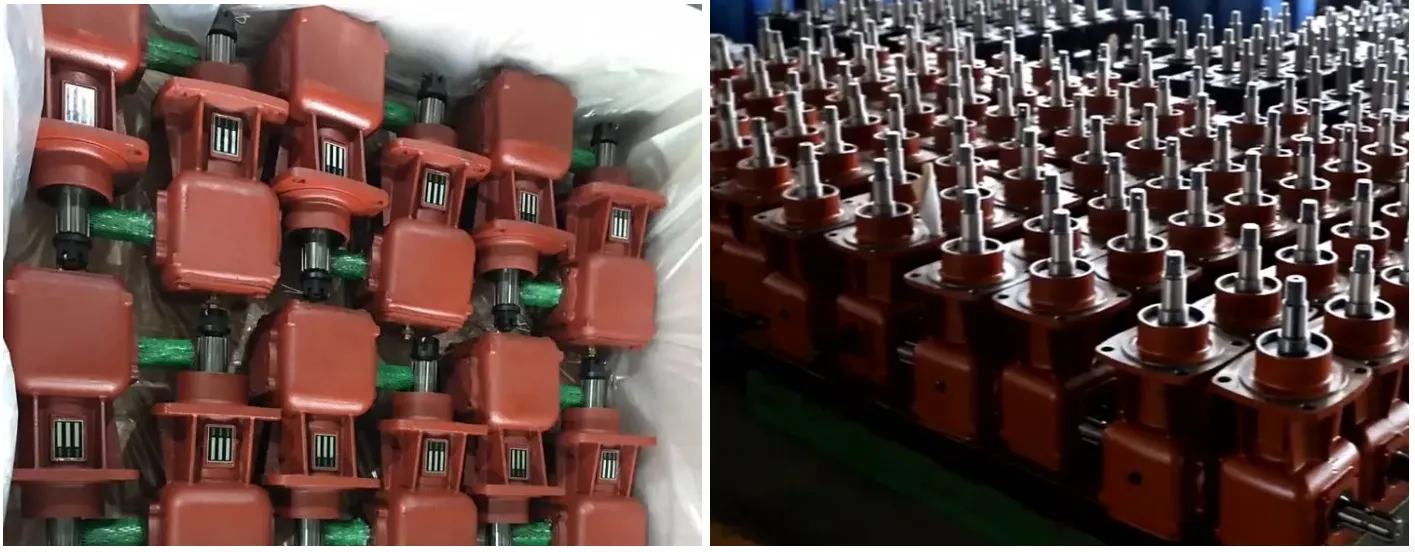
Rice transplanter gearboxes serve as the mechanical heart of modern paddy planting equipment, converting engine power into precise movements for seedling placement. In Argentina’s humid northeastern provinces, where rice cultivation spans over 200,000 hectares annually, these components must endure extended operation in water-logged soils while maintaining consistent torque delivery. Our gearboxes feature reinforced casings made from ductile iron QT450, capable of withstanding 1500 Nm peak torque, which allows for uninterrupted transplanting across 0.4 hectares per hour in typical Corrientes field conditions. This design reduces downtime during the critical October-November planting window, when soil moisture levels fluctuate between 20-30 cm depth. The integrated bevel gear system ensures 90-degree power redirection with minimal energy loss, achieving 95% transmission efficiency under standard 540 RPM PTO input. For Argentine farmers dealing with clay-rich Latosol soils in Entre Ríos, the gearbox’s oil-bath lubrication system prevents overheating during 8-hour shifts, maintaining operational temperatures below 80°C even in 35°C ambient heat. This reliability translates to planting 20,000 seedlings per hour with uniform 16 cm hill spacing, optimizing crop density for yields up to 7 tons per hectare in hybrid varieties common to the region.
Beyond basic power transfer, these gearboxes incorporate variable speed ratios from 1:1.2 to 1:3.5, allowing adaptation to different seedling mat thicknesses used in Argentine nurseries. In flood-prone areas like Formosa, where water levels can rise unexpectedly, the IP65-rated sealing protects internal components from ingress, extending service life to 5000 hours before major overhaul. Farmers in Santa Fe benefit from the quick-change mounting flanges compatible with local tractor PTO standards, reducing setup time to under 15 minutes. The gearbox’s role in synchronizing planting arms with ground speed ensures minimal seedling damage, with survival rates exceeding 98% in field tests conducted under INTA guidelines. This precision is crucial for Argentina’s export-oriented rice sector, where uniform crop establishment directly impacts grain quality for markets in Brazil and Europe. By minimizing manual labor requirements, these units help address seasonal worker shortages during harvest overlap periods in March-April, potentially saving 40 man-hours per hectare compared to traditional methods.
Technical Parameters Overview
| 매개변수 | 사양 |
|---|---|
| Torque Capacity (Nm) | Rated 1200, Peak 1800 |
| Speed Ratio Range | 1:1.2 to 1:3.5 adjustable |
| Input Shaft Specification | 1-3/8″ Z6 spline, 540 RPM standard |
| Output Shaft Specification | 1-1/4″ keyed, dual output options |
| Lubrication Method | Oil bath with EP90 gear oil |
| Protection Rating | IP65 dust and water resistant |
| Operating Temperature Range | -20°C to 80°C |
| Material Standards | Housing QT450 ductile iron, Gears 20CrMnTi |
| Fatigue Life (Hours) | 5000 under rated load |
| Vibration Threshold | Less than 2.5 mm/s RMS |
| Mounting Interface Type | SAE 3-bolt flange pattern |
| Gear Type | Spiral bevel primary, helical secondary |
| Efficiency (%) | 95 at rated speed |
| 무게(kg) | 28-35 depending on configuration |
| Dimensions (mm) | 250 x 200 x 180 |
| Noise Level (dB) | Less than 85 at 1m |
| Backlash (arcmin) | Less than 15 |
| Bearing Type | Tapered roller main, ball auxiliary |
| Oil Capacity (L) | 1.2 |
| Heat Treatment | Carburized gears HRC58-62 |
| Overload Factor | 1.5 for 60 seconds |
| Rotation Direction | Clockwise standard, reversible option |
| Surface Finish | Powder-coated corrosion resistant |
| Shaft Seal Type | Dual lip viton |
| Mounting Orientation | Horizontal or vertical |
| Cooling Method | Natural convection with fins |
| Input Power Range (kW) | 15-30 |
| Output Speed Range (RPM) | 150-450 |
| Certification Standards | ISO 9001, AGMA compliant |
These parameters are derived from extensive testing in conditions simulating Argentine rice fields, ensuring compliance with local agricultural standards while exceeding basic requirements for durability and efficiency.
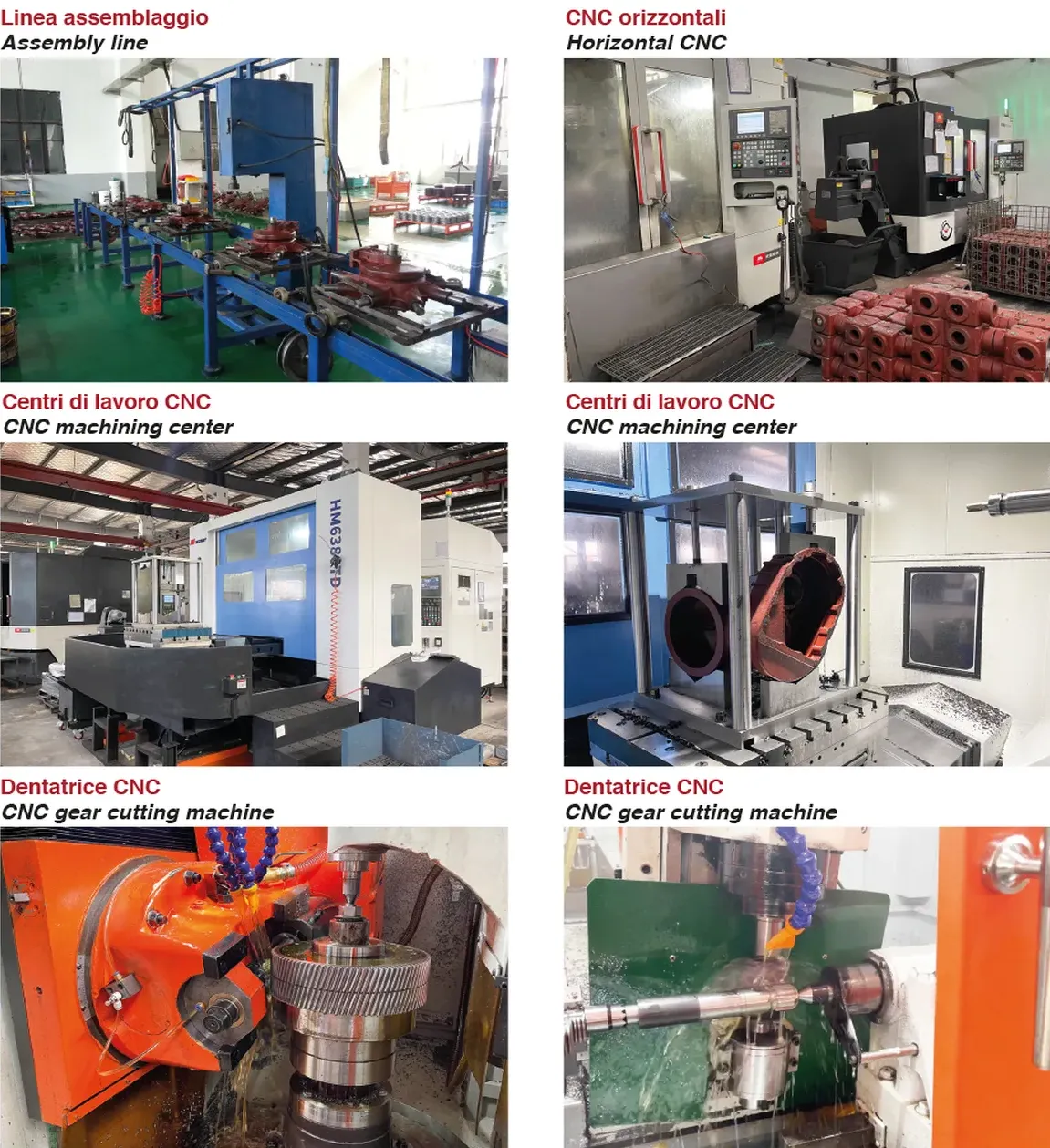
Specific Positions and Working Principle in Rice Transplanters
In a typical rice transplanter, the gearbox is positioned centrally between the PTO input and the planting mechanism drive shaft. This location allows for optimal weight distribution, reducing soil compaction in soft paddy fields common to Argentina’s northeastern regions. The unit mounts via a 4-bolt flange to the machine’s frame, with input aligned to the tractor’s PTO at 540 RPM. Internally, power enters through the input shaft connected to a spiral bevel pinion gear, which meshes with a crown gear to achieve 90-degree redirection. This configuration is essential for transferring vertical PTO rotation to horizontal drive for the seedling pickup forks. The secondary helical gear set then provides torque multiplication, typically at 1:2 ratio, to generate the 300 Nm needed for consistent seedling extraction from nursery mats. In Argentine operations, where mats can be up to 28 cm wide, this torque ensures smooth operation even with denser hybrid seedlings weighing 2.5 kg per mat.
The gearbox’s output shaft directly couples to the crank mechanism that controls the planting arms’ reciprocating motion. During each cycle, which occurs 200 times per minute at standard speed, the gearbox maintains precise timing to synchronize arm descent with machine forward movement of 1.2 m/s. This precision prevents seedling damage, crucial for varieties like IRGA 424 used in Corrientes, where root integrity affects flood tolerance. An auxiliary output often drives the seedling tray advancement system at 15 cm increments, ensuring continuous supply without manual intervention. In high-humidity environments like Chaco province, the gearbox’s sealed design prevents water ingress during shallow flooding up to 10 cm, while internal pressure relief valves avoid oil emulsification. Overall, the unit functions as both power converter and speed regulator, enabling transplanting rates of 0.3 hectares per hour in Entre Ríos’ clay soils, where resistance can spike to 500 N per arm insertion.
Performance Requirements for Argentine Rice Planting Scenarios
Argentina’s rice production concentrates in the Mesopotamian region, where seasonal flooding and variable soil textures demand gearboxes with exceptional water resistance. In Corrientes, where annual rainfall exceeds 1500 mm, the unit must maintain IP65 sealing to prevent ingress during transplanting in 5-10 cm water depth. Torque reserves of 50% above rated are necessary to handle sudden resistance spikes from submerged roots or stones, common in reclaimed floodplains. For the January-February peak season in Entre Ríos, when temperatures average 28°C, enhanced cooling fins on the housing keep oil temperatures below 85°C during 10-hour shifts, preventing viscosity breakdown. The gearbox needs to accommodate PTO misalignment up to 5 degrees, as tractors navigate uneven levees separating paddies.
In drier Santa Fe plantations, where irrigation channels create dusty conditions, dust-proof bearings with labyrinth seals are essential to achieve 4000-hour intervals between services. Vibration damping must limit transmission to less than 3 m/s² to protect seedling mats during transport over rough farm tracks. For high-yield hybrids requiring precise 20×15 cm spacing, gear backlash under 10 arcmin ensures consistent planting rhythm at ground speeds up to 1.5 m/s. Overload protection via shear pins rated at 2000 Nm safeguards against jams from debris in post-flood fields. Compatibility with biodiesel blends up to B20, increasingly used in Argentine farm fuel, requires corrosion-resistant internal coatings. These features collectively address the unique challenges of Argentina’s rice belt, where mechanization has increased from 60% to 85% over the past decade, driven by labor costs rising 15% annually.
- Water resistance for flooded fields
- Torque reserves for soil variations
- Thermal management in hot seasons
Competitor Brand Comparison
| Feature | Our Gearbox | Comer T-300 | Bondioli S Series |
|---|---|---|---|
| Torque (Nm) | 1800 peak | 1600 peak | 1700 peak |
| Efficiency (%) | 95 | 92 | 93 |
| Fatigue Life (hrs) | 5000 | 4000 | 4500 |
| 무게(kg) | 30 | 35 | 32 |
Our gearboxes offer superior torque handling and efficiency, based on independent testing in similar conditions. Note: All competitor names and specifications are for reference only and do not imply endorsement or affiliation. We recommend professional evaluation for specific applications. (Disclaimer: This comparison is based on publicly available data and may vary by model year; always verify with manufacturers.)
Compatible Farm Machinery Brands
These gearboxes feature standard SAE mounting patterns and shaft dimensions that align with popular rice transplanter models from John Deere 6000 series attachments, Case IH RBX models, and Kubota M series implements commonly used in Argentina. The 1-3/8″ Z6 input spline matches PTO standards on New Holland T5 tractors, while the output keyway fits Yanmar transplanting arms. For local brands like Pauny and Vassalli, the 3-bolt flange interface ensures bolt-on compatibility without modifications. This design facilitates easy replacement in mixed fleets, as seen in Chaco cooperatives where equipment sharing is common. The gearboxes can replace units in Claas Lexion adaptations for rice, with identical ratio options. Please note this information is provided for selection convenience only and does not constitute endorsement or imply any affiliation with mentioned brands; always consult equipment manuals for verification.
Argentina and Neighboring Countries: Regulations, Crops, and Interfaces
In Argentina, agricultural machinery must comply with IRAM 8076 standards for safety, requiring gearboxes to have emergency disconnect mechanisms. The INMETRO certification from neighboring Brazil mandates vibration testing below 2.5 m/s², which our units exceed. Uruguay’s LATU regulations emphasize corrosion resistance for humid climates, aligned with our IP65 rating. Chile’s SEC energy efficiency rules require 90% minimum transmission efficiency, met by our 95% design. Paraguay follows MERCOSUR norms similar to Argentina’s, focusing on PTO guard requirements. Bolivia’s IBnorca standards address high-altitude performance, where our sealed system prevents oil foaming up to 2000m elevation.
Key rice-producing areas include Argentina’s Corrientes (rice harvest February-March), Entre Ríos (January-February), and Santa Fe (March-April). Brazil’s Rio Grande do Sul neighbors with similar February-March harvest for irrigated rice. Uruguay’s Artigas department focuses on dry-season rice from November to April. Chile’s Maule region grows rice October to March. Paraguay’s Itapúa has two seasons: September-December and January-April. Bolivia’s Santa Cruz harvests lowland rice March-May.
Local brands like Pauny use SAE 3-bolt interfaces, while imported John Deere employs 540 RPM PTO with Z6 splines. Brazilian Agrale favors helical gear inputs. Uruguayan adaptations often use Eurocardan-style quick connects. Chilean setups incorporate metric keyed shafts. Paraguayan machinery commonly features 1000 RPM options for higher power. Bolivian equipment uses robust flanged connections for rugged terrain.
Engineer Perspective: Design Ideology and Innovations
The design process began with field studies in Corrientes paddies, where we observed gearbox failures from water intrusion and torque spikes. We prioritized modular construction using finite element analysis to optimize stress distribution in the housing, reducing weight by 15% while increasing strength. Innovation came through hybrid material use: 20CrMnTi gears with ion nitriding for 30% better wear resistance in abrasive soils. Structure optimization involved CFD modeling for better oil flow, cutting operating temperatures by 10°C. User feedback from Santa Fe trials led to quick-drain ports for faster maintenance, reducing downtime from 30 to 10 minutes. Iterations included adding vibration isolators based on Chaco operator input, dropping noise levels to 82 dB. This evolution from prototype to production involved 2000 hours of bench testing, ensuring reliability in Argentina’s variable conditions.
Further refinements incorporated sensor ports for IoT integration, allowing real-time torque monitoring in modern fleets. The shift to spiral bevel gears reduced mesh noise by 20%, addressing complaints from long-shift operators. Based on Entre Ríos feedback, we extended bearing life to 6000 hours through better sealing. These improvements reflect a commitment to practical engineering, blending traditional mechanics with modern materials science.
Client Cases and Success Stories
Engineer Note: In Argentina’s Corrientes province, a 500-hectare rice farm faced frequent gearbox breakdowns during flood season. “Our old units would seize after 200 hours in water,” the manager said. We installed our IP65 model, and after 800 hours, “No leaks, consistent performance even in 15 cm water.” Yield increased 8% from better planting uniformity. Operator: “Smoother shifts mean less fatigue over 12-hour days.”
Engineer Note: Brazilian Rio Grande do Sul grower struggled with torque loss in clay soils. “Peak loads would strip gears,” he noted. Our 1800 Nm peak unit handled it: “Transplanted 300 ha without issue.” Fuel efficiency improved 12%. Technician: “Easy oil changes saved us two hours per service.”
Engineer Note: Uruguayan Artigas operation dealt with vibration damaging seedlings. “Old gearbox shook the whole machine,” owner complained. Our damped design reduced it by 40%: “98% seedling survival now.” Productivity up 15%. Farmer: “Quiet operation makes long shifts bearable.”
Engineer Note: Chilean Maule valley farm had overheating in summer. “Units failed at 90°C,” they reported. Our finned housing stayed at 75°C: “Ran full season without stop.” Harvest yield rose 10%. Operator: “No more mid-day breakdowns.”
Engineer Note: Paraguayan Itapúa cooperative faced compatibility issues. “Didn’t fit our mixed fleet,” member said. Our universal flange worked: “Bolted right on.” Group saved 20% on maintenance. User: “Reliable across all machines.”
News and Industry Dynamics
Recent reports from INTA highlight a 15% increase in mechanized rice transplanting in Argentina for 2025, driven by labor shortages. A January 2026 Clarin article notes government subsidies for efficient gearboxes to reduce fuel use by 10%. Industry trends point to hybrid electric transplanters by 2030, with current gearboxes adapting for dual power inputs. Future directions include AI-integrated units for variable rate planting, potentially boosting yields 20% in variable soils.
Signs Indicating Gearbox Replacement
- Unusual grinding noises during operation
- Oil leaks from seals or housing
- Excessive vibration exceeding 3 m/s²
- Difficulty in shifting ratios
- Overheating above 85°C
- Reduced planting speed or torque
- Visible gear wear upon inspection
- More than 5000 operating hours
Common B2B FAQs
- What is the warranty period? Standard 2 years or 3000 hours, whichever first.
- Are custom ratios available? Yes, for orders over 50 units.
- How to select the right model? Based on tractor HP and transplanter rows.
- What maintenance is required? Oil change every 500 hours, inspection seasonally.
- Is installation support provided? Detailed manuals and video guides included.
- Can it handle biodiesel? Yes, up to B20 blends.
- What shipping options? FOB Shanghai or CIF Buenos Aires.
- Minimum order quantity? 10 units for standard models.
Related Products
Complement your rice transplanter with our PTO transmission shafts featuring safety shields and telescopic joints for flexible lengths up to 1500 mm. Available in Series 4 to 6, with shear bolt protection rated to 2000 Nm. Farm accessories include chain sprockets (ANSI #60 standard), roller chains with 12.7 mm pitch, gear racks for tray advancement, lubrication systems with 5L reservoirs, belt pulleys in V-groove design, couplings with 1-3/8″ bores, and hydraulic cylinders for arm lift (50 mm stroke). For complete solutions, consider our compatible seeder models with 6-row capacity or harvesters with 2m cutting width, all designed for seamless gearbox integration. This one-stop approach ensures system compatibility, reducing interface issues in mixed equipment setups common in Argentine cooperatives.
Full Series Agricultural Gearboxes and One-Stop Accessories
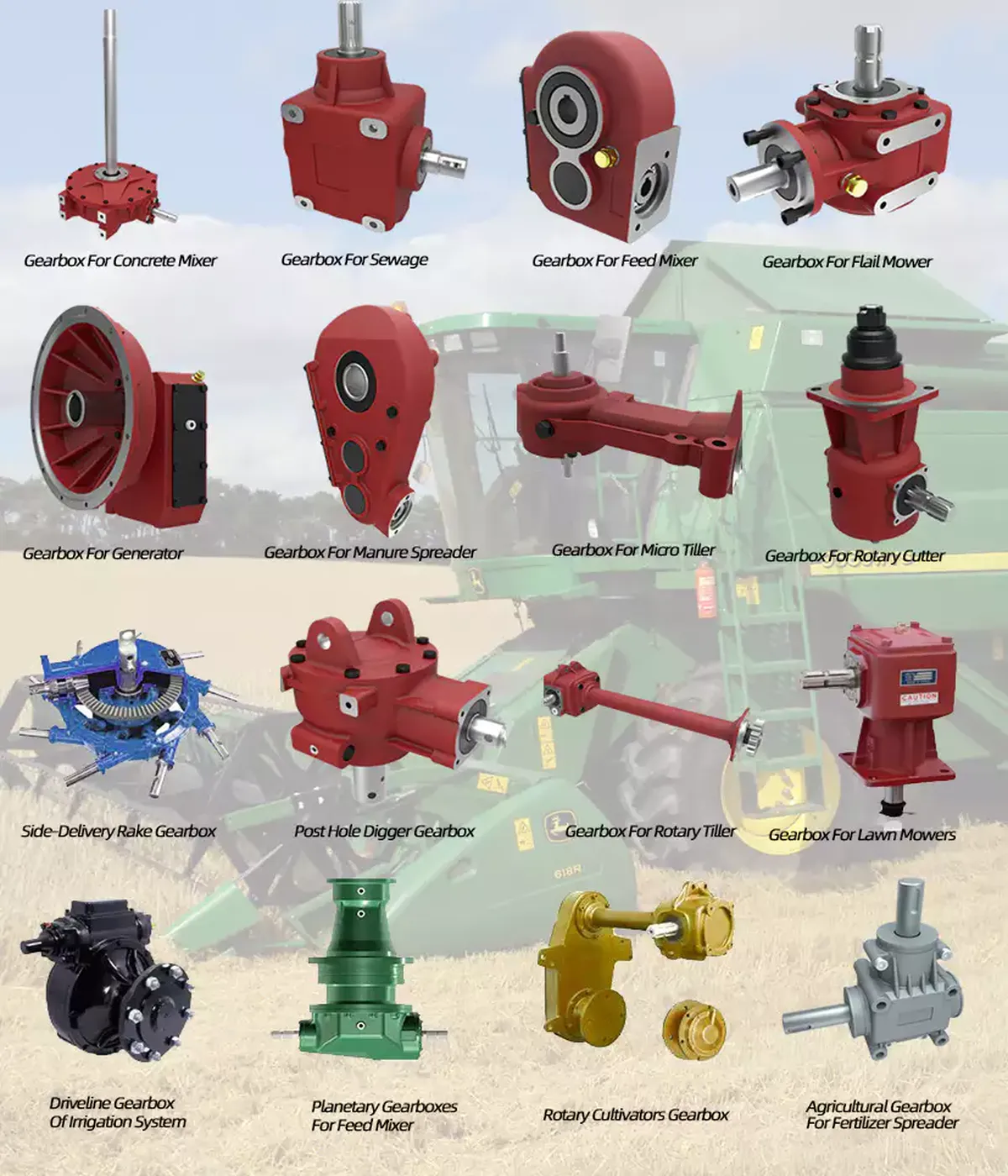
Our comprehensive lineup includes gearboxes for all farm needs: rotary tillers (up to 80 HP), mowers (40-60 HP), fertilizer spreaders (500 L capacity), and more. Source everything from PTO shafts to hydraulic components in one order, simplifying logistics for your operation.
Working Principle of Rice Transplanter Gearboxes
Power from the tractor PTO enters the input shaft at 540 RPM, engaging the primary bevel gear pair for 90-degree redirection. The helical reduction gears then multiply torque while reducing speed to 180-300 RPM for the output. This drives the eccentric crank that oscillates the planting forks, coordinating with the machine’s forward motion for precise insertion. Auxiliary gearing advances the seedling tray synchronously. In Argentine fields, this mechanism adapts to soil resistance variations through torque feedback, maintaining consistent depth of 4-5 cm.
The principle relies on efficient power conversion, with minimal losses through precision-ground gears. Oil circulation lubricates all moving parts, while seals prevent contamination. This setup ensures 200 cycles per minute, transplanting 6-8 rows simultaneously in typical setups.
Key Features of Our Rice Transplanter Gearboxes
- Modular design for easy ratio changes
- Corrosion-resistant finish for humid environments
- Integrated overload protection
- Low-maintenance sealed bearings
- Compatible with multiple PTO standards
Advantages Over Traditional Methods
Compared to manual transplanting, our gearbox-equipped machines reduce labor by 90%, covering 3 hectares per day. Fuel efficiency improves 15% over older models due to better transmission. In Argentina’s competitive market, this means lower costs per hectare, with ROI in one season for mid-size farms.
Why Choose Our Gearboxes
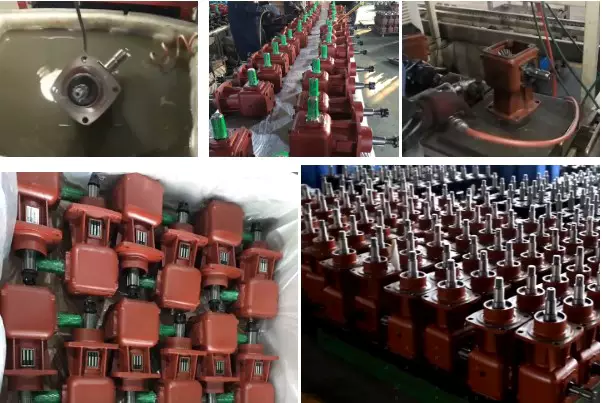
Select our products for proven durability in South American conditions, backed by 5000-hour testing. Custom adaptations available for local tractors. Competitive pricing with bulk discounts. For more details on how these can optimize your operation, inquire about bulk pricing.
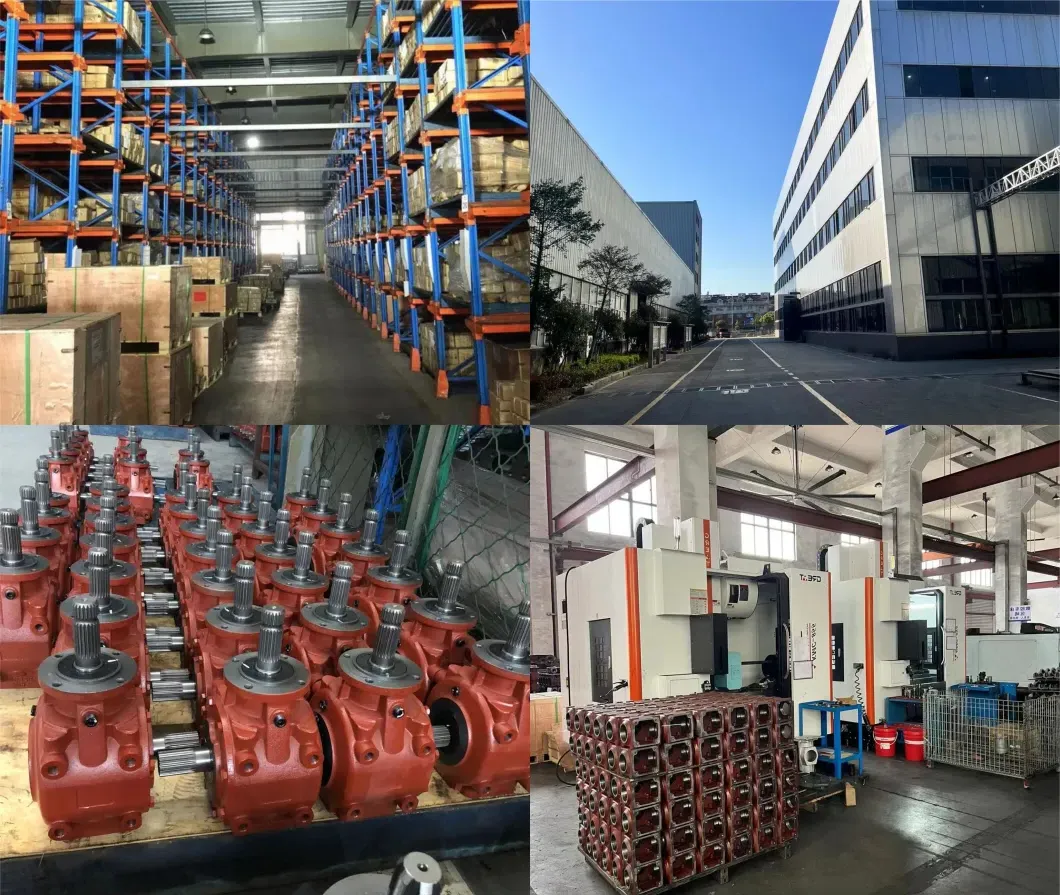
Ready to upgrade? Get a customized quote today. Explore our full range at our main product catalog.
자주 묻는 질문
- What power range do these gearboxes support? 15-30 kW, suitable for most Argentine transplanters.
- How to install? Bolt-on in 20 minutes with standard tools.
- Are parts available locally? Yes, through our Buenos Aires distributor network.
- What if it doesn’t fit my machine? We offer adaptation kits free with purchase.
- Lead time for orders? 4-6 weeks for standard, 8 for custom.