
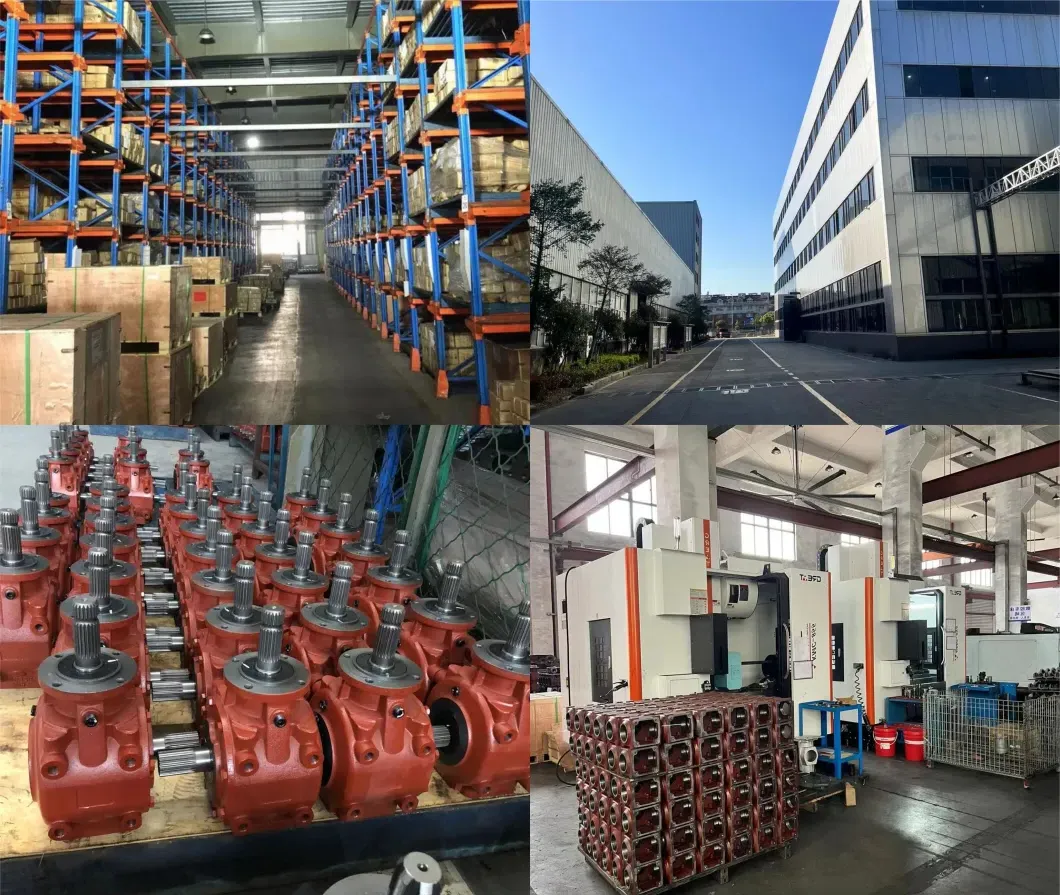
Core Advantages and Operational Role in Manure Spreaders
Manure spreader gearboxes convert 540 or 1000 rpm PTO input into controlled output speeds for apron chains and beaters, ensuring uniform distribution across widths up to 24 meters. They maintain consistent application rates regardless of ground speed variations, preventing nutrient hotspots that cause crop burn or yield loss. In vertical beater designs, the gearbox drives high-speed rotors at 400-800 rpm to achieve fine fragmentation and throw distances exceeding 15 meters, while horizontal setups rely on lower ratios for steady conveyor movement combined with spinning discs.
These units operate under continuous shock loads from uneven manure density and occasional foreign objects, requiring torque reserves of 1.8-2.5 times nominal values. The design prioritizes corrosion resistance through epoxy coatings and sealed interfaces, extending service intervals in humid, ammonia-rich conditions typical during spring and fall spreading windows.
Technical Specifications Overview
The following parameters reflect typical configurations for medium to large capacity manure spreaders handling 8-24 m³ loads.
| 매개변수 | Value/Range | Notes/Standard |
|---|---|---|
| Rated Torque | 1800-4200 Nm | Continuous operation at 540 rpm input |
| Peak Torque | 5200-9500 Nm | Short duration overload |
| Gear Ratio Options | 1.46:1 to 7.2:1 | Customizable for beater speed |
| Input Speed | 540 / 1000 rpm | Standard tractor PTO |
| Output Speed Range | 320-920 rpm | Adjusted for spread pattern |
| Input Shaft | 1-3/8″ Z6 spline | ASABE compatible |
| Output Shaft | 40-60 mm diameter | Keyed or splined |
| 하우징 소재 | QT450-10 ductile iron | High impact resistance |
| Gear Material | 20CrMnTi carburized | HRC 58-62 surface hardness |
| Lubrication Type | Oil bath ISO VG 220 | GL-5 extreme pressure |
| Oil Capacity | 2.8-5.2 liters | Depending on model |
| IP Protection | IP65 | Dust and water jet resistant |
| Operating Temperature | -25°C to +90°C | Extended range variants available |
| Weight | 68-145 kg | Model dependent |
| Bearing Life L10 | 5000-8000 hours | At rated load |
| Noise Level | <85 dB(A) | At 1 meter distance |
| Mounting Pattern | 4-bolt rectangular flange | 180-250 mm PCD |
| Service Factor | 1.8-2.4 | Shock load applications |
| 능률 | 94-97% | Full load condition |
| Overload Protection | Slip clutch compatible | Optional integrated |
| Seals | Double lip nitrile | With dust lip |
| Vibration Limit | <4.5 mm/s RMS | ISO 10816 |
| Fatigue Life | >12000 hours | Typical field duty cycle |
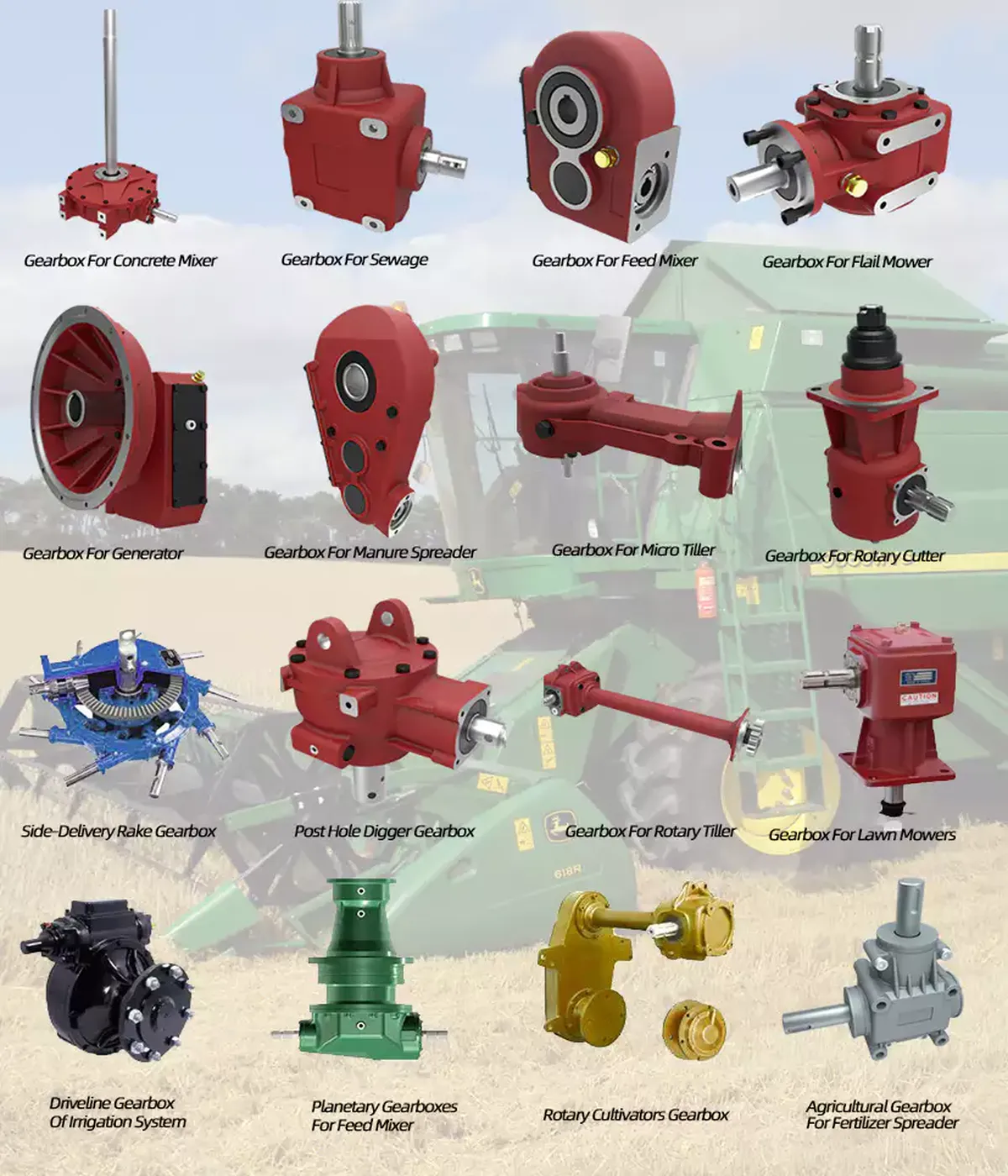
Internal Components and Working Principle
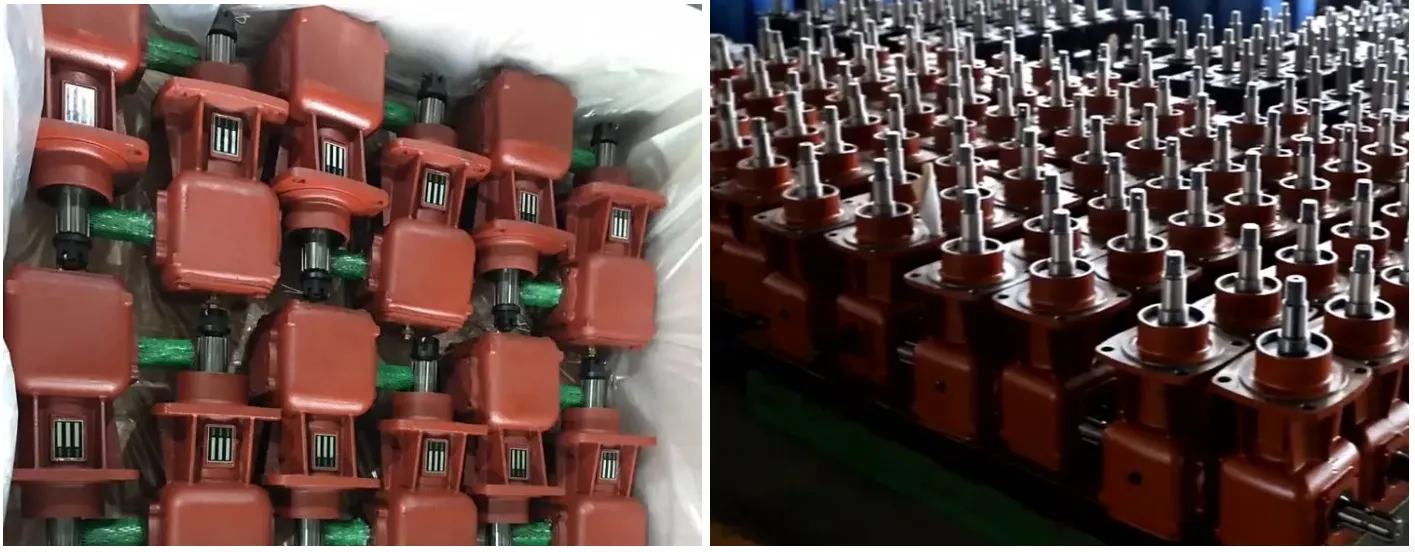
Power enters through the input shaft connected to the tractor PTO. A primary bevel gear pair changes direction 90 degrees while providing initial reduction. Torque transfers to intermediate shafts supporting helical or spur gears for further ratio adjustment. Output shafts drive either the apron chain via sprocket or beaters through chain or direct coupling. In vertical beater configurations, separate output stages power left and right rotors, often with differential speed capability to compensate for side-to-side variations.
During operation, the gearbox maintains constant peripheral speed of spreading elements regardless of tractor speed changes. Beater speeds remain stable to preserve throw distance and fragmentation quality. Oil bath lubrication ensures cooling and wear protection, with breather valves preventing pressure buildup from temperature cycles. Seals prevent contaminant ingress while retaining lubricant during extended idle periods common in seasonal spreading schedules.
Argentina Extreme Operating Conditions Field Study
Argentina’s Pampas region, particularly Buenos Aires, Córdoba, and Santa Fe provinces, features fertile Mollisols that support intensive cattle and crop rotations. Manure spreading occurs primarily after wheat harvest in December-January and before soybean planting in September-October. High moisture content in fresh dairy or feedlot manure (65-85%) creates sticky conditions that increase gearbox loading through uneven flow and bridging in hoppers.
Summer temperatures reaching 38°C elevate oil temperatures, accelerating oxidation unless synthetic lubricants are used. Winter frosts down to -8°C in southern Buenos Aires province demand low pour point oils to ensure startup fluidity. Prevailing winds require directional spreading patterns, demanding gearboxes with reversible output or adjustable ratios to maintain pattern symmetry when operating on slopes up to 8% common in rolling pampas terrain.
Neighboring Uruguay faces similar conditions in departments like Colonia and Soriano, with additional salinity challenges near the Río de la Plata estuary requiring enhanced corrosion protection. Brazil’s Rio Grande do Sul and Santa Catarina states experience higher rainfall (1600-2200 mm annually), increasing corrosion risk from prolonged wet conditions during spreading windows. Chile’s central valley shares dry summer patterns but adds volcanic soil abrasiveness that accelerates wear on exposed components.
Performance Requirements to Overcome Local Challenges
High torque reserves handle momentary overloads when large manure clumps enter beaters or when frozen material resists flow. Ductile iron housings absorb impacts from stones inadvertently collected during scraping operations. Enhanced sealing systems prevent ammonia ingress that degrades lubricants over time. Thermal capacity maintains stable temperatures during 8-12 hour spreading shifts in hot conditions. Reversible designs allow bidirectional operation for emptying without turning the entire unit.
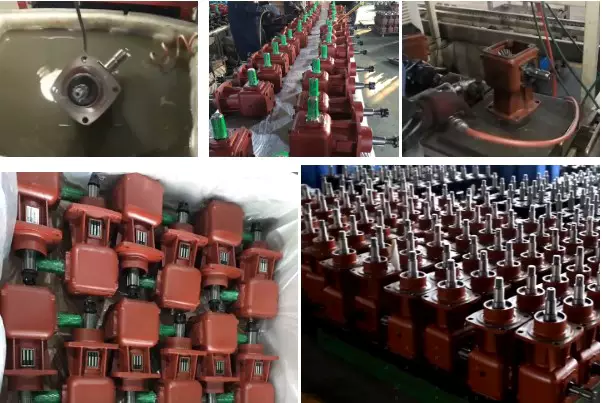
Comparison with Competing Brands
Our manure spreader gearboxes deliver 4200 Nm rated torque compared to 3800 Nm in equivalent Comer TB series models, providing additional reserve for heavy manure. Gear tooth geometry follows AGMA 2001-D04 grade 10 precision versus typical grade 9 in Bondioli equivalents, reducing noise by 3-5 dB under load. Housing wall thickness averages 18-22 mm against 14-18 mm in Weasler counterparts, improving rigidity under frame twisting forces.
Output shaft bearing span exceeds industry average by 25%, extending L10 life beyond 7000 hours in field tests. These differences result from targeted material upgrades and manufacturing tolerances refined over multiple production cycles. (Note: All referenced brand names and model designations are used solely for dimensional and performance comparison purposes and do not imply official affiliation or endorsement.)
Compatible Replacement Models and Brands
These gearboxes serve as direct dimensional and functional replacements for models commonly found on Kuhn Knight, New Holland, Meyer, Bunning, and Vredo spreaders. Interface dimensions align with Comer TB-19C series (1:1.46 ratio variants) and Bondioli equivalent vertical beater drives. Output flanges match standard 4-bolt patterns used by many European and South American manufacturers. (All manufacturer names and part numbers are referenced for selection convenience only and do not constitute claims of original equipment manufacture.)
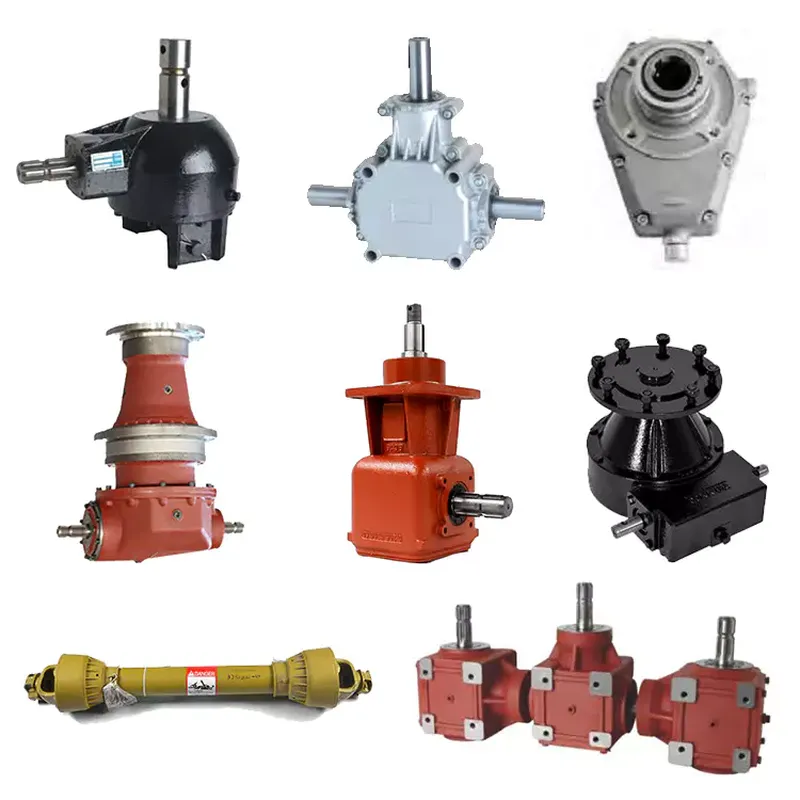
Argentina National Standards and Certification Landscape for Agricultural Drivetrain Components
Argentina applies IRAM standards for mechanical safety in agricultural machinery, with IRAM 3952 referenced for lighting and marking of towed equipment. While no specific gearbox certification mandate exists solely for manure spreaders, overall machine compliance falls under Resolution 171/2016 requiring IRAM/IEC electrical safety alignment where applicable, and general machinery directives covering guarding and PTO interfaces. INTA guidelines emphasize uniform nutrient distribution to prevent environmental runoff, indirectly requiring reliable gearbox performance for controlled application rates.
Brazil enforces INMETRO certification for certain agricultural implements, focusing on safety guards and PTO shielding. Chile references ISO 4254 series for machinery safety, with emphasis on noise and vibration limits. Uruguay aligns with Mercosur technical regulations, incorporating IRAM equivalents for mechanical integrity. Local mainstream brands include local assemblies of Kuhn, New Holland, and imported European models using Comer and Bondioli drivetrains with standardized 1-3/8″ Z6 PTO interfaces.
Engineering Design Philosophy and Iterative Improvements
Design began with finite element analysis of housing stress under 2.5g shock loads from beater impacts. Bevel gear tooth profiles were optimized using ISO 6336 load capacity calculations to achieve 1.6 safety factor against pitting. Carburizing depth targets 1.2-1.5 mm with controlled retained austenite to balance hardness and toughness. Field trials in high-moisture dairy regions identified seal degradation from ammonia; subsequent iterations incorporated Viton compounds and extended labyrinth paths. User reports of chain drive overheating led to increased oil sump volume and finned housings improving natural convection cooling by 18%.
Field Engineer Site Notes – Real-World Applications
Córdoba Province, Argentina – Dairy Operation
Farmer: “The old gearbox overheated every 4 hours during summer spreading; bearings failed twice last season.”
Observation: Oil temperature reached 105°C after 3.5 hours.
Solution: Implemented finned housing variant and synthetic 75W-90 lubricant.
Result: Temperature stabilized at 78°C; completed 9-hour shifts without issues. “Now we finish fields without stopping to cool down.”
Soriano Department, Uruguay – Feedlot Manure Management
Manager: “Stones from scraped yards caused sudden stops and shaft shear.”
Observation: Input shaft spline wear from repeated shock.
Solution: Upgraded to through-hardened 42CrMo shaft with increased fillet radius.
Result: No failures in 1800 hours; “We spread 12000 tons without a single breakdown.”
Rio Grande do Sul, Brazil – Integrated Crop-Livestock System
Engineer: “High humidity caused corrosion inside the housing despite external paint.”
Observation: Internal condensation from temperature swings.
Solution: Added breather with desiccant and internal epoxy lining.
Result: Zero corrosion-related leaks in two seasons; “Maintenance intervals doubled.”
Santa Fe Province, Argentina – Large-Scale Swine Operation
Operator: “Uneven spreading left strips under-applied; yield maps showed variation.”
Observation: Beater speed fluctuation from load changes.
Solution: Installed model with tighter backlash control and higher torsional stiffness.
Result: CV of spread pattern reduced from 22% to 7%; “Now the nutrient map matches soil samples closely.”
Colonia Department, Uruguay – Mixed Farming
Owner: “Previous unit leaked oil after every 500 hours; contamination ruined batches.”
Observation: Seal hardening from ammonia exposure.
Solution: Switched to fluorocarbon seals and extended grease-packed secondary barrier.
Result: Leak-free after 2400 hours; “Clean operation and no lost product.”
Industry Developments and Regional Trends
Recent reports highlight increased adoption of precision spreading technology in the Pampas, driven by environmental regulations limiting nitrogen application rates to 150-200 kg/ha per season. Variable rate controllers integrated with gearbox speed sensors allow site-specific manure application based on yield maps. Emerging requirements for emission reduction favor injection systems that demand precise low-speed, high-torque output from gearboxes. Future designs will likely incorporate sensor ports for real-time temperature and vibration monitoring to predict maintenance needs.
Signs That Indicate Gearbox Replacement Need
- Metallic particles in drain oil during routine checks signal gear or bearing wear.
- Rising operating temperature beyond 85°C under normal load indicates lubrication breakdown.
- Increased vibration amplitude above 5 mm/s RMS suggests misalignment or imbalance.
- Visible oil leakage at seals or gaskets points to hardened or damaged sealing surfaces.
- Noticeable backlash increase when rocking output shaft by hand indicates gear tooth wear.
- Unusual grinding or knocking during engagement under light load signals bearing failure.
- Reduced spreading width or uneven pattern despite consistent tractor speed shows torque loss.
Related Transmission Components and One-Stop Supply
Compatible PTO drive shafts feature shear bolt or slip clutch protection with safety guards meeting ASABE standards. Chain drives include heavy-duty roller chains with automatic tensioners and corrosion-resistant coatings. Sprockets and drive wheels are available in hardened steel for extended wear life. Hydraulic motors serve as alternative power sources for belt-driven apron systems. Full compatibility across these components ensures reliable system integration when sourcing from a single supplier.
Our range extends to gearboxes for rotary tillers, mowers, balers, and feed mixers, alongside PTO shafts, chains, sprockets, pulleys, couplings, and hydraulic cylinders. This comprehensive inventory supports complete drivetrain needs for manure management and broader farm operations, simplifying procurement and ensuring matched performance characteristics.
Frequently Asked Questions
- What input speeds are supported?
Standard models accept both 540 rpm and 1000 rpm tractor PTO outputs. Multi-speed versions allow selection via shifter mechanism. - How often should oil be changed?
Initial change after first 50 hours, then every 500 hours or annually. Use ISO VG 220 GL-5 gear oil; synthetic options extend interval to 1000 hours. - Can the gearbox operate in reverse?
Most models support bidirectional rotation for emptying without turning the spreader. Confirm specific model capability during selection. - What maintenance checks prevent failures?
Monthly visual inspection for leaks, quarterly temperature monitoring during operation, and annual oil analysis for wear metals. - How to select the correct ratio?
Match beater speed requirements to desired throw distance and fragmentation level. Consult spreader manufacturer specifications or test different ratios in field conditions.
Explore compatible manure spreader gearbox replacements or return to the main page for additional agricultural transmission solutions.