
Productomschrijving
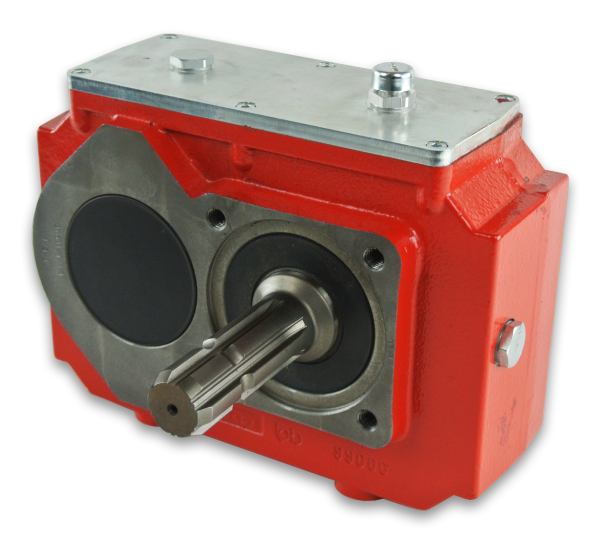
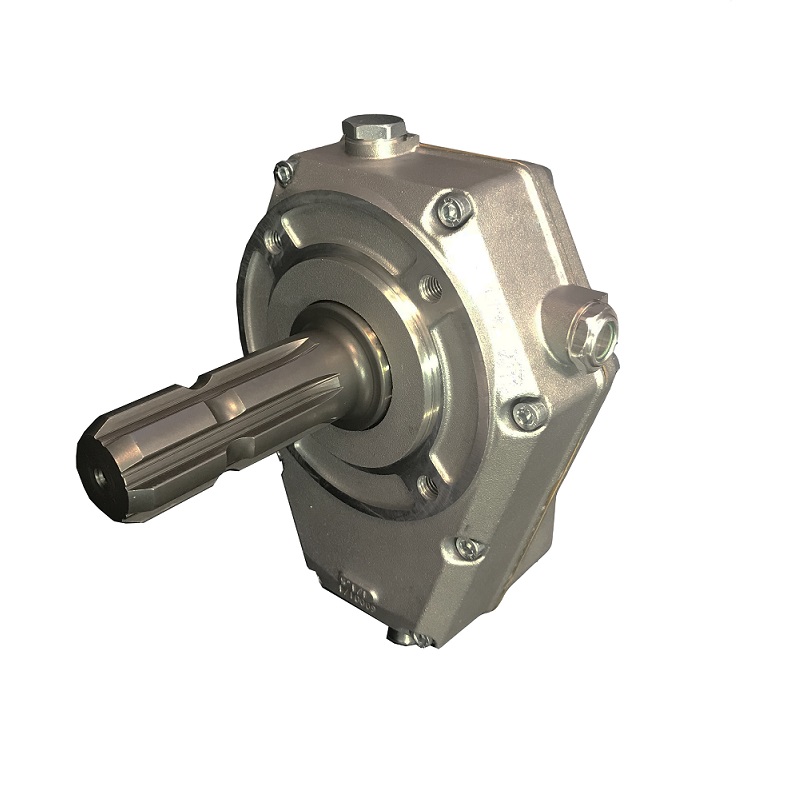
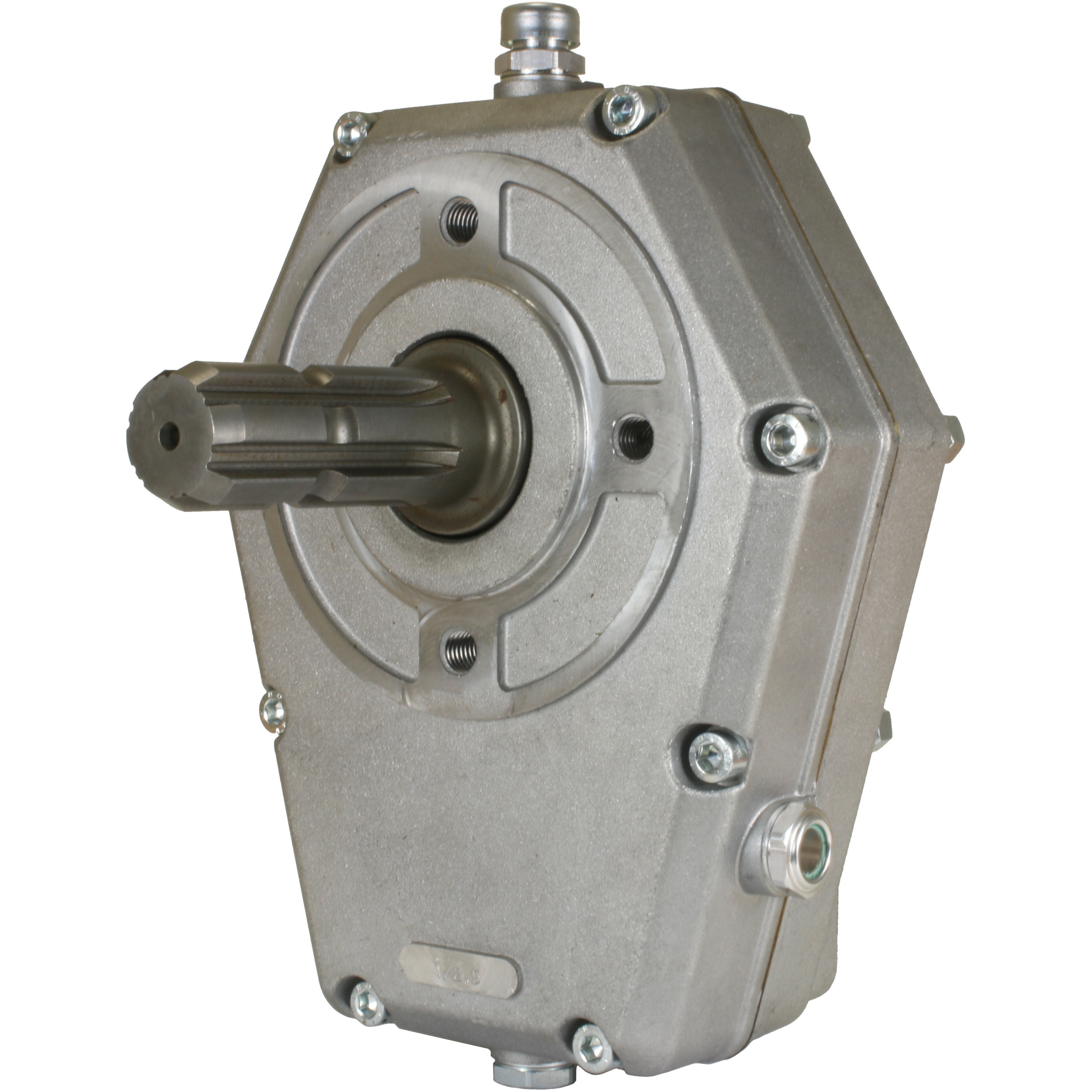
540 Pto Gearbox Gear Box for Machinery Application Durable Good Price Speed Increaser Best Manufacturers Suppliers Tractors Power Take Offs 540 Pto Gearbox
Productomschrijving
P.T.O TRACTOR GEARBOXES
The gearboxes series are used mainly for connecting hydraulic pumps to the power take-offs of agricultural tractors. PTO output, standardized at either 540 or 1,000 rpm, is, in this way, increased to optimum operating speeds for the hydraulic pumps. RD series of gearboxes are used to reduce hydraulic motor speed.
ML and B series gearboxes provide the connection for hydraulic pumps to low speed tractor power take off. The standard power take off speed of 540 rpm, is increased by the gearbox ratio to optimal speed conditions required for the pump. Different inputs are accepted under condition that the output speeds don’t go over 3000 rpm.
hydraulic PTO driven gearbox for tractor
The Gearboxes are designed for connecting gear pumps to farm tractor power take offs (PTO). Output speed of power take offs is 540rpm which can be compared with the proper running speeds of hydraulic pumps. Different input running speeds can also be suitable,provided that the gearbox output speed does not exceed 3000 rpm.
| Sollicitatie: | Landbouwmachines |
|---|---|
| Functie: | Speed Changing, Speed Increase |
| Indeling: | Planetary Gear Box |
| Hardheid: | Verhard tandoppervlak |
| Installatie: | Type koppelarm |
| Stap: | Traploos |
Challenges in Using Miter Gearboxes
While miter gearboxes offer various advantages, they also come with certain challenges that need to be addressed:
Smering: Proper lubrication is crucial for miter gearboxes to minimize friction, heat, and wear between gear teeth. Ensuring consistent and sufficient lubrication in the gearbox can be challenging, especially in enclosed or hard-to-reach spaces.
Maintenance: Miter gearboxes require periodic maintenance to ensure their optimal performance and longevity. Maintenance tasks may include checking and replenishing lubrication, inspecting gear teeth for wear, and addressing any misalignment or mounting issues that may arise over time.
Backlash: Backlash, or the clearance between gear teeth, can impact the accuracy of motion transfer. Excessive backlash can lead to reduced precision and positioning errors in applications that require high accuracy.
Complex Design: Miter gearboxes have a more intricate design compared to some other gearbox types, which can make manufacturing, assembly, and maintenance more complex. This complexity may also result in higher manufacturing and maintenance costs.
Efficiency Loss: Miter gearboxes can experience efficiency losses due to factors such as friction and misalignment. These losses can reduce the overall efficiency of power transmission, leading to energy wastage.
Space Constraints: In some applications, space limitations can pose a challenge when integrating miter gearboxes, especially when larger gear ratios are required to achieve the desired motion direction change.
Shock Loads: Applications subject to sudden shock loads or high impact forces can pose challenges for miter gearboxes. Adequate measures, such as using shock-absorbing components or designing for higher durability, may be required to address these challenges.
Alignment and Mounting: Proper alignment and mounting of miter gearboxes are critical to ensure smooth operation and prevent premature wear. Achieving precise alignment can be challenging, especially in installations with limited access or complex geometries.
Cost Considerations: The design complexity and manufacturing requirements of miter gearboxes can contribute to higher costs compared to simpler gearbox types. Balancing the benefits of miter gearboxes with the associated costs is essential during the selection process.
Addressing these challenges often requires careful engineering, proper maintenance practices, and consideration of specific application requirements. Despite the challenges, miter gearboxes remain valuable components in various industries where their unique motion direction-changing capabilities are advantageous.
Verstekbakken in automobieltoepassingen, met name stuursystemen
Verstekbakken spelen een cruciale rol in autotoepassingen, met name in stuursystemen, waar ze worden gebruikt om de bewegingsrichting met 90 graden te veranderen. Zo presteren verstekbakken in autostuursystemen:
Stuurmechanisme: In voertuigen zorgt de stuurkolom voor de rotatiebeweging, die in een rechte hoek op de wielen moet worden overgebracht voor effectieve stuurcontrole. Verstekversnellingsbakken zijn in het stuursysteem geïntegreerd om deze bewegingsverandering te realiseren.
Hoekverandering: De verstekversnellingsbakken nemen de rotatie-input van de stuurkolom over en brengen deze over via kegeltandwielen die onder een hoek van 90 graden zijn geplaatst. Hierdoor kan de beweging worden gericht op de stuurstang en uiteindelijk op de wielen.
Precisie en nauwkeurigheid: Stuursystemen voor auto's vereisen een nauwkeurige en responsieve bewegingsregeling. Verstekversnellingsbakken zorgen voor een nauwkeurige overbrenging van de beweging, waardoor bestuurders een betrouwbare en soepele stuurcontrole hebben.
Compact ontwerp: Verstekversnellingsbakken hebben een compact en ruimtebesparend ontwerp, waardoor ze geschikt zijn voor installatie in de beperkte ruimte van de stuurkolom van een voertuig.
Minder speling: Om de veiligheid en het reactievermogen te garanderen, zijn verstekbaktransmissies zo ontworpen dat de speling tot een minimum wordt beperkt. Dit is van cruciaal belang om nauwkeurige controle over de rijrichting van het voertuig te behouden.
Duurzaamheid: Toepassingen in de automobielindustrie vereisen duurzaamheid en betrouwbaarheid. Verstekversnellingsbakken zijn ontworpen om de omstandigheden en belastingen in voertuigen te weerstaan en zo langdurige prestaties te garanderen.
Verstekbakken dragen bij aan de efficiënte en effectieve werking van stuursystemen in voertuigen en bieden bestuurders de controle die ze nodig hebben om veilig en comfortabel te navigeren.
Types of Miter Gearboxes and Their Classification
Miter gearboxes come in various types, each designed to meet specific application requirements based on factors such as gear arrangement, shaft orientation, and efficiency. They can be classified into the following main types:
- Straight Bevel Miter Gearboxes: These gearboxes have straight-cut teeth on the bevel gears and are suitable for applications where the intersecting shafts are positioned in the same plane. They are commonly used for changing the direction of motion between two shafts that are parallel to each other.
- Spiral Bevel Miter Gearboxes: Spiral bevel miter gearboxes feature spiral-cut teeth on the bevel gears, which reduces noise, vibration, and improves efficiency. They can handle higher torque and are often used in heavy-duty applications where smooth and quiet operation is essential.
- Skew Bevel Miter Gearboxes: Skew bevel gearboxes have skewed teeth that allow for smoother meshing and reduced wear. They are ideal for applications with high-speed rotation and heavy loads, such as machine tools and automotive systems.
- Hypoid Bevel Miter Gearboxes: Hypoid bevel gearboxes have hypoid-cut gears, which enable greater torque transmission and efficiency. They are commonly used in applications with higher torque requirements, such as industrial machinery and heavy equipment.
The classification of miter gearboxes is based on the type of gear arrangement, tooth profile, and other design features. Choosing the right type of miter gearbox depends on the specific application’s demands for torque, speed, efficiency, and space limitations.


editor by CX 2023-10-26