
Opis produktu
Basic Info.
| Model | 704 Wheel Tractor | |
| Drive Type | 4WD/2WD | |
| Overall MachineDimensions(length*width*height and location) | mm | 3300*1600*1640 |
| Wheelbase | mm | 1950 |
| commonly used wheel tracks | mm | 1200 |
| wheel tracks(front wheel/rear wheel) | mm | 1100-1300(adjustable) |
| Minimum ground clearance and location | mm | 310(bottom of front axle) |
| Minimum usage quality | kg | 1700 |
| standard weight(front/rear) | kg | 50/60 |
| number of gears(forward/reverse) | / | 8+8 shuttle side gear |
| Maximum design theoretical speed | km/h | 31.46 |
| Engine and main clutch connection method | / | direct |
| type of rollover protection device(cab or safety frame) | / | security framework |
| Engine model | / | 495 |
| Engine structure type | / | In-line,direct injection,water-cooled,four-stroke |
| engine manufacturer | / | HangZhou 70 Hp |
| engine air intake method | / | turbocharging |
| number of engine cylinders | / | 4 |
| engine standard power | kw | 51.5 |
| engine standard speed | r/min | 2400 |
| engine cooling method | / | water cooling |
| steering system type | / | fully hydraulic |
| steering system steering control mechanism | / | steering wheel |
| steering system steering mechanism type | / | front wheel steering |
| tyre model | front wheel:750-16 rear wheel:11.2-28 | |
| Suspension device type | / | Rear three-point suspension |
| number of hydraulic output groups | / | two |
| working device safety valve full opening pressure | MPa | 17.5-18.0 |
| number of splinesof PTO shaft | / | 6 |
| PTO shaft standard speed | R/min | 540/720 |
Parametry produktu
704 TRACTOR
Tractor A self-propelled engine used to pull and drive work machinery to complete various mobile operations. Can also do fixed work power. It is composed of engine, transmission, walking, steering, hydraulic suspension, power output, electrical instruments, driving control and traction systems or devices.
The engine power is transmitted from the transmission system to the driving wheel to make the tractor run. In real life, it is common to use the rubber belt as the medium of power transmission. Agricultural, industrial and special purpose tractors according to function and use; According to the structure type of wheel, crawler, boat tractor and self-propelled chassis.
Features
1.It is equipped with famous and excellent engines, with large torque reserve, strong power and low fuel consumption.
2.Full hydraulic steering system, flexible and light to operate.
3.Middle shift gear, easy to operate.
4.8+2 gear shift, reasonable speed matching, high working efficiency and strong adaptability.
5.The new miniature LCD instrument is developed according to the harsh working conditions of construction machinery and has high reliability.
REAL SCENE SHOOTING
Although the tractor is a more complex machine, its type and size are different, but they are composed of 3 parts of the engine, chassis and electrical equipment, each of which is indispensable.
Tractor engine
It is the device that generates the power of the tractor, and its role is to convert the heat energy of the fuel into mechanical energy to output power. Most of the farm tractors produced use diesel engines.
Tractor chassis
It is the device that transmits power to the tractor. Its role is to transfer the power of the engine to the driving wheel and the working device to make the tractor travel, and to complete the mobile operation or fixed role. This function is achieved through the mutual cooperation and coordination of the transmission system, walking system, steering system, braking system and working device, and at the same time, they constitute the skeleton and body of the tractor. Therefore, we refer to the above 4 systems and 1 device as chassis. That is to say, in the whole of the tractor, all other systems and devices other than the engine and electrical equipment are collectively referred to as the tractor chassis.
Tractor electrical equipment
It is a device to ensure that the tractor uses electricity. Its role is to solve lighting, safety signals and engine starting.
Profil firmy
HangZhou Qingcha Machinery Manufacturing Co., Ltd. is located in the ash high-tech park of Xihu (West Lake) Dis. Town, HangZhou City,HangZhou. It has been committed to the research and development and production of internal combustion counterbalanced forklifts, battery counterbalanced forklifts, OMV intelligent omnidirectional forklifts,wheel loader,mini dumper,mixer,backhoe loader,excavator ,tractor and mini digger.
Since its inception, the company has always been to build China’s most cost-effective high-quality construction machinery for the purpose of continuous research and development and innovation, the company has large CNC cutting machine, vertical machining center, horizontal gantry milling machine and other equipment more than 40 sets, to achieve all the key components Self-made, providing a strong guarantee for the quality of the product.
For the long-term development of the company, the company regards the quality as the life of the company, establishes a perfect quality assurance system, and has passed the IS09001 international quality system certification.
In the near future, HangZhou Forklift will become 1 of the CHINAMFG R&D, production and export construction machinery bases in the industry, contributing to the prosperity of the domestic and international logistics market and the promotion of innovation and development in the construction machinery industry.
| Typ: | Wheel Tractor |
|---|---|
| Usage: | Farm Tractor, Garden Tractor, Lawn Tractor |
| Orzecznictwo: | ISO, CE |
.shipping-cost-tm .tm-status-off{background: none;padding:0;color: #1470cc}
| Shipping Cost: Estimated freight per unit. | about shipping cost and estimated delivery time. |
|---|
| Payment Method: |
|
|---|---|
| Initial Payment Full Payment |
| Currency: | US$ |
|---|
| Return&refunds: | You can apply for a refund up to 30 days after receipt of the products. |
|---|
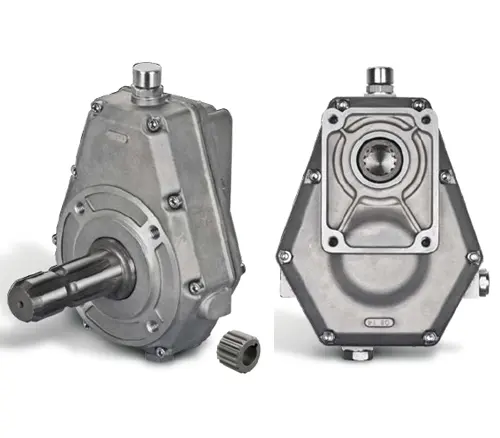
Efficient Power Transmission and Torque Transfer with Miter Gearboxes
Miter gearboxes play a crucial role in ensuring efficient power transmission and torque transfer in mechanical systems:
Direct 90-Degree Motion Change: Miter gearboxes utilize bevel gears to change the direction of rotational motion by 90 degrees. This direct motion change eliminates the need for additional components or complex transmission mechanisms, resulting in minimal power losses.
Optimal Torque Transfer: Bevel gears in miter gearboxes are designed to mesh at a specific angle, allowing for efficient torque transfer between the input and output shafts. This design ensures that a significant portion of the input torque is transmitted to the output shaft, minimizing energy wastage.
Sturdy and Precise Gearing: Miter gearboxes are constructed with high-quality materials and precision machining to ensure proper meshing and engagement of the bevel gears. This enhances the gearbox’s ability to transmit torque accurately and reliably.
Reduced Friction and Wear: The meshing bevel gears in miter gearboxes are engineered for minimal friction and wear. This feature contributes to efficient power transmission over the gearbox’s lifespan and helps maintain consistent torque transfer.
Compact and Space-Efficient Design: The compact nature of miter gearboxes allows for efficient use of available space in mechanical systems. This design minimizes the distance between the input and output shafts, reducing potential energy losses and improving overall efficiency.
Applications in High-Torque Scenarios: Miter gearboxes are often employed in applications requiring high torque transmission, such as heavy machinery, industrial equipment, and automotive systems. Their ability to efficiently handle torque transfer makes them suitable for demanding tasks.
Versatility and Customization: Miter gearboxes can be customized to meet specific torque and power requirements of different applications. This adaptability ensures optimal torque transfer and power transmission in various settings.
Overall, miter gearboxes are designed to provide efficient and reliable power transmission while maintaining high torque transfer capabilities, making them valuable components in a wide range of mechanical systems.
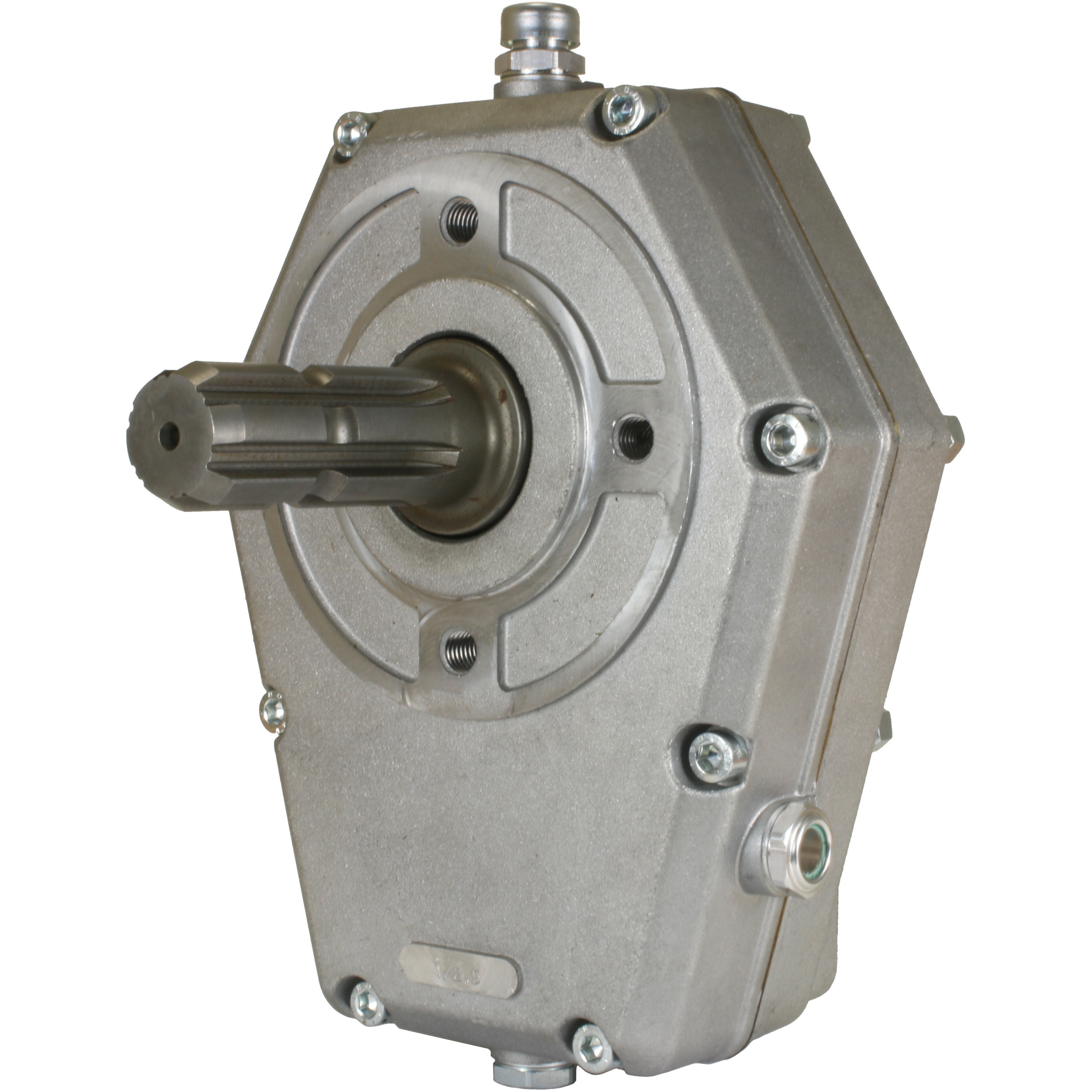
Zalety przekładni kątowych w porównaniu z innymi systemami przekładni
Przekładnie kątowe oferują wyraźne zalety w pewnych sytuacjach, dzięki którym są preferowane w stosunku do innych typów układów przekładniowych:
Zmiana ruchu o 90 stopni: Przekładnie kątowe doskonale sprawdzają się w zmianie kierunku ruchu o 90 stopni. Dzięki temu idealnie nadają się do zastosowań, w których wymagana jest zmiana kierunku ruchu pod kątem prostym.
Kompaktowa konstrukcja: Przekładnie kątowe mają kompaktową i oszczędzającą miejsce konstrukcję, dzięki czemu nadają się do zastosowań o ograniczonej przestrzeni.
Precyzyjne sterowanie: W układach kierowniczych samochodów przekładnie kątowe zapewniają precyzyjną i dokładną kontrolę kierunku jazdy pojazdu, przyczyniając się do bezpiecznego i responsywnego kierowania.
Zmniejszony luz: Przekładnie kątowe zostały zaprojektowane tak, aby zminimalizować luz, zapewniając precyzyjne i płynne przenoszenie ruchu. Dzięki temu nadają się do zastosowań, w których precyzja i responsywność mają kluczowe znaczenie.
Personalizacja: Przekładnie kątowe można dostosować do konkretnych wymagań dotyczących momentu obrotowego, prędkości i konstrukcji, dzięki czemu można je dostosować do różnych zastosowań.
Niezawodna transmisja ruchu: Przekładnie kątowe zapewniają niezawodne przenoszenie ruchu i są często wybierane w zastosowaniach, w których kluczowe znaczenie ma spójna i dokładna kontrola ruchu.
Niski poziom hałasu i wibracji: Konstrukcja przekładni kątowych pozwala na redukcję hałasu i wibracji, dzięki czemu nadają się one do zastosowań, w których wymagana jest cicha praca.
Przekładnie kątowe są preferowane w sytuacjach, w których ich wyjątkowa konstrukcja i możliwości odpowiadają konkretnym wymaganiom dotyczącym sterowania ruchem i zmiany kierunku, zapewniając wydajność, precyzję i niezawodność.
Obsługa aplikacji o dużej prędkości i dużym obciążeniu w przekładniach kątowych
Przekładnie kątowe to wszechstronne komponenty mechaniczne, które sprawdzają się w szerokim zakresie zastosowań, zarówno przy dużych prędkościach, jak i przy dużych obciążeniach. Przydatność przekładni kątowej do konkretnego zastosowania zależy od różnych czynników, takich jak konstrukcja, materiał, smarowanie i ogólne uwarunkowania inżynieryjne.
W przypadku zastosowań wysokoobrotowych, przekładnie kątowe mogą być projektowane i produkowane tak, aby obsługiwać prędkości obrotowe typowe dla różnych branż. Prawidłowo zaprojektowane przekładnie kątowe uwzględniają takie czynniki, jak profil zębów, smarowanie i dobór materiałów, aby zminimalizować tarcie, generowanie ciepła i zużycie, umożliwiając wydajną i niezawodną pracę przy dużych prędkościach.
Podobnie, przekładnie kątowe mogą być zaprojektowane do pracy przy dużych obciążeniach. Dzięki zastosowaniu trwałych materiałów, precyzyjnej obróbki i solidnych łożysk, przekładnie kątowe mogą efektywnie przenosić wysoki moment obrotowy, zachowując jednocześnie integralność konstrukcji. Układ przekładni stożkowych w przekładniach kątowych doskonale nadaje się do równomiernego rozprowadzania dużych obciążeń na zęby kół zębatych, zapewniając płynne i równomierne przenoszenie mocy.
Należy pamiętać, że konkretna konstrukcja i możliwości przekładni kątowej będą się różnić w zależności od producenta i przeznaczenia. Inżynierowie i projektanci pracują nad optymalizacją przełożeń, układów łożysk i materiałów obudowy, aby zapewnić, że przekładnia kątowa sprosta wymaganiom danego zastosowania, niezależnie od tego, czy wymaga ona wysokich prędkości, dużych obciążeń, czy też kombinacji obu tych czynników.
Przekładnie kątowe zapewniają niezawodną pracę w szerokim spektrum warunków pracy, co czyni je uniwersalnym wyborem dla różnych branż i zastosowań.


editor by CX 2023-11-28