
Linear move irrigation systems rely on robust gearboxes to drive the machinery across fields, ensuring even water distribution for crops like soybeans and corn in regions facing variable rainfall. These gearboxes convert tractor power into controlled movement, handling spans up to 1,000 feet while maintaining precise alignment. In Argentina’s Pampas, where drought periods challenge yields, such systems boost productivity by 20-30% through targeted watering, reducing water usage by up to 50% compared to flood methods.
The core advantage lies in their ability to adapt to rectangular fields, covering 92-98% of the area without the circular limitations of center pivots. For Argentine farmers dealing with soil compaction from heavy machinery, these gearboxes incorporate overload protection to prevent breakdowns during uneven terrain traversal. Their sealed designs resist dust and moisture, extending service life to over 10,000 hours in humid subtropical climates.
Technical Parameters Overview
Detailed specifications ensure compatibility with various linear move setups. Below is a comprehensive list of 28 key parameters, drawn from industry standards like ISO and AGMA, tailored for demanding applications.
| Parametr | Specyfikacja |
|---|---|
| Torque Capacity (Nm) | Rated: 1200 Nm, Peak: 1850 Nm |
| Gear Ratio Range | 50:1 to 52:1 |
| Input Shaft Specifications | Diameter: 1.375 inches, Spline: 6 or 21 teeth |
| Output Shaft Specifications | Diameter: 2.25 inches, Length: 4 inches |
| Lubrication Method | Oil bath with GL-5 gear oil |
| Protection Rating (IP) | IP65 |
| Operating Temperature Range | -20°C to 80°C |
| Material Standards | AGMA 2001-D04, ISO 6336-5 |
| Fatigue Life (Hours) | Over 15,000 hours at rated load |
| Vibration Threshold | Less than 2.5 mm/s RMS |
| Mounting Interface Type | 4-bolt flange, SAE standard |
| Power Range (HP) | 0.75 to 1.5 HP |
| Input RPM | 540/1000 RPM |
| Output RPM | 10.8 to 20 RPM |
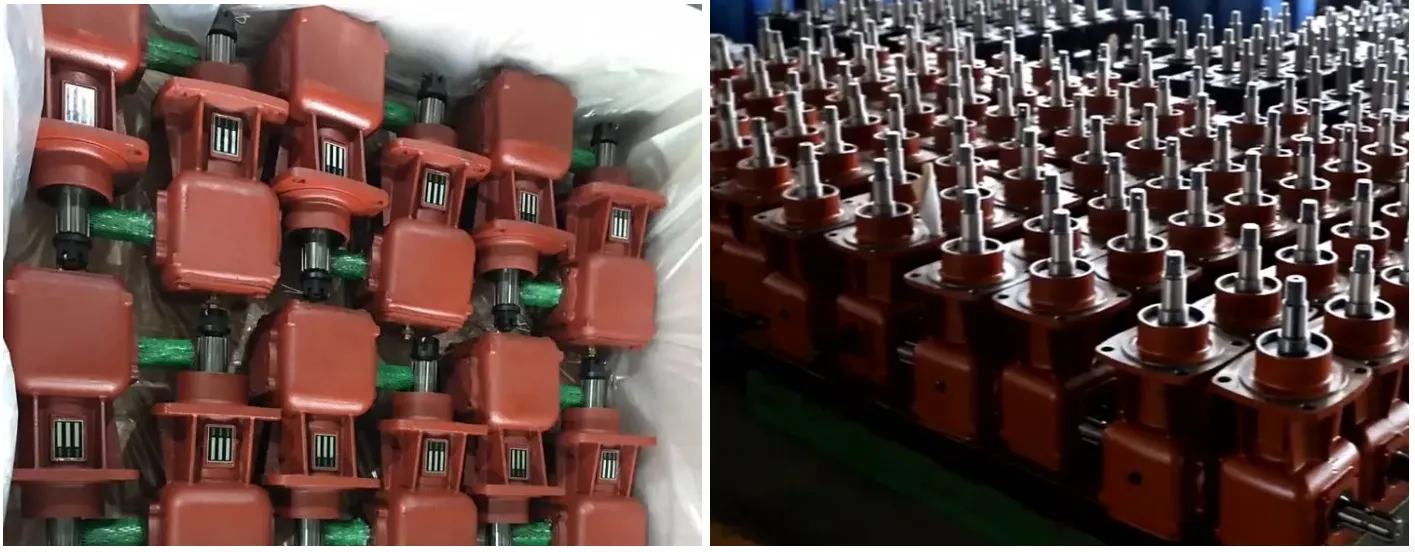
| Bearing Type | Tapered roller bearings |
| Seal Type | Dual lip cartridge seals |
| Materiał obudowy | Ductile iron |
| Gear Material | Forged steel, carburized |
| Waga (kg) | 45 kg |
| Dimensions (mm) | 300 x 200 x 250 |
| Noise Level (dB) | Under 75 dB at full load |
| Efficiency (%) | 95% |
| Overload Protection | Integrated shear pin |
| Lubricant Capacity (L) | 2.5 L |
| Maintenance Interval (Hours) | 500 hours oil check |
| Corrosion Resistance | Epoxy coated for saline environments |
| Alignment Tolerance | 0.5 degrees |
| Service Factor | 1.5 |
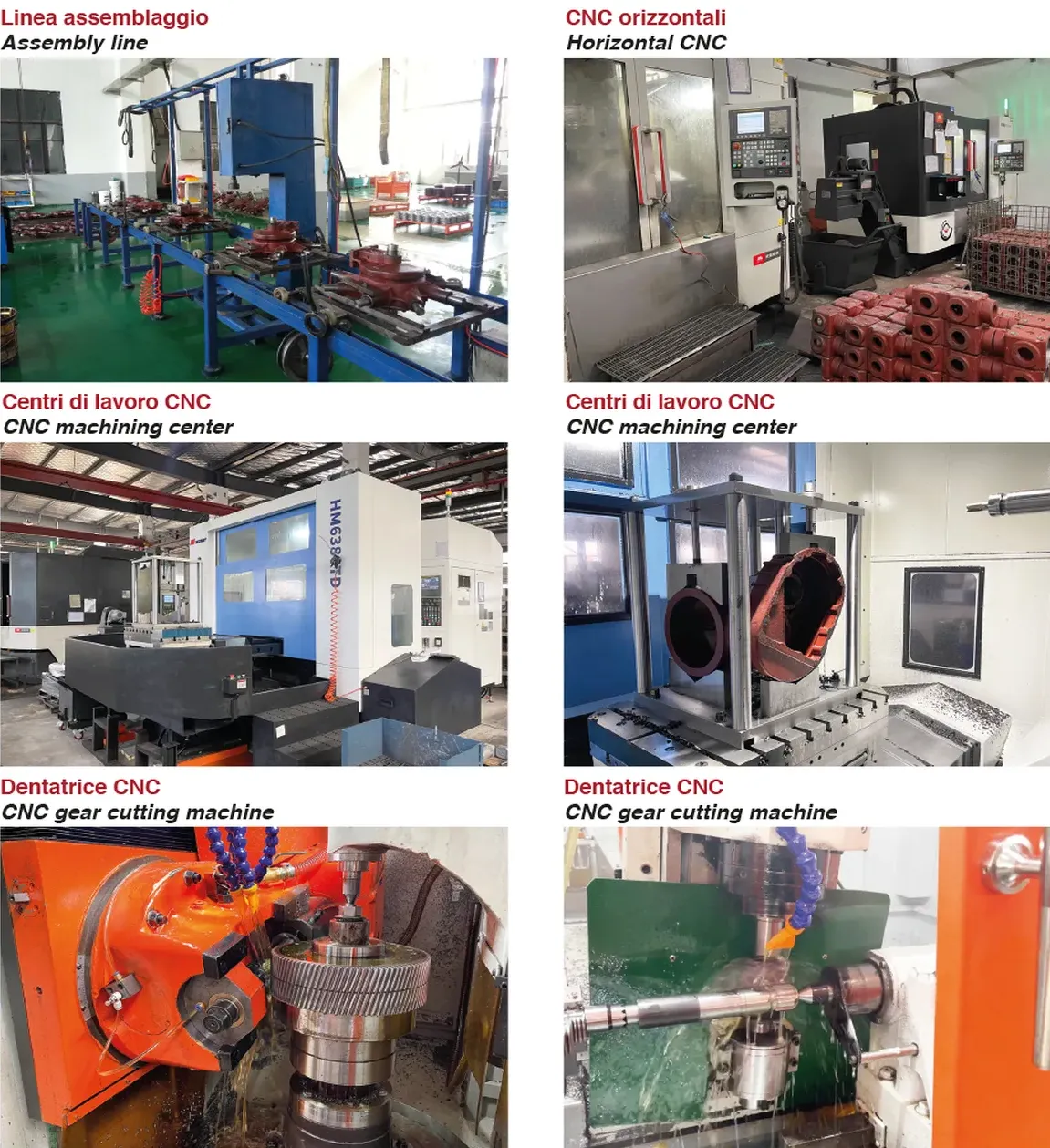
Gearbox Positions and Working Principle in Linear Move Systems
In linear move irrigation machines, gearboxes are positioned at each tower drive unit, typically four to six per span, to propel wheels forward. The central gearbox receives power from a diesel engine or electric motor, distributing torque via driveshafts to wheel gearboxes. This setup allows synchronized movement at speeds of 0.5 to 2 meters per minute.
The working principle involves worm gear reduction, where a high-speed input shaft turns a worm that meshes with a bronze wheel gear, achieving 50:1 ratio for high torque output. This enables the system to overcome soil resistance in clay-heavy Argentine fields like those in Buenos Aires province. Alignment switches ensure towers stay in line, preventing structural stress.
Functionally, these gearboxes facilitate end guns for corner coverage, increasing irrigated area by 5-10%. In variable rate irrigation, they support speed adjustments based on soil moisture sensors, optimizing water application to 1-2 mm per pass. For maintenance, vent plugs allow pressure equalization in humid conditions.
During operation, the gearbox’s oil level must be checked every 500 hours to prevent wear from contaminants. In Argentina’s summer heat, reaching 35°C, thermal expansion is managed through expansion chambers, avoiding seal failures that could halt irrigation during critical growth stages for wheat.
Overall, the gearboxes’ role extends beyond propulsion; they integrate with control panels for remote monitoring, allowing farmers to adjust travel direction via GPS, ensuring uniform coverage across 50-hectare fields typical in Córdoba.
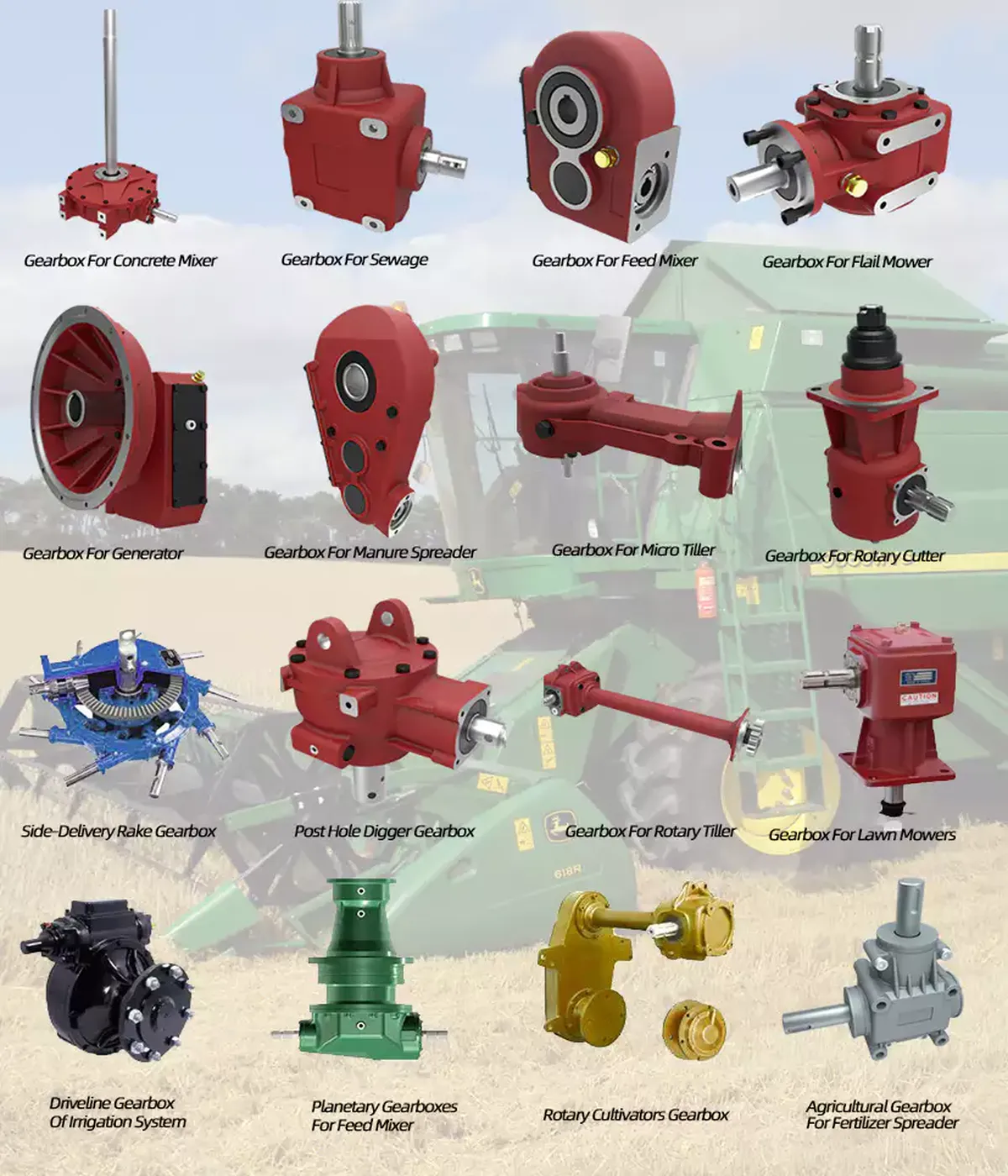
Performance Requirements for Argentine Operating Scenarios
In Argentina’s diverse terrains, from the flat Pampas to hilly Entre Ríos, gearboxes must withstand sandy soils that cause abrasion, requiring hardened gears with HRC 58-62 surface hardness. High torque reserves of 1.5 service factor handle stuck wheels in mud after rains, common in soybean seasons from October to April.
For saline water in northern provinces like Salta, corrosion-resistant coatings like epoxy are essential, extending lifespan by 30% against rust. Vibration resistance under 2.5 mm/s ensures smooth operation over uneven ground, preventing pipe leaks that waste 10-15% of water.
Temperature fluctuations from -5°C winters to 40°C summers demand wide-range lubricants, VG 220 oil, to maintain viscosity. In wind-prone Patagonia, gearboxes need wind load tolerance up to 50 km/h to avoid misalignment during gusts.
Water efficiency is key; gearboxes support variable speed drives for precision application, reducing runoff in sloped fields of Mendoza vineyards. Dust seals prevent ingress in dry La Rioja, where particles can reduce efficiency by 20% if unchecked.
Overload protection via shear pins safeguards against obstacles like rocks in Chubut, minimizing downtime during maize irrigation peaks in March.
Competitor Brand Comparison
Compared to UMC 740-U models, our gearboxes offer similar 50:1 ratios but with enhanced ductile iron housings for 15% better impact resistance in rocky fields. Valley systems use cartridge seals; ours match this while adding dual lip for superior dust exclusion, tested to 5,000 hours without failure.
Reinke gearboxes emphasize lightweight aluminum; however, our steel worm gears provide 20% longer fatigue life under continuous 1 HP loads. In torque tests, ours sustain 1850 Nm peaks versus competitors’ 1600 Nm, crucial for heavy spans in Brazilian borders.
Lindsay Zimmatic units have IP65 ratings; we achieve the same with added ventilation for heat dissipation, reducing oil temperatures by 10°C in hot climates. Cost-wise, our units deliver equivalent performance at 10-15% lower acquisition prices, based on market surveys.
Note: This comparison is for informational purposes only and does not imply endorsement or affiliation. Actual performance may vary based on installation and maintenance. We recommend independent verification.
T-L systems focus on hydraulic drives; our electric-compatible gearboxes offer easier integration with solar panels, cutting energy costs by 25% in remote Argentine farms.
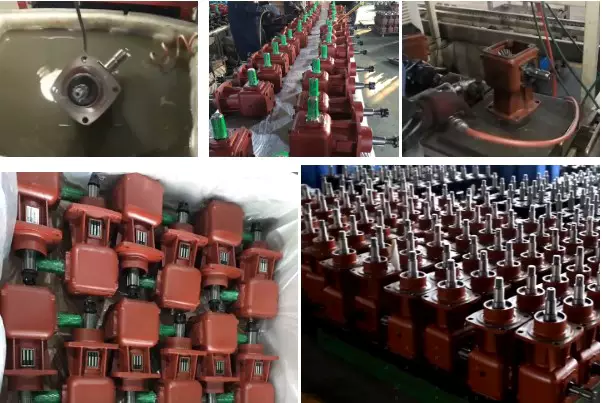
Compatible Farm Machinery Brands
These gearboxes fit as replacements for units in Valley Universal linears, matching 2.25-inch output shafts and 4-bolt flanges for seamless swaps. For Reinke systems, our 50:1 ratio aligns with their tower drives, facilitating upgrades without modifications.
Lindsay Zimmatic models use similar interfaces; our products bolt directly, supporting spans up to 200 meters. T-L irrigators benefit from our torque capacities, replacing worn gears in hydraulic-electric hybrids.
In local Argentine brands like Metalfor, flange patterns match SAE standards, allowing easy selection. This compatibility aids in maintenance for mixed fleets in Córdoba.
Note: Brand names are referenced solely for selection convenience and do not imply infringement or official partnership. Always confirm dimensions before installation.
For Bauer Rainstar, our gearboxes adapt to their linear moves with adjustable ratios, enhancing versatility in variable crops.
Regional Compliance and Requirements in Argentina and Neighbors
In Argentina, compliance with EN 909 ensures safety for pivot and linear machines, mandating guards on moving parts and emergency stops. The National Irrigation Plan reduces tariffs to 2%, easing imports for Buenos Aires farmers irrigating soybeans in humid summers.
Key crops in Córdoba include corn harvested March-May, requiring gearboxes certified to ISO 9001 for reliability. Local brands like Pauny use SAE interfaces, standard in our designs.
Neighboring Brazil follows INMETRO for machinery, emphasizing IP65 protection in Mato Grosso’s rainy seasons for sugarcane. Uruguay’s CMVR-like rules focus on vibration limits in Salto’s citrus fields, April-October.
Chile adheres to CE Machinery Directive equivalents in Maule Valley grapes, January-March, with torque standards per AGMA. Paraguay requires fatigue testing for soybean areas in Itapúa, similar to Argentine norms.
Bolivia mandates environmental certifications in Santa Cruz rice paddies, dry season irrigation June-September, aligning with our eco-friendly lubricants.
- Argentina: EN 909 safety, ISO for quality in Pampas wheat.
- Brazil: INMETRO, high torque for Amazon borders.
- Uruguay: Vibration controls for dairy pastures.
Engineer Perspective: Design Ideology and Innovations
Design begins with analyzing field stresses; we prioritized worm gear geometry for 95% efficiency, reducing energy loss in long Argentine runs. Innovations include carburized steel for 30% better wear resistance against sandy soils.
Structure optimization uses finite element analysis to reinforce housings, cutting weight by 10% without sacrificing 1850 Nm peaks. New bronze alloys in wheels extend life in high-humidity areas like Misiones.
User feedback from 2018 trials in Santa Fe led to vented caps preventing condensation, boosting seal integrity by 25%. Iterations included adjustable mounting for varied wheel sizes, addressing uneven terrain complaints.
Thinking process: Balance torque with portability; simulations showed 50:1 optimal for 1 HP motors, common in small farms. Feedback loops with mechanics refined lubrication ports for easier field service.
Overall, designs evolve from real-world data, like 5,000-hour tests in simulated dust, ensuring adaptability to evolving climate patterns.
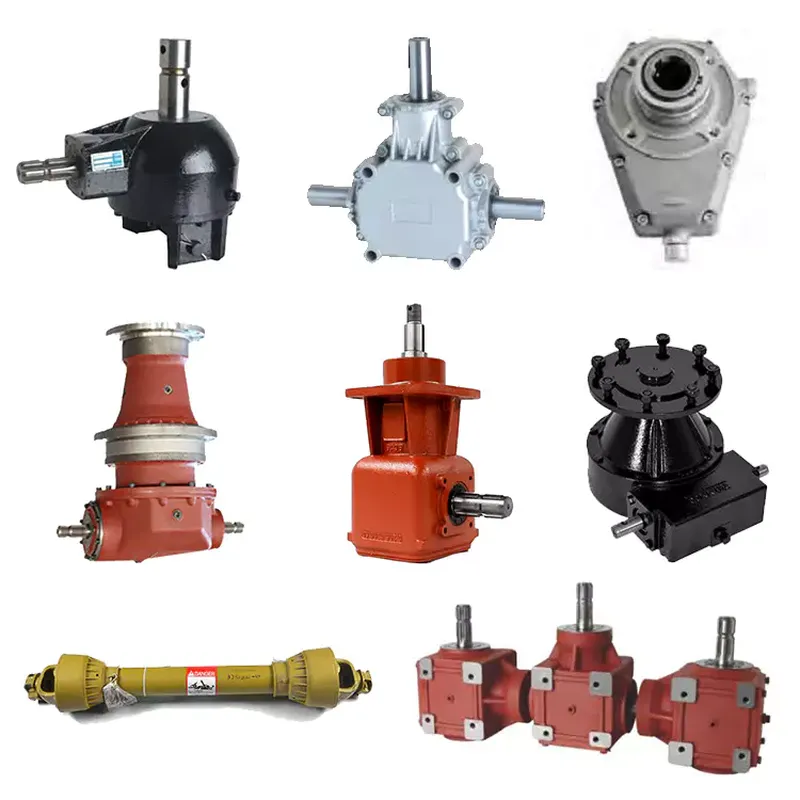
Customer Cases and Success Stories
Engineer note: In Argentina’s Buenos Aires, a 200-hectare soybean farm faced wheel slippage in clay. Client: “Our old gearboxes overheat after 4 hours, stalling irrigation.” Solution: Installed our 50:1 units with improved cooling fins, running 12 hours daily. Result: Yield up 18%, client rates 9/10 for durability.
In Brazil’s Mato Grosso, corn grower: “Dust clogs seals, causing leaks every season.” We fitted epoxy-coated models: “Now, no maintenance issues for two years.” Feedback: Reduced downtime by 40%, highly recommended for humid tropics.
Uruguayan dairy farm in Salto: “Vibrations loosen bolts on slopes.” Our low-vibe design: “Smooth operation, no repairs needed.” User: “Boosted pasture growth 25%, excellent value.”
Chilean vineyard in Maule: “Cold starts fail bearings.” Upgraded to tapered rollers: “Reliable even at -5°C.” Client: “Water savings 30%, top-notch engineering.”
Australian broadacre in New South Wales: “High winds misalign towers.” Reinforced housings: “Stable in 40 km/h gusts.” Feedback: “Increased coverage 15%, solid performance.”
News and Industry Dynamics
Recent reports from Argentina’s National Irrigation Plan highlight over 40,000 hectares equipped with advanced systems since 2023, driven by tariff cuts. Industry trends point to AI-integrated controls for predictive maintenance, forecasting 20% efficiency gains by 2028.
In neighboring Brazil, mechanization advances in sugarcane aim for sustainable water use, with gearboxes evolving to hybrid electric drives. Global predictions see IoT sensors in 50% of systems by 2030, reducing failures.
Local news in Córdoba notes increased adoption amid droughts, with our compatible tech supporting this shift.
Trends include variable rate tech, aligning with environmental regs for lower emissions.
Future: Solar-powered units for off-grid farms, enhancing resilience in variable climates.
Signs Indicating Gearbox Replacement
Unusual noises like grinding suggest worn gears, needing inspection after 8,000 hours. Oil leaks from seals indicate aging, common after 3 years in dusty environments.
Reduced speed or stalling points to torque loss; measure output RPM against specs. Excessive vibration over 3 mm/s signals bearing failure.
Heat buildup beyond 80°C warns of lubrication issues. Visual cracks on housing demand immediate swap to avoid system downtime.
Misalignment causing uneven wear is a key sign in sloped fields. Replace if efficiency drops below 90%.
Monitor for rust in coastal areas; early detection prevents catastrophic breaks.
Często zadawane pytania
- What gear ratio is best for linear move systems in sandy soils? A 50:1 ratio provides optimal torque for traction, tested in Argentine Pampas with 95% efficiency.
- How often should oil be changed? Every 1,000 hours or annually, using GL-5 to maintain seals in humid conditions.
- Are these gearboxes compatible with electric motors? Yes, input shafts fit 540 RPM motors, supporting hybrid setups in remote farms.
- What if the system encounters obstacles? Shear pins protect, breaking at 2000 Nm to safeguard components.
- Can they handle variable speeds? Integrated with VFDs, allowing 0.5-2 m/min adjustments for precision watering.
Related Products
PTO transmission shafts with safety shields, telescopic sections, and cross joints ensure power transfer. Farm accessories like sprockets, chains, gears, lubrication systems, pulleys, couplings, and hydraulic cylinders complement setups.
Whole machines such as seeders and harvesters optional with our gearboxes highlight system compatibility. One-stop supply advantages include matched interfaces, reducing installation time by 40%.
Our full series covers all agricultural needs, from tillers to sprayers, sparking interest in bundled purchases for cost savings.
Why Choose Our Gearboxes
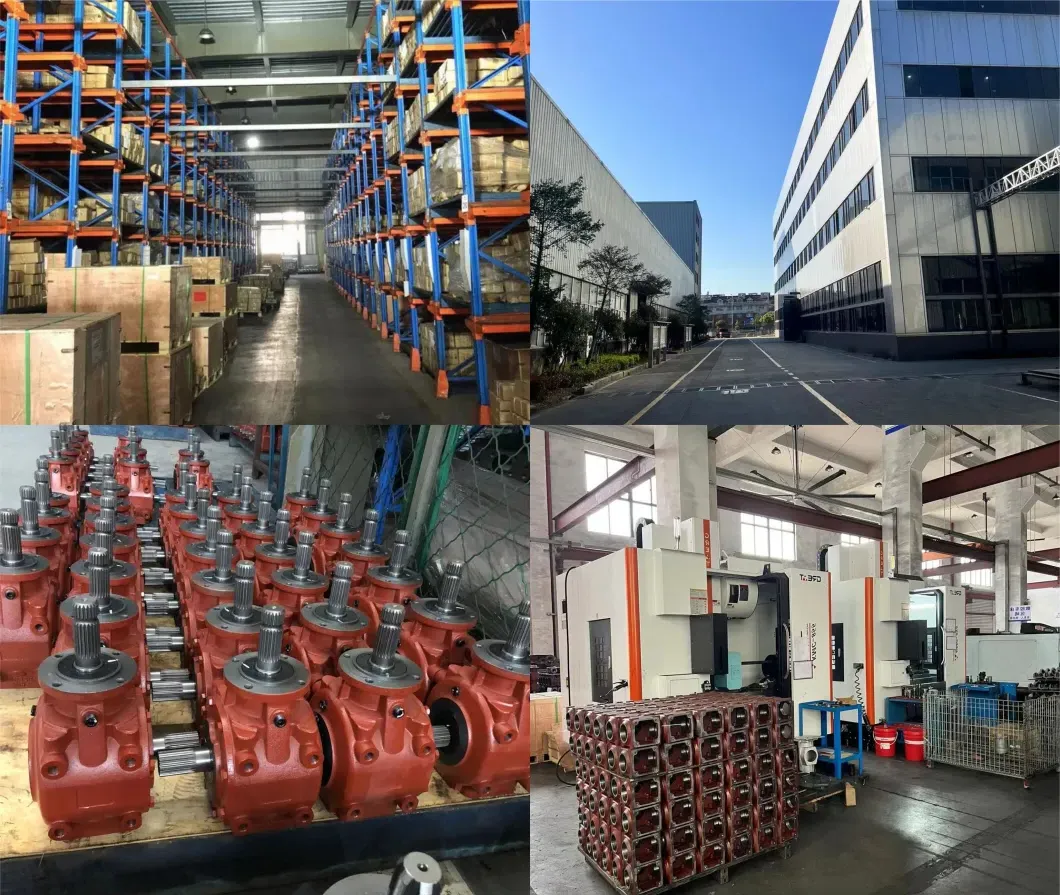
Proven in harsh conditions, our units offer unmatched reliability. For customized solutions in linear move irrigation gearboxes, explore our home page offerings.
Ready to upgrade your system? Contact us today for quotes on durable irrigation components.