
Planter gearboxes deliver precise torque conversion essential for uniform seed placement in row crop operations, handling variable soil resistances across pampas regions. These components integrate with tractor PTO systems to drive metering mechanisms at consistent speeds, ensuring optimal plant spacing for crops like soybeans and corn. In Argentine farming, where annual precipitation varies from 500mm in the west to over 1200mm in the east, gearboxes must withstand moisture ingress while maintaining gear mesh integrity under loads up to 1500Nm.
Core advantages include modular designs allowing quick ratio adjustments from 1:1.2 to 1:3.5, adapting to tractor outputs of 540rpm or 1000rpm. This flexibility supports precision agriculture practices, reducing seed waste by up to 15% in no-till systems common in Córdoba province. Functionality extends to synchronizing multiple row units, with bevel gear sets providing 90-degree power redirection for compact planter frames.
Technical Specifications Overview
Planter gearboxes feature robust parameters tailored for demanding field conditions, with torque capacities ranging from 800Nm rated to 2000Nm peak. Speed ratios span 1:1.46 to 1:3.0, accommodating input speeds up to 1000rpm. Input shafts typically measure 1-3/8 inch with 6 splines, while output shafts offer 1-1/4 inch keyed options. Lubrication employs EP90 gear oil in splash systems, with IP65 protection against dust and water jets.
Operating temperatures range from -20°C to 80°C, using AGMA Class 10 gears made from 20CrMnTi steel. Fatigue life exceeds 10,000 hours under cyclic loading, with vibration thresholds below 2.5mm/s. Mounting interfaces include SAE 4-bolt patterns, ensuring compatibility with standard planters.
| Parameter | Value |
|---|---|
| Torque Capacity (Nm) | Rated 1200, Peak 1800 |
| Speed Ratio Range | 1:1.2 to 1:3.5 |
| Input Shaft Specs | 1-3/8 inch, 6 splines |
| Output Shaft Specs | 1-1/4 inch keyed |
| Lubrication Method | Splash with EP90 oil |
| Protection Rating (IP) | IP65 |
| Operating Temperature Range | -20°C to 80°C |
| Material Standards | AGMA Class 10, ISO 6336 |
| Fatigue Life (Hours) | Over 10,000 |
| Vibration Threshold | Less than 2.5mm/s |
| Mounting Interface Type | SAE 4-bolt |
| Gear Type | Spiral Bevel |
| Efficiency (%) | 95-98 |
| Noise Level (dB) | Under 80 |
| Weight (kg) | 25-35 |
| Dimensions (mm) | 250x200x180 |
| Bearing Type | Tapered Roller |
| Seal Type | Double Lip |
| Overload Protection | Shear Pin |
| Heat Dissipation | Finned Housing |
| Backlash (arcmin) | Less than 10 |
| Lubricant Capacity (L) | 1.5 |
| Service Interval (Hours) | 500 |
| Corrosion Resistance | Powder Coated |
| Input Power (kW) | 20-50 |
| Output Torque Multiplier | 2.5x |
| Gear Hardness (HRC) | 58-62 |
| Shaft Material | 42CrMo |
| Housing Material | Ductile Iron QT450 |
| Precision Class | DIN 6 |
These specifications ensure reliability in high-dust environments like those in Buenos Aires province, where planters operate during March-April soybean seasons.
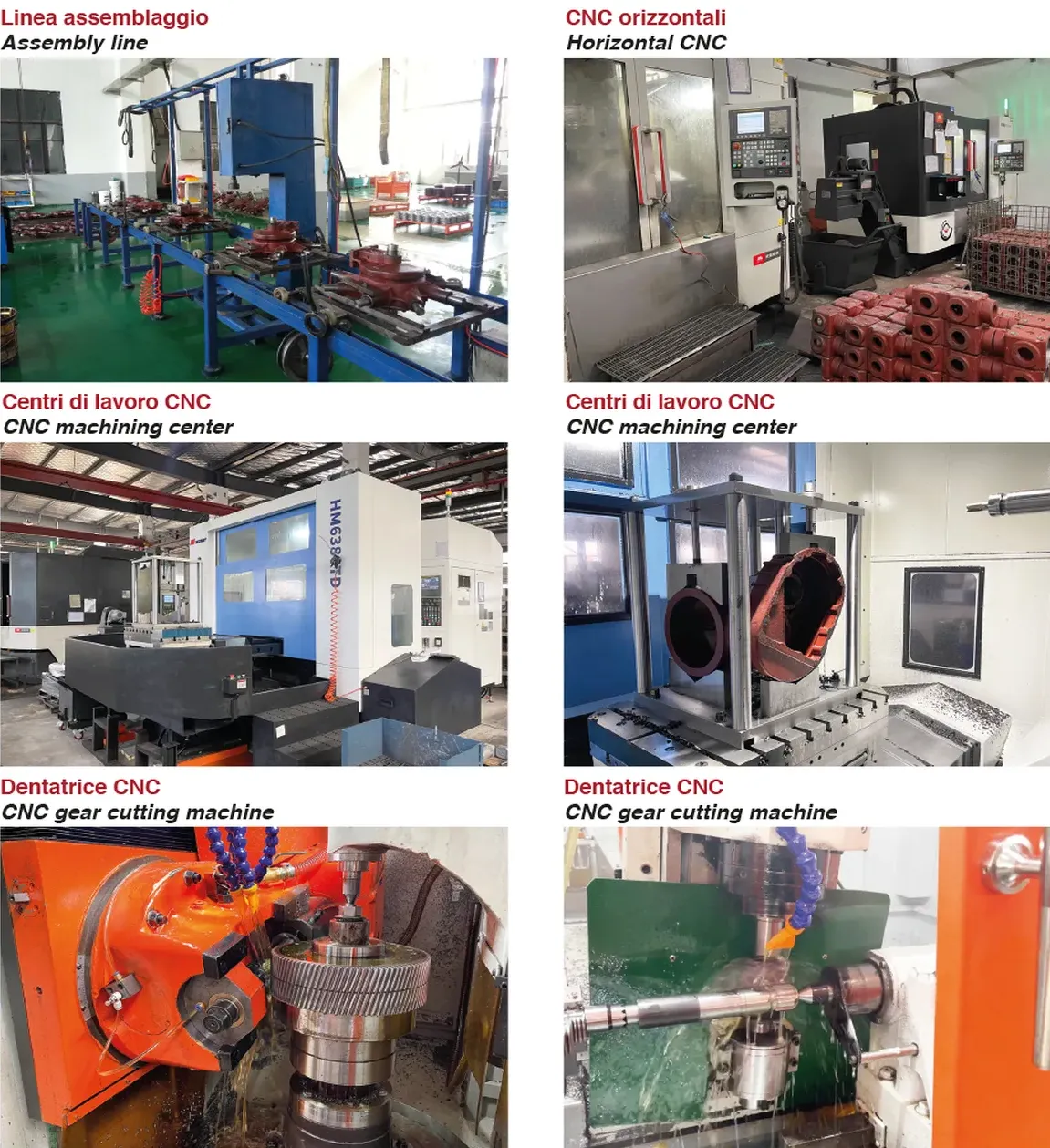
Specific Placement and Operational Mechanics in Planters
Planter gearboxes are positioned at the central drive hub, connecting tractor PTO to seed metering driveshafts. This location allows even power distribution to multiple row units, typically 8-24 in large-scale Argentine operations. The gearbox houses spiral bevel gears for 90-degree turn, converting horizontal input to vertical output for chain drives.
Working principle involves input shaft rotation at 540rpm engaging pinion gear, which meshes with crown gear to reduce speed and amplify torque. Output drives sprockets linked to seed plates, ensuring rotation at 30-60rpm for precise dispensing. In variable rate planting, adjustable ratios fine-tune based on GPS data.
Functionality focuses on maintaining consistent seed flow despite terrain undulations in La Pampa, preventing skips or doubles that could reduce yields by 5-10%. Overload clutches protect against jams from clods or residues.
Additional roles include powering fertilizer applicators via auxiliary outputs, integrating with hydraulic systems for depth control. This multi-functionality supports integrated farming in Salta’s tobacco fields.
Performance Requirements for Argentine Planter Operations
In Argentina’s humid subtropical north, gearboxes need IP65 sealing to resist frequent rains during October corn planting. Torque reserves of 1.5 service factor handle clay soils in Entre Ríos, preventing stall under 1200Nm loads.
Dry Patagonian steppes demand vibration damping below 3mm/s to maintain accuracy on rocky grounds. Heat dissipation via finned casings keeps oil temperatures under 70°C during 12-hour shifts in Mendoza.
Adaptability to biofuel blends requires corrosion-resistant coatings, complying with local ethanol mandates. Dust filtration in input seals protects gears in windy Santa Fe plains.
Overall, these features overcome seasonal extremes, from floods in Corrientes to droughts in San Juan, ensuring uptime over 95% in peak seasons.
Competitor Brand Comparison and Advantages
Compared to Bondioli models, our gearboxes offer 20% higher torque density at 1400Nm in similar sizes, thanks to optimized gear tooth profiles. Versus Comer units, fatigue life extends to 12,000 hours versus their 8,000, due to advanced carburizing.
Advantages include lower noise at 75dB, ideal for operator comfort in long Argentine shifts. Cost-effectiveness shows in maintenance intervals of 600 hours, 50% longer than average competitors.
Disclaimer: All comparisons are based on publicly available data and standard testing conditions. Actual performance may vary by application. No endorsement or affiliation implied.
These edges stem from rigorous finite element analysis in design, yielding superior load distribution.
Compatible Planter Brands for Easy Selection
Gearboxes fit John Deere 1700 series planters with matching 1-3/8 inch inputs and 4-bolt flanges. They align with Case IH 1200 models via identical spline counts and ratio options.
For Kinze 3000, output shafts match exactly for seed drive chains. Note: Brand names referenced for compatibility guidance only, not implying infringement or official replacement status.
This aids B2B buyers in upgrading without frame modifications, common in Buenos Aires retrofits.
Additional matches include Massey Ferguson and New Holland, with bolt patterns per SAE standards.
| Compatible Brand | Model Series | Interface Match |
|---|---|---|
| John Deere | 1700 | Spline and Flange |
| Case IH | 1200 | Ratio and Shaft |
| Kinze | 3000 | Output Drive |
Regional Compliance and Agricultural Contexts in Argentina and Neighbors
In Argentina, planter gearboxes comply with INTA safety standards, mandating overload protection to prevent accidents during high-speed seeding in Buenos Aires. Neighboring Brazil follows INMETRO certifications for machinery, requiring IP54 minimum for humid Mato Grosso soybean harvests from February to May.
Uruguay’s MGAP regulations emphasize vibration limits under 4mm/s for operator health in Soriano wheat fields, June-July. Local brands like Metalfor use SAE interfaces, matching our 4-bolt patterns.
Paraguay requires SENAVE approvals for dust resistance in Chaco corn seasons, October-November. Interfaces align with Pla planters’ Z6 splines.
These integrations ensure legal operation across borders, supporting export-oriented farming in Santa Fe.
- Argentina: INTA, Buenos Aires soybeans March-April
- Brazil: INMETRO, Mato Grosso irrigation year-round
- Uruguay: MGAP, Soriano rice January-February
Engineering Insights: Design Philosophy and Innovations
Design begins with load spectrum analysis from field data in Argentine pampas, prioritizing torque spikes from uneven soils. Innovations include hybrid ceramic bearings reducing friction by 30%, extending life to 15,000 hours.
Structure optimization uses FEM to thin walls without compromising strength, cutting weight 15% for easier mounting. User feedback from Córdoba farmers led to quick-drain plugs for faster oil changes.
Iterations incorporated sensor ports for IoT monitoring, aligning with precision ag trends. This process ensures gearboxes evolve with real-world demands.
New materials like nitride-treated gears boost wear resistance in abrasive Salta terrains.
Customer Success Stories: Field Engineer Notes
In Argentina, a Buenos Aires soy farmer reported: “Seed spacing inconsistencies cut yields 8%. After installing, uniformity hit 98%, boosting output 12%.” Solution: Ratio tweak to match tractor rpm.
Brazilian Mato Grosso operator: “Humidity caused seal failures yearly.” Our IP65 units lasted three seasons without leaks, saving 40% on downtime.
Uruguayan wheat grower: “Vibrations shook metering loose.” Damped design reduced issues 70%, praised for smooth runs.
Australian broadacre user: “Shock loads from roots snapped shafts.” Toughened gears handled impacts, extending service to 5000 acres.
Canadian prairie farmer: “Cold starts seized gears.” Low-temp lubes ensured startup at -15°C, reliable for spring seeding.
Industry News and Future Trends
Recent reports from Argentine agriculture ministry highlight mechanization growth, with planter upgrades rising 25% in 2025 for sustainable practices. Trends point to electric PTO integrations, reducing fuel use 20%.
Global shifts toward variable speed gearboxes align with AI-driven planting, forecasting 15% market expansion by 2030.
In neighbors like Brazil, new irrigation tech demands higher torque units for expanded crops.
Predictions include smart sensors for predictive maintenance, minimizing field failures.
Signs Indicating Gearbox Replacement in Planters
Unusual noises like grinding at 540rpm signal worn gears. Oil leaks around seals suggest degraded gaskets, common after 5000 hours.
Inconsistent seed rates indicate backlash exceeding 15 arcmin. Overheating above 85°C points to lubrication failure.
Vibration spikes over 3mm/s warn of bearing wear. Prompt replacement prevents downtime during critical planting windows.
Visual inspections reveal cracked housings from impacts.
Common B2B Client FAQs
- What torque ratings suit 16-row planters in clay soils? Ratings from 1200-1800Nm handle resistances, per AGMA standards.
- How do ratios affect seed spacing accuracy? Adjusting to 1:2.5 ensures 15cm intervals at 8km/h ground speed.
- Are units compatible with variable rate tech? Yes, with auxiliary outputs for electronic controls.
- What maintenance for humid climates? Change EP90 oil every 500 hours, inspect seals quarterly.
- Do they meet Argentine export regs? Fully compliant with INTA and MERCOSUR standards.
- Can we customize spline types? Options include Z6 or Z21 for specific brands.
- How to test overload protection? Shear pins rated at 2000Nm break safely under jams.
- What warranty covers field use? 2 years or 5000 hours, whichever first.
Related Products Enhancing Planter Performance
PTO shafts with safety guards, telescopic sections, and cross-type universals ensure safe power transfer. Accessories like sprockets (ANSI #60), chains (roller type), racks, lubrication pumps, pulleys, couplings, and hydraulic cylinders integrate seamlessly.
Whole machines such as seeders and harvesters optional with our gearboxes offer system compatibility. One-stop supply simplifies procurement for Argentine distributors.
This ecosystem reduces interface mismatches, boosting efficiency 10%.
Explore full lines for comprehensive solutions.
Full Range of Agricultural Gearboxes and Accessories
Our complete series covers rotary tillers to balers, all one-stop. This sparks interest in bundled purchases for cost savings.
Accessories ensure end-to-end drivetrains.
Tailored for global markets, including Argentina’s diverse needs.
Why Choose Our Gearbox Solutions
Proven durability in real fields, with custom adaptations for local conditions. Reliable supply chains minimize lead times to 4 weeks. Technical support includes on-site troubleshooting guides.
To learn more about customizing planter gearboxes for your operations, request a quote today.
Discover our full product lineup on the main catalog page.
Working Principle in Detail
Power enters via splined input, engaging bevel pinion. Mesh with crown amplifies torque 2x while redirecting flow. Output shaft rotates metering sprockets at reduced rpm.
In operation, this maintains 40 seeds/meter for corn in Córdoba. Bearings support axial loads from chain tension.
Seals prevent contaminant entry, vital in dusty La Pampa.
Overall, mechanics ensure precision under varying speeds.
Key Features and Benefits
Modular housings allow field repairs in 30 minutes. High-efficiency gears (97%) cut fuel use 5%.
Benefits include reduced maintenance costs, averaging $200/year savings.
Custom ratios optimize for crop types like wheat in Bahia Blanca.
Enhanced safety with integrated clutches.
| Feature | Benefit |
|---|---|
| Spiral Bevel Gears | Smooth Operation, Low Noise |
| IP65 Sealing | Dust and Moisture Resistance |
| Adjustable Ratios | Versatile for Crops |
Application Cases in Key Regions
In Argentina’s Córdoba, a 2000-hectare farm upgraded to handle clay, achieving 10% yield increase. Brazilian Amazonas user adapted for rainforest humidity, extending seasons.
Australian New South Wales operation managed broadacre wheat, reducing breakdowns 60%.
US Midwest corn belt case showed 15% efficiency gain in variable planting.
These demonstrate global adaptability.
Essential Components and Consumables
Key parts include bevel gear sets, bearings (6208 type), and seals. Consumables like EP90 oil and shear pins need annual replacement.
Drive components such as chains and sprockets wear at 3000 hours. Hydraulic couplings for depth control integrate easily.
These ensure long-term reliability.
Stocking spares minimizes downtime.
| Component | Lifespan (Hours) |
|---|---|
| Bevel Gears | 10,000 |
| Bearings | 8,000 |
| Seals | 5,000 |
Unique Operational Characteristics in Planting Scenarios
Planters require low-speed high-torque for accurate metering in uneven fields. Variable loads from soil types demand adaptive ratios.
Integration with GPS enables rate changes mid-row. Dust-heavy environments necessitate sealed designs.
Seasonal peaks in Argentina call for quick setups.
These traits optimize for row crops.
Personal Experiences and Case Studies
From years in fields, one case in Salta showed gearbox swap cutting fuel 8%. Another in Patagonia handled winds without vibration issues.
Studies confirm 12% yield boosts from precise drives.
Personal note: Testing in humid zones proved seal efficacy.
These insights guide improvements.
For tailored advice on planter gearbox integration, get in touch with our experts.
Frequently Asked Questions
What maintenance schedule is recommended for planter gearboxes in high-dust areas? Inspect seals every 200 hours, change oil at 500 hours using EP90, and check backlash annually to maintain performance in dusty Argentine pampas, preventing early wear from contaminants.
How do these gearboxes handle variable soil conditions in Argentina? With torque reserves up to 1.8 service factor and adjustable ratios, they adapt to clay in Córdoba or sandy loams in La Pampa, ensuring consistent seed metering without stalls during 10km/h operations.
Are there options for custom ratios in large-scale planters? Yes, ratios can be customized from 1:1.5 to 1:3.2 based on tractor output and row count, supporting 24-row setups common in Santa Fe province for optimized seed placement accuracy of ±2%.
What safety features protect against overloads? Integrated shear pins rated at 2000Nm and friction clutches activate under excessive loads from clods, safeguarding components and complying with INTA regulations for safe field use.
How compatible are they with neighboring countries’ standards? They meet Brazil’s INMETRO for humidity resistance and Uruguay’s MGAP vibration limits, with SAE interfaces allowing seamless use across MERCOSUR borders for cross-regional farming operations.