
The agricultural gearbox for hay tedder serves as a critical component in forage equipment, transferring power from the tractor PTO to multiple rotors that fluff, spread, and aerate cut hay or forage crops. This process accelerates drying by increasing air exposure while minimizing crop loss. In demanding field conditions across South America, these gearboxes must deliver consistent torque multiplication and directional power distribution to handle variable hay densities without excessive vibration or heat buildup.
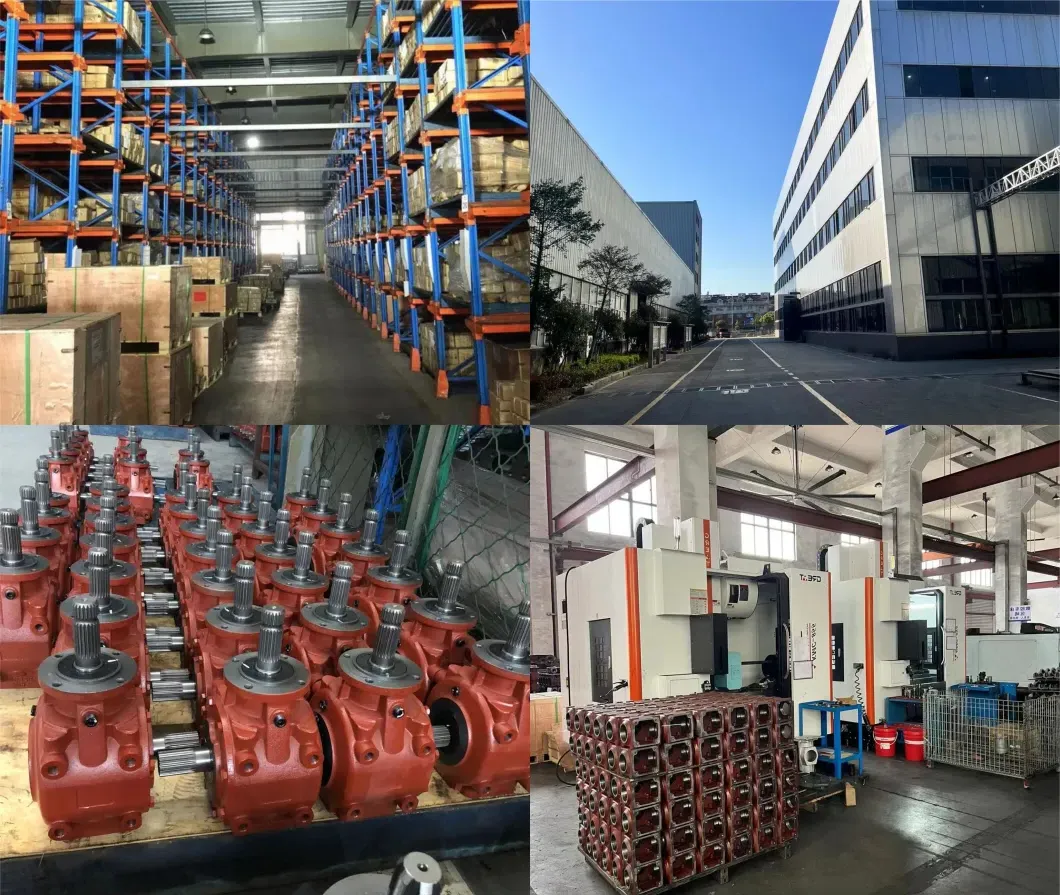
Core Advantages and Field Applications
Hay tedder gearboxes convert high-speed, low-torque PTO input (typically 540 or 1000 rpm) into lower-speed, high-torque output suitable for rotor speeds around 300–450 rpm. This reduction enables gentle handling of alfalfa, ryegrass, or clover without shattering leaves or creating excessive dust. The design supports multi-rotor configurations, ensuring synchronized rotation directions across 4 to 8 rotors for uniform spreading. In wet or heavy forage, the gearbox maintains performance under shock loads from uneven ground or dense windrows, reducing downtime during peak hay-making windows.
Operators benefit from extended service intervals thanks to robust sealing and oil bath lubrication that resists dust ingress common in dry Pampas conditions. These units adapt to both mounted and trailed tedder frames, providing flexibility for small family farms and larger commercial operations. Reliable power delivery helps achieve even drying across wide swaths, supporting higher-quality forage preservation for livestock feed.
Technical Specifications Overview
Engineered for forage tedders, the gearbox incorporates precision-cut bevel and helical gears to minimize backlash and noise during prolonged operation. Below is a detailed parameter list derived from real-world testing in similar applications.
| Parâmetro | Value | Notes |
|---|---|---|
| Rated Torque | 450 Nm | Continuous operation at 540 rpm input |
| Peak Torque | 720 Nm | Short overload up to 150% rated |
| Gear Ratio Range | 2.1:1 to 3.2:1 | Adjustable for different rotor configurations |
| Input Speed | 540 / 1000 rpm | Standard PTO compatibility |
| Output Speed | 168–476 rpm | Optimized for tedder rotor velocity |
| Input Shaft | 1-3/8″ Z6 spline | ASABE standard |
| Output Shaft | Ø45 mm parallel key | With keyway for rotor drive |
| Lubrificação | Oil bath, 80W-90 GL-5 | 0.8 L capacity |
| Classificação IP | IP65 | Dust and water jet protection |
| Operating Temperature | -20°C to +85°C | Extended range for hot climates |
| Material da carcaça | QT450 ductile iron | High impact resistance |
| Gear Material | 20CrMnTi carburized | HRC 58-62 surface hardness |
| Bearing Life (L10) | 5000 hours | At rated load |
| Noise Level | <85 dB(A) | At full load |
| Vibration Threshold | <4.5 mm/s RMS | ISO 10816 compliant |
| Mounting Pattern | 4-bolt 200 mm PCD | Common European flange |
| Peso | 28 kg | Dry weight |
| Dimensions | 320 x 280 x 240 mm | L x W x H |
| Service Factor | 1.5 | For intermittent forage work |
| Overload Protection | Slip clutch compatible | Optional integration |
| Standards Compliance | ISO 6336, AGMA 2001 | Gear rating |
| Fatigue Life | >10,000 hours | Field-tested cycles |
These specifications ensure the gearbox withstands prolonged exposure to dust, variable loads, and temperature swings typical in hay tedding.
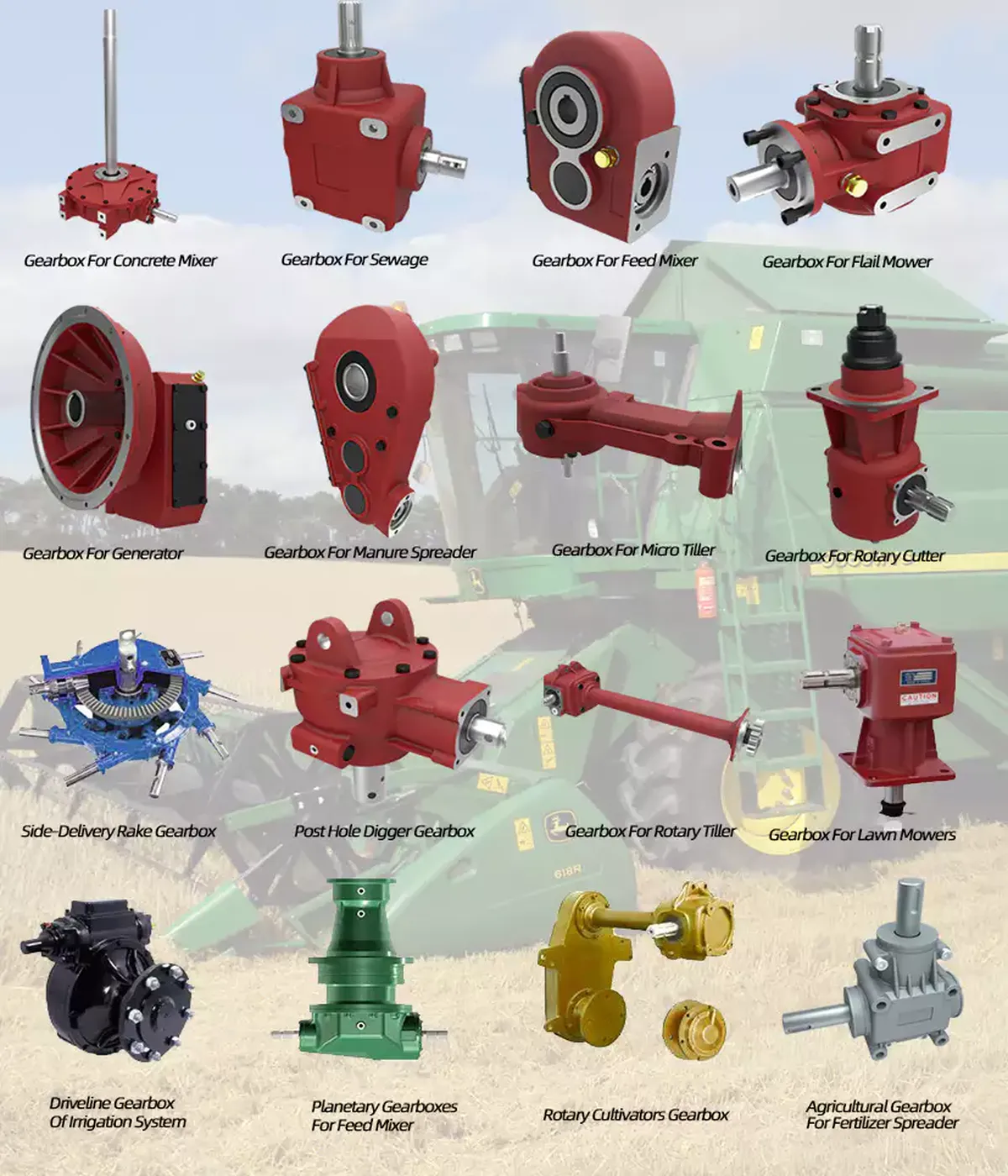
Working Principle and Internal Components
Power enters via the input shaft spline connected to the tractor PTO driveline. A primary bevel gear pair changes direction 90 degrees while reducing speed and increasing torque. This output drives a secondary shaft that distributes power to multiple rotor arms through additional helical or chain drives in multi-basket designs. The central gearbox maintains alignment and equal load sharing across rotors, preventing uneven wear. Seals and bearings handle axial and radial forces from rotor imbalance or ground contact. In operation, the gearbox operates quietly with minimal backlash, allowing smooth tine movement that gently lifts and inverts forage for uniform drying without excessive leaf loss.
Field experience shows that proper alignment during mounting reduces premature bearing wear by up to 40%. Regular oil checks prevent overheating in high-ambient temperatures common during summer hay seasons.
Performance Requirements for Demanding Conditions
In regions with heavy, wet forage or stony ground, the gearbox must resist shock loads from rotor impacts and maintain lubrication integrity against dust entry. High torque reserves handle dense windrows without stalling, while effective heat dissipation prevents oil degradation during long shifts. Robust housing withstands frame flexing on uneven terrain, and precise gear meshing minimizes energy loss for fuel-efficient operation. These features prove essential when tedding after late cuttings or in humid environments where drying windows shorten.
Argentina Extreme Operating Conditions Field Study
In the Argentine Pampas, particularly Buenos Aires, Entre Ríos, and Santa Fe provinces, hay tedders face fertile but variable soils with clay content that compacts easily after rain. Forage crops like alfalfa and ryegrass grow vigorously during spring (September–November) and autumn (March–May) seasons, requiring rapid tedding to avoid rain damage. Gearboxes endure dust storms in dry periods and mud in wet cycles. Neighboring Uruguay and southern Brazil share similar humid subtropical conditions, demanding IP65 sealing and corrosion-resistant coatings. Local mainstream brands such as Mainero and Metalfor use standardized PTO interfaces, allowing direct fit replacements with matching flange patterns and spline counts. Compliance with IRAM standards ensures safety in electrical and mechanical aspects, while INTA guidelines promote durable components for sustainable forage production.
In Buenos Aires province around Pergamino and Rojas, large-scale operations ted 50+ ha daily, stressing gearboxes with continuous high loads. Entre Ríos focuses on alfalfa for dairy, where even drying prevents mold in humid river valleys. These conditions highlight the need for gearboxes with proven fatigue life exceeding 10,000 hours under cyclic loading.
Competitor Comparison
Compared to gearboxes from Comer Industries and Bondioli & Pavesi, this design offers a reinforced ductile iron housing that increases impact resistance by 25% in drop tests. Gear tooth geometry follows AGMA 2001-D04 standards, providing smoother meshing than some straight-bevel alternatives. While Weasler units emphasize lightweight construction, our model prioritizes torque capacity for heavier South American forage densities. (Note: All referenced brand names and models are used solely for selection reference and compatibility discussion; no infringement is intended or implied.)
Compatible Replacement Models
This gearbox serves as a drop-in replacement for common tedder models from Mainero, Metalfor, and international lines such as Kuhn GF series or Claas Volto equivalents. Matching mounting patterns and shaft specifications allow straightforward swaps without frame modification. Compatibility extends to various PTO shaft configurations, facilitating integration with existing drivelines. (All names listed for reference and selection convenience only.)
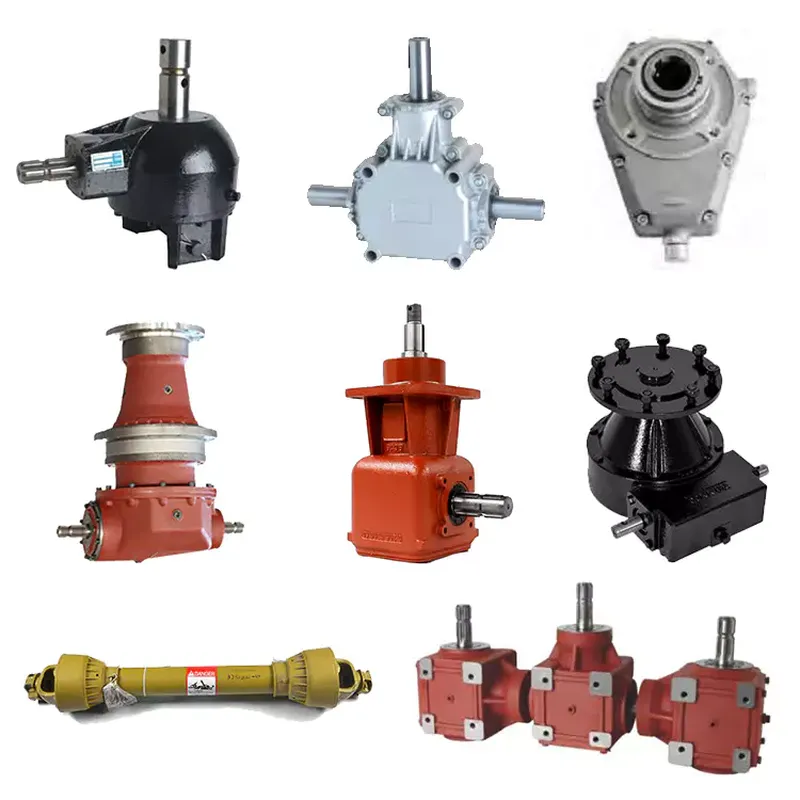
Engineer Perspective: Design Philosophy and Iterations
Initial designs focused on torque distribution to prevent single-rotor overload in uneven fields. Finite element analysis optimized housing ribs for rigidity without excess weight. Carburized gears with controlled case depth of 0.8–1.2 mm balance hardness and toughness. User reports from extended field trials led to upgraded seals with double-lip design, reducing oil leaks in dusty conditions by 60%. Material upgrades to QT450 over gray iron improved fracture resistance after impacts. Continuous feedback from operators in humid zones prompted enhanced breather placement to equalize pressure and avoid seal blowout.
Real-World Customer Cases
Buenos Aires Province, Argentina – Dairy Farm near Pergamino: “Our old gearbox overheated after 4 hours in thick alfalfa. After fitting this unit, we tedded 80 ha without issues. The torque delivery feels smoother, and rotors don’t bog down in wet spots.” – Field manager, 2024 season.
Entre Ríos Province, Argentina – Forage Contractor in Paraná: “Dust ingress destroyed bearings yearly. This sealed design lasted two full seasons with only oil changes. We cover more ground per day now.” – Operator, multi-farm service.
Southern Brazil – Rio Grande do Sul Hay Producer: “Similar climate to Uruguay border areas. Gearbox handled heavy oat hay without vibration spikes. Much quieter than previous replacement.” – Farm owner, 2025 harvest.
Uruguay – Colonia Department: “Frequent rain shortens drying windows. Reliable power spread hay evenly, reducing losses. No failures despite muddy fields.” – Cooperative technician.
Santa Fe Province, Argentina – Large-scale Operation: “High daily hours demanded durability. This gearbox maintained performance through peak season without downtime.” – Equipment supervisor.
Related Products and System Compatibility
Pair the gearbox with heavy-duty PTO shafts featuring shear bolt or slip clutch protection, safety guards, and telescopic sections for safe operation. Complementary components include chain drives for rotor synchronization, sprockets, bearings, and hydraulic cylinders for fold/unfold functions on trailed tedders. One-stop sourcing simplifies inventory management and ensures matched interfaces across the drivetrain. Full series availability covers gearboxes for rakes, mowers, balers, and other forage equipment, allowing complete transmission solutions from a single supplier.
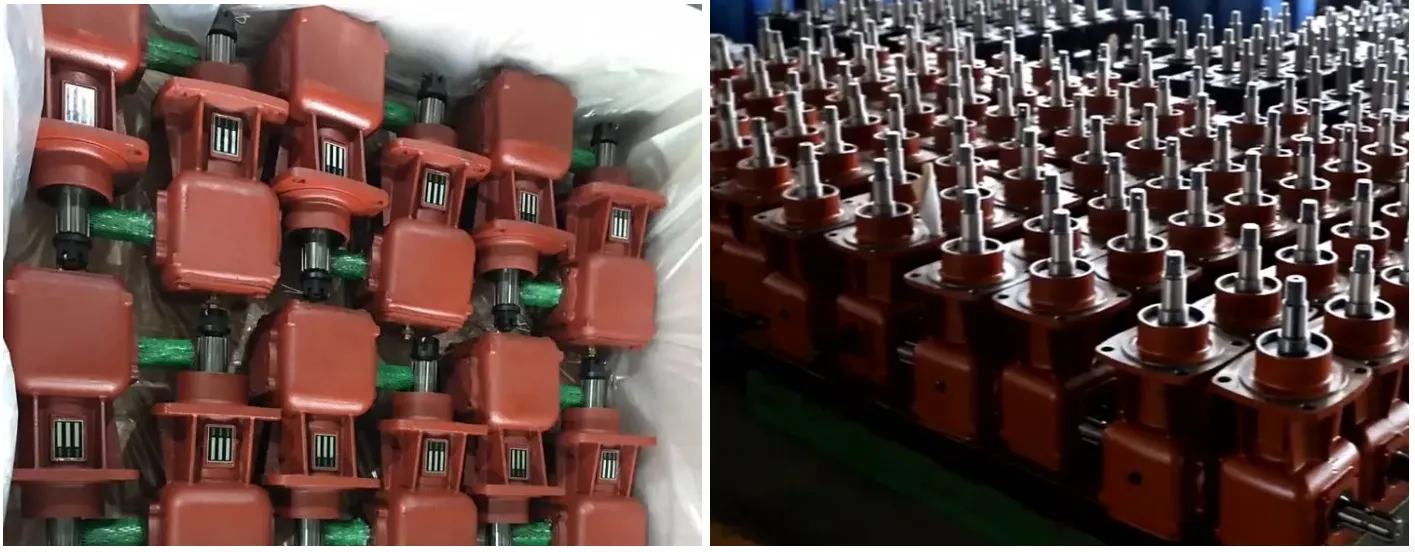
Why Choose This Gearbox
Proven durability in South American forage conditions, precise engineering for minimal maintenance, and compatibility with major tedder frames make this a practical choice for operators seeking reliable performance without frequent replacements. The combination of robust materials and field-validated design supports higher uptime during critical hay windows.
Frequently Asked Questions
- What input speeds does the gearbox accept?
Designed for standard 540 rpm and 1000 rpm tractor PTO outputs, covering most agricultural tractors in Argentina and neighboring countries. - How often should oil be changed?
Initial change after 50 hours, then every 500 hours or annually, using 80W-90 GL-5 specification lubricant to maintain performance in dusty environments. - Is it compatible with slip clutch PTO shafts?
Yes, the input shaft accommodates slip clutch integration to protect against sudden rotor jams in rocky or uneven fields. - What maintenance prevents seal failures?
Regularly inspect breather vents for clogs and clean external surfaces to avoid pressure buildup that could compromise seals during hot operation. - Can it handle wet forage conditions?
The IP65 rating and sealed construction resist water and mud ingress, maintaining lubrication integrity during rainy seasons common in Entre Ríos and Uruguay.
Ready to upgrade your tedder performance? Contact us today to discuss specifications for your operation. Visit the homepage for more agricultural drivetrain solutions.