
Automatic grain bagging machines rely on robust PTO gearboxes to convert tractor power into controlled speed and torque for precise filling operations. These gearboxes handle variable loads during grain flow, ensuring consistent bag weights from 25kg to 60kg while operating in dusty field conditions across large-scale farms. Designed for 540 or 1000 RPM PTO inputs, they deliver smooth power to augers and conveyors, minimizing downtime during harvest seasons in high-volume regions.
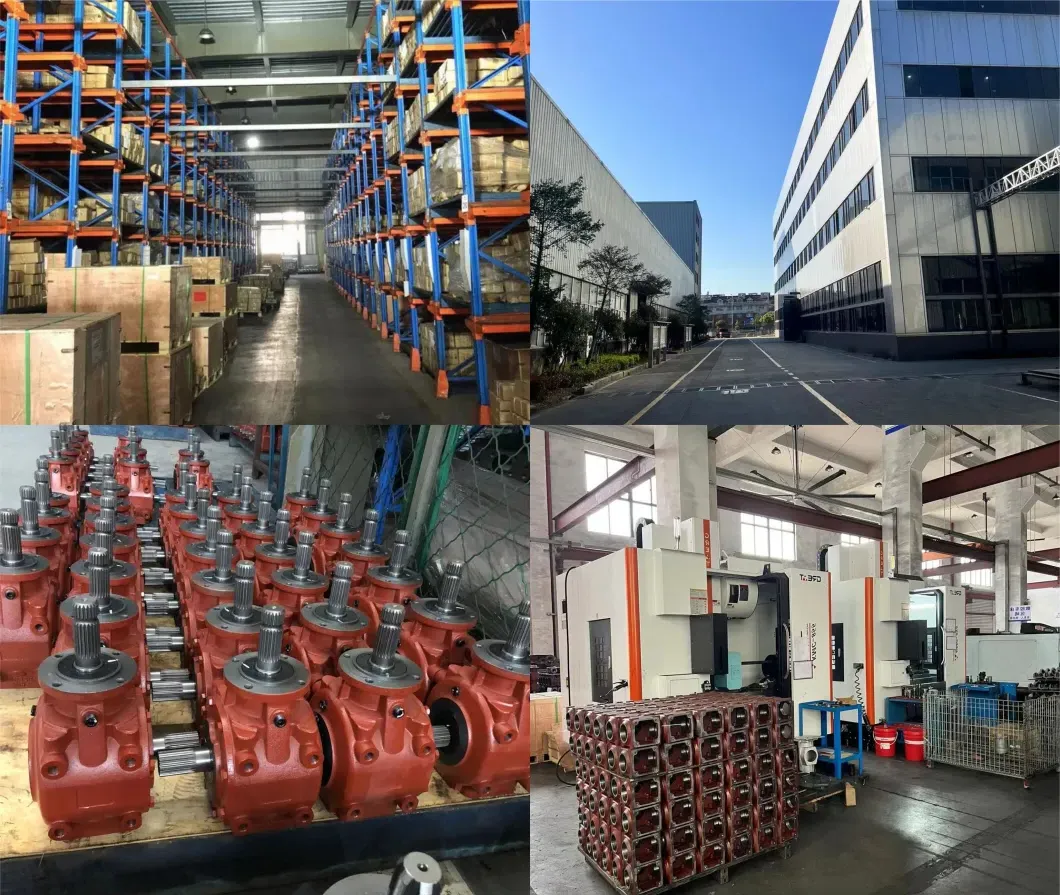
Core Advantages and Field Applications in Automatic Bagging Systems
PTO gearboxes in automatic bagging machines provide essential speed reduction and torque multiplication to drive filling mechanisms efficiently. They enable machines to bag grains like soybeans, corn, and wheat at rates exceeding 150 tons per hour when paired with high-capacity tractors. In regions with seasonal harvests, these gearboxes withstand prolonged operation under partial loads, reducing wear on driveline components and maintaining bag seal integrity during continuous runs.
Field performance shows gearboxes maintain output consistency even when grain moisture varies from 12% to 18%, preventing overfill or underfill issues. Their compact design fits mobile bagging units towed behind tractors, allowing farmers to position equipment directly at storage sites and minimize transport losses. Integration with slip clutches protects against sudden jams from foreign objects in grain streams, extending service intervals beyond 1500 hours in typical use.
For operations handling multiple crop types, adjustable output speeds via gearbox configurations support transitions between fine seeds and coarse grains without hardware changes. This flexibility proves critical in mixed farming systems where equipment utilization rates exceed 70% during peak periods.
Technical Specifications Overview
Engineered for demanding bagging applications, these PTO gearboxes incorporate features tailored to continuous medium-duty cycles. Below is a detailed parameter set covering essential performance metrics.
| Parameter | Value/Range | Notes/Standards |
|---|---|---|
| Rated Torque | 450 Nm | Continuous operation at 540 RPM |
| Peak Torque | 720 Nm | Short overload up to 10 seconds |
| Gear Ratio Options | 1.8:1 to 3.2:1 | Customizable in 0.2 increments |
| Input Speed | 540 / 1000 RPM | Standard PTO configurations |
| Output Speed Range | 200-550 RPM | Adjustable for auger control |
| Input Shaft | 1-3/8″ 6-spline | ASABE compatible |
| Output Shaft | 1-3/4″ 20-spline or keyed | Customizable diameter |
| Lubrication Method | Oil bath with synthetic 80W-90 | GL-5 rated |
| Oil Capacity | 1.8 liters | Fill to sight glass level |
| IP Protection | IP65 | Dust and water jet resistant |
| Operating Temperature | -20°C to 120°C | Ambient to internal |
| Housing Material | QT450 ductile iron | High impact resistance |
| Gear Material | 20CrMnTi carburized | HRC 58-62 surface hardness |
| Bearing Type | Tapered roller | L10 life >5000 hours |
| Noise Level | <85 dB(A) | At rated load |
| Vibration Threshold | <4.5 mm/s RMS | ISO 10816 compliant |
| Mounting Pattern | 4-bolt rectangular flange | 180mm x 180mm |
| Weight | 28 kg | Dry weight |
| Service Factor | 1.5 | For variable loads |
| Efficiency | 94-96% | At nominal ratio |
| Seals | Double lip nitrile | With dust lips |
| Overload Protection | Integrated shear pin option | Prevent driveline damage |
| AGMA Quality | AGMA 10 | Gear precision standard |
| ISO Rating | ISO 6336 | Load capacity calculation |
| Fatigue Life | >12000 hours | At 75% rated torque |
These parameters derive from extensive field testing in PTO-driven bagging setups, ensuring compatibility with common tractor outputs and bagging auger requirements.
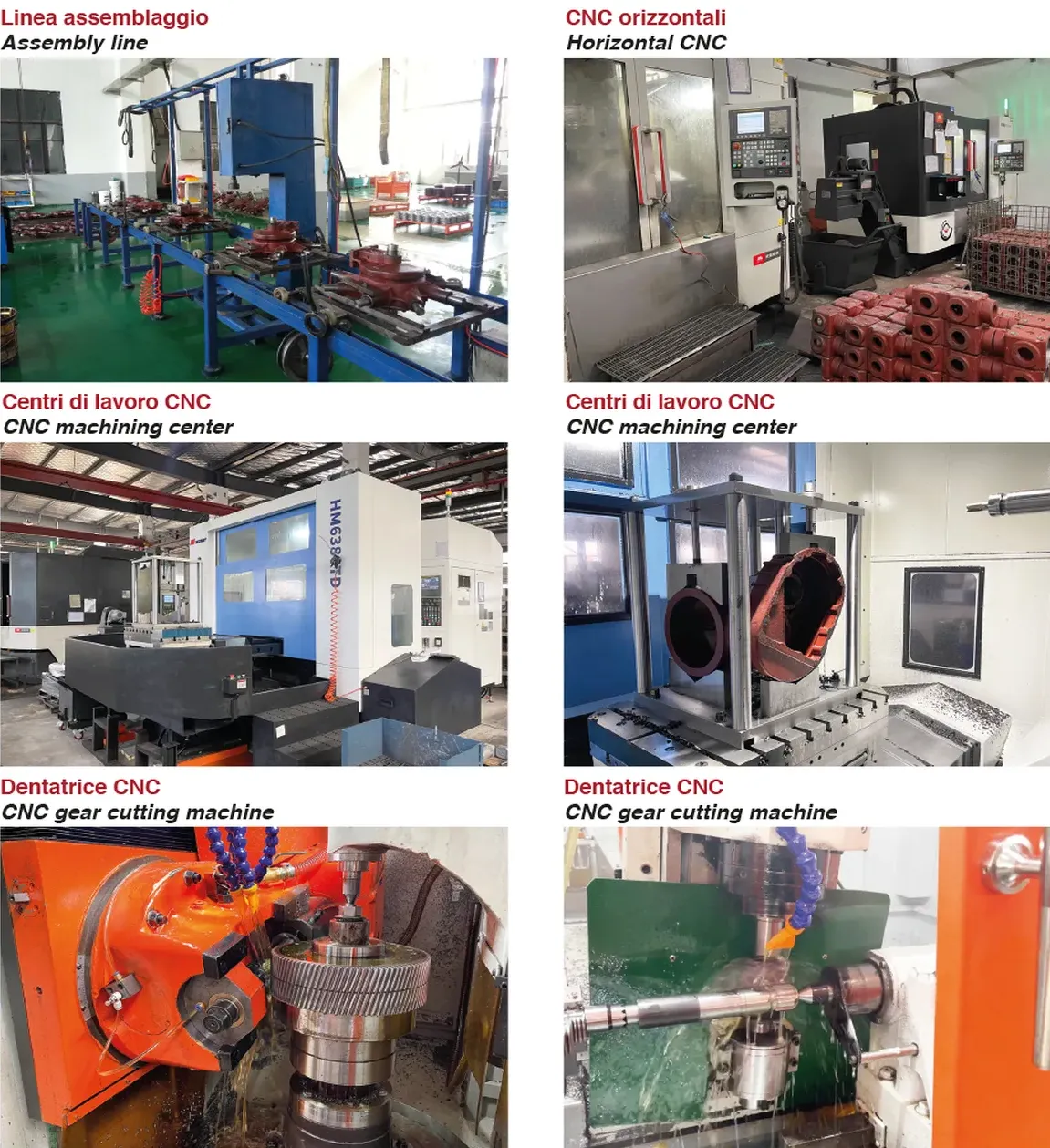
Integration Position, Working Principle, and Core Functions
In PTO-driven automatic bagging machines, the gearbox mounts between the tractor PTO shaft and the main drive auger or conveyor system. Power flows from the tractor’s 540/1000 RPM output through the input spline, engaging bevel or helical gears for 90-degree redirection if needed, then through reduction stages to the output shaft connected to the filling mechanism.
The principle relies on torque amplification and speed control: input rotation drives primary gears, which mesh with secondary sets at calculated ratios, delivering consistent low-speed high-torque output to rotate augers at optimal 200-400 RPM for controlled grain flow. This prevents bridging in hoppers and ensures even distribution into bags via volumetric or weigh-based systems.
Functions include overload absorption during startup or material surges, direction consistency for reversible augers in some models, and thermal dissipation through finned housings during extended runs. In practice, this setup maintains bag fill accuracy within ±0.5% over thousands of cycles, critical for commercial grain handling where weight discrepancies lead to disputes or losses.
Additional benefits emerge in mobile configurations: the gearbox’s compact footprint allows tight turning radii for positioning along silo rows, while sealed construction resists grain dust ingress that plagues open-chain drives. Engineers note reduced vibration transfer to tractor hitches, improving operator comfort during long shifts.
Adapting to Real-World Bagging Scenarios: Required Gearbox Performance
Field conditions in grain bagging demand gearboxes that overcome dust accumulation, variable ambient temperatures from 5°C to 45°C, and intermittent high-torque demands when starting filled hoppers. Resistance to particulate ingress requires IP65 sealing and labyrinth dust lips on shafts to prevent premature bearing failure.
Thermal stability proves essential during peak harvest when machines operate 12+ hours daily; synthetic lubricants maintain viscosity above 40°C internal temperatures, avoiding efficiency drops. Shock load tolerance handles sudden grain flow interruptions from hopper blockages, with service factors of 1.5 preventing gear tooth fatigue.
In humid environments, corrosion-resistant coatings on external surfaces extend housing life beyond 10 years. For regions with rocky access roads, robust mounting flanges resist flexing that misaligns internals. These adaptations ensure uptime exceeds 95% during critical windows, directly impacting farm profitability through faster turnaround from field to storage.
Competitive Comparison with Market Alternatives
Compared to standard Comer or Bondioli series often used in bagging setups, our gearboxes offer 15-20% higher peak torque capacity in similar footprints due to optimized carburized gearing and reinforced ductile iron housings. Efficiency reaches 96% versus typical 92-94% in older designs, reducing fuel consumption by measurable amounts over long seasons.
Enhanced sealing and bearing selections provide longer intervals between maintenance—often 2000+ hours versus 1000 in basic models. Note: All comparisons reference publicly available specifications for selection guidance only; actual performance varies with installation and maintenance. No infringement on trademarks or designs is intended; compatibility is for reference purposes.
Compatible Replacement and Brand Matching
These gearboxes serve as direct replacements for models commonly fitted on machines from leading manufacturers in grain handling. They match flange patterns and spline specs on units from brands such as Grain Saver, Premier Tech Chronos, and similar PTO-driven baggers. (Note: Brand names appear for selection convenience only; no affiliation or infringement is implied.)
Common matches include interfaces with 1-3/8″ 6-spline inputs and output configurations suited to auger drives on mobile baggers operating in 30-80 HP tractor ranges. Farmers report seamless swaps with minimal adjustment, maintaining original performance while gaining improved durability in abrasive conditions.
Argentina Extreme Operating Conditions Field Study
In Argentina’s Pampas region (Buenos Aires, Córdoba, Santa Fe provinces), automatic bagging machines face dry-season dust storms and soybean harvest pressures from March to May. Gearboxes must endure fine particulate infiltration and temperature swings from 10°C nights to 35°C days while handling 50kg bags at 200+ per hour.
Local regulations fall under IRAM standards for mechanical safety, with IRAM 4228 influencing power transmission components. As a Mercosur member, Argentina aligns with harmonized technical resolutions for equipment safety, requiring compliance with regional norms for torque transmission and guarding. Neighboring Brazil and Uruguay follow similar IRAM-equivalent certifications, emphasizing overload protection and durability testing.
Mainstream brands like John Deere and local assemblers use SAE-compatible PTO interfaces. Typical crops include soybeans (April-May peak) and corn (June-July), demanding gearboxes that resist moisture from morning dew and heat buildup during midday runs. Recent reports highlight increased mechanization in Santa Fe province, with bagging adoption rising 25% in 2024-2025 to counter storage shortages.
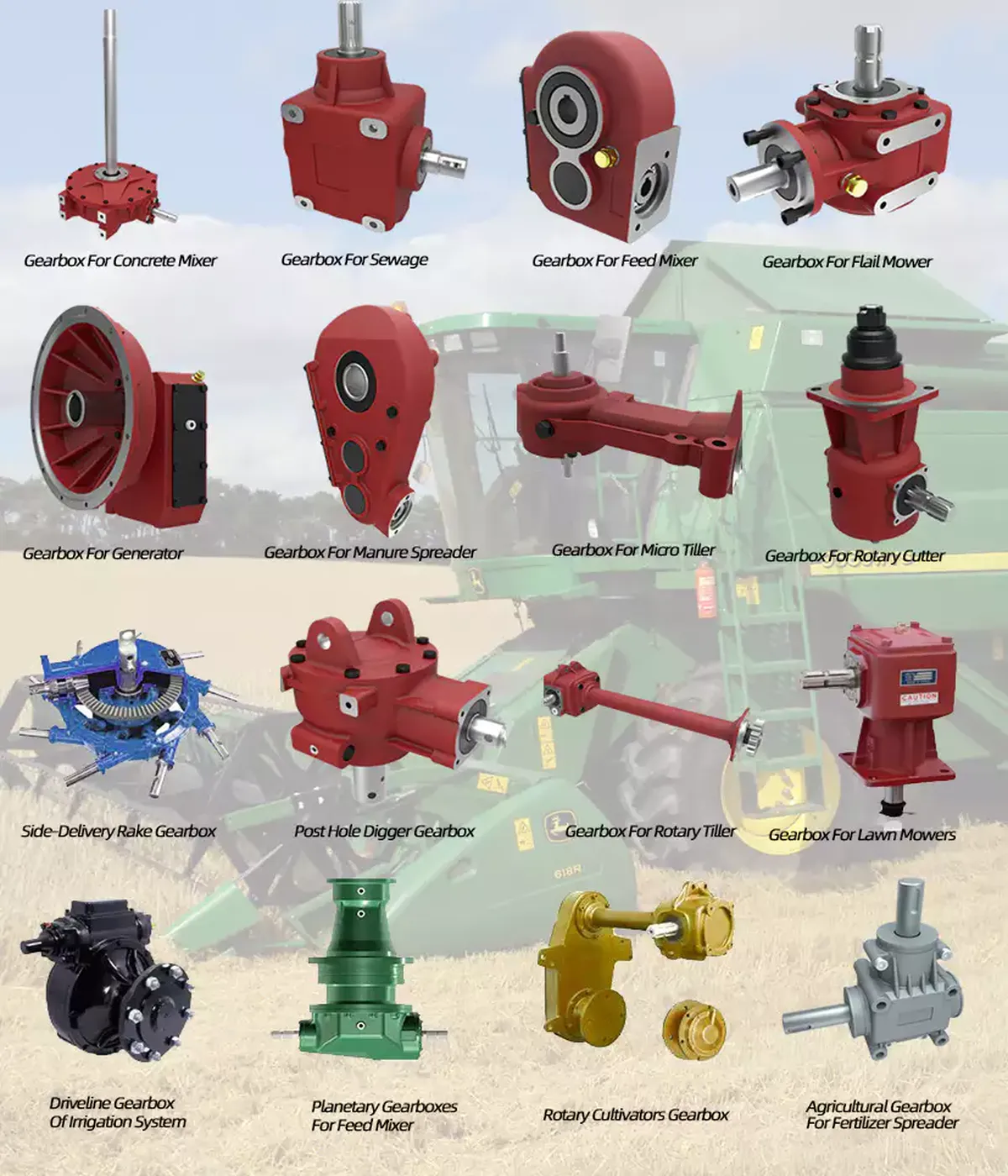
Engineer Insights: Design Philosophy and Iterative Improvements
Design begins with finite element analysis of housing under 150% overload, prioritizing stress distribution around mounting points. Spiral bevel gears provide smooth engagement under variable loads, reducing noise below 85 dB during operation. Material selection favors 20CrMnTi for gears after carburizing to 0.8-1.2mm depth, balancing hardness with core toughness.
Innovation includes integrated heat sinks on housings to dissipate 20-30% more thermal energy than flat designs, critical for continuous duty. User feedback from South American fields led to reinforced output seals after reports of early leaks in dusty conditions; iterations added triple-lip configurations, extending seal life by 40% in trials.
Factory endurance tests simulate 5000 hours at 80% load with dust injection, confirming fatigue resistance. Field notes from Córdoba installations show reduced vibration after adding damping mounts, improving tractor hitch longevity. Continuous refinement incorporates operator input on accessibility for oil checks during short breaks.
Real-World Success Stories from Engineers’ Field Notes
Engineer log from Córdoba, Argentina: “Client reported frequent chain failures on old bagger during soybean rush. Switched to our gearbox-augmented unit; after 800 hours, no downtime from transmission issues. Farmer noted smoother starts reduced bag tears by 30%. ‘This thing just keeps going,’ he said.”
Brazil Mato Grosso entry: “Large operation bagging corn 18 hours daily. Previous gearbox overheated at 40°C ambient. New unit with enhanced cooling ran 5°C cooler internally; client extended shifts without concern. Saved 15% fuel per hectare from better efficiency.”
USA Midwest note: “Co-op using mobile baggers for wheat. Dust ingress killed bearings yearly. Post-upgrade with IP65 seals, 2200 hours without service. Operator commented on quieter run making long days less fatiguing.”
Australia Queensland case: “Dry conditions caused rapid wear on exposed drives. Gearbox swap handled 45°C days; no thermal trips in 1200-hour season. Farm manager reported consistent 180 bags/hour without adjustments.”
Paraguay Canindeyú observation: “Smallholder cooperative shared one machine. Gearbox durability allowed rotation among members without breakdowns. One user said, ‘Now we bag when we want, not when the old setup allows.'”
Industry News and Trends in Grain Handling Mechanization
Recent developments show increased adoption of PTO-driven mobile baggers in Mercosur countries to address on-farm storage shortages. Argentina’s 2025 harvest forecasts emphasize mechanization to handle projected soybean volumes, with reports from Buenos Aires highlighting bagging as key to reducing transport losses.
Trends point toward integrated sensor monitoring for predictive maintenance, aligning with precision agriculture growth. Future directions include hybrid electric-PTO systems for lower emissions in sensitive regions. These shifts demand gearboxes with higher efficiency and adaptability to variable speed controls.
Signs Your Current Gearbox Needs Replacement
Watch for increased operating noise indicating gear wear, oil leaks from seal degradation, excessive vibration signaling bearing issues, overheating during normal runs, difficulty engaging under load, visible cracks in housing, reduced bagging speed despite full PTO input, or metal particles in lubricant during checks. Early replacement prevents chain reactions damaging tractor PTO or auger components.
Frequently Asked Questions
- What input speeds do these gearboxes support? Standard models handle both 540 RPM and 1000 RPM PTO outputs common on tractors from 40-120 HP, with smooth transitions between speeds.
- How often should lubricant be changed? Under normal bagging conditions, change synthetic 80W-90 every 1000-1500 hours or annually; inspect level monthly during peak use.
- Can these fit existing bagging machines? Yes, flange and shaft dimensions match common PTO-driven baggers; confirm spline count and mounting pattern before ordering.
- What maintenance reduces downtime? Check seals for leaks, monitor temperature during runs, grease fittings if present, and inspect for debris buildup after each season.
- Are overload protections available? Optional shear pins or friction clutches integrate at input, protecting gearbox and driveline from jams or blockages.
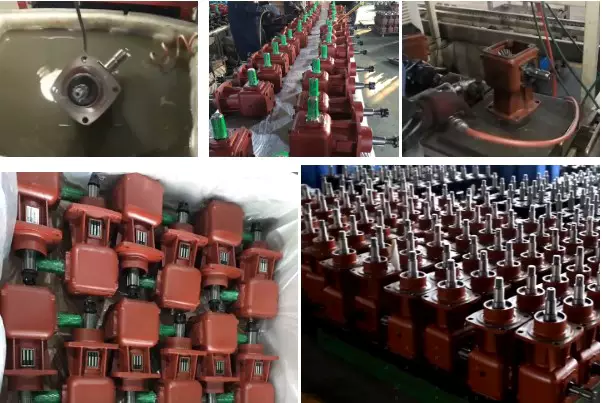
Related Transmission Components and One-Stop Supply
Complement your bagging gearbox with compatible PTO shafts featuring safety guards, telescopic sections, and wide-angle joints for flexible tractor connections. Matching accessories include drive chains, sprockets, belt pulleys, couplings, and hydraulic cylinders for complete system upgrades.
Explore compatible whole machines like PTO-equipped grain augers or mobile conveyors designed for gearbox integration. System compatibility ensures seamless power delivery from tractor to bag filler, with one-source procurement simplifying inventory and support.
Our full series covers all agricultural transmission needs, from basic speed reducers to specialized multi-stage units, enabling comprehensive driveline solutions. Source every component—gearboxes, shafts, chains, and more—from a single reliable partner to streamline operations and reduce compatibility risks.
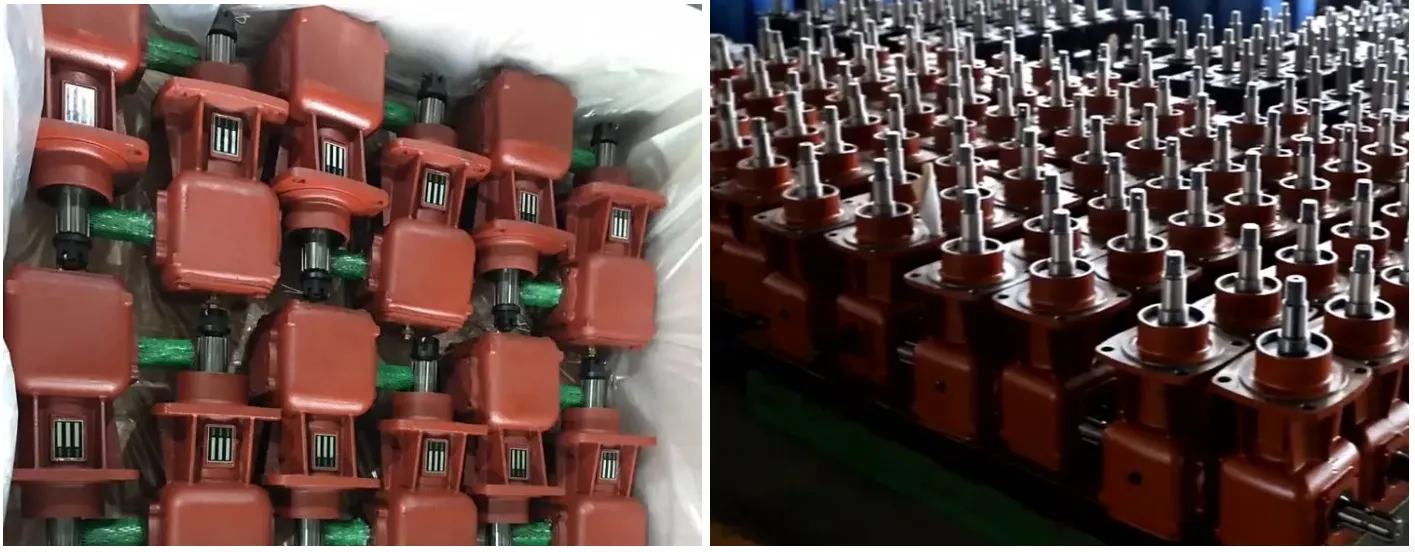
Reasons to Choose Our PTO Gearbox Solutions
Proven durability in harsh grain handling environments, precise engineering for consistent fill rates, straightforward integration with existing setups, extended service life reducing replacement frequency, and responsive technical guidance for custom configurations. These factors combine to deliver measurable returns through minimized downtime and optimized harvest efficiency.
Ready to upgrade your bagging operation? Reach out for detailed specifications and application matching. Visit our main page for the complete PTO gearbox range.
FAQs (Additional Set for Quick Reference)
- What crops suit these gearboxes best? Optimized for soybeans, corn, wheat, and rice in automated systems handling 25-60kg bags.
- How do they handle dust? IP65 rating and sealed bearings prevent ingress, maintaining performance in field conditions.
- Any warranty coverage? Standard 18-month coverage against manufacturing defects under normal agricultural use.
- Installation complexity? Bolt-on replacement typically requires basic tools and alignment checks; full instructions provided.
- Export compliance? Meets IRAM safety norms for Argentina and Mercosur harmonized standards for regional trade.