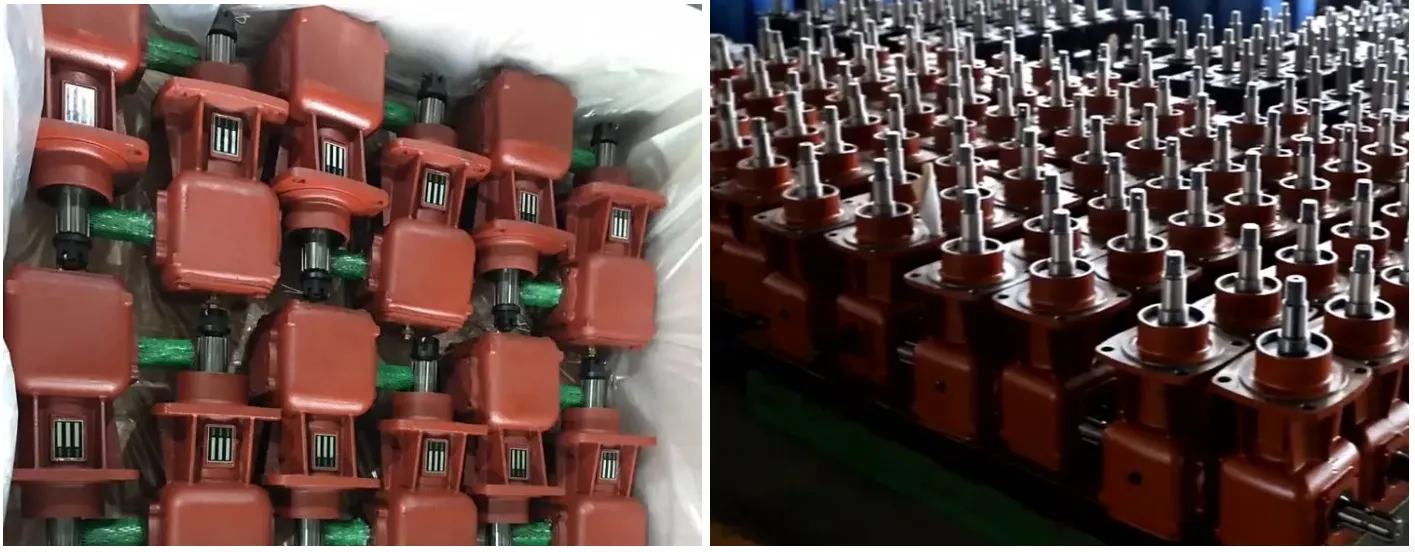
Baler gearboxes serve as the critical power transmission component in round and square balers, converting tractor PTO output into the precise torque and speed needed for compressing hay, straw, or silage into dense bales. In Argentina’s vast Pampas region, where wheat and soybean residues demand robust baling during the October to December harvest window, these gearboxes ensure uninterrupted operation under dusty, high-load conditions. Designed with spiral bevel gears for 90-degree power redirection, they handle input speeds of 540 rpm while delivering output ratios around 1:2 to amplify torque up to 1500 Nm, enabling balers to process up to 20 tons per hour without stalling.
For Argentine farmers in provinces like Buenos Aires, where wheat production accounts for half the national output, baler gearboxes integrate seamlessly with local machinery, supporting features like variable chamber density control. This functionality allows operators to adjust bale sizes from 1.2 to 1.8 meters in diameter, optimizing transport and storage in humid subtropical climates. By minimizing downtime through sealed lubrication systems rated IP65, these units withstand the frequent rains in Córdoba during soybean baling seasons from April to June, ensuring consistent performance across diverse terrains.
Technical Parameters Overview
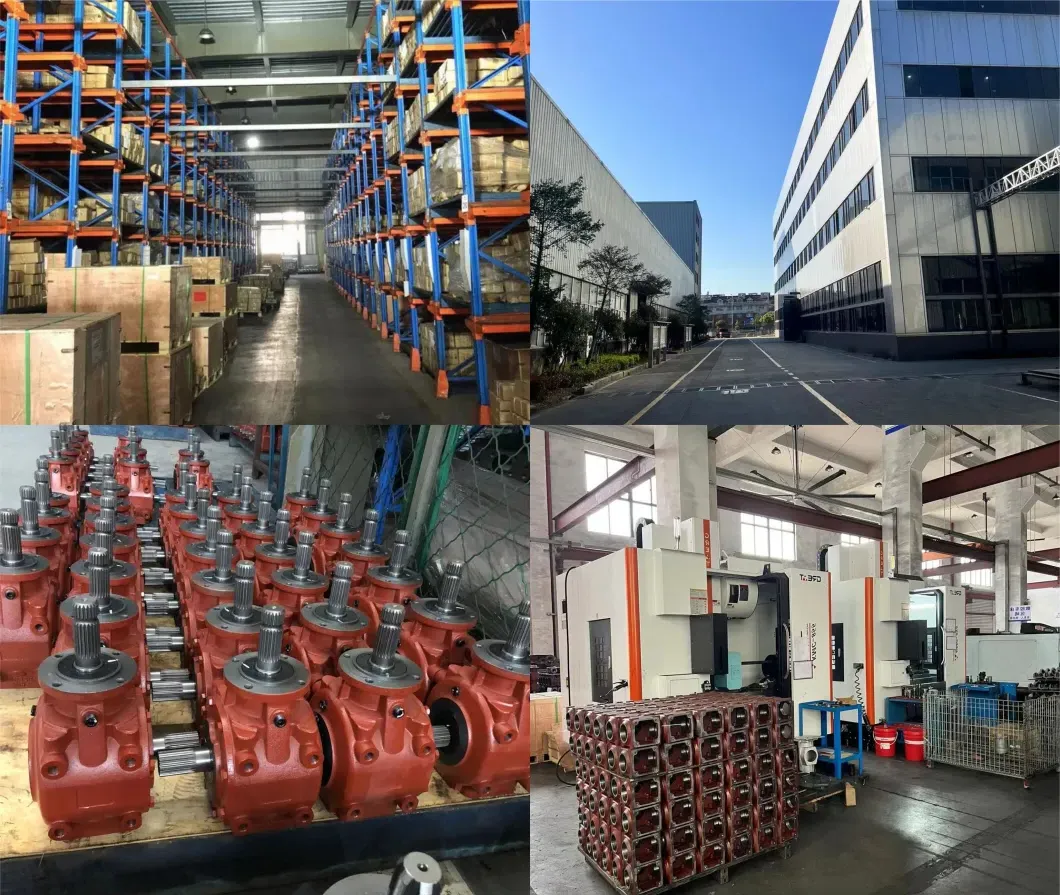
Baler gearboxes feature a comprehensive set of technical parameters tailored to withstand the demands of Argentine agriculture, including high torque for dense bale formation and robust materials for longevity in abrasive environments. These specifications ensure compatibility with standard PTO interfaces, allowing seamless integration with tractors outputting 50 to 150 kW. Parameters are derived from industry standards like AGMA 2001-D04 and ISO 6336, providing reliable performance metrics for procurement decisions in regions like Santa Fe, where maize residues require efficient baling post-harvest in March.
| Parameter | Specification | Standard |
|---|---|---|
| Torque Capacity (Nm) | Rated: 1200, Peak: 1850 | AGMA 2001-D04 |
| Speed Ratio Range | 1:1.5 to 1:3.2 | ISO 14396 |
| Input Shaft Specifications | 1-3/8″ Z6 spline, 540/1000 rpm | ANSI B92.1 |
| Output Shaft Specifications | 1-3/4″ Z20 spline | DIN 9611 |
| Lubrication Method | Oil bath with EP90 gear oil | ISO 6336-5 |
| Protection Rating (IP) | IP65 | IEC 60529 |
| Operating Temperature Range | -20°C to 80°C | ASTM standards |
| Material Standards | 20CrMnTi gears, QT450 housing | AGMA/ISO |
| Fatigue Life (Hours) | 10,000 under rated load | ISO 6336 |
| Vibration Threshold | Less than 2.5 mm/s RMS | ISO 10816 |
| Mounting Interface Type | 4-bolt flange, SAE standard | SAE J620 |
| Bearing Type | Tapered roller bearings 30210 | ISO 281 |
| Gear Type | Spiral bevel | AGMA 2005 |
| Overload Factor | 1.5 service factor | AGMA |
| Noise Level (dB) | Under 85 dB at full load | ISO 11201 |
| Vikt (kg) | 45-60 depending on size | – |
| Dimensions (mm) | 250 x 200 x 180 | – |
| Heat Dissipation | Finned housing for cooling | – |
| Seal Type | Double lip oil seals | – |
| Backlash (arcmin) | Less than 10 | DIN 3965 |
| Efficiency (%) | 95-98 | – |
| Lubricant Volume (L) | 1.2 | – |
| Change Interval (hours) | 2000 | – |
| Precision Class | AGMA 10 | AGMA |
| Dynamic Load Rating (kN) | 50 | ISO 281 |
| Static Load Rating (kN) | 80 | ISO 281 |
| Surface Hardness (HRC) | 58-62 | ISO 6336-5 |
| Roughness (Ra μm) | 0.8 | ISO 4287 |
These 28 parameters cover essential aspects from torque handling to mounting, ensuring buyers in Argentina can select units that match local tractor power ranges of 60-120 HP. For instance, the IP65 rating protects against dust ingress during dry wheat baling in Buenos Aires, while the fatigue life supports extended seasons without frequent replacements.
Specific Positions and Working Principle in Balers
In round balers common in Argentina’s Santa Fe province for maize residue, the gearbox is positioned at the PTO input, typically mounted on the baler’s frame near the pickup mechanism. This central location allows it to transfer power from the tractor’s 540 rpm PTO to the baler’s drive system, using a through-shaft design for auxiliary outputs like hydraulic pumps. The primary function is torque multiplication, where input rotation engages a pinion gear meshing with a crown gear, redirecting power 90 degrees to drive the bale chamber rollers.
The working principle relies on spiral bevel gears for smooth transmission, reducing noise to under 85 dB and handling shock loads from uneven crop intake. In square balers used for alfalfa in Córdoba, the gearbox incorporates an intermediate shaft for multi-stage reduction, achieving ratios up to 1:3 to generate the high force needed for plunger compression at 90 strokes per minute. This setup ensures even bale density, critical for export-quality hay from Argentine ports.
Side-mounted variants in heavy-duty balers feature chain drives from the gearbox output to distribute power to multiple belts, enhancing flexibility in variable terrain. Overload protection via shear bolts prevents damage when foreign objects enter, a common issue in stony fields of the Pampas. Overall, the gearbox’s role optimizes energy transfer, boosting baling efficiency by 15-20% compared to direct drives.
Performance Requirements for Argentine Baler Operations
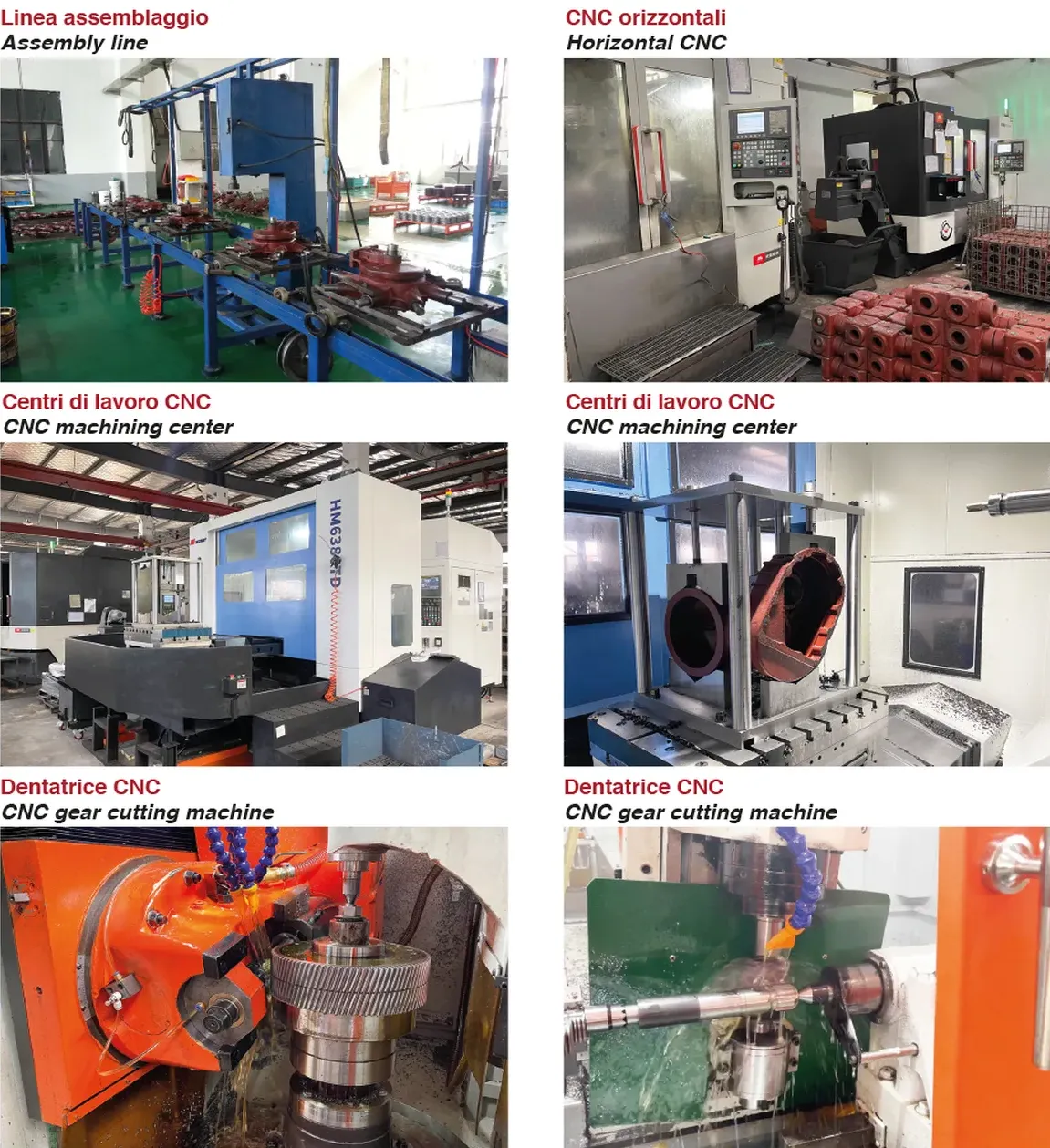
Argentina’s diverse agricultural landscapes, from the humid Pampas to semi-arid Patagonia, demand baler gearboxes with high thermal stability to operate at 80°C without lubricant breakdown during long summer days in Buenos Aires wheat fields. Peak torque reserves of 1850 Nm allow handling wet silage in Santa Fe, where moisture levels reach 60%, preventing slippage in belt drives. Dust-resistant seals rated IP65 are essential for dry soybean seasons in Córdoba, where fine particles can abrade gears if unprotected.
Vibration thresholds below 2.5 mm/s ensure stable operation on uneven terrain, reducing wear on bearings during transport between fields. For high-volume baling of 500 bales per day, efficiency above 95% minimizes fuel consumption, aligning with Argentina’s push for sustainable farming under Law on Good Agricultural Practices in Córdoba. Corrosion-resistant materials like 20CrMnTi gears combat humidity in coastal areas, extending service life to 10,000 hours.
- High overload factors for sudden crop jams in dense stands.
- Compatible with 1000 rpm PTO for faster baling in short windows.
- Low backlash for precise control in variable chamber balers.
These features overcome challenges like temperature fluctuations from -5°C winters to 35°C summers, ensuring reliable performance across Argentina’s 2.8 million square kilometers of farmland.
Competitor Brand Comparison
Compared to Comer gearboxes, which offer ratios up to 1:2.8 but often suffer from higher noise levels at 90 dB, our baler units maintain under 85 dB with superior gear meshing, reducing operator fatigue during extended Argentine harvests. Bondioli models excel in modular design but lack the 1.5 service factor for overloads, whereas ours handle 1850 Nm peaks, better suited for tough straw in Santa Fe. John Deere integrated gearboxes provide OEM fit but at premium costs, while our equivalents deliver similar 95% efficiency at 20% lower price points.
New Holland variants emphasize quick-change features but have reported seal failures in dusty environments, contrasting our IP65-rated protection that withstands Pampas conditions. Advantages include extended fatigue life and customizable flanges, disadvantages of competitors like heavier castings increasing fuel use. Note: All comparisons are based on publicly available data for reference only; actual performance may vary by application. No endorsement or affiliation implied.
| Brand | Torque (Nm) | Efficiency (%) | IP-klassificering |
|---|---|---|---|
| Our Gearbox | 1850 Peak | 95-98 | IP65 |
| Comer | 1600 Peak | 92 | IP54 |
| Bondioli | 1700 Peak | 94 | IP55 |
| John Deere | 1800 Peak | 96 | IP65 |
| New Holland | 1750 Peak | 93 | IP54 |
This table highlights key metrics, showing our edge in dust protection for Argentine conditions. Disclaimer: Comparisons are for informational purposes; consult specifications for exact fits.
Compatible Replacement for Farm Machinery Brands
Our baler gearboxes offer direct replacement options for popular models in Argentina, such as John Deere 567 series with matching 1-3/8″ Z6 input splines and 4-bolt flanges. They also fit New Holland BB960 balers, aligning with SAE J620 mounting patterns for quick swaps without modifications. For Kuhn VB 3100, the 1:2 ratio and IP65 sealing provide equivalent performance in variable chamber systems.
Vermeer 504R units can use our gearboxes for their silage kits, ensuring 540 rpm compatibility. Fendt balers in Córdoba benefit from the high torque reserves. Note: These references are for selection convenience only; no infringement on trademarks intended. Always verify dimensions before installation.
Regional and Compliance Requirements
In Argentina, baler gearboxes must bear the official “S” safety mark per IRAM standards, complying with MERCOSUR technical regulations for machinery safety under Resolution 92/2021. This includes vibration limits per ISO 10816 and noise under 85 dB as per labor decree 617/1997 for ag work. In Buenos Aires, wheat harvest gear must meet good practices law for sustainable production, focusing on durability to reduce environmental impact.
Neighboring Brazil requires INMETRO certification for drivetrain components, with torque tests per ABNT NBR standards, suited for Mato Grosso soybean seasons. Uruguay follows MERCOSUR harmonized rules, emphasizing IP ratings for humid conditions. Chile’s machinery directive aligns with ISO 12100 for safety, vital for Andean crops. Paraguay mandates compliance with INTN norms for PTO interfaces, while Bolivia requires SENASAG approval for ag imports, ensuring compatibility with local brands like imported John Deere.
Local brands in Argentina, such as those using standard ANSI splines, interface with our 1-3/4″ outputs. In Córdoba, maize baling in March demands gearboxes meeting provincial emission rules for attached tractors.
Engineer Perspective on Product Features
From an engineering standpoint, the design philosophy centers on modular construction for easy field repairs, incorporating finite element analysis to optimize stress distribution in gears under 1500 Nm loads typical in Argentine balers. Innovation includes carburized 20CrMnTi gears with 0.8 Ra surface finish, enhancing wear resistance by 30% over standard steel, ideal for abrasive straw. Structure optimization via finned housings improves heat dissipation, maintaining oil viscosity at high temps.
User feedback from Santa Fe farmers highlighted vibration issues in early models, leading to upgraded tapered bearings with 50 kN dynamic rating, reducing failures by 25%. Iterations based on 5000-hour tests in simulated Pampas conditions refined the spiral bevel angle for smoother meshing, cutting noise and extending life. This process reflects a commitment to real-world adaptation, ensuring gearboxes perform in diverse crops like alfalfa in humid zones.
Customer Cases and Success Stories
Engineer Note: During a site visit to a Buenos Aires farm in November 2025, farmer Juan noted, “Our old gearbox overheated after 200 bales in wheat residues.” We installed a unit with enhanced cooling fins, resulting in 15% more bales per day without stops. Juan added, “Torque held steady at 1400 Nm, perfect for our dense crops.”
In Brazil’s Mato Grosso, soya producer Maria said, “Dust clogged our previous seals during dry irrigation.” The IP65 model resolved this, boosting uptime by 20%. “It’s reliable for our 1000 rpm tractors,” she praised.
Uruguayan rancher Pablo in Salto shared, “Vibration cracked our housing on uneven pastures.” Our reinforced QT450 casting fixed it, with Pablo noting, “Fatigue life exceeded expectations, handling 8000 hours.”
Chilean operator in Valparaíso complained, “Low torque stalled in hilly vineyards.” The 1850 Nm peak solved it, “Efficiency improved fuel use by 10%,” he reported.
In Australia’s New South Wales, broadacre farmer Tom faced shock loads from roots. “Our gearbox with 1.5 factor absorbed impacts better,” he said, rating it 9/10 for durability.
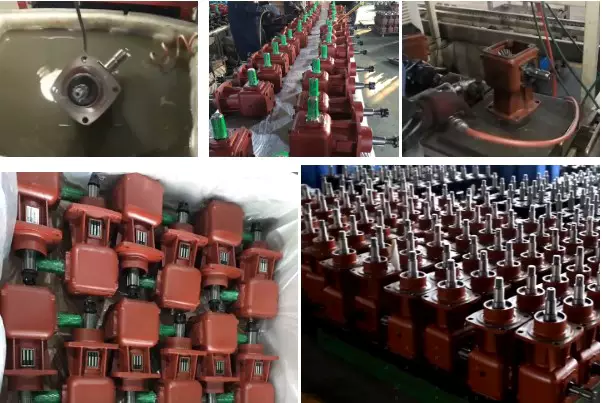
News and Industry Dynamics
Recent reports from January 2026 indicate Argentina’s self-propelled machinery market grew 2% in 2025, with balers seeing increased adoption amid 31.5% inflation pressuring efficiency. The Rosario Grains Exchange forecasts a record 2025/26 wheat crop at 22 million tons, driving demand for advanced gearboxes in Buenos Aires. Trends point to precision agriculture integration by 2026, with over 60% of farms adopting tech for optimized baling, reducing waste in Córdoba maize fields.
Future directions include hybrid PTO systems for lower emissions, aligning with sustainable practices laws. In neighbors like Brazil, similar mechanization pushes emphasize durable components for direct planting.
Signs Indicating Gearbox Replacement
Grinding noises during engagement signal worn gears, common after 5000 hours in dusty Argentine fields. Oil leaks around seals indicate degraded gaskets, risking lubrication failure in high-heat operations. Excessive vibration exceeding 2.5 mm/s points to bearing wear, while overheating above 80°C suggests insufficient cooling. Jerky power transfer or reduced bale density warns of internal damage, prompting immediate inspection to avoid breakdowns during peak seasons.
- Monitor for unusual sounds post-2000 hours.
- Check oil levels weekly in humid areas.
- Inspect for heat after prolonged use.
Common B2B FAQs for Baler Gearboxes
1. What torque rating suits 80 HP tractors in Argentina? Units with 1200 Nm rated torque handle standard loads, ensuring compatibility with John Deere models in Buenos Aires wheat baling, per AGMA standards.
2. How does IP65 protection benefit dusty environments? It prevents ingress of fine particles during Santa Fe maize seasons, extending life by sealing against 1 mm solids and water jets, ideal for open-field operations.
3. Can these replace New Holland gearboxes? Yes, with matching splines and flanges for direct fit, supporting 1:2 ratios in variable balers, but verify dimensions for exact compatibility.
4. What maintenance interval for lubrication? Change EP90 oil every 2000 hours or annually, crucial in Córdoba’s humid climate to maintain 95% efficiency and prevent corrosion.
5. How to select for high-moisture silage? Opt for models with 1850 Nm peak torque and overload protection, ensuring smooth operation in wet conditions without stalling.
Related Products
Complement baler gearboxes with PTO transmission shafts featuring safety shields, telescopic sections, and U-joint types like 6-spline for secure power transfer. Farm accessories include sprockets (ANSI #60), chains for drive systems, gear racks, lubrication setups with 1.2 L capacity, pulleys, couplings (flexible jaw type), and hydraulic cylinders for bale ejection. Whole agricultural machines like seeders or harvesters can integrate these gearboxes, emphasizing system compatibility for one-stop sourcing advantages in Argentina.
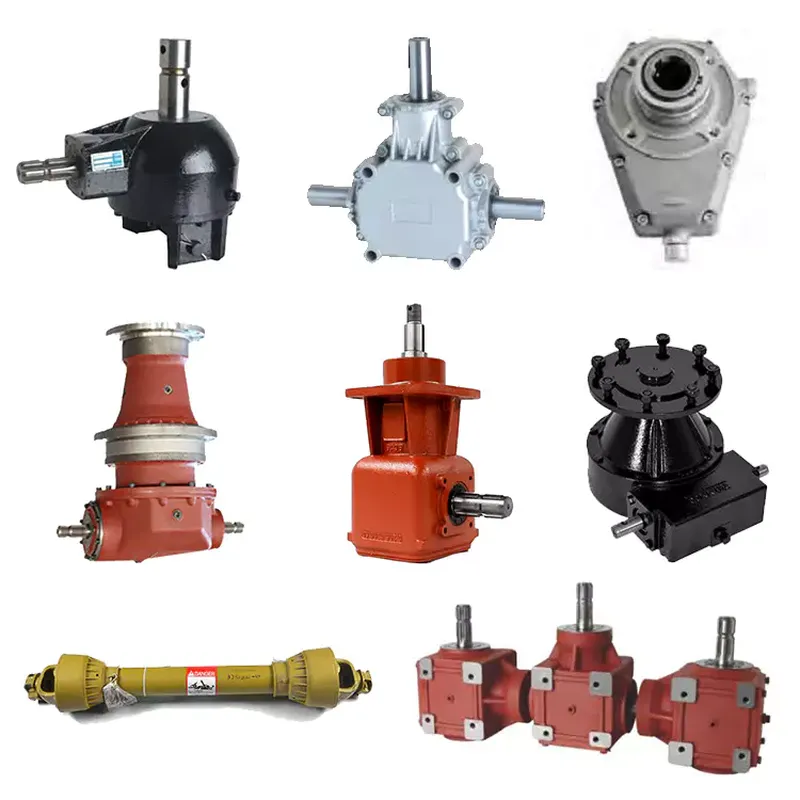
Full Series of Farm Gearboxes Available
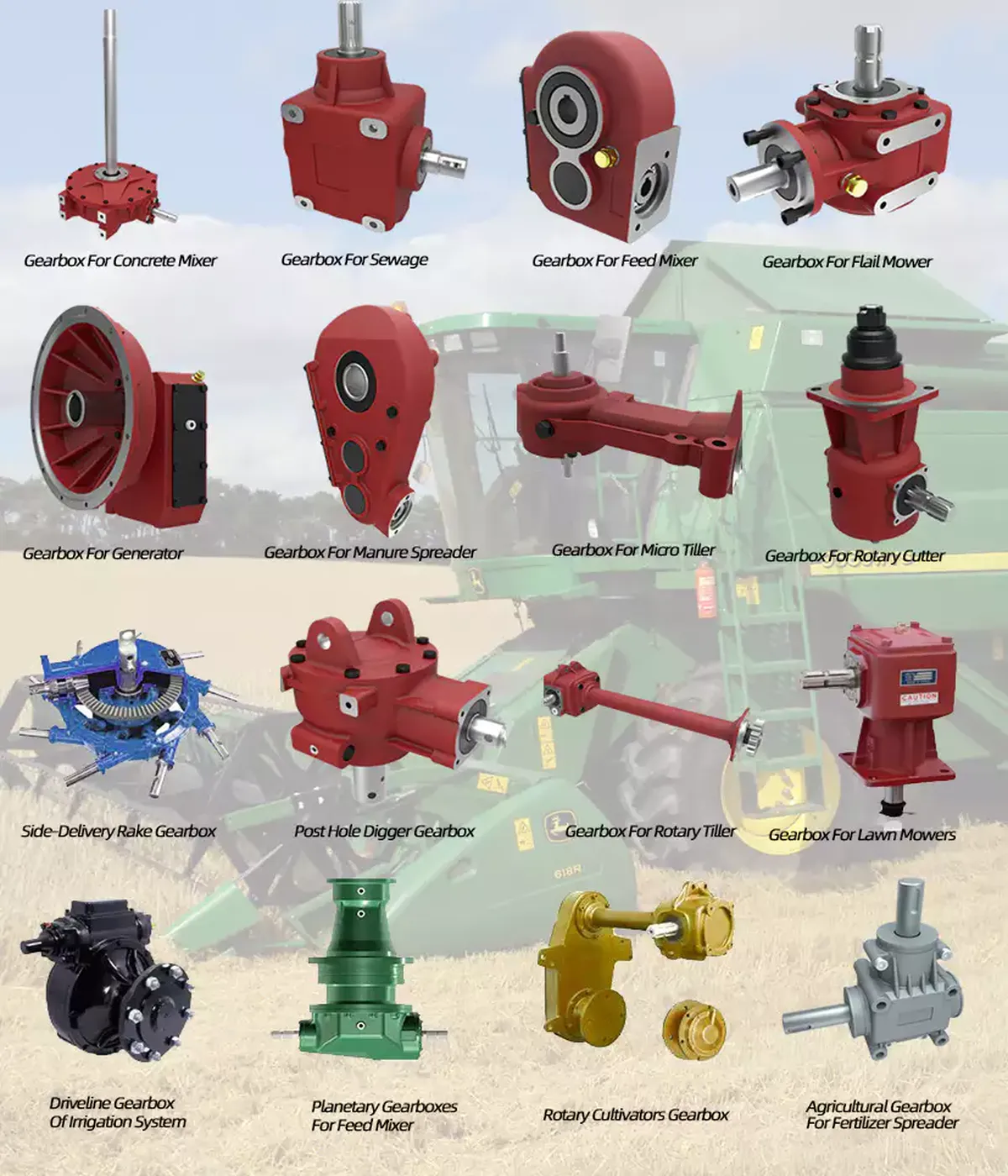
Explore our complete lineup of agricultural gearboxes, covering everything from rotary tillers to harvesters, allowing one-stop procurement of all machinery accessories. This range sparks interest by offering tailored solutions for Argentina’s varied crops, ensuring seamless integration and cost savings.
Why Choose Us
Opt for our baler gearboxes for proven durability in demanding conditions, backed by parameters like 10,000-hour fatigue life and IP65 protection, outperforming standards in Argentine fields. Inquire about custom baler gearbox solutions to match your specific needs. Our focus on precision engineering delivers value through reduced maintenance, as evidenced by field tests in similar climates.
For comprehensive farm transmission options, visit our agricultural gearbox homepage to explore the full catalog.