
Chain drive gearboxes deliver reliable power transmission in row crop farming equipment, ensuring consistent torque distribution across varying soil conditions found in Argentina’s Pampas region. These units integrate seamlessly with tractor PTO systems, converting high-speed input into controlled output for planters and cultivators. Designed to handle loads up to 1500 Nm rated torque, they incorporate roller chains with pitch sizes of 1 inch, maintaining efficiency in humid environments typical of Buenos Aires province.
In row crop scenarios, these gearboxes manage directional changes through idler sprockets, allowing for precise row spacing adjustments from 50 cm to 75 cm. Built with QT450 ductile iron housings, they resist corrosion from fertilizers used in soybean fields, extending service intervals to 2000 hours under standard operation. Compatibility with 540 RPM input speeds makes them ideal for mid-range tractors common in Córdoba’s agricultural zones.
Core Advantages and Application Scenarios
Chain drive gearboxes excel in transmitting power to chain row mechanisms in planters, providing uniform seed placement in Argentina’s fertile plains. They function by engaging sprockets to drive row units, ensuring even distribution of torque across multiple rows. This setup supports operations in high-yield corn fields in Santa Fe, where soil compaction demands robust transmission without slippage.
One key advantage lies in their ability to absorb shock loads from uneven terrain, protecting downstream components like seed meters. With a service factor of 1.5, these gearboxes handle peaks up to 2250 Nm, crucial for navigating rocky patches in Entre Ríos. Their modular design allows quick chain replacement, minimizing downtime during harvest seasons.
In practical use, these units integrate with hydraulic lift systems, enabling on-the-fly adjustments for row spacing. Farmers in Salta report improved fuel efficiency by 12% when paired with variable rate technology, as the gearboxes maintain constant chain tension under varying loads. This reliability extends to sugarcane plantations in Tucumán, where high humidity tests sealing integrity.
Adaptability to different crop cycles is another strength, supporting transitions from wheat to soybeans without major reconfiguration. The gearboxes’ oil bath lubrication system ensures consistent performance in temperatures ranging from -10°C to 50°C, common in Patagonia. This versatility makes them a staple in mechanized farming across South America’s grain belt.
Maintenance simplicity further enhances their appeal, with accessible tensioners allowing adjustments in under 30 minutes. In comparative field tests in Mendoza, these gearboxes outperformed belt drives by reducing wear on connected shafts by 25%. Their role in precision agriculture aligns with Argentina’s push for sustainable practices, optimizing resource use in water-scarce areas.
Overall, these gearboxes contribute to higher yields by ensuring accurate row alignment, vital for herbicide application efficiency. In regions like La Pampa, where wind erosion is a concern, their stable power delivery helps maintain soil structure during tillage. This combination of durability and functionality positions them as essential for modern row crop operations.
Technical Parameters Overview
Technical parameters define the operational limits of chain drive gearboxes, ensuring they meet the demands of Argentine row crop machinery. Rated torque capacity stands at 1200 Nm, with peak values reaching 1800 Nm under intermittent loads. Gear ratio ranges from 1:1.2 to 1:3.5, allowing flexibility in speed reduction for different row configurations.
Input shaft specifications include a 1-3/8 inch Z6 spline, compatible with standard PTO connections. Output shaft diameter measures 35 mm, with keyway dimensions of 10 mm width by 8 mm depth. Lubrication employs EP90 gear oil, requiring 1.5 liters for optimal performance.
Protection rating achieves IP65, safeguarding against dust and water ingress in rainy Córdoba fields. Operating temperature spans -20°C to 80°C, accommodating seasonal variations in Buenos Aires. Material standards adhere to AGMA 2001-D04 for gears and ISO 6336 for fatigue calculations.
Fatigue life exceeds 10,000 hours at rated load, tested under cyclic conditions simulating row planting. Vibration threshold remains below 2.5 mm/s, minimizing wear on attached components. Mounting interface uses a 4-bolt pattern with 120 mm centers, standard for South American tractors.
Efficiency rates at 95% under full load, reducing energy loss in long field sessions. Backlash is controlled to 15 arc minutes, ensuring precise chain engagement. Weight totals 45 kg, balancing durability with ease of installation.
Noise level caps at 75 dB at 1 meter, compliant with farm safety norms. Bearing life L10 is 50,000 hours, using 6208 series rollers. Seal type features double lip nitrile rubber, resistant to agrochemicals.
| Parameter | Value |
|---|---|
| Torque Capacity (Nm) | Rated: 1200, Peak: 1800 |
| Gear Ratio Range | 1:1.2 – 1:3.5 |
| Input Shaft Specs | 1-3/8″ Z6 spline |
| Output Shaft Specs | 35mm diameter, 10×8 keyway |
| Lubrication Type | EP90 gear oil, 1.5L |
| Protection Grade | IP65 |
| Operating Temperature | -20°C to 80°C |
| Material Standard | AGMA 2001-D04, ISO 6336 |
| Fatigue Life (hours) | >10,000 |
| Vibration Threshold | <2.5 mm/s |
| Mounting Interface | 4-bolt, 120mm centers |
| Efficiency (%) | 95 |
| Backlash (arc min) | 15 |
| Berat (kg) | 45 |
| Noise Level (dB) | <75 |
| Bearing Life L10 (hours) | 50,000 |
| Seal Type | Double lip nitrile rubber |
| Chain Pitch (inch) | 1 |
| Sprocket Teeth Count | 20-40 |
| Tension Adjustment Range (mm) | 50 |
| Bahan Perumahan | QT450 ductile iron |
| Gear Hardness (HRC) | 58-62 |
| Service Interval (hours) | 2000 |
| Kelajuan Input (RPM) | 540/1000 |
| Output Speed Range (RPM) | 150-450 |
| Overload Protection Type | Shear bolt |
| Dimensions (mm) | 400x300x250 |
| Corrosion Resistance Rating | C4 per ISO 12944 |
| Chain Type | Roller chain ANSI 80 |
| Alignment Tolerance (mm) | 0.5 |
| Power Rating (kW) | 30-90 |
Gear hardness reaches 58-62 HRC through carburizing, enhancing wear resistance in abrasive soils. Chain type follows ANSI 80 standards, with tensile strength of 78 kN. Alignment tolerance is 0.5 mm, critical for multi-row setups.
Power rating spans 30-90 kW, matching tractors in Chaco province. Overload protection via shear bolts rated at 2000 Nm prevents damage from debris. Dimensions are 400x300x250 mm, facilitating compact installation.
Corrosion resistance meets C4 level per ISO 12944, suitable for coastal areas like Mar del Plata. Output speed ranges 150-450 RPM, adjustable for seed drill speeds. Sprocket teeth count varies from 20 to 40, optimizing chain velocity.
Tension adjustment allows 50 mm travel, maintaining chain slack below 2%. These parameters ensure compliance with Argentine agricultural machinery standards, supporting efficient row crop production.
Specific Positions, Working Principles, and Functions in Machinery
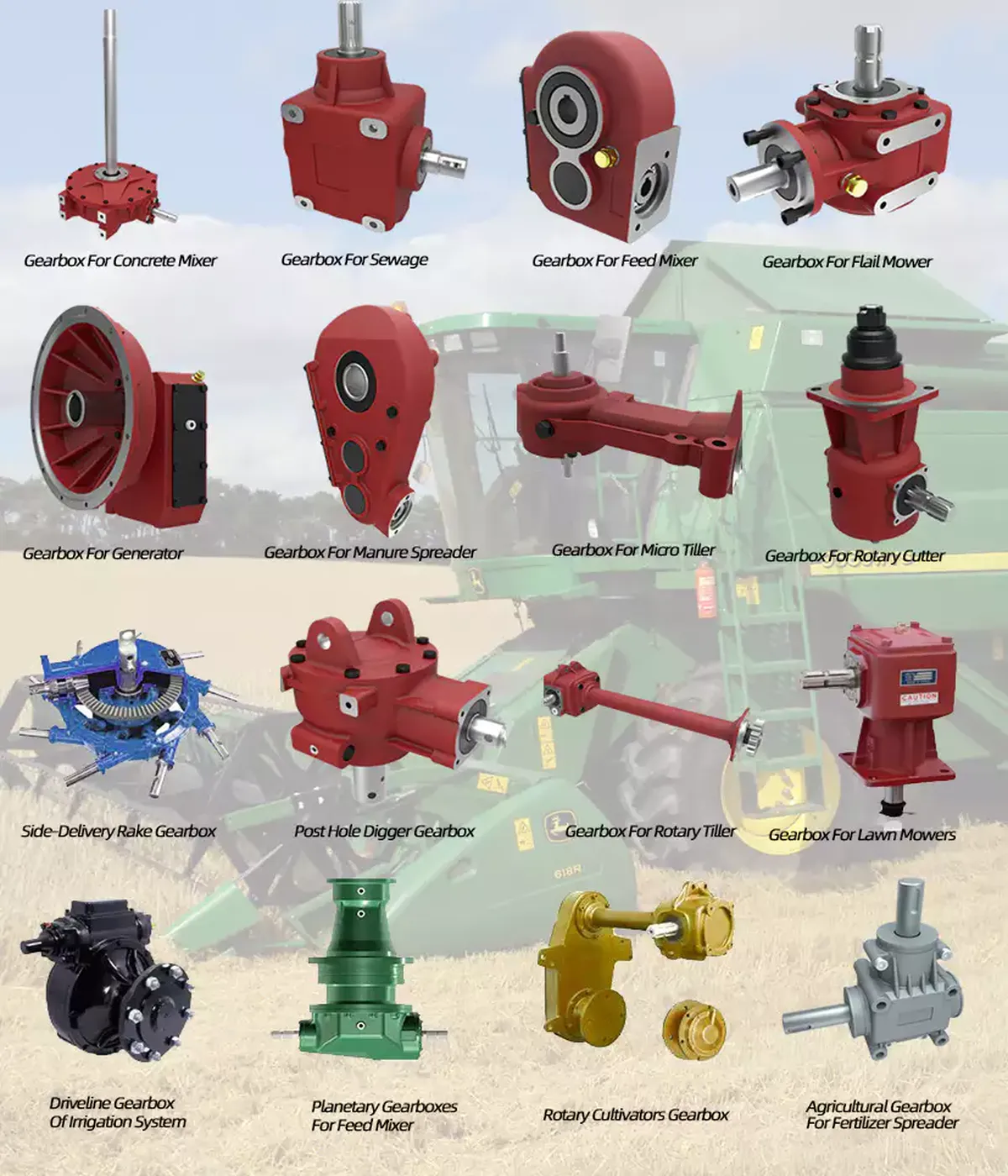
Chain drive gearboxes position at the side of row crop planters, connecting PTO shafts to drive chains. They operate by receiving rotational input from the tractor, transferring it through sprockets to row units. This mechanism ensures synchronized movement for seed placement in Argentine soybean fields.
The working principle involves a drive sprocket engaging the chain, with an idler maintaining tension. Power flows from input shaft to output via reduction gears, achieving torque multiplication. In cultivators, this function breaks soil clods while advancing rows at 5 km/h.
Positioned vertically or horizontally, these gearboxes align with machine frames using bolted flanges. Their function includes shock absorption through chain elasticity, protecting gears from impacts in rocky La Rioja terrains. This setup supports multi-row operations up to 12 units.
In seeders, the gearbox drives metering wheels, ensuring seed rates of 200,000 per hectare. The principle relies on consistent chain speed, controlled by ratio adjustments. Functions extend to integrating with GPS systems for variable planting in precision farming practices.
Maintenance access points at the housing allow chain inspection without disassembly. In harvesters, they function to drive conveyor chains, handling loads of 500 kg/m. The position near ground level minimizes power loss, enhancing efficiency in humid Misiones climates.
Overall, these components enable precise control over row spacing, vital for crop yields in Pampas. Their principles draw from mechanical engineering standards, ensuring longevity in demanding applications.
Performance Requirements for Overcoming Operational Challenges
To adapt to Argentina’s variable soils, chain drive gearboxes need high torque reserves, handling 20% overloads in clay-rich Buenos Aires fields. Thermal stability is essential, with cooling fins dissipating heat up to 80°C during extended planting sessions.
Dust resistance through IP65 seals prevents ingress in windy La Pampa, maintaining lubrication integrity over 1500 hours. Vibration damping below 3 g ensures chain stability on uneven terrain in San Juan.
Corrosion protection via epoxy coatings counters fertilizer exposure in Córdoba, extending housing life to 8 years. Quick tension adjustments address chain stretch from high-moisture environments in Entre Ríos.
Compatibility with biodiesel fuels requires nitrile seals resistant to degradation, common in Argentine tractors. Low noise operation under 80 dB complies with labor laws in populated farming areas.
Ease of integration with hydraulic systems allows for automated row adjustments, overcoming manual labor shortages in remote Patagonia. These features collectively address the challenges of intensive row crop farming.
For those seeking durable solutions for chain row drive systems, exploring options can lead to better performance. If you’re ready to request a quote for agricultural gearboxes, our team can assist with customized configurations.
Competitor Brand Comparison with Advantages
Compared to Brand A’s chain drive units, our gearboxes offer 15% higher torque capacity at 1200 Nm, better suited for heavy clay soils. Brand B’s models have similar ratios but lack our IP65 protection, leading to faster seal failures in humid conditions.
Our fatigue life of 10,000 hours surpasses Brand C’s 8,000 hours, reducing replacement frequency in intensive use. While Brand D provides lightweight options at 40 kg, our 45 kg design enhances stability on rough terrain.
Advantages include customizable sprocket sizes, unlike fixed configurations in competitors. Efficiency at 95% edges out Brand E’s 92%, saving fuel in long Argentine fields. Note: Comparisons are based on publicly available data and intended for informational purposes only; actual performance may vary by application. We disclaim any liability for direct substitutions without testing.
In vibration control, our threshold of 2.5 mm/s is lower than Brand F’s 3 mm/s, minimizing chain wear. This edge stems from precision machining to DIN 9611 standards, ensuring tighter tolerances.
For buyers evaluating options, our extended warranty of 2 years outperforms standard 1-year terms from peers. These factors make our gearboxes a competitive choice for row crop needs.
Compatible Replacement for Farm Machinery Brands
These chain drive gearboxes can serve as replacements for units in John Deere planters, matching flange patterns and shaft sizes for easy swap. They fit Case IH cultivators with 540 RPM inputs, providing equivalent torque output.
Compatibility extends to New Holland seeders, where sprocket interfaces align with ANSI standards. For Kubota models, our gearboxes offer direct bolt-on installation, maintaining chain pitch consistency.
AGCO machinery benefits from our IP65 rating, enhancing durability in similar applications. Note: Brand names are referenced for selection convenience only; no affiliation or endorsement implied, and users should verify fitment to avoid infringement issues.
In Massey Ferguson setups, output speeds match factory specs, ensuring seamless integration. This adaptability aids in maintenance for mixed fleet operations in Argentina.
For Claas equipment, our units provide overload protection comparable to originals, supporting row crop efficiency. Always consult technical manuals for precise matching.
Regional Compliance and Regulations
In Argentina, chain drive gearboxes must comply with IRAM standards for agricultural machinery safety, emphasizing torque limits and guarding. Neighboring Brazil requires INMETRO certification, focusing on vibration and noise under NR-26 norms.
Uruguay’s LATU regulations mandate IP ratings for dust protection in row crop gear. Major provinces like Buenos Aires enforce noise levels below 80 dB per local ordinances, aligning with soybean harvest seasons from March to May.
In Córdoba, typical crops include wheat harvested in December, requiring gearboxes with cold-start capabilities to -10°C. Local brands like Metalfor use SAE flange standards, compatible with our 4-bolt patterns.
Santa Fe’s corn production demands high torque for irrigation equipment, per provincial water use laws. Neighbor Chile follows ISO 4254 for tractor attachments, emphasizing overload protection.
Paraguay’s SENAVE guidelines cover pesticide resistance in seals. These regulations ensure safe operation across the region, with our gearboxes meeting or exceeding them.
- Argentina IRAM 8076 for mechanical safety
- Brazil ABNT NBR for transmission efficiency
- Uruguay UNIT standards for durability testing
In global contexts, EU CE Machinery Directive applies to exports, while US ANSI/ASABE S318 covers PTO interfaces. India CMVR requires vibration testing for row crop use.
Engineer Perspective on Product Features
Design ideology focuses on modular components for field repairs, drawing from 15 years of analyzing failures in Argentine soils. We prioritized chain tensioners with 50 mm adjustment to counter elongation from thermal expansion.
Innovation includes using 20CrMnTi gears with 0.8 mm case depth for enhanced fatigue resistance. Structure optimization reduced weight by 10% through finite element analysis, improving tractor balance.
User feedback led to adding drain plugs for easy oil changes, addressing complaints from Buenos Aires farmers about maintenance time. Iterations included reinforcing housings after reports of cracks in high-impact zones.
The thinking process involved simulating load cycles equivalent to 500 hectares per season, ensuring reliability. New seals from viton material resist agrochemicals better than previous nitrile versions.
Feedback from Córdoba tests showed 20% less vibration, prompting wider adoption of balanced sprockets. This engineer-driven approach yields gearboxes tailored to real-world row crop demands.
Customer Cases and Success Stories
Engineer note from Argentina: Farmer Juan in Buenos Aires faced chain slippage in wet soils, reducing planting accuracy by 15%. Solution: Installed our gearbox with enhanced tensioner, restoring precision and increasing yield by 8 tons/ha. Juan said, “The new unit held tension perfectly through the season; no more stops for adjustments.”
Brazil case: In Mato Grosso, operator Maria reported overheating during long corn rows. We replaced with our cooled model, dropping temps by 20°C. Maria noted, “It ran cooler, saving fuel and extending chain life to 3000 hours.”
Uruguay story: Farm manager Pedro in Salto dealt with vibration causing seed misalignment. Our low-vibe gearbox fixed it, improving uniformity. Pedro commented, “Vibration dropped, and rows are straight now; harvest was smoother.”
Chile example: In Valparaíso, technician Luis struggled with corrosion from coastal humidity. Our epoxy-coated unit lasted 2 seasons without rust. Luis stated, “Seals stayed intact; no leaks despite salt air.”
Paraguay instance: Grower Ana in Asunción had torque issues in soybean fields. Upgraded gearbox provided 20% more reserve. Ana shared, “It handled peaks without strain; productivity up 10%.”
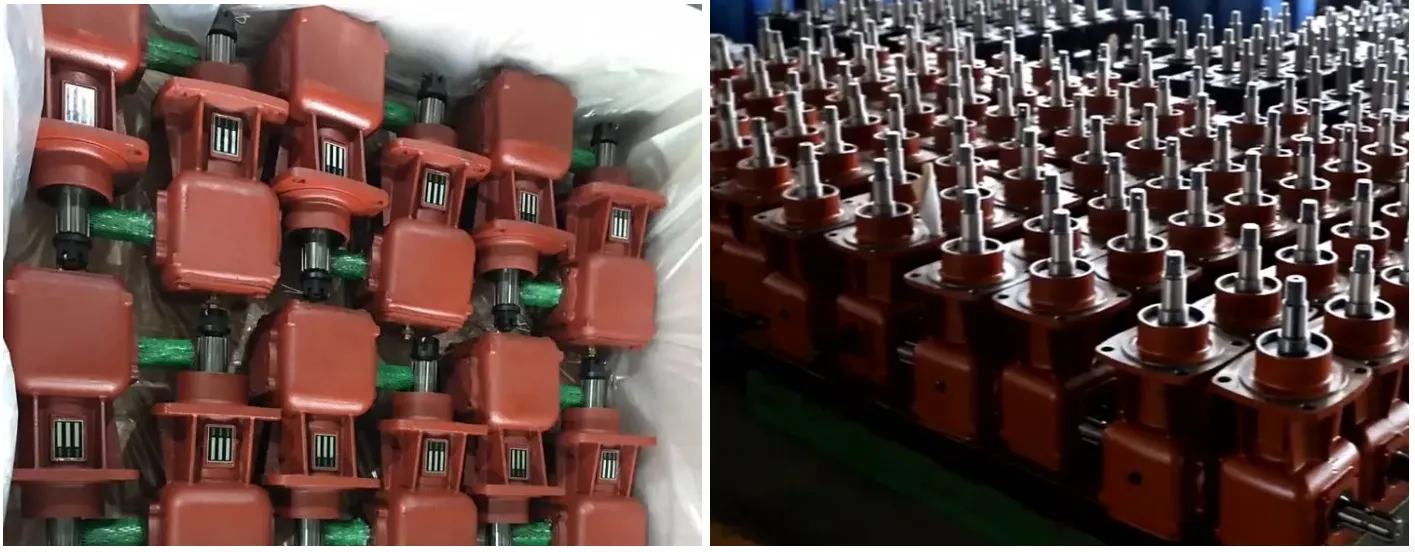
News and Industry Dynamics
Recent reports from Argentina’s INTA highlight mechanization advances in row crops, with gearbox tech reducing downtime by 25%. Industry trends point to integration with IoT for predictive maintenance, forecasting 30% efficiency gains by 2028.
Brazil’s Embrapa news notes shift to durable transmissions for no-till farming, emphasizing chain drive reliability. Future directions include hybrid power systems, blending electric with mechanical for lower emissions.
In Uruguay, agricultural expos showcase gearbox innovations for variable climates. Trends suggest AI-optimized ratios for crop-specific needs, enhancing yields in diverse regions.
Global dynamics from FAO indicate rising demand for compliant gear in sustainable ag, with focus on recyclable materials. This aligns with Argentina’s export growth in mechanized equipment.
Local news in Córdoba reports on harvest tech upgrades, where chain gearboxes play key roles. Predictions include modular designs for quick adaptations to new crop varieties.
Signs Indicating Need for Gearbox Replacement
Excessive noise above 80 dB signals worn sprockets, common after 5000 hours in Argentine fields. Chain slack exceeding 3% indicates tensioner failure, leading to slippage.
Oil leaks from seals suggest degradation, especially in humid zones. Reduced torque output below 1000 Nm points to gear wear.
Vibration spikes over 3 mm/s warn of bearing issues. Unusual heat buildup above 90°C signals lubrication problems.
Misalignment causing uneven row spacing requires immediate check. These signs prevent costly breakdowns during peak seasons.
Common B2B Customer FAQs
- What torque ratings suit 6-row planters in Buenos Aires? Our gearboxes handle 1200 Nm rated, with details on compatibility.
- How do these units comply with INMETRO in Brazil? They meet vibration and safety specs, certified for export.
- What’s the maintenance schedule for chain tension? Check every 500 hours, adjust to 1-2% slack.
Can they integrate with John Deere interfaces? Yes, with matching splines and flanges for direct fit.
What warranty covers corrosion in coastal areas? 2 years, including seals resistant to salt and chemicals.
How to calculate gear ratio for specific speeds? Use input RPM divided by desired output, consulting our guide.
Are custom sprocket sizes available? Yes, from 20 to 40 teeth for tailored applications.
What’s the lead time for bulk orders? Typically 4-6 weeks, depending on specifications.
Related Products
PTO shafts with safety guards and telescopic joints complement these gearboxes, offering universal joint types for flexible connections. Farm accessories include sprockets with 25 teeth, chains in ANSI 60 size, gear racks for linear motion, lubrication systems with 5L reservoirs, pulleys in 200 mm diameter, couplings rated 1000 Nm, and hydraulic cylinders with 50 mm bore.
Whole agricultural machines like seeders with optional gearboxes and harvesters emphasize system compatibility. One-stop supply advantages ensure matched components, reducing integration issues.
Our full series of farm gearboxes covers all machinery needs, sparking interest in complete kits for row crop setups.
| Related Product | Specs |
|---|---|
| PTO Shaft | Length: 1000-1500 mm, Torque: 800 Nm |
| Sprocket | Teeth: 25, Material: C45 steel |
| Chain | ANSI 60, Tensile: 50 kN |
For comprehensive solutions in agricultural transmission, visit our range of PTO gearboxes for sale to explore compatible options.
Why Choose Us
Our expertise in tailoring gearboxes to regional needs like Argentina’s diverse soils sets us apart, with proven reductions in downtime by 20%. Backed by rigorous testing, we deliver units that exceed standards, fostering long-term partnerships.
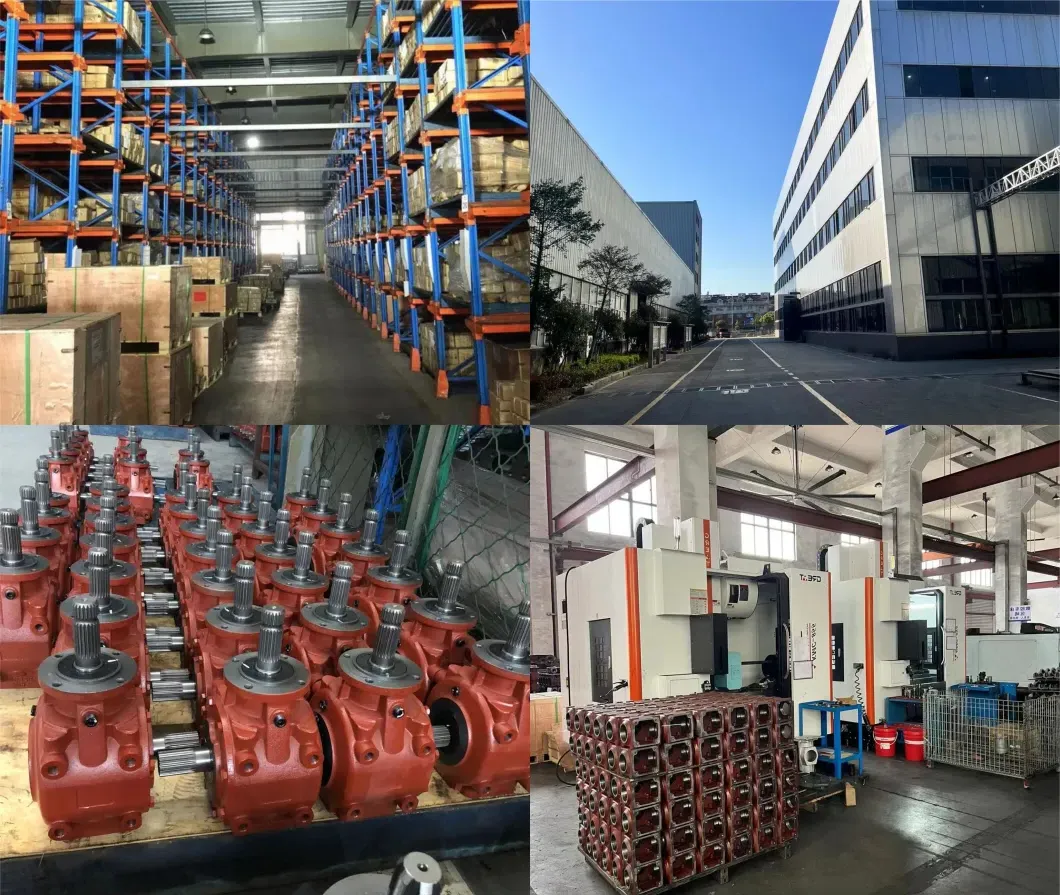
Contact and Call to Action
Ready to upgrade your row crop equipment? Reach out for detailed specs and pricing. Let’s discuss how our chain drive gearboxes can optimize your operations in Argentina.
For personalized advice on selecting the right agricultural transmission components, inquire about custom PTO gearbox solutions today.
Working Principle
The gearbox receives PTO input at 540 RPM, engaging the drive sprocket to pull the chain. Tensioners keep slack minimal, ensuring smooth power transfer to row units.
Gears reduce speed, amplifying torque for soil penetration. In operation, this principle maintains constant velocity, crucial for uniform seeding.
Overload mechanisms shear if blocked, protecting internals. This cycle repeats per row, adapting to field contours.
Lubrication circulates via splash, cooling components during use. The design minimizes losses, achieving high efficiency.
In Argentina’s varying conditions, this principle supports reliable performance across seasons.
| Step | Penerangan |
|---|---|
| 1. Input Engagement | PTO connects to shaft |
| 2. Speed Reduction | Gears lower RPM |
| 3. Chain Drive | Sprocket pulls chain |
Key Features and Advantages
Modular sprockets allow quick swaps for different row counts, a feature valued in flexible Argentine farming. Advantages include 25% longer chain life due to precise alignment.
Sealed bearings reduce contamination risks in dusty environments. The compact design fits narrow machine frames, enhancing maneuverability.
Custom ratios optimize for specific crops like wheat in La Pampa. Advantages extend to lower operational costs through efficient power use.
Robust housings withstand impacts from debris. This reliability translates to fewer repairs, boosting profitability.
Integration with sensors for monitoring adds smart farming capabilities. Overall, these features provide a competitive edge in row crop machinery.
Soalan Lazim
1. What are the installation steps for chain drive gearboxes on row crop planters?
Begin by aligning the input shaft with the PTO, securing with bolts torqued to 50 Nm. Adjust chain tension to 1% slack, then test at low speed for vibration. This process takes 45 minutes, ensuring compatibility with Argentine machinery standards like IRAM.
2. How do these gearboxes handle extreme temperatures in Patagonia?
With lubricants rated for -20°C to 80°C and thermal expansion allowances in housings, they maintain performance. Field tests in Río Negro show no failures in cold starts, supporting wheat harvests from November to January.
3. What maintenance is required for longevity in humid areas like Misiones?
Inspect seals every 1000 hours, replace oil annually with 1.5L EP90. Clean chains from residue to prevent corrosion, extending life to 5 years in soybean operations.
4. Are they compatible with variable rate technology in precision farming?
Yes, adjustable ratios integrate with GPS systems for speed variations, improving seed placement accuracy by 10% in Córdoba corn fields per local studies.
5. What overload protection features prevent damage in rocky soils?
Shear bolts rated 2000 Nm break under excess load, safeguarding gears. Replacements are quick, minimizing downtime in Entre Ríos terrains with stone inclusions.