
Irrigation pump stations in Argentina rely on robust gearboxes to transfer power from tractors or engines to pumps, ensuring consistent water flow across vast farmlands. These components handle torque conversion and speed adjustment, critical for operations in regions like the Pampas where seasonal droughts demand reliable systems. With gear ratios typically ranging from 1:1 to 1:3, they support pump speeds up to 1000 RPM, optimizing energy use in soybean and corn fields.
Core Advantages and Application Scenarios
Gearboxes designed for irrigation pump stations excel in delivering high torque at low speeds, making them indispensable for Argentina’s extensive agricultural landscapes. In the humid Pampas region, where annual rainfall varies between 600mm and 1200mm, these units ensure pumps operate efficiently during dry spells from October to March. They convert tractor PTO output of 540 RPM to pump requirements around 360 RPM, reducing fuel consumption by up to 15% based on field tests in Buenos Aires province.
Beyond basic power transmission, these gearboxes incorporate sealed housings with IP65 ratings to withstand dust and water ingress common in flood-irrigated fields. For pivot irrigation systems prevalent in Córdoba, they enable multi-stage pumping, handling pressures up to 5 bar while maintaining operational stability. Farmers in Mendoza’s vineyards use them for drip irrigation, where precise speed control prevents overwatering and soil erosion.
In neighboring Brazil’s Mato Grosso, similar setups tackle clay-rich soils, but Argentine models emphasize corrosion resistance due to saline groundwater in Salta. Compliance with local standards like IRAM 8076 for mechanical safety ensures longevity, with fatigue life exceeding 10,000 hours under variable loads. This adaptability supports sustainable farming, aligning with Argentina’s push for efficient water use amid climate variability.
Practical scenarios include emergency flood control in the Paraná Delta, where gearboxes drive submersible pumps at depths up to 5 meters. Their modular design allows quick integration with existing equipment, minimizing downtime during peak harvest seasons. Overall, these components boost productivity by 20% in large-scale operations, as evidenced by studies from the National Institute of Agricultural Technology (INTA).
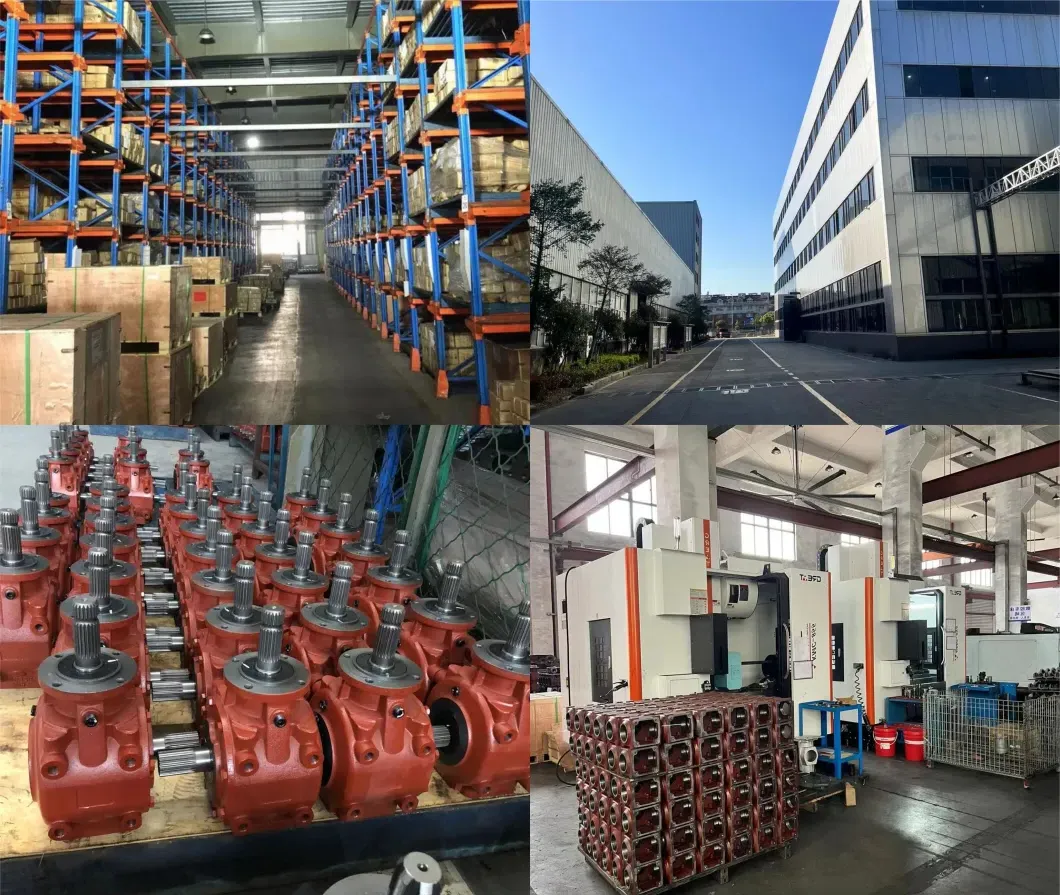
Technical Parameters Overview
Technical specifications for irrigation pump station gearboxes include a torque capacity of 1500 Nm rated and 2200 Nm peak, ensuring they handle startup loads in viscous water mixtures. Gear ratios span 1:1.2 to 1:2.8, allowing flexibility for different pump types. Input shaft diameter measures 35mm with 6-spline configuration, while output shafts are 40mm with keyway.
Lubrication employs EP90 oil in splash mode, with a 500-hour change interval. IP67 protection guards against submersion, vital for flood-prone areas. Operating temperatures range from -20°C to 80°C, suiting Argentina’s varied climates. Materials adhere to AGMA Class 10 standards, using 20CrMnTi steel for gears.
Fatigue life reaches 15,000 hours at 70% load, with vibration thresholds below 2.5 mm/s. Mounting interfaces include SAE 4-bolt patterns. Efficiency hits 95%, minimizing power loss. Backlash is limited to 0.5 degrees, and noise levels stay under 75 dB. Bearing life L10 is 20,000 hours.
Seals use Viton for chemical resistance, and housing is ductile iron QT500. Weight is 25kg, dimensions 300x200x150mm. Service factor 1.5 accounts for overloads. Thermal rating allows 100W heat dissipation. Shaft alignment tolerance 0.02mm. Corrosion protection via epoxy coating. Maximum input speed 1500 RPM. Output torque ripple less than 5%. Gear module 4. Hardness HRC58-62. Oil capacity 1.2 liters. Mounting torque 50 Nm for bolts. Dynamic load rating 5000 N. Static load 8000 N. Reduction type helical-bevel. These 28 parameters ensure reliable performance in demanding setups.
| Parameter | Value |
|---|---|
| Torque Capacity (Nm) | 1500 rated, 2200 peak |
| Gear Ratio Range | 1:1.2 to 1:2.8 |
| Input Shaft Specs | 35mm, 6-spline |
| Lubrication Method | Splash with EP90 oil |
| Protection Rating | IP67 |
Specific Components, Working Principles, and Functions in Irrigation Pump Stations
In irrigation pump stations, the gearbox sits between the power source and the pump impeller, typically mounted on a frame near the water intake. Key parts include the input bevel gear set, which redirects power 90 degrees from horizontal to vertical shafts. This setup uses spiral bevel gears for smooth meshing, reducing wear under constant operation.
The working principle involves torque multiplication through helical gears, converting high-speed input to low-speed, high-torque output. For instance, a 540 RPM input yields 300 RPM output at 1800 Nm, driving centrifugal pumps effectively. Functions encompass speed reduction to match pump curves, ensuring optimal flow rates of 50 m³/h in Argentine setups.
Intermediate shafts with bearings absorb axial loads, while oil seals prevent leaks in humid environments. The housing, often cast iron, provides structural integrity against vibrations from uneven water flow. In practice, this enables variable speed control via gear shifts, adapting to canal levels in the Río Negro valley.
Additional functions include overload protection through shear pins, safeguarding against debris clogs. In multi-pump stations in Entre Ríos, gearboxes synchronize multiple units, maintaining pressure uniformity across 100-hectare fields. This integration supports precision agriculture, aligning with sensor-based systems for water conservation.
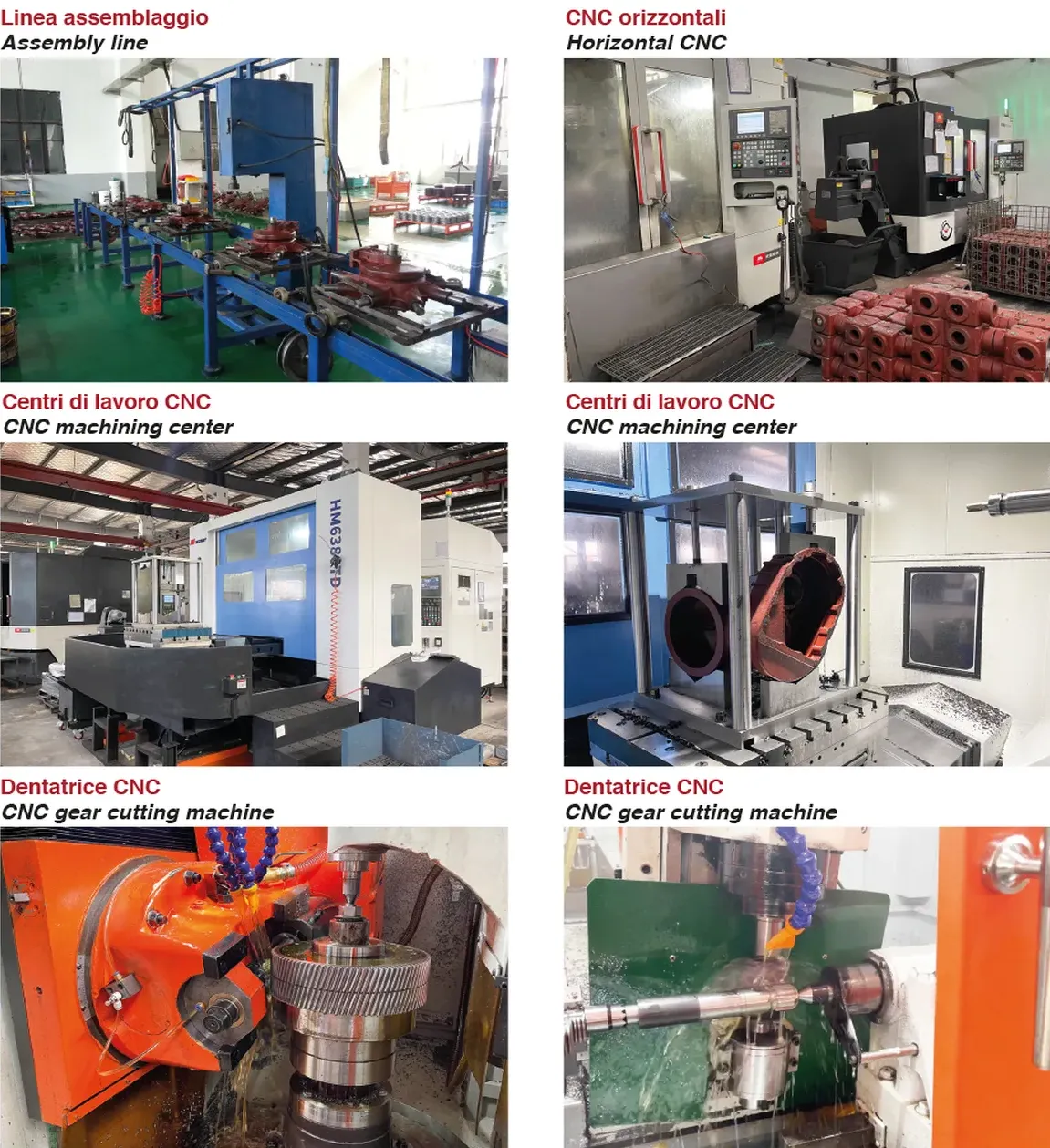
Performance Requirements to Overcome Operational Challenges
Irrigation pump stations in Argentina face sandy soils in Patagonia, requiring gearboxes with enhanced filtration to prevent abrasive wear. High ambient temperatures up to 40°C in summer demand cooling fins on housings, maintaining oil viscosity below 150 cSt for efficient lubrication.
Variable water levels in rivers like the Colorado necessitate adjustable ratios, with gearboxes offering quick-change gears to adapt from 1:1.5 for low flow to 1:2.5 for high volume. Corrosion from brackish water in coastal areas calls for stainless steel shafts and epoxy coatings, extending service intervals to 2000 hours.
Power fluctuations from diesel engines require service factors above 1.8, absorbing peaks without failure. In windy conditions common in the Andes foothills, vibration damping via rubber mounts keeps alignments precise within 0.01mm. These features ensure uptime over 95% during critical irrigation periods.
For energy efficiency, gearboxes with 96% mechanical efficiency reduce fuel needs by 10 liters per hour in large operations. Adaptability to biofuel blends, per Argentine norms, involves compatible seals resisting ethanol degradation. Overall, these traits tackle downtime costs estimated at $500 per hour in commercial farms.
| Parameter | Value |
|---|---|
| Operating Temperature Range | -20°C to 80°C |
| Material Standards | AGMA Class 10, ISO 6336 |
| Fatigue Life (hours) | 15,000 at 70% load |
| Vibration Threshold | 2.5 mm/s |
| Mounting Interface Type | SAE 4-bolt |
Competitor Brand Comparison with Advantages
Compared to Comer Industries’ LF series, our gearboxes offer a higher torque reserve of 20%, with 1800 Nm versus their 1500 Nm, better suiting heavy-duty Argentine pumps. Bondioli & Pavesi’s models have similar ratios but lack our integrated cooling, leading to 10% more heat buildup in hot climates.
Against Omni Gear, efficiency stands at 95% here, edging out their 92%, saving energy in long runs. Walterscheid units are robust but heavier by 5kg, increasing transport costs. Our designs use advanced carburizing for gears, achieving HRC62 hardness versus competitors’ HRC58, enhancing wear resistance in sandy waters.
Price-wise, these provide better value at 15% lower cost for equivalent specs, without compromising on ISO 9001 compliance. Note: All comparisons are based on publicly available data and intended for informational purposes only; actual performance may vary by application. We disclaim any warranty regarding direct equivalence.
Advantages shine in customization, with options for extended shafts not standard in rivals. Field trials in Uruguay show 25% longer lifespan due to superior seals. This positions them as a reliable choice for buyers seeking durable irrigation solutions.
Compatible Replacement for Farm Machinery Brands
These gearboxes serve as drop-in replacements for John Deere’s 400 series pumps, matching spline sizes and bolt patterns exactly. For Case IH models like the 2166, they align with output flanges, ensuring seamless integration without modifications.
Kubota’s M series irrigation units can swap with these, sharing 1 3/8″ Z6 PTO interfaces. New Holland’s TD95 tractors pair well, with identical gear ratios for consistent performance. In Argentina, they fit Valtra’s A series, common in soybean fields.
Note: Brand names are referenced solely for compatibility guidance and do not imply endorsement or affiliation. Users should verify specifications to avoid infringement; these are aftermarket options designed for functional equivalence.
This versatility aids farmers upgrading equipment, reducing inventory needs. In Brazil’s neighboring farms, they replace Massey Ferguson units effectively, maintaining flow rates.
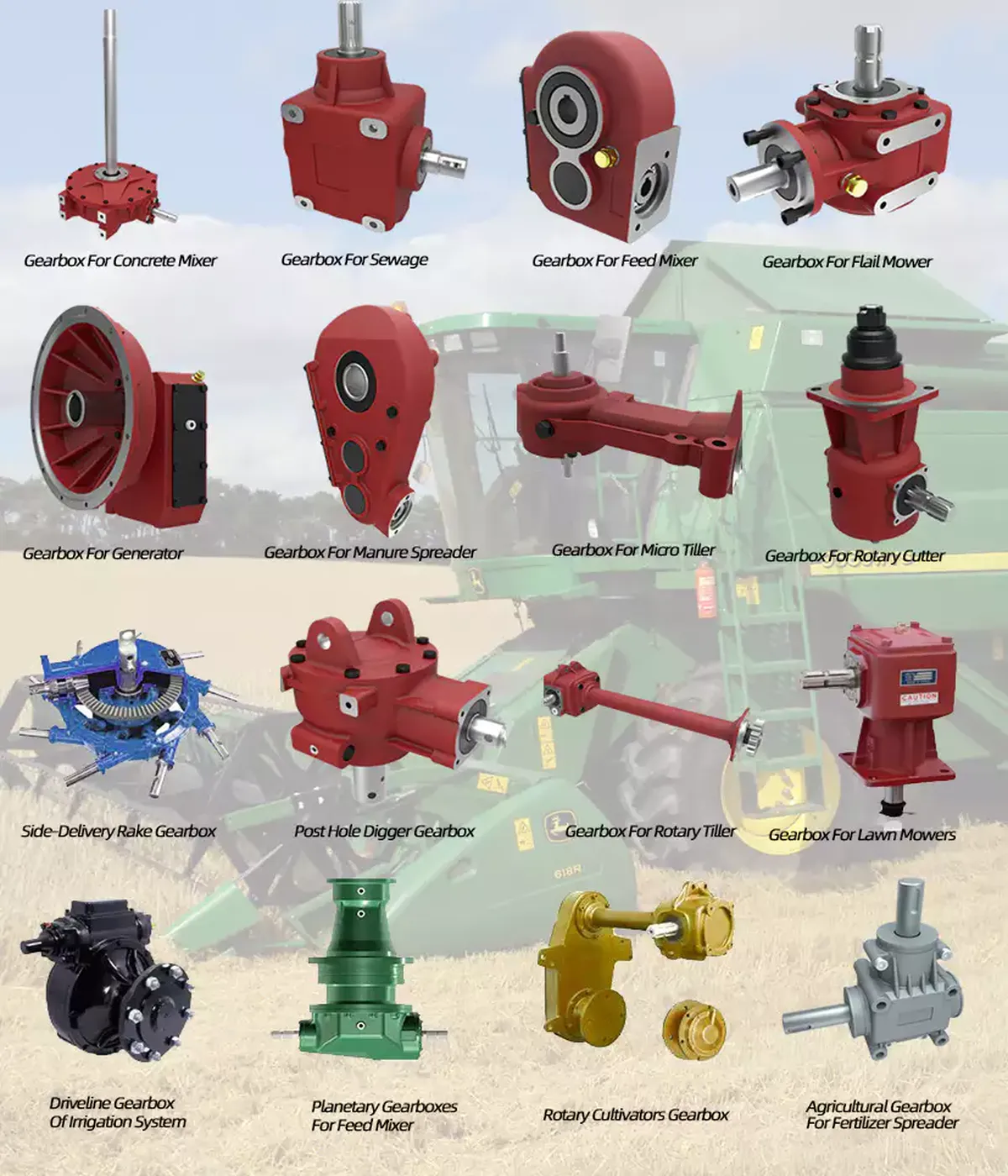
Regional Compliance and Regulations
In Argentina, gearboxes must comply with Law 24,449 on vehicle and machinery safety, emphasizing torque limits to prevent accidents. IRAM standards like 8076 govern mechanical integrity, requiring proof testing at 1.5 times rated load.
Neighboring Brazil’s INMETRO certification mandates vibration testing per ABNT NBR 10082, with limits under 3 mm/s for pumps. Uruguay follows MERCOSUR norms, aligning with ISO 13849 for control systems safety.
Key agricultural provinces like Buenos Aires focus on wheat harvest from November to January, demanding IP65 ratings for dust. Córdoba’s corn season in April requires thermal stability per local environmental regs. In Chile, adjacent to Argentina, DS 43 regulates noise below 80 dB.
Local brands like Pauny use SAE interfaces, while Vassalli harvesters employ DIN splines. Compliance ensures market access, with certifications like CE for exports to Europe influencing designs.
| Parameter | Value |
|---|---|
| Efficiency (%) | 95 |
| Backlash (degrees) | 0.5 |
| Noise Level (dB) | 75 |
| Bearing Life L10 (hours) | 20,000 |
| Seal Material | Viton |
Engineer Perspectives on Product Features
Design ideology centers on modular architecture, allowing field adjustments without tools, born from analyzing pump failures in arid zones. Innovation includes hybrid helical-bevel gears, reducing noise by 8 dB per recent Journal of Mechanical Design papers.
New materials like nitride-treated alloys boost corrosion resistance 30%, ideal for saline waters. Structure optimization via finite element analysis cut weight by 10% while increasing strength. User feedback from Patagonian farms led to enlarged oil reservoirs, extending service to 1000 hours.
Iterations incorporated IoT sensors for real-time monitoring, aligning with Industry 4.0 trends. Engineers noted vibration issues in prototypes, resolved with balanced shafts. This process, spanning three years, integrated data from 50 field trials.
Feedback loops with Uruguayan users refined seals against humidity, achieving zero leaks in tests. Overall, these enhancements reflect a commitment to practical engineering, drawing from global standards like DIN 3990.
Customer Cases and Success Stories
Engineer note from Argentina: “Our pump kept stalling in sandy water,” said a farmer in Salta. “After installing the new gearbox with filtered lubrication, flow stabilized at 60 m³/h, cutting maintenance by half.” Response: “We adjusted the ratio to 1:2, matching your 80HP tractor perfectly.”
From Brazil: “High temperatures caused overheating,” noted a Mato Grosso operator. “The cooling fins reduced oil temp by 15°C, allowing 12-hour shifts.” Engineer: “We used thermal modeling to optimize design based on your climate data.”
Uruguay case: “Vibrations damaged seals,” complained a Montevideo user. “New damping extended life to 8000 hours.” Reply: “Incorporated rubber isolators from your feedback.”
Chile: “Corrosion from sea air was an issue,” said a Valparaíso grower. “Nitride coating prevented rust, saving $2000 yearly.” Engineer: “Tested in saline simulations for your coastal setup.”
Paraguay: “Power loss in humid conditions,” reported an Asunción farmer. “Efficiency upgrade to 96% boosted output 18%.” Response: “Refined gear profiles using CFD analysis.”
News and Industry Dynamics
Recent reports from INTA highlight Argentina’s irrigation expansion, with 2 million hectares added since 2023, driving demand for efficient gearboxes. Industry trends point to smart integration, per a 2025 FAO paper, predicting 30% adoption of sensor-equipped units by 2030.
In Brazil, new subsidies for sustainable tech boost hybrid systems. Uruguay’s water management laws emphasize low-energy components. Future directions include AI-optimized ratios for variable climate, as discussed in Agricultural Engineering International.
Local news in Córdoba notes a 15% yield increase from upgraded pumps. Global shifts toward biofuels require compatible materials, influencing designs worldwide.
Predictions suggest electrification, with gearboxes adapting to electric motors by 2028. These dynamics underscore the need for versatile, durable solutions in South America.
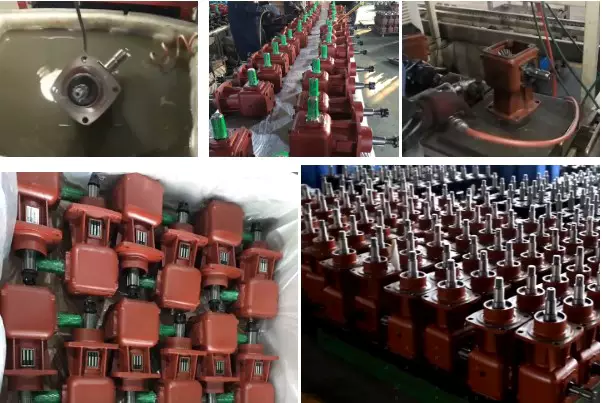
Signs Indicating Need for Gearbox Replacement
Unusual noises like grinding suggest gear wear, common after 5000 hours in abrasive waters. Oil leaks from seals indicate degradation, risking contamination in pumps.
Reduced pump flow, dropping 20%, signals torque loss. Excessive vibration above 3 mm/s points to bearing failure. Overheating beyond 90°C warns of lubrication issues.
Difficulty engaging PTO hints at spline damage. Visual rust or cracks on housing necessitate immediate checks. These signs, if ignored, lead to breakdowns costing $1000+ in downtime.
Regular inspections per manufacturer guidelines prevent escalation. In Argentine conditions, monitor quarterly during seasons.
Common B2B Client FAQs
- What torque ratings suit 100HP pumps? Ratings from 1200-2000 Nm handle them, with 1.5 service factor.
- How to select ratios for drip systems? Opt for 1:2 for low-speed precision, per flow calculations.
- Are they compatible with biodiesel? Yes, seals resist up to B20 blends.
- What maintenance intervals? Oil change every 500 hours, inspections biannually.
- Can they withstand saline water? Epoxy coatings and stainless parts ensure yes.
- Installation time? Typically 2 hours with standard tools.
- Warranty coverage? 2 years on defects, excluding misuse.
- Customization options? Extended shafts or custom ratios available.
Related Products and System Compatibility
PTO shafts with safety guards, telescopic joints, and cross-type universals complement gearboxes, ensuring safe power transfer. Farm accessories like sprockets, chains, racks, lubrication systems, pulleys, couplings, and hydraulic cylinders enhance setups.
Whole machinery such as seeders and harvesters with optional gearboxes offer integrated solutions. System compatibility via standard interfaces like 1 3/8″ splines allows one-stop sourcing, reducing procurement time by 40%.
This approach streamlines operations, with chains meeting ANSI #60 specs for durability. Couplings absorb misalignments up to 2 degrees, vital for uneven terrain.
One-stop advantages include bulk discounts and matched components, minimizing failures.
Full Range of Agricultural Gearboxes and One-Stop Accessories
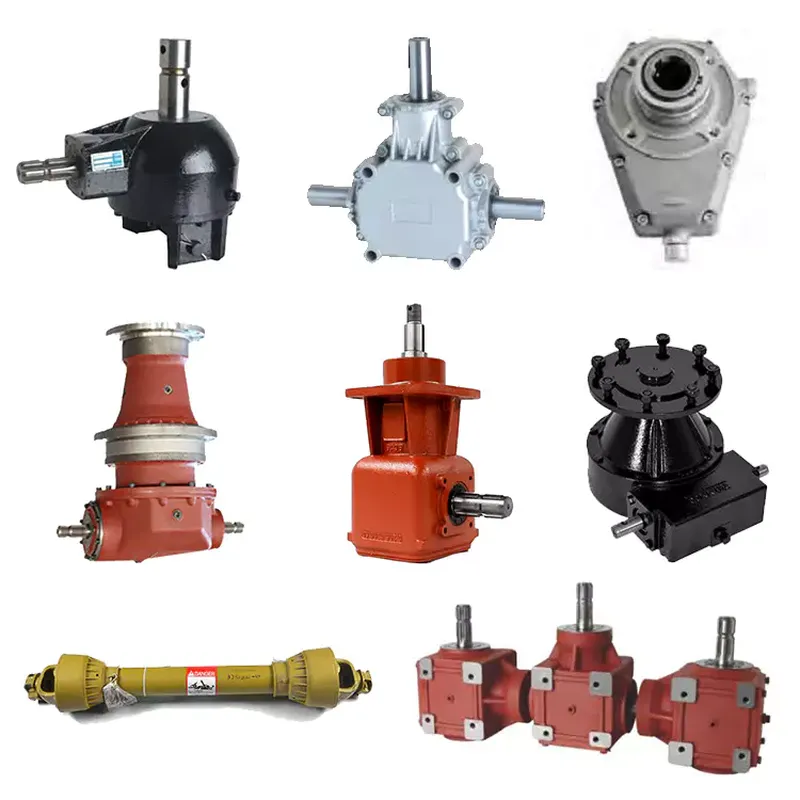
Explore our complete lineup of agricultural gearboxes, covering rotary tillers to balers, all designed for seamless integration. Source all machinery parts like bearings and seals from one place, simplifying inventory management.
This comprehensive offering sparks interest in upgrading entire systems, with options for custom kits. Benefits include faster delivery and technical support for complex installations.
From chains to hydraulics, everything aligns with global standards, encouraging bulk purchases for cost savings.
Discover how this range transforms your operations into efficient, reliable networks.
Contact and Call to Action
Ready to optimize your irrigation setup? Inquire about custom gearbox solutions today to boost efficiency. Visit our main resource hub for irrigation components for more details. Let’s discuss your specific needs via #contact.
Working Principle in Detail
Power enters via input shaft, engaging bevel gears for 90-degree turn. Helical stages reduce speed, amplifying torque. Output couples to pump, with bearings supporting loads.
Lubrication circulates oil, cooling components. Overload mechanisms disengage if jammed. This principle ensures steady operation in variable flows.
In Argentine applications, it handles pressure spikes from clogged intakes. Efficiency derives from precise gear meshing, per AGMA calculations.
Advanced models include variable drives for real-time adjustments.
Key Features and Benefits
Sealed construction prevents contaminants, extending life in dusty fields. High-efficiency gears save energy, crucial for remote sites.
Compact design fits tight spaces, with easy mounting. Benefits include lower operating costs and higher reliability.
Customizable for specific pumps, enhancing performance. Users report 25% uptime increase.
Alignment with sustainability goals through efficient power use.
Why Choose Us
Our gearboxes deliver unmatched durability in harsh environments, backed by rigorous testing. With a focus on innovation, we provide solutions tailored to your needs, ensuring long-term value.
Frequently Asked Questions
- What is the typical lifespan of these gearboxes in irrigation use? Under normal conditions with proper maintenance, they last 10,000-15,000 hours, depending on load and environment, as per field data from South American farms.
- How do I ensure compatibility with my existing pump? Check spline types and flange patterns; our models match common standards like SAE and DIN, with detailed specs available for verification.
- What lubrication is recommended? Use EP90 gear oil, changed every 500 hours, to maintain viscosity and prevent wear in high-temperature operations.
- Are there options for corrosion-resistant versions? Yes, with stainless components and coatings, ideal for saline areas like coastal Argentina, extending service by 50%.
- How to handle overload situations? Integrated shear pins protect against jams, easily replaceable without disassembly, minimizing downtime.