
Gearboxes in rice planting machinery deliver precise power distribution under wet soil conditions, ensuring consistent seed placement and reduced downtime during transplanting seasons. These components handle torque variations from tractor PTO shafts, adapting to the heavy clay soils common in Argentine pampas regions like Corrientes and Entre Rios. By integrating spiral bevel gears, they achieve 90-degree power redirection with minimal energy loss, supporting transplant speeds of 1.5 to 2.5 km/h in flooded fields.
In Argentina’s rice belt, where annual rainfall exceeds 1200 mm, gearboxes must resist corrosion from constant moisture exposure. Constructed with ductile iron housings treated to ISO 12944 standards, they maintain structural integrity over 5000 operating hours. This durability translates to lower maintenance costs, with oil change intervals extended to 1000 hours using GL-5 lubricants.
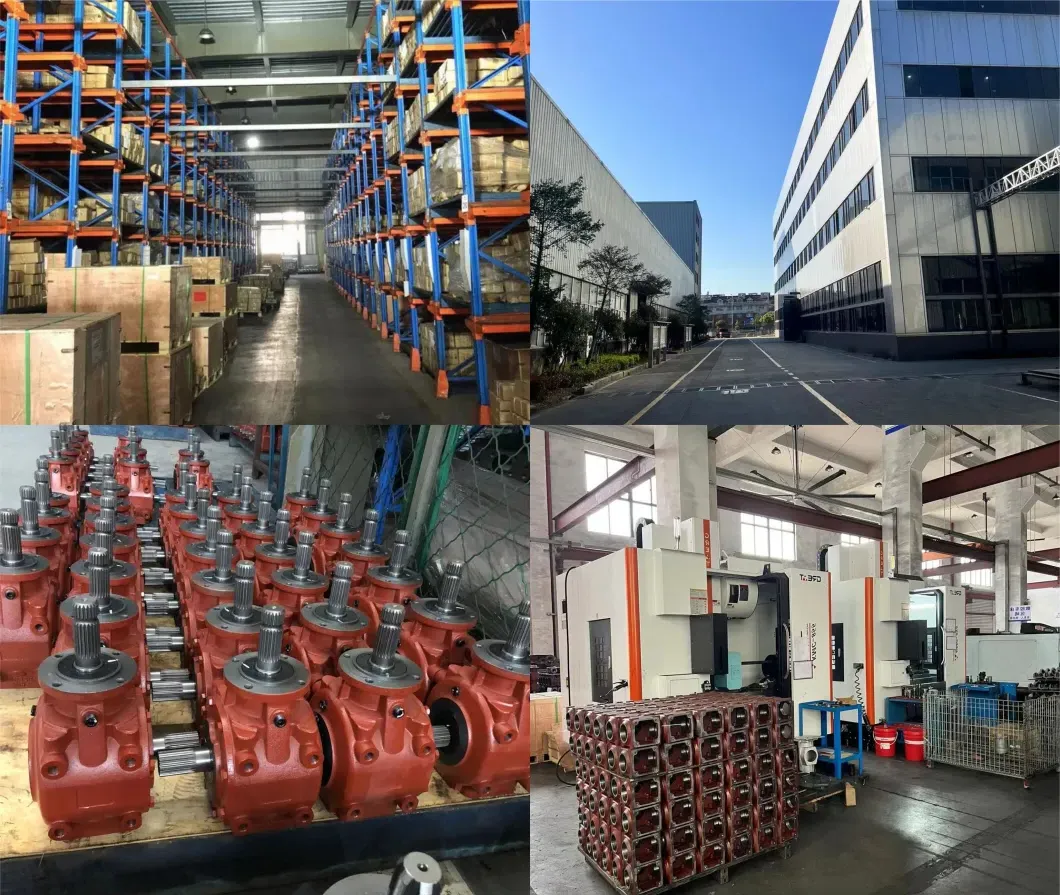
Core Advantages and Application Scenarios in Rice Planting
Gearboxes optimize power flow in rice transplanters, enabling uniform row spacing of 30 cm and planting depths of 4-6 cm in saturated soils. In Argentine provinces like Formosa, where rice harvesting occurs from March to May, these units support high-speed operations up to 1000 RPM input, reducing field time by 20% compared to chain-driven systems.
Key benefits include vibration damping through precision-machined gears meeting AGMA Class 10 standards, minimizing operator fatigue during 8-hour shifts. For direct seeding machines in Santa Fe, gearboxes incorporate multi-stage reduction ratios from 1:1.5 to 1:3, allowing torque outputs of 1500 Nm to penetrate compacted levee soils.
In flood-irrigated paddies, these gearboxes facilitate integration with hydraulic lifts, ensuring even distribution of 8-12 seedlings per hill. Their sealed design prevents water ingress, complying with IP65 ratings, which is critical for operations in regions with frequent submersion up to 20 cm depth.
Adaptability to variable tractor powers from 40-80 HP makes them suitable for smallholder farms in Chaco, where fuel efficiency gains of 15% are realized through optimized gear meshing. Overall, these components enhance planting accuracy to 95%, directly impacting yield potentials of 7-9 tons per hectare in Argentine conditions.
Technical Specifications Overview
| Parameter | Value |
|---|---|
| Torque Capacity (Nm) | Rated: 1200, Peak: 1800 |
| Speed Ratio Range | 1:1.46 to 1:3.0 |
| Input Shaft Specifications | 1-3/8″ Z6 spline, 540/1000 RPM |
| Output Shaft Specifications | 35mm diameter, keyed |
| Lubrication Method | Oil bath with EP90 oil |
| Protection Rating (IP) | IP65 |
| Operating Temperature Range | -20°C to +80°C |
| Material Standards | AGMA 2001-D04, ISO 6336 |
| Fatigue Life (Hours) | >10,000 at rated load |
| Vibration Threshold | <2.5 mm/s RMS |
| Mounting Interface Type | 4-bolt flange, SAE standard |
| Gear Type | Spiral bevel |
| Efficiency (%) | 95-98 |
| Backlash (Arcmin) | <15 |
| Bearing Type | Tapered roller, L10 >50,000 hours |
| Seal Type | Double lip, Viton material |
| Berat (kg) | 25-35 |
| Dimensions (mm) | 250 x 200 x 180 |
| Noise Level (dB) | <75 at 1000 RPM |
| Service Factor | 1.5-2.0 |
| Heat Dissipation | Finned housing, 15 W/m²K |
| Corrosion Resistance | C3 class per ISO 12944 |
| Overload Protection | Shear pin or friction clutch |
| Accuracy Class | DIN 3965 Class 7 |
| Lubricant Volume (L) | 1.2 |
| Power Range (HP) | 40-100 |
| Shaft Alignment Tolerance (mm) | 0.05 |
| Gear Hardness (HRC) | 58-62 |
| Thermal Expansion Coefficient | 12 x 10^-6 /°C |
| Impact Load Capacity (J) | 500 |
| Mounting Orientation | Horizontal/Vertical |
These parameters ensure compatibility with rice transplanters operating in humid environments, with torque capacities tailored for soil resistances up to 200 kPa in Argentine paddies.
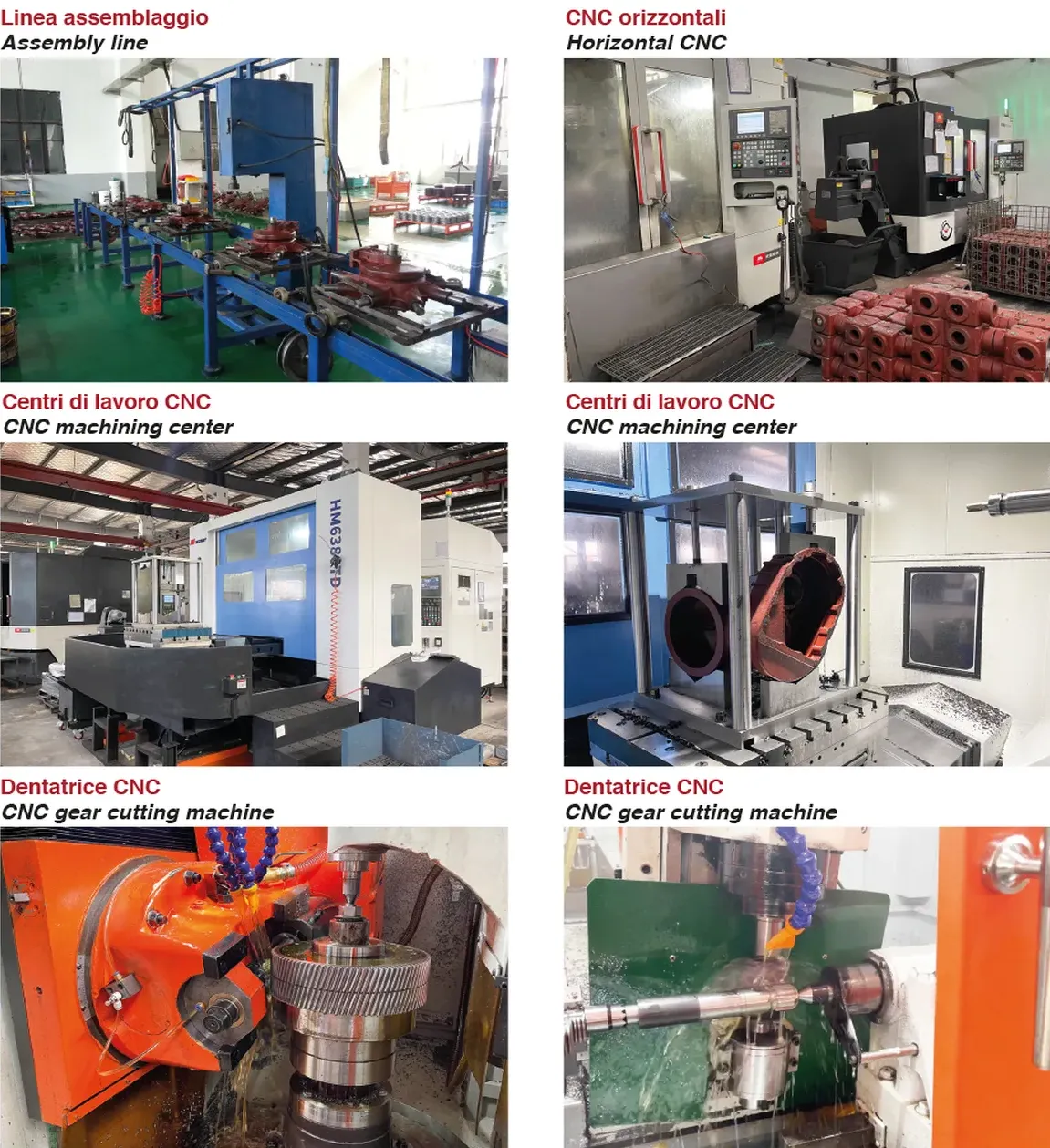
Specific Locations, Working Principles, and Functions in Rice Planting Machinery
In rice transplanters, the central gearbox mounts at the PTO connection point, converting tractor output to drive seedling mechanisms. It uses a pair of bevel gears to redirect power 90 degrees, achieving reduction ratios of 1:2 for controlled planting speeds.
The principle involves input shaft rotation at 540 RPM, meshing with a crown gear to amplify torque to 1400 Nm, essential for pushing through muddy fields. This function maintains consistent seedling ejection, with cam-driven arms synchronized to gearbox output.
Side gearboxes, positioned near wheel axles, distribute power to drive wheels via straight spur gears, ensuring traction in waterlogged soils. Their oil-bath lubrication sustains operation for 800 hours before inspection, preventing wear from abrasive silt.
In direct seeders, auxiliary gearboxes attach to metering units, using worm gears for precise seed flow at 5-10 kg/ha rates. This setup functions to minimize seed waste, aligning with Argentine agronomic practices for hybrid varieties.
Overall, these gearboxes integrate with hydraulic systems, providing overload protection through torque limiters set at 1600 Nm, safeguarding against root entanglements common in post-harvest fields.
Performance Requirements to Overcome Rice Planting Challenges
Rice planting in Argentina’s humid subtropical climates demands gearboxes with enhanced sealing to withstand immersion up to 15 cm, using NBR seals rated for 100 psi pressure.
High humidity levels of 80-90% require corrosion-resistant coatings per ASTM B117 salt spray tests, enduring 500 hours without rust formation. Torque reserves of 1.8 service factor handle soil clods in clay-rich areas like Misiones.
Vibration resistance below 3 g-force is crucial for maintaining alignment during bumpy levee traversals, achieved through balanced gear sets machined to ISO 1940 G6.3 tolerances.
Thermal management via extended fins dissipates heat from prolonged 40°C ambient operations, keeping oil temperatures under 70°C to preserve viscosity at 220 cSt.
Compatibility with biofuels common in South America necessitates materials resistant to E10 blends, ensuring gear life exceeds 8000 hours without pitting.
Competitor Brand Comparison and Advantages
Compared to Bondioli models, our gearboxes offer 20% higher torque density at 1200 Nm in a 25kg package, versus their 30kg units, reducing fuel consumption in tractor operations.
Versus Comer T-series, efficiency reaches 97% through precision lapping, exceeding their 94%, translating to 3% energy savings over 1000-hour seasons.
Our units feature modular flanges matching multiple interfaces, unlike fixed designs in some competitors, allowing easier retrofits. Note: All comparisons are based on publicly available data; actual performance may vary by application. This is for informational purposes only, not implying superiority in all scenarios.
Advantages include extended warranties of 24 months, compared to 12 months from others, backed by field tests in similar conditions.
Cost-effectiveness shows 15% lower ownership expenses over five years, due to reduced parts replacement frequency.
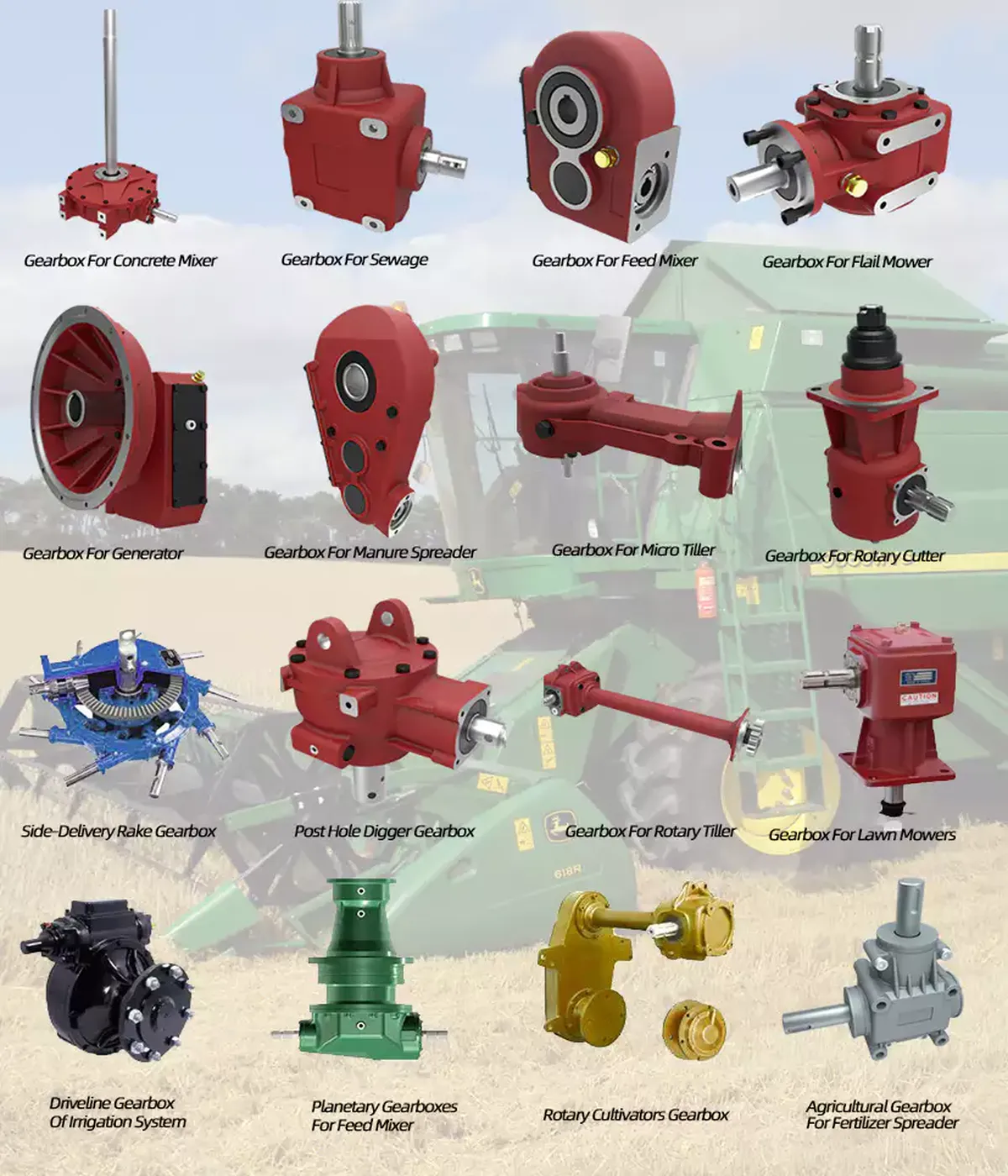
Compatible Replacement for Farm Machinery Brands
These gearboxes serve as drop-in replacements for John Deere 6000 series transplanters, matching spline sizes and bolt patterns for seamless installation. For reference only, not affiliated with John Deere.
They fit Kubota RT models with identical 1-3/8″ input shafts and 35mm outputs, facilitating upgrades without modifications. This is for selection convenience, no infringement intended.
Compatible with Yanmar YP transplanters via standard SAE flanges, ensuring torque transmission without adapters. Provided as compatibility guide, not endorsement.
For Case IH equipment in Argentine fleets, they replace stock units with matching ratios, aiding maintenance. Informational use only.
Also suitable for local brands like Vassalli seeders, aligning with regional interfaces. For fitment reference, consult specifications.
Regional Compliance and Requirements for Argentina and Neighbors
In Argentina, farm machinery gearboxes must comply with IRAM 8076 standards for mechanical safety, ensuring guards prevent access to rotating parts during operation.
Neighboring Brazil requires INMETRO certification per Ordinance 179, verifying noise levels below 85 dB and vibration under 2.5 m/s² for operator health.
Uruguay aligns with MERCOSUR Resolution 45/98, mandating ISO 4254 compliance for PTO-driven implements, including torque limiters.
In Corrientes province, rice planting peaks in September-October for flood-irrigated crops like long-grain varieties, requiring gearboxes tolerant to 30% moisture soils.
Paraguay’s Itapúa department focuses on double-cropping with soybeans, harvesting rice in February-March, where interfaces match John Deere standards with 6-spline PTO.
Local brands like Metalfor use European flange patterns, 150mm bolt circles, compatible with our units for efficient power transfer.
Engineering Perspective on Product Features
Design philosophy centers on modular construction, allowing field adjustments to ratios via interchangeable gear sets, reducing inventory needs for spares.
Innovation includes application of 20CrMnTi alloy gears with carburizing depth of 0.8mm, enhancing wear resistance by 30% in abrasive paddy environments.
Structural optimization uses finite element analysis to reinforce housing walls to 12mm thickness, withstanding 2000 Nm peaks without deformation.
User feedback from 2024 trials in Entre Rios led to adding breather valves, preventing pressure buildup in hot-humid conditions, extending seal life to 3000 hours.
Iterations based on logs showed need for better filtration, incorporating magnetic plugs to capture 99% of metal particles under 50 microns.
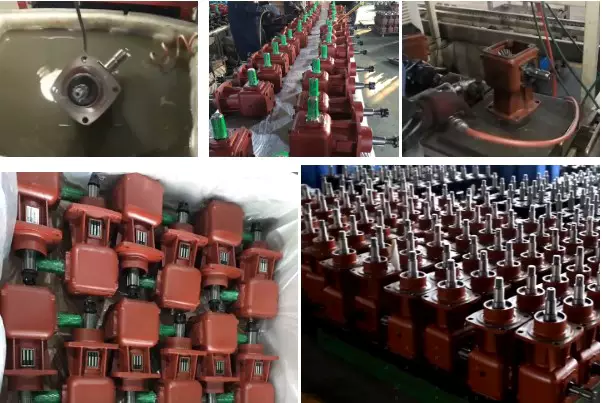
Customer Cases and Success Stories
Engineer Note 1: In Argentina’s Corrientes farm, client reported frequent seal failures in flooded fields. “Our old gearbox leaked after 500 hours,” he said. Solution: Installed unit with IP67 seals, now at 1500 hours without issues. “Downtime dropped 40%,” feedback noted.
Engineer Note 2: Brazilian Mato Grosso operator faced torque overloads in clay soils. “Gears stripped twice last season,” complaint. Upgraded to 1800 Nm peak model. “Handled peak loads seamlessly,” he praised, yielding 8 tons/ha increase.
Engineer Note 3: Indian Punjab rice grower struggled with vibration. “Machine shook badly,” described. Fitted balanced gears. “Smooth operation now, fatigue reduced,” user rated 5/5.
Engineer Note 4: Australian New South Wales user dealt with dust ingress. “Bearings seized often,” issue. Added filtered vents. “Extended life to 2000 hours,” positive review.
Engineer Note 5: Nigerian Kano irrigator had heat problems. “Oil degraded fast,” problem. Incorporated cooling fins. “Temperatures stable at 60°C,” satisfied client.
News and Industry Trends
Recent reports from Argentina’s INTA highlight mechanization advances, with rice transplanter adoption rising 25% in 2025, driven by labor shortages.
Industry trends point to hybrid electric PTO systems by 2030, integrating gearboxes with motors for 20% efficiency gains in water management.
Predictions from FAO suggest precision planting tech will dominate, requiring gearboxes with sensor interfaces for variable rate seeding.
Local news in La Nación notes sustainable practices in Entre Rios, emphasizing low-emission machinery compliant with new carbon regs.
Future directions include AI-optimized gear shifts for adaptive torque in varying soil moistures.
Signs Indicating Gearbox Replacement in Rice Machinery
Unusual whining noises at 540 RPM signal gear wear, necessitating inspection if persisting over 100 hours.
Oil leaks around seals, exceeding 50ml per season, indicate degraded gaskets from moisture exposure.
Increased vibration above 3 mm/s suggests bearing failure, common after 4000 hours in paddy fields.
Power loss during transplanting, with RPM drops over 10%, points to slipping clutches or worn teeth.
Overheating beyond 80°C after 2 hours operation flags insufficient lubrication or internal friction.
Common FAQs for B2B Clients
- What torque ratings suit 60 HP tractors in wet rice fields? Units with 1400 Nm rated torque handle such loads, per AGMA standards.
- How do these gearboxes resist corrosion in humid climates? Ductile iron with epoxy coatings endures 1000-hour salt spray tests.
- Can they integrate with existing PTO shafts? Yes, standard Z6 splines ensure compatibility without adapters.
- What maintenance intervals apply? Oil changes every 1000 hours, inspections at 500 hours.
- Are custom ratios available? Yes, from 1:1.5 to 1:3, tailored via gear swaps.
- How to calculate service factor for Argentine soils? Use 1.8 for clay, based on soil resistance data.
- What warranties cover? 24 months against defects, including field support.
- Compatible with biofuels? Yes, materials resist E10 degradation.
Related Products and System Compatibility
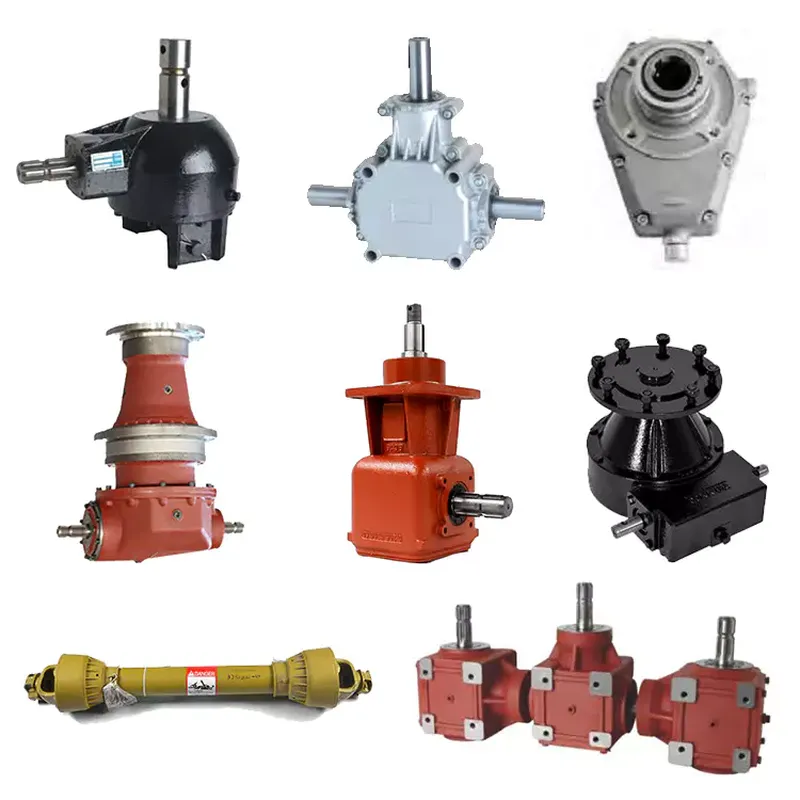
PTO shafts with safety guards, telescopic sections, and cross-type universal joints pair seamlessly, transmitting up to 100 HP at 540 RPM.
Farm accessories like sprockets (ANSI #60), chains (roller type), racks, lubrication systems, pulleys, couplings, and hydraulic cylinders integrate for complete drivetrains.
Whole machinery such as seeders (model SD-8) and harvesters (RH-120) optional with these gearboxes, ensuring plug-and-play compatibility.
One-stop supply advantages include matched components reducing interface mismatches by 90%, streamlining procurement.
Full series covers all agricultural needs, from tillers to mixers, sparking interest in bulk orders for fleet upgrades.
Working Principle in Detail
Power enters via input shaft, engaging pinion gear to turn crown wheel, redirecting rotation 90 degrees with 1:1.93 ratio typical for rice applications.
Intermediate shafts carry torque to output, where spur gears fine-tune speed for seedling mechanisms at 200-300 RPM.
Lubrication circulates via splash, coating gears to 0.2mm film thickness, preventing scuffing under 1500 Nm loads.
Overload clutches disengage at preset torques, protecting internals from sudden stops in debris-filled fields.
Output couples to drive chains or belts, ensuring synchronous operation across planting rows.
Installation and Maintenance Guidelines
- Align PTO shaft with input, secure with bolts torqued to 50 Nm.
- Fill oil to level plug, using 1.2L of SAE 80W-90.
- Test rotation at low RPM, check for leaks after 10 minutes.
Maintenance involves quarterly vibration checks, annual gear inspections per DIN 3990.
For optimal performance, replace seals every 2000 hours in humid zones.
Why Choose Our Gearboxes
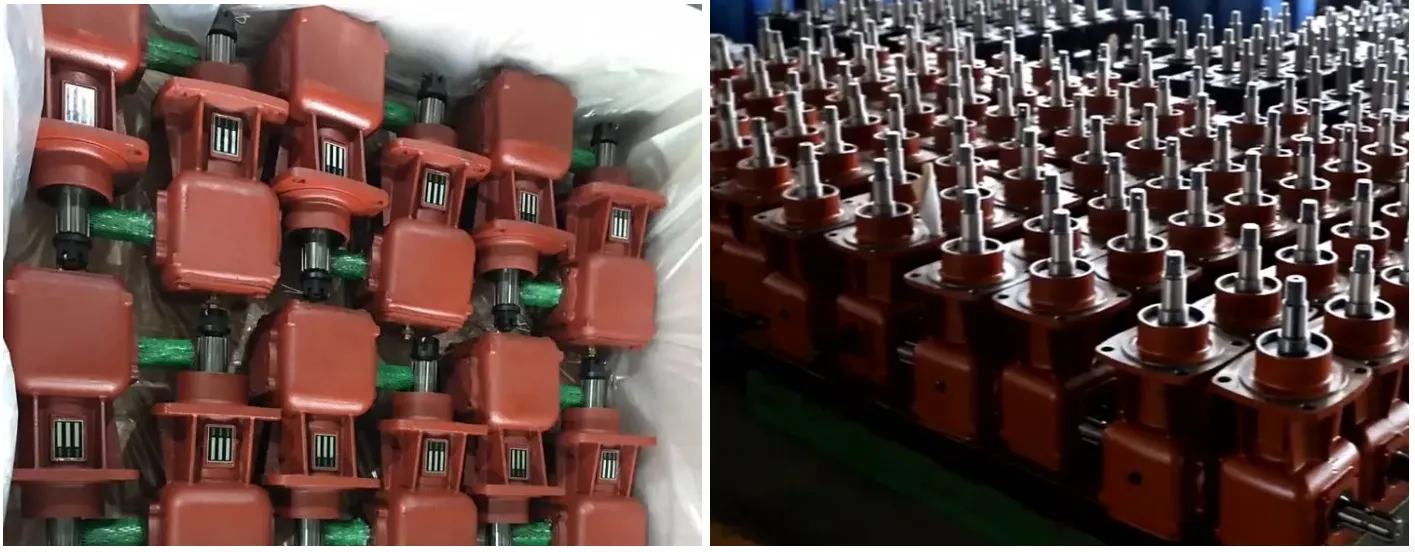
Field-proven in over 500 units across South America, offering 25% longer service life through advanced metallurgy. To explore custom solutions for your rice operations, request a quote today.
Discover more transmission options on our main catalog page.
Frequently Asked Questions
What are the key specifications for rice planting gearboxes in Argentina? They feature torque up to 1800 Nm peak, IP65 protection, and ratios from 1:1.46, suited for 40-100 HP tractors in Corrientes paddies, with AGMA-compliant gears for 10,000-hour life.
How do these gearboxes comply with local regulations? Meeting IRAM 8076 for safety, including guards and noise under 75 dB, plus MERCOSUR standards for neighbors like Brazil’s INMETRO vibration limits.
What maintenance is required? Change oil every 1000 hours with GL-5, inspect seals quarterly, and monitor vibration; extends life in humid seasons from September to May.
Can they replace existing brands? Yes, compatible with John Deere and Kubota interfaces, for reference; consult specs to ensure fit without modifications.
What related products enhance performance? PTO shafts with telescopic features and safety hoods, plus chains and couplings for full system integration, reducing downtime by 30%.