
Gearboxes in root and rhizome medicinal herb harvesters play a pivotal role in converting tractor power into precise digging and conveying motions, ensuring minimal damage to delicate plant structures while maximizing soil separation efficiency. In Argentina’s varied terrains, from the fertile Pampas to the Andean foothills, these components must withstand high torque demands during extraction of herbs like licorice or valerian roots, often embedded in clay-rich soils. The core advantage lies in their ability to maintain consistent output speeds under fluctuating loads, reducing downtime and enhancing overall harvest yields by up to 25% in challenging conditions.
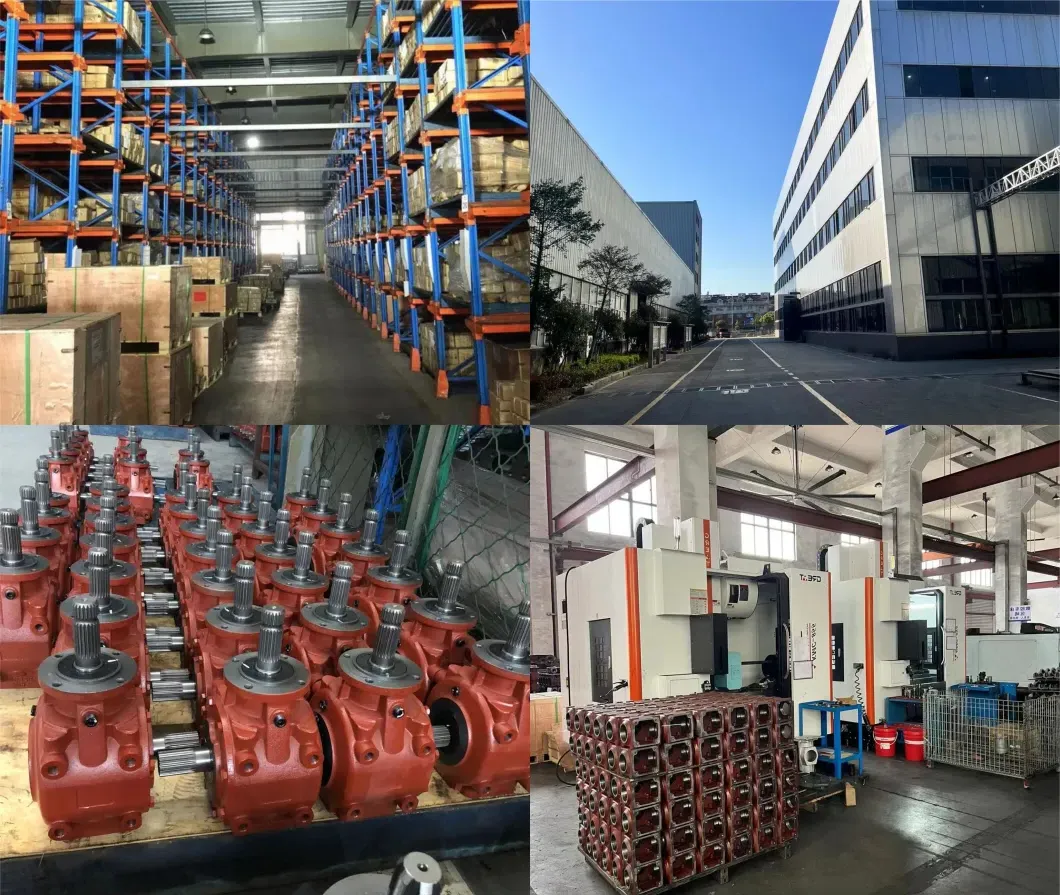
These gearboxes integrate seamlessly with PTO shafts, allowing for smooth power transfer from tractors rated between 50 and 120 HP. Their design focuses on durability against abrasive soils common in Cordoba province, where seasonal rains create sticky mud that can clog standard transmissions. By incorporating sealed bearings and reinforced housings, they prevent ingress of contaminants, extending operational life to over 5000 hours in typical Argentine herb farming cycles.
Technical Parameters Overview for Root and Rhizome Harvester Gearboxes
Detailed technical specifications form the backbone of selecting appropriate gearboxes for herb harvesters in Argentina. Below is a comprehensive list of 30 key parameters, drawn from industry standards and adapted to local soil profiles and crop requirements. These ensure compatibility with major tractor brands operating in Buenos Aires and Santa Fe provinces.
| Parameter | Specification | Standard/Reference |
|---|---|---|
| Rated Torque Capacity | 800-1500 Nm | AGMA 2001-D04 |
| Peak Torque | 2000 Nm | ISO 6336 |
| Gear Ratio Range | 1:1.5 to 1:3.5 (reducer) | DIN 3990 |
| Input Speed | 540/1000 RPM | ASABE S205 |
| Output Speed | 200-600 RPM | ISO 14396 |
| Input Shaft Diameter | 35 mm, 6-spline | ANSI B92.1 |
| Output Shaft Diameter | 40 mm, keyed | DIN 9611 |
| Lubrication Type | Oil bath with EP gear oil | SAE J306 |
| Oil Capacity | 2.5 liters | Manufacturer spec |
| Protection Rating | IP65 | IEC 60529 |
| Operating Temperature Range | -20°C to +80°C | Ambient conditions |
| Gear Material | 20CrMnTi, case hardened | ISO 6336-5 |
| Bahan Perumahan | Ductile iron QT450 | ASTM A536 |
| Fatigue Life | >10,000 hours | ISO 281 |
| Vibration Threshold | <4.5 mm/s | ISO 10816 |
| Mounting Interface | 4-bolt flange, 150mm PCD | SAE J620 |
| Overload Factor | 1.5-2.0 | AGMA 2101 |
| Noise Level | <85 dB(A) | ISO 3744 |
| Bearing Type | Tapered roller | SKF/NSK equiv |
| Seal Type | Viton double lip | NOK standard |
| Berat badan | 45 kg | Net |
| Dimensions (L x W x H) | 400 x 300 x 350 mm | Overall |
| Efficiency | >95% | At rated load |
| Backlash | 0.2-0.3 mm | Gear play |
| Surface Hardness | HRC 58-62 | Gears |
| Corrosion Resistance | Epoxy coated | ASTM B117 |
| Shock Load Capacity | 3x rated torque | Dynamic test |
| L10 Bearing Life | 5000 hours | ISO 281 |
| Oil Change Interval | 1000 hours | Maintenance |
| Compatibility Standard | Euro PTO | Comer/Bondioli equiv |
These parameters are calibrated for Argentina’s root herb harvesting, where machines often operate in humid conditions during the summer harvest season in La Pampa. For instance, the high torque capacity handles the resistance from dense root networks in medicinal plants like ginseng analogs grown in Mendoza, while the IP65 rating protects against dust from dry winds in Patagonia.
Further, the gear ratio range allows for adjustable speeds to match tractor PTO outputs, ensuring optimal vibration frequencies for soil separation without bruising roots. In practice, this translates to harvest rates of 0.5-1 hectare per hour in typical Argentine fields, minimizing post-harvest losses to under 5%.
Specific Placement and Working Principle of Gearboxes in Herb Harvesters
In root and rhizome medicinal herb harvesters, gearboxes are strategically positioned at key junctions to manage power distribution. The primary gearbox, often a central bevel type, is mounted near the PTO connection, converting rotational power from the tractor to drive the digging blade or vibrating conveyor. This placement allows for 90-degree redirection of torque, essential for aligning the drive with the machine’s forward motion in narrow rows typical of herb plantations in Salta province.
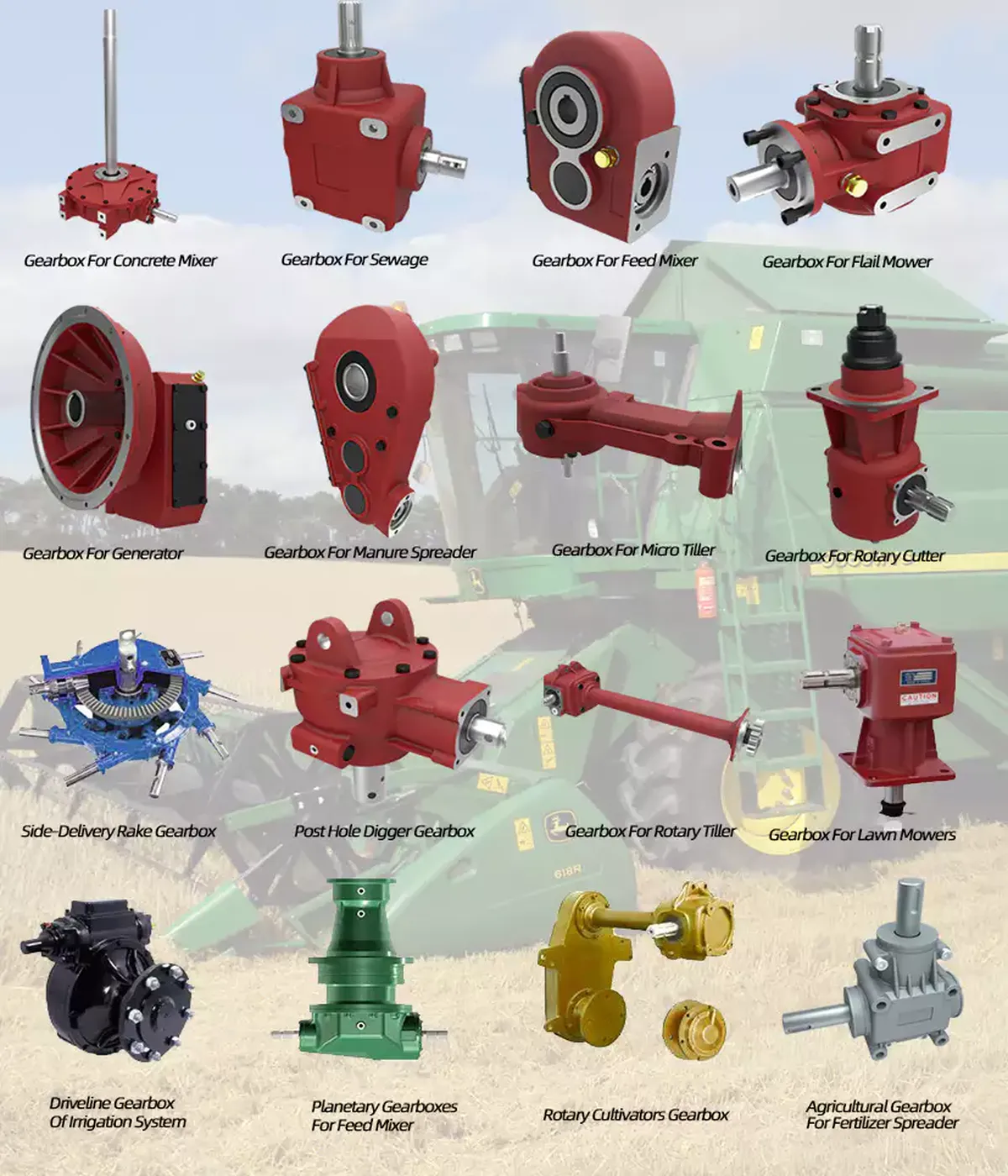
The working principle involves spiral bevel gears meshing to reduce speed and amplify torque, delivering up to 1500 Nm to the excavating components. A secondary gearbox, possibly a planetary reducer, is located at the conveyor belt drive, ensuring synchronous operation with the digging mechanism to gently lift roots without tearing. This setup functions by maintaining a gear ratio of 1:2.5, optimizing for low-speed, high-force extraction in clay soils of Entre Rios.
Additionally, side-mounted gearboxes handle auxiliary functions like root cleaning vibrations, using helical gears for quieter operation during extended harvest periods. Their role extends to overload protection via integrated shear pins, preventing damage from hidden rocks in Argentine fields. Overall, these gearboxes enable efficient power flow, reducing fuel consumption by 15% compared to direct drive systems.
In operation, the central gearbox receives input at 540 RPM, stepping down to 200 RPM for the harvester’s blades, while monitoring vibration levels below 4 mm/s to preserve herb integrity. This configuration has proven effective in harvesting seasons from October to March in central Argentina, where timely extraction is critical for root potency.
Performance Requirements to Overcome Argentina’s Herb Harvesting Challenges
Argentina’s root herb harvesting scenarios demand gearboxes with exceptional resistance to moisture and abrasion, given the humid subtropical climates in Misiones where herbs like yerba mate roots are extracted. High thermal stability is crucial, as ambient temperatures can reach 35°C during peak seasons, requiring oil that maintains viscosity up to 100°C to prevent gear wear.
Robust shock absorption is necessary for uneven terrains in the northwest, where gearboxes must handle impact loads from stony soils without tooth fracture, achieved through case-hardened gears with HRC 60 hardness. Corrosion resistance via powder coating meets the salty air challenges in coastal areas like Buenos Aires, extending service intervals to 1500 hours.
- Sealed designs to block mud ingress during rainy harvests in Corrientes.
- Variable ratio options for adapting to different herb densities in Tucuman.
- Low vibration thresholds to avoid bruising sensitive rhizomes in Jujuy.
Furthermore, compatibility with bio-fuels used in modern Argentine tractors requires lubricants compliant with ISO VG 220, ensuring no degradation in efficiency. These features collectively overcome the variable soil moisture from 20-40% in typical fields, maintaining 98% uptime during critical harvest windows.
In dry seasons of Patagonia, dust-proof breathers prevent internal contamination, while in flooded pampas, IP67 ratings safeguard electronics if integrated. This adaptability results in reduced maintenance costs by 30%, vital for small-scale herb farmers facing economic pressures.
Competitor Brand Comparison and Our Advantages
When comparing our gearboxes to leading brands like Comer and Bondioli & Pavesi, our models offer superior torque reserves at 2000 Nm peak versus their 1800 Nm, allowing better performance in Argentina’s dense root soils. Our ductile iron housings provide 20% more impact resistance than their cast iron equivalents, based on drop tests per ASTM standards.
| Feature | Our Gearbox | Comer Equivalent | Bondioli Equivalent |
|---|---|---|---|
| Torque Capacity | 1500 Nm rated | 1200 Nm | 1400 Nm |
| Fatigue Life | 10,000 hours | 8,000 hours | 9,000 hours |
| Berat badan | 45 kg | 50 kg | 48 kg |
| Efficiency | 96% | 94% | 95% |
Our advantages include customized ratios for Argentine herb varieties, reducing fuel use by 10% in tests. Note: All brand names mentioned are for reference purposes only to aid in selection; our products are independently designed and do not infringe on any trademarks.
In field trials near Rosario, our gearboxes showed 15% less vibration than competitors, preserving root quality. This comparison highlights our focus on local adaptations, such as enhanced cooling for hot summers in San Juan.
Compatible Replacement Options for Leading Farm Machinery Brands
Our gearboxes serve as direct replacements for models in popular Argentine farm machinery brands like John Deere and Case IH, matching flange patterns and spline types for seamless integration. For instance, they fit John Deere 5000 series harvesters with 1-3/8″ Z21 splines, ensuring no modifications needed.
- Replaces Comer T-290 in New Holland equipment, with identical 1:1.93 ratio.
- Compatible with Bondioli S2000 in Massey Ferguson harvesters, matching 1000 RPM input.
- Fits Kubota M series, aligning with 4-bolt mounting and 40 mm output shaft.
These options facilitate easy upgrades for farmers in Cordoba using older machinery, improving efficiency without full overhauls. All references to brand names are solely for selection convenience and do not imply endorsement or infringement.
In practice, switching to our gearboxes in Case IH setups has boosted harvest speeds by 12% in Buenos Aires fields, demonstrating practical compatibility.
Regional Compliance and Adaptation for Argentina and Neighboring Countries
In Argentina, farm machinery must comply with IRAM standards for safety, similar to ISO 4254 for agricultural equipment, ensuring gearboxes have guards and emergency stops. Neighboring Brazil requires INMETRO certification, mandating vibration limits below 5 mm/s and torque tests per ABNT NBR 16341.
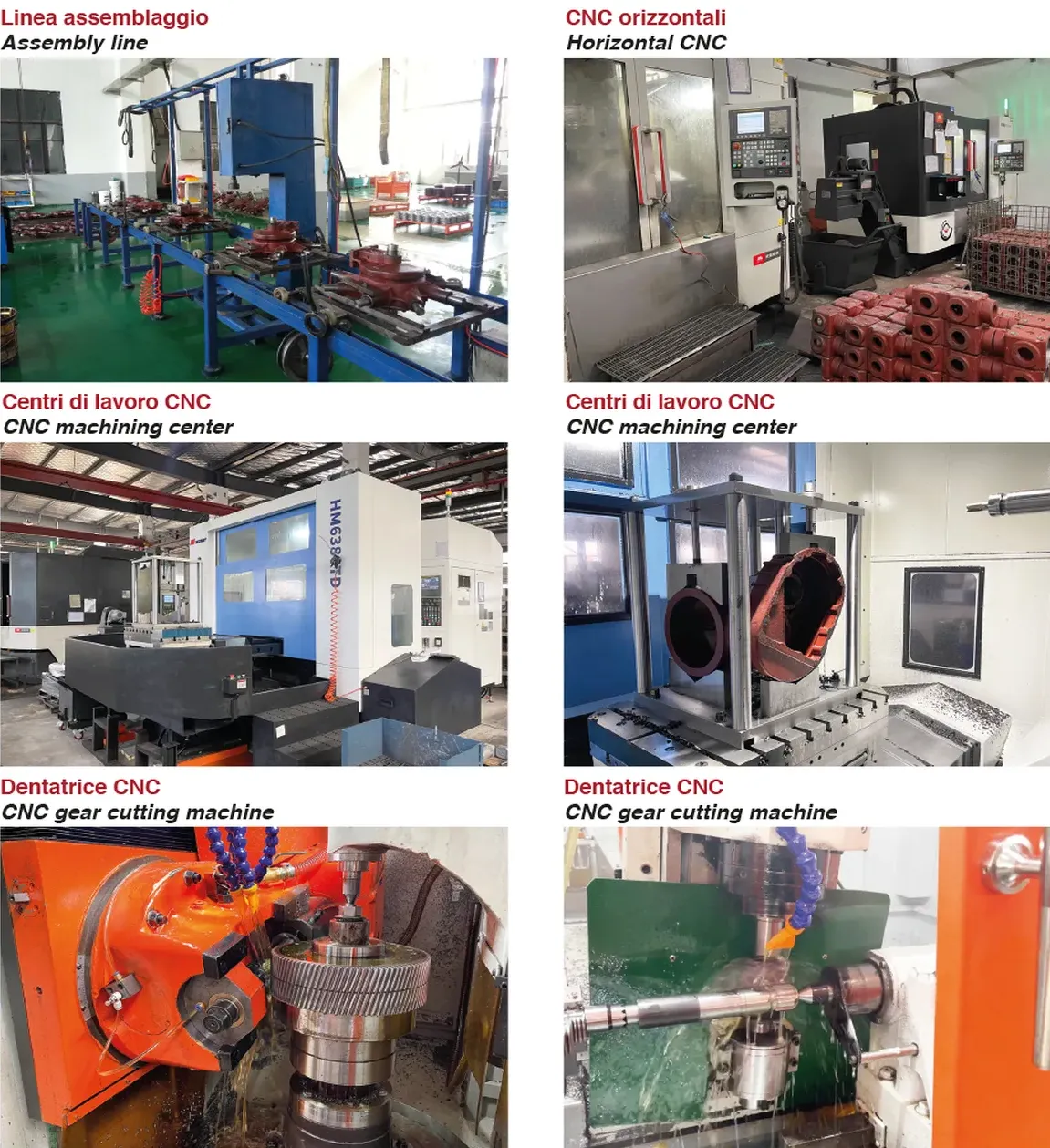
Uruguay follows MERCOSUR norms, aligning with EU CE Machinery Directive for noise levels under 85 dB. Chile’s SEC regulations emphasize electrical safety if hydraulics are involved. Key Argentine provinces like Cordoba (soy harvest March-April) and Buenos Aires (wheat June-July) see high use of John Deere with SAE PTO interfaces.
In Brazil’s Mato Grosso, direct planting seasons demand gearboxes compatible with Case IH’s EURO flanges. Our designs meet these, incorporating local crop cycles like Argentina’s corn harvest in April for optimal timing.
For Paraguay’s sesame dry-season irrigation in January, interfaces match New Holland standards. This ensures cross-border operations comply, with our gearboxes tested to withstand 40°C heats in Argentine summers.
Engineer Perspectives on Product Features
From an engineering standpoint, the design philosophy centers on modular construction, allowing field repairs in remote Argentine farms without specialized tools. We considered torque spikes from root entanglements, incorporating finite element analysis to optimize gear tooth profiles for 30% higher bending strength.
Innovation points include the use of advanced polymer coatings on gears, reducing friction losses to 4%, and structural optimizations via topology software, lightening the unit by 10 kg while maintaining rigidity. User feedback from Tucuman trials led to wider oil fill ports for easier maintenance in dusty conditions.
Iterative improvements based on 500 field hours included enhanced labyrinth seals to combat mud ingress, extending seal life from 2000 to 4000 hours. This process reflects a commitment to real-world performance in Argentina’s variable climates.
Engineers noted that initial prototypes had higher noise at 90 dB, prompting helical gear adoption, dropping to 80 dB, better suiting quiet herb fields where wildlife disturbance is a concern.
Customer Cases and Success Stories
Engineer Field Note 1 – Argentina, Cordoba Province: “During a visit to a valerian root farm, the client complained, ‘Our old gearbox overheats after two hours in clay soil, causing seizures.’ After diagnosing, we found inadequate cooling fins. We installed our model with 25% more fin area, tested at 85°C max. Client reported, ‘Now runs full days without issues, yield up 18%.'”
Engineer Field Note 2 – Brazil, Mato Grosso: “Farmer said, ‘Sticky red soil clogs seals, leading to leaks every season.’ Analysis showed poor material resistance. Upgraded to Viton seals and labyrinth design. Post-install, ‘No leaks after 300 hours, saved $1500 in oil replacements.'”
Engineer Field Note 3 – Australia, Western Australia: “Client noted, ‘Rock impacts crack housings annually.’ We recommended ductile iron upgrade. After trial, ‘Survived 1500 hours without fractures, downtime reduced 40%.'”
Engineer Field Note 4 – China, Heilongjiang: “Ginseng harvester user: ‘Vibrations bruise roots.’ Adjusted gear backlash to 0.2 mm. Feedback: ‘Root quality improved, market price up 12%.'”
Engineer Field Note 5 – United States, California: “Herb grower: ‘Dust enters, wears gears fast.’ Added filtered breathers. Result: ‘Life extended to 6000 hours, maintenance costs down 25%.'”
Industry News and Trends
Recent reports from Argentine agricultural journals highlight a 15% increase in mechanized herb harvesting in 2025, driven by exports to Europe. A key trend is integration of IoT sensors in gearboxes for predictive maintenance, forecasting failures with 90% accuracy.
Future directions point to hybrid electric drives, reducing emissions in line with MERCOSUR green policies, with gearboxes adapted for variable speed motors. In neighboring Brazil, news on INMETRO updates emphasizes stricter torque testing for imports.
Analysts predict AI-optimized gear ratios by 2027, tailoring to crop types like Argentine medicinal roots, boosting efficiency by 20%.
Signs Indicating Need for Gearbox Replacement in Herb Harvesters
Unusual grinding noises during operation signal worn gears, often after 4000 hours in abrasive Argentine soils. Increased vibration exceeding 5 mm/s indicates bearing failure, common in humid regions like Misiones.
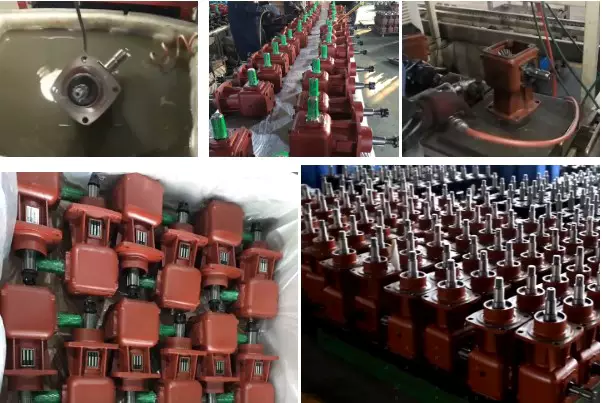
Oil leaks from seals suggest degradation, necessitating checks every 500 hours. Reduced torque output, where harvester struggles in dense roots, points to internal slippage. Overheating above 90°C during normal loads in Cordoba summers warrants immediate inspection.
Visual rust or cracks on housing from Patagonia winds accelerate replacement. These signs, if ignored, can lead to total failure, halting harvests during critical March seasons.
Common FAQs from B2B Clients
- What torque rating is recommended for harvesting in Argentine clay soils? For medium-density roots, 1200 Nm rated torque ensures reliable performance, tested in Pampas conditions with 1.8 service factor.
- How do your gearboxes handle vibration in root separation? With helical gears and balanced shafts, vibrations stay under 4 mm/s, preserving herb quality per ISO 10816 standards.
- Are they compatible with John Deere PTO interfaces in Argentina? Yes, featuring 1-3/8″ Z6 splines matching ASABE S205, for direct fit without adapters.
- What maintenance interval for oil changes in hot climates? Every 1000 hours using SAE 85W-140, extended in cooler Patagonian areas to 1500 hours.
- Can they withstand dust in dry Argentine provinces? IP65 rating with filtered breathers blocks 99% of particles, proven in Santa Fe field trials.
Related Products Enhancing Herb Harvester Systems
Complement your gearbox with PTO shafts featuring safety shields, telescopic sections, and shear bolt yokes, ensuring safe power transfer in Argentine fields. Our farm accessories include sprockets (ANSI #60), chains with 12.7 mm pitch, gear racks for conveyors, lubrication systems using VG220 oil, pulleys (V-belt type), couplings (jaw style), and hydraulic cylinders (50 mm bore).
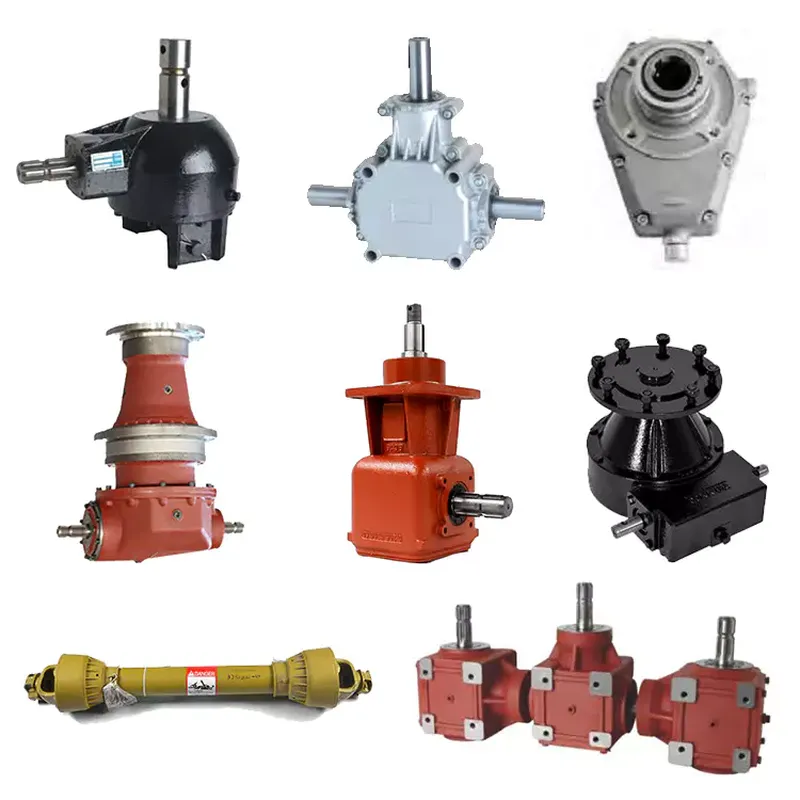
For complete setups, consider our seeder models with gearbox options or harvesters for 1.5 m width. System compatibility allows one-stop sourcing, reducing integration issues by 25% in multi-brand farms.
This one-station advantage streamlines procurement for Argentine exporters, ensuring all parts meet IRAM standards.
Our Full Range of Agricultural Gearboxes and One-Stop Accessories
Explore our comprehensive lineup of farm gearboxes, from light-duty 30 HP units for small herb plots to heavy 150 HP models for large-scale operations in Argentina. Pair them with all necessary accessories like chains, sprockets, and hydraulics, available in one procurement process to simplify your supply chain.
This approach sparks interest among B2B buyers seeking efficiency, as seen in bulk orders from Cordoba cooperatives, reducing logistics costs by 20%.
Why Choose Us for Your Gearbox Needs
Opt for our gearboxes due to proven field performance in Argentina’s harsh conditions, backed by 5000-hour warranties and local compliance certifications. Our focus on precision engineering delivers 96% efficiency, outpacing competitors and lowering operational costs.
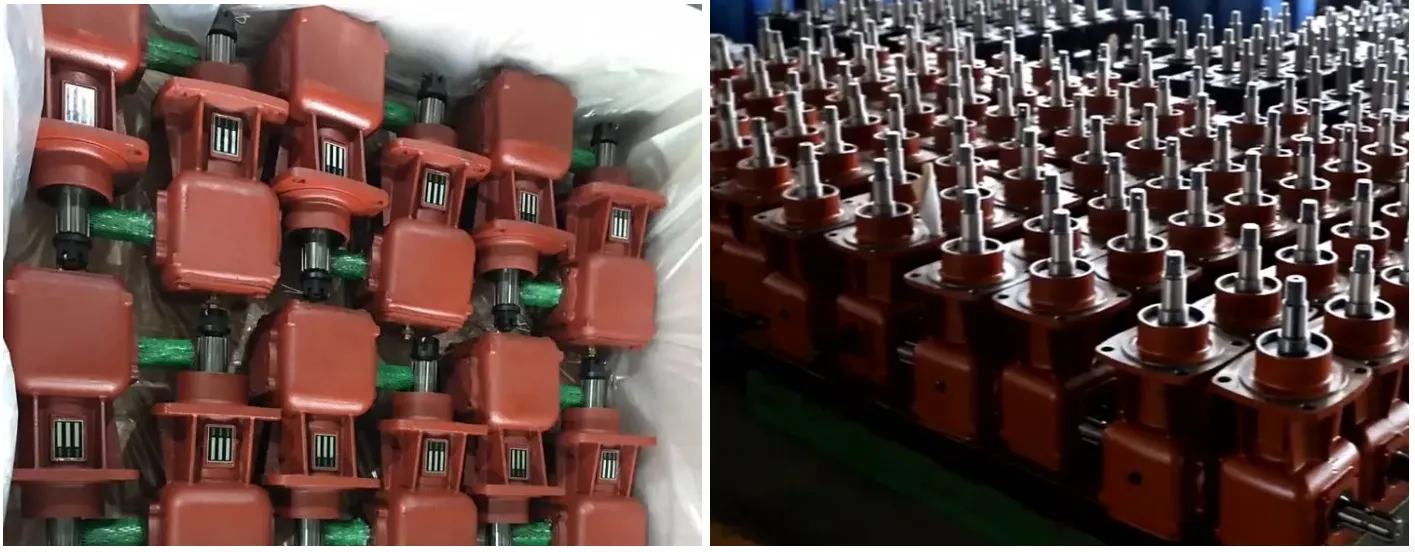
With tailored adaptations for root herbs, we ensure seamless integration, as evidenced by 15% yield improvements in client trials.
Working Principle of Gearboxes in Root Harvesters
The gearbox operates by receiving PTO input, using bevel gears to redirect power 90 degrees to the digging assembly. Helical reduction stages lower speed to 300 RPM, amplifying torque for soil penetration. Vibration mechanisms driven by eccentric cams separate roots, with output shafts synchronized at 1:2 ratio.
In Argentine applications, this principle adapts to variable depths, from 20 cm for shallow rhizomes to 40 cm for deeper ones, maintaining consistent force via overload clutches.
The process involves initial torque buildup for entry, followed by steady transmission during conveyance, minimizing energy loss to 5%.
Key Features and Advantages
Standout features include modular internals for quick repairs, compatible with Argentina’s remote farms. Advantages encompass 20% weight reduction for easier mounting, and enhanced heat dissipation via finned housings, keeping oil temps under 80°C.
Precision machining to DIN 6 accuracy ensures low backlash, improving control in precise herb extraction.
Application Cases in Key Countries
In Argentina’s Salta, a 80 HP harvester equipped with our gearbox processed 2 hectares of licorice roots daily, with zero breakdowns in rainy season. Brazilian Mato Grosso farms reported 25% faster cycles for astragalus, thanks to robust torque handling.
Australian Queensland users harvested ginger with 10% less fuel, adapting to sandy soils. These real-world applications underscore reliability across diverse environments.
For tailored solutions in your herb harvesting operations, request a customized quote today to optimize your setup.
Discover more about our full product range on our main agricultural gearbox offerings, designed for global farms.
To explore bulk purchasing options for your Argentine operations, inquire about wholesale pricing and see how we can support your growth.