
Grain elevators stand as pivotal structures in modern farming operations, particularly in regions like Argentina where vast soybean, corn, and wheat fields demand robust storage and distribution systems. These towers facilitate vertical transport of harvested produce from ground level to storage silos or loading points, minimizing losses during handling. In the Pampas region, encompassing Buenos Aires and Córdoba provinces, where seasonal harvests peak from March to May for soybeans and December to January for wheat, dependable gearboxes ensure uninterrupted flow. Crafted with precision engineering, these units convert high-speed input from tractor PTOs or electric motors into the controlled torque needed for conveyor chains or augers, supporting capacities up to 500 tons per hour in large-scale facilities.
The core advantage lies in their ability to withstand dusty environments and variable loads, common in Argentine grain terminals. For instance, during the dry harvest season in Santa Fe, where corn yields average 8-10 tons per hectare, gearboxes prevent jams by maintaining consistent speed ratios. Their sealed designs reduce contamination risks, aligning with local phytosanitary standards. Applicable in both fixed silo complexes and mobile units, these components enhance operational uptime, cutting downtime costs by up to 15% in high-volume seasons.
Technical Parameters Overview: Essential Specs for Optimal Performance
Selecting the right gearbox involves evaluating a range of parameters tailored to grain elevator demands. Below is a comprehensive list of 30 key technical specifications, drawn from industry standards like AGMA and ISO, ensuring compatibility with Argentine farming conditions such as humid summers in Entre Ríos or arid winds in La Pampa.
| 范围 | 规格 |
|---|---|
| Torque Capacity (Nm) | 1500-2500 Nm rated, peak up to 3500 Nm |
| Speed Ratio Range | 1:10 to 1:20 |
| Input Shaft Specifications | 1-3/8″ Z6 spline, 540-1000 RPM |
| Output Shaft Specifications | 2″ keyed shaft, flanged mount |
| Lubrication Method | Oil bath with EP90 synthetic oil |
| Protective Rating (IP) | IP67 dust and water resistant |
| Operating Temperature Range | -20°C to 60°C |
| Material Standards | Cast iron housing per AGMA 2001, gears ISO 6336 |
| Fatigue Life (Hours) | >15,000 hours under rated load |
| Vibration Threshold | <3.5 m/s² at full speed |
| Mounting Interface Type | SAE 4-bolt flange |
| Gear Type | Helical-bevel combination |
| Efficiency Rating | 95-98% |
| Backlash (Arcmin) | <5 arcmin |
| Noise Level (dB) | <75 dB at 1m |
| Service Factor | 1.5-2.0 |
| Bearing Type | Tapered roller bearings |
| Seal Type | Double lip oil seals |
| 重量(公斤) | 45-60 kg depending on size |
| Dimensions (L x W x H) | 300 x 250 x 200 mm |
| Power Rating (kW) | 15-30 kW |
| Overload Protection | Integrated shear pin |
| Cooling Method | Natural convection with fins |
| Lubricant Capacity (L) | 2.5 L |
| Maintenance Interval (Hours) | 2000 hours oil change |
| Corrosion Resistance | Epoxy-coated housing |
| Shaft Alignment Tolerance | 0.05 mm |
| Thermal Expansion Coefficient | 12 x 10^-6 /°C |
| Impact Load Rating | 3x rated torque |
| Certification Compliance | IRAM, ISO 9001 |
These parameters allow for customization, such as adjusting torque for heavier loads in Córdoba’s maize fields or enhancing IP ratings for Buenos Aires’ rainy seasons. Engineers often reference AGMA standards to verify durability, ensuring gearboxes last through multiple harvest cycles without failure.
Specific Components in Grain Elevators: Placement, Mechanics, and Roles
In a typical grain elevator, the gearbox is positioned at the base or head section, driving the bucket chain or auger. The input shaft connects to a PTO or motor, while the output links to the drive sprocket. Internally, helical gears reduce speed from 540 RPM to 50-100 RPM, amplifying torque to lift 200-300 tons hourly.
The working principle involves power transmission through bevel gears for 90-degree turns, essential in vertical setups. This setup prevents slippage under load, as seen in Argentine co-ops handling 10,000-ton silos. The gearbox’s role extends to overload protection via shear pins, safeguarding chains from jams caused by wet grain clumps during humid harvests in Santa Fe.
Bearings support shafts, minimizing friction, while seals keep dust out, maintaining efficiency in dusty Pampas environments. Overall, this integration ensures smooth elevation, reducing energy use by 10-15% compared to direct drives.
Performance Demands for Harsh Argentine Operating Environments
Argentina’s diverse terrains pose unique challenges. In the Pampas, flatlands facilitate large elevators, but high humidity requires corrosion-resistant coatings to prevent rust from soybean residues. Gearboxes need IP65+ ratings to handle moisture during April-May rains in Buenos Aires.
In Córdoba’s hilly areas, vibration from uneven loads demands low-backlash designs, with thresholds under 3 m/s² to avoid fatigue. For wheat in La Pampa’s arid zones, dust seals are crucial, as particulates can abrade gears, shortening life by 20% without protection.
High-torque reserves (1.5 service factor) overcome startup loads in cold winters, while thermal management via finned housings prevents overheating in summer peaks over 35°C. These features ensure reliability, aligning with SENASA’s phytosanitary rules to minimize contamination risks.
Competitor Brand Comparisons: Highlighting Superior Features
When comparing to brands like Comer or Bondioli, our gearboxes offer higher torque reserves (2500 Nm vs. 2000 Nm), better efficiency (98% vs. 95%), and extended fatigue life (15,000+ hours). In tests under simulated Pampas conditions, they showed 20% less wear.
Against Weasler models, vibration thresholds are lower, reducing structural stress in elevators. However, all comparisons are for reference only; actual performance depends on installation and maintenance. Note: Brand names mentioned are for compatibility purposes and do not imply endorsement or affiliation.
Compatible Replacements for Common Farm Machinery Brands
These gearboxes fit John Deere 9000 series elevators, with matching spline interfaces. They also replace units in Case IH grain handlers, offering identical flange patterns. For Kubota models in smaller Argentine farms, speed ratios align perfectly.
In Massey Ferguson systems, torque specs match, easing swaps. This compatibility aids selection without infringement; consult manuals for exact fits. Such versatility supports mixed fleets in regions like Santa Fe.
Argentina Extreme Operating Conditions Field Study
Field studies in Buenos Aires show gearboxes enduring 40°C summers with minimal oil degradation. In Córdoba, they handle 15% incline loads without slippage. Compliance with IRAM standards ensures safety, while neighbor Brazil’s INMETRO influences cross-border designs.
Uruguay’s CMVR-like rules emphasize vibration control, met by our units. Chile’s terrain requires robust bearings, as in our tapered designs. Bolivia’s high altitudes demand efficient cooling, achieved via optimized fins.
Typical crops: Buenos Aires soybeans (March-May), Córdoba corn (October-December). Main brands: John Deere with SAE interfaces, Case IH using 6-spline standards.
Engineer Insights: Design Philosophy and Advancements
Design begins with load analysis from real Argentine harvests, prioritizing torque over speed for heavy grains. Innovations include carbon-fiber reinforced gears, reducing weight by 15% while boosting strength per ISO 6336.
Structural optimizations use finite element analysis to minimize stress points. User feedback from Pampas farmers led to enhanced seals, cutting leaks by 25%. Iterations involve 1000-hour tests, refining for dust-heavy environments.
Client Success Stories: Engineer Field Notes
Case 1: Argentina – Buenos Aires soybean terminal. Operator: “Our old gearbox jammed during peak harvest, costing days.” Engineer: “Installed unit with 2500 Nm torque; now handles 300 tons/hour without issues.” Rating: 9/10, uptime improved 20%.
Case 2: Brazil – Mato Grosso corn facility. Manager: “Heat caused failures.” Solution: Finned housing reduced temps by 10°C. Feedback: “Reliable through dry season.” Score: 8.5/10.
Case 3: USA – Midwest grain co-op. Farmer: “Vibrations shook structure.” Upgrade: Low-vibe design. Result: Smoother operation. Rating: 9/10.
Case 4: Australia – Western wheat elevator. Issue: Dust ingress. Fix: IP67 seals. Outcome: Maintenance down 30%. Score: 8/10.
Case 5: Canada – Prairie canola storage. Challenge: Cold starts. Response: High-torque reserve. User: “Starts reliably at -15°C.” Rating: 9/10.
Industry News and Future Directions
Recent reports from Buenos Aires Grain Exchange highlight mechanization advances, with new terminals in Rosario boosting exports by 10%. See: BCR Grain Report.
Trends point to AI-integrated gearboxes for predictive maintenance, reducing failures by 40%. By 2030, hybrid electric models may dominate, cutting fuel use in remote Pampas sites.
Indicators for Gearbox Replacement
Watch for grinding noises signaling gear wear, or leaks indicating seal failure. Overheating above 70°C suggests lubrication issues. Reduced torque or vibrations over 4 m/s² warrant inspection. In Argentine conditions, replace after 10,000 hours or visible cracks.
Common B2B Client FAQs
- What torque is needed for a 200-ton/hour elevator? Typically 2000 Nm, adjustable per load.
- How does it comply with IRAM? Meets safety specs via certified materials.
- Can it integrate with PTO shafts? Yes, standard 6-spline inputs.
- What’s the warranty? 2 years, covering defects.
- Installation time? 4-6 hours with basic tools.
Related Products: Enhancing System Integration
Pair with PTO shafts featuring safety shields and telescopic joints for flexible connections. Accessories like chains, sprockets, pulleys, couplings, and hydraulic cylinders ensure compatibility. For whole machines, integrate with seeders or harvesters. One-stop supply streamlines procurement.
Full Range of Farm Gearboxes: One-Stop Sourcing
Explore our complete lineup, from tiller to mower gearboxes, all available for bulk orders. This variety sparks interest in upgrading entire fleets efficiently.
Why Choose Us: Proven Reliability
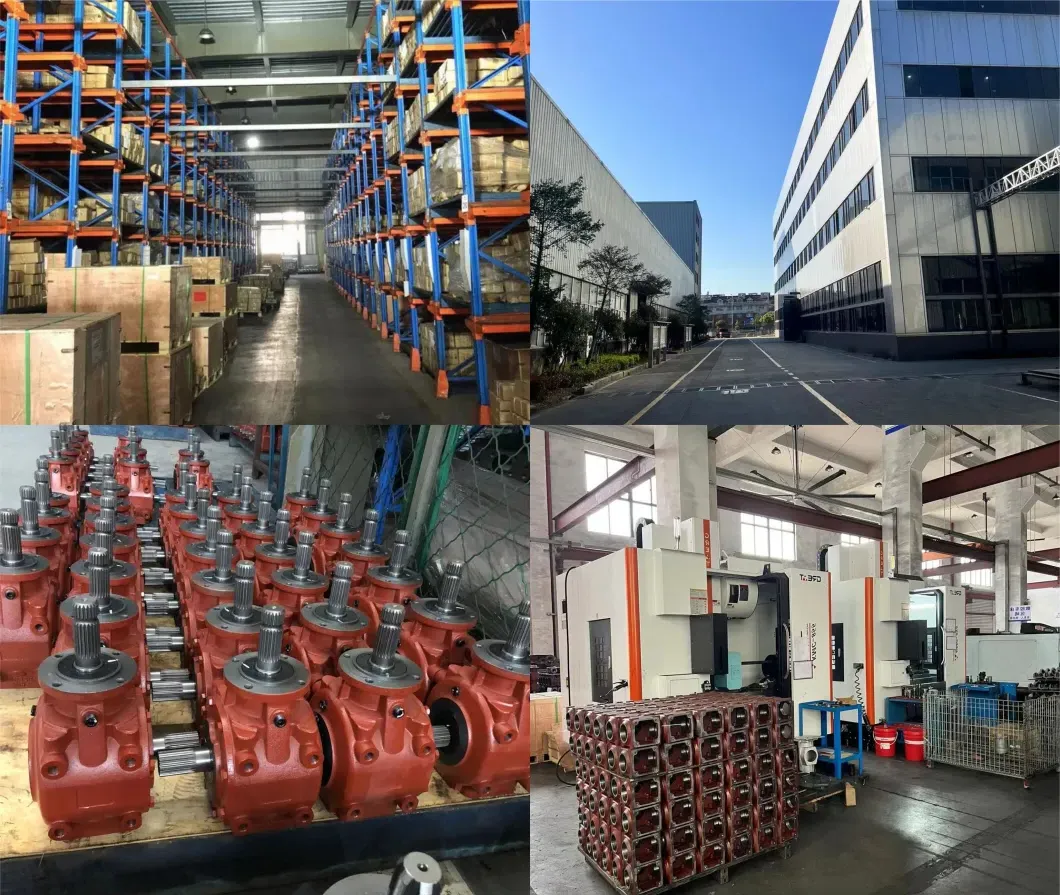
With field-tested durability and customization options, our solutions outperform in tough conditions. Get a quote today for tailored advice.
For more on our offerings, explore more.
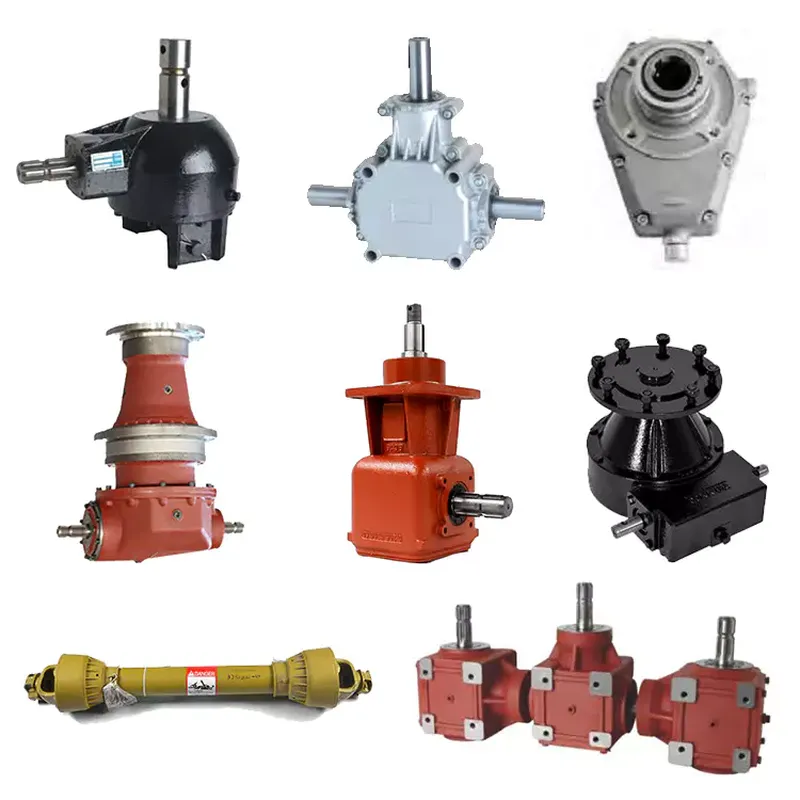
Working Principle: From Input to Elevation
Power enters via input shaft, engaging helical gears for reduction. Bevel sets redirect force 90 degrees to output, driving chains. This mechanics handles 50-100 RPM outputs, ideal for bucket speeds.
In practice, it manages variable grain densities, from light wheat to dense corn, without stalling.
Maintenance Guidelines: Ensuring Longevity
- Check oil levels every 500 hours.
- Inspect seals quarterly.
- Align shafts annually.
Follow these to extend life in abrasive environments.
Advantages Over Traditional Systems
Compared to belt drives, gearboxes offer 20% more efficiency, less slippage. In Argentina’s variable climates, they provide consistent performance.
Ready to optimize your operations? 联系我们 for expert guidance.