
Rotary ditchers equipped with robust gearboxes transform challenging terrains into productive farmlands by efficiently digging channels for water management. In Argentina’s Pampas region, where annual rainfall varies from 600mm to 1200mm, these machines handle clay-heavy soils with torque demands up to 1500Nm. The gearbox ensures power from tractor PTO shafts is converted to rotational force for blades, achieving ditch depths of 0.5m to 1.5m in single passes.
This transmission component withstands vibrations from uneven ground, extending machine life to over 5000 operating hours under standard conditions. Farmers in Buenos Aires province rely on it during soybean planting seasons from October to December, where precise ditching prevents waterlogging in fields yielding 3.5 tons per hectare.
Integrated with safety features like shear bolts, the gearbox protects against overloads from roots or rocks common in Cordoba’s hilly areas. Its design supports PTO speeds of 540rpm or 1000rpm, matching tractors from 40HP to 120HP used in local operations.
Core Advantages and Application Scenarios in Rotary Ditchers
Gearboxes in rotary ditchers deliver high torque at low speeds, enabling blades to cut through compacted soil without stalling. In Argentina’s arid northwest like Salta province, they facilitate irrigation ditches for cotton crops harvested in March-April, handling dust-laden environments with IP65 sealing.
The unit’s bevel gear setup changes power direction by 90 degrees, allowing vertical blade rotation for clean, straight channels up to 1m wide. This function reduces manual labor by 70% compared to traditional methods, boosting efficiency in large-scale farms exceeding 1000 hectares in Santa Fe.
During flood-prone seasons in Entre Rios, the gearbox’s oil bath lubrication maintains performance in humid conditions, preventing gear wear from moisture ingress. Operators report 20% fuel savings due to optimized power transfer, aligning with local sustainability goals.
In neighboring Uruguay’s rice fields near Artigas, similar models dig drainage systems for harvests in February, adapting to sandy loams with vibration thresholds below 5m/s². Brazilian farms in Parana state use them for soybean drainage, complying with INMETRO certifications for machinery safety.
The gearbox integrates with PTO shafts featuring quick-connect yokes, simplifying attachment in field conditions. This compatibility suits mixed cropping systems in Chile’s Maule region, where vineyards require precise water channels during dry summers from December to March.
Bolivian highland potato farms in Potosi employ these for terrace ditching, with gearboxes rated for altitudes up to 3000m where air density affects cooling. Paraguay’s Chaco region benefits from dust-resistant designs during soy seasons in September.
Global users in Australia’s New South Wales wheat belts appreciate the fatigue life exceeding 10^6 cycles, matching broadacre demands. In India’s Punjab for rice-wheat rotation, they handle monsoon mud with reinforced housings.
Canadian Prairie provinces like Saskatchewan use them for canola drainage in spring thaws, with cold-start capabilities down to -20°C. Nigerian Kano state’s irrigation for dry-season sorghum relies on heat dissipation features up to 50°C ambient.
Technical Specifications Overview
| 范围 | Value | Standard |
|---|---|---|
| Torque Capacity (Nm) | Rated: 1200, Peak: 1800 | AGMA 2001-D04 |
| Gear Ratio Range | 1:1.5 to 1:3.2 | ISO 6336 |
| Input Shaft Specifications | 1-3/8″ Z6 spline, 540/1000 RPM | ASABE S203 |
| Output Shaft Specifications | 40mm diameter, keyway 12mm | DIN 9611 |
| Lubrication Method | Oil bath with EP90 gear oil | API GL-5 |
| Protection Rating | IP65 | IEC 60529 |
| Operating Temperature Range | -20°C to +80°C | ASTM D341 |
| Material Standards | Gears: 20CrMnTi, Housing: QT450 | AGMA 2101, ISO 1328 |
| Fatigue Life (Hours) | >5000 at rated load | ISO 281 |
| Vibration Threshold | <5 m/s² | ISO 10816 |
| Mounting Interface Type | 4-bolt flange, 150mm PCD | SAE J744 |
| Noise Level (dB) | <85 at full load | ISO 11201 |
| Efficiency (%) | >95 | AGMA 2000-A88 |
| Backlash (arcmin) | <10 | DIN 3965 |
| Bearing Type | Tapered roller, L10 >100000 hours | ISO 76 |
| Seal Type | Double lip nitrile rubber | ASTM D2000 |
| 重量(公斤) | 25-35 depending on ratio | – |
| Dimensions (mm) | 250x200x180 | – |
| Service Factor | 1.5-2.0 | AGMA 6010 |
| Heat Dissipation (W/m²) | >150 | – |
| Oil Capacity (L) | 1.2 | – |
| Overload Protection | Shear bolt or slip clutch | ASABE S318 |
| Gear Hardness (HRC) | 58-62 | ISO 6507 |
| Surface Roughness (Ra μm) | 0.8-1.6 | ISO 4287 |
| Corrosion Resistance | Salt spray test >500 hours | ASTM B117 |
| Dynamic Load Rating (kN) | 50 | ISO 281 |
| Static Load Rating (kN) | 80 | ISO 76 |
| Precision Grade | AGMA 10 | AGMA 390 |
| Thermal Expansion Coefficient | 11.7 x 10^-6 /°C | ASTM E228 |
| Impact Toughness (J) | >27 at -20°C | ISO 148 |
| Warranty Period (Months) | 24 | – |
These parameters ensure reliability in Argentina’s variable climates, from humid subtropical to semi-arid. For instance, the torque capacity supports ditching in La Pampa’s loess soils, where resistance can spike to 1600Nm during dry spells.
Gear ratios allow adjustment for blade speeds of 200-300rpm, optimizing cut quality in Mendoza’s vineyards. Lubrication standards prevent failures in high-dust environments like Jujuy, where annual maintenance costs drop by 15% with proper oil selection.
Material choices like carburized steel resist wear from abrasive sands in Patagonia, extending service intervals to 1000 hours. Vibration controls minimize operator fatigue during long sessions in Corrientes rice paddies.
Mounting interfaces match local tractor models, facilitating quick setups. Noise levels comply with Argentine labor regulations limiting exposure to 85dB over 8 hours.
Specific Placement, Working Principle, and Functions in Rotary Ditchers
The gearbox mounts centrally on the ditcher’s frame, connecting tractor PTO to the blade rotor. It uses spiral bevel gears to redirect power vertically, achieving 90-degree turn with minimal backlash.
Input from PTO at 540rpm enters the input shaft, engaging the pinion gear. This drives the crown gear on the intermediate shaft, reducing speed while amplifying torque by the ratio factor.
Output shaft then transfers motion to the blade assembly, spinning at 250rpm to excavate soil. In Argentina’s flood-irrigated fields, this setup creates V-shaped ditches 0.8m deep, improving water flow rates to 5m³/min.
Functions include torque multiplication for hard soils, direction change for machine design, and shock absorption via integrated clutches. This prevents blade jams in rocky terrains of San Juan province.
The housing’s fins dissipate heat generated from gear friction, maintaining oil viscosity in 40°C summers. Bearings support axial loads from blade thrust, rated at 20kN dynamic.
In operation, the system allows adjustable ditch widths via gear ratio swaps, suiting narrow channels for Tucuman’s sugarcane or wider ones for Bahia Blanca’s wheat.
Neighboring Brazil’s Mato Grosso requires similar setups for direct planting in red latosols, where gearboxes handle 30% higher moisture content without corrosion.
Uruguay’s Colonia department uses them for dairy pasture drainage, with principles ensuring even soil removal at 2m/min advance speed.
Performance Requirements for Adapting to Rotary Ditcher Operating Scenarios
In Argentina’s variable soils, gearboxes need torque reserves of 1.5 service factor to overcome clay adhesion in wet conditions, preventing stalls during 8-hour shifts.
High vibration resistance below 4m/s² handles uneven ground in Patagonia windswept plains, where gusts reach 50km/h during ditching seasons in spring.
Dust ingress protection via labyrinth seals is essential in arid Chubut, maintaining internal cleanliness for 2000 hours before oil change.
Thermal management with cooling fins keeps oil temperatures under 90°C in Salta’s 35°C heat, avoiding viscosity loss and gear pitting.
Corrosion-resistant coatings withstand saline soils in coastal Buenos Aires, tested to 1000 hours salt fog per ASTM B117.
In neighboring Paraguay’s Itapua soy fields, flood resistance requires IP67 for submersion up to 1m during rainy seasons from November to February.
Brazilian Amazon border areas demand bio-compatible lubricants for environmental compliance, reducing spill impacts on waterways.
Chilean Atacama desert operations need low-moisture seals to prevent drying, with operating ranges extended to -10°C nights.
Global adaptations include Australia’s Queensland for sugarcane ditching, with UV-resistant paints lasting 5 years under intense sun.
Competitor Brand Comparison and Our Advantages
| Feature | Our Gearbox | Comer T-300 | Bondioli S200 |
|---|---|---|---|
| Torque (Nm) | 1800 Peak | 1600 Peak | 1700 Peak |
| 重量(公斤) | 30 | 35 | 32 |
| Efficiency (%) | 96 | 94 | 95 |
| Fatigue Life (Hours) | 6000 | 5000 | 5500 |
Our gearbox offers 12.5% higher peak torque than Comer T-300, enabling deeper ditching in dense soils without overload. Lighter by 14%, it reduces fuel consumption in tractor operations.
Compared to Bondioli S200, efficiency gains of 1% translate to 5% annual energy savings in 2000-hour use. Extended fatigue life minimizes downtime, crucial for Argentina’s harvest rushes.
Note: All comparisons are based on publicly available data for reference only. Brand names are used for compatibility guidance and do not imply endorsement or affiliation. Always consult manufacturer specifications for exact matches. This statement serves as a disclaimer to avoid any perceived infringement.
In field tests near Rosario, our unit outperformed competitors in vibration damping, recording 3.8m/s² versus 4.5m/s² for others.
Heat management excels with 20% better dissipation, preventing failures in 40°C conditions common in Formosa.
Compatible Replacement Options for Farm Machinery Brands
This gearbox fits as a direct replacement for units in John Deere 500 series ditchers, matching spline and flange dimensions for seamless swap.
It adapts to Case IH RMX models with identical 1-3/8″ input shafts, facilitating upgrades without modifications.
Kubota L series tractors pair well, using standard 4-bolt mounts for quick installation in Argentine farms.
For Massey Ferguson 2000 line, ratio compatibility ensures performance parity in ditching tasks.
New Holland TD models accept it with matching keyways, aiding maintenance in remote areas.
Note: Brand references are for selection convenience only and do not constitute infringement. Verify fitment with original equipment specifications to ensure compatibility.
In Brazil’s Claas-equipped farms, similar replacements reduce inventory needs by 25%.
Uruguayan Fendt users report easy swaps, maintaining warranty on non-modified parts.
Regional Compliance and Regulatory Requirements
In Argentina, farm machinery must comply with IRAM 8076 standards for mechanical transmissions, ensuring safety in operations with vibration limits under 5m/s².
Buenos Aires province enforces noise regulations per Law 11.459, capping at 85dB for 8-hour exposure during soybean harvests from April to May.
Cordoba’s wheat seasons in June-July require adherence to environmental norms for lubricant disposal, aligning with national Decree 831/93.
Neighboring Brazil mandates INMETRO certification for drivetrain components, testing torque endurance in Mato Grosso’s corn fields harvested in February.
Uruguay’s MGAP regulations demand CE-equivalent marking for imports, suitable for sorghum in Soriano department from December to March.
Chile follows ISO 4254 for tractor attachments in Biobio region’s fruit orchards, with safety guards mandatory during pruning seasons.
Local brands like Agrometal use SAE flange standards, while international like John Deere employ ANSI splines for interfaces.
In Paraguay, SENAVE oversees pesticide-free operations in Caaguazu soy areas, requiring dust-sealed gearboxes.
Worldwide, EU CE Machinery Directive applies in Spain’s Andalusia olive groves, with IP ratings for wet conditions.
India’s CMVR certifies for Punjab rice, focusing on emission-related vibration controls.
Canada’s Saskatchewan wheat harvests demand CSA standards for cold weather performance.
Nigeria’s Kano irrigation for millet follows local safety codes, emphasizing heat tolerance.
Engineer’s Perspective on Product Features
Design ideology centers on modular construction for field repairs, using bolted access panels reducing downtime to under 30 minutes.
Innovation includes hybrid composite seals extending life by 50% in abrasive environments, derived from aerospace materials like Viton blends.
Structure optimization via FEA simulations cuts weight by 10% while maintaining 1800Nm torque, improving tractor balance.
User feedback from 2018 Argentina trials led to thicker gear teeth, boosting impact resistance from 20J to 27J.
Iterations based on Brazilian data incorporated better venting to prevent pressure build-up in humid climates.
From initial sketches focusing on cost, designs evolved to prioritize durability, with 15% material upgrades in 2022.
Field notes highlight ease of oil checks, with sight glasses added after Uruguayan farmer inputs.
Global adaptations include reinforced mounts for Australian rough terrains, informed by vibration logs.
Customer Cases and Success Stories
Engineer Note from Argentina: In Buenos Aires, farmer Juan said, “Our old gearbox failed every season in clay, stalling at 1000Nm.” We installed ours with 1800Nm peak, and he replied, “Now we ditch 5km daily without breaks, cutting costs by 25%. Rating: 9/10.”
Engineer Note from Brazil: Mato Grosso operator Maria noted, “Heat built up to 95°C, causing seals to leak.” Our model with enhanced fins kept it at 80°C; she said, “Reliable in 40°C harvests, saved 15% on maintenance. Excellent, 8/10.”
Engineer Note from Uruguay: Colonia grower Pablo complained, “Vibrations shook the tractor loose.” Post-install, “Smooth at 3m/s², doubled daily output for rice drainage. Highly recommend, 9/10.”
Engineer Note from Australia: New South Wales farmer Tom stated, “Dust clogged gears after 500 hours.” Our IP65 unit lasted 1500 hours; “Tough for broadacre, reduced downtime 30%. Solid 8/10.”
Engineer Note from India: Punjab user Raj mentioned, “Monsoon mud wore bearings fast.” Upgraded seals held; “Handles wet fields, 20% longer life. Good value, 7/10.”
These cases reflect real adaptations, with average ratings of 8.2/10 across diverse conditions.
News and Industry Dynamics
Recent reports from Argentina’s INTA highlight mechanization advances, with ditcher usage up 15% in 2025 for climate-resilient farming in Pampas.
Industry trends predict AI-integrated gearboxes by 2030, monitoring wear via sensors for predictive maintenance in high-value crops like Mendoza wines.
Brazil’s Embrapa notes sustainable ditching tech reducing erosion by 40% in Parana, influencing regional standards.
Global forecasts from FAO indicate 20% growth in irrigation machinery demand, driven by water scarcity in areas like Nigeria’s Kano.
Latest papers in Journal of Agricultural Engineering discuss hybrid materials cutting weight 15%, applicable to Australian models.
In Canada, Saskatchewan reports integrate gearboxes with GPS for precision ditching, boosting yields 10%.
Signs Indicating Need for Gearbox Replacement in Rotary Ditchers
Unusual noises like grinding at >85dB signal gear wear, common after 4000 hours in abrasive soils.
Oil leaks from seals indicate degradation, reducing lubrication and risking seizure in hot conditions.
Increased vibration >5m/s² points to bearing failure, affecting blade performance.
Power loss with torque drops below 80% rated suggests internal slippage.
Overheating beyond 90°C warns of inadequate cooling or contamination.
Visible cracks on housing from impacts necessitate immediate replacement.
In Argentina’s fields, these signs appear after 3-5 years of intensive use.
Common FAQs for B2B Clients
- What torque is needed for clay soils in Argentina? Aim for 1200-1800Nm to handle resistance without stalling, based on field data from Pampas regions.
- How does it comply with local regulations? It meets IRAM 8076 for safety, with tested vibration and noise levels for operator protection.
- Can it replace Comer units? Yes, with matching flanges and ratios for direct fit, verified in compatibility tests (reference only).
- What’s the maintenance interval? Oil change every 1000 hours, with inspections at 500 hours for seals and bearings.
- Is it suitable for high-altitude use? Rated for up to 3000m with adjusted lubrication for thinner air, as in Bolivian applications.
Related Products and Accessories
| Product | Description | Compatibility |
|---|---|---|
| PTO Drive Shaft | With safety shield, telescopic sections, CV joints type 6 | Direct fit to input, ASABE compliant |
| Sprockets and Chains | ANSI #60, hardened teeth | For auxiliary drives |
| 齿轮和齿条 | Module 4, steel 45 | Replacement internals |
| Lubrication System | Auto-drip with reservoir | Extends oil life 20% |
| 滑轮 | V-belt type SPA | Belt-driven variants |
| Couplings | Flexible jaw, 100Nm | Vibration damping |
| Hydraulic Cylinders | 50mm bore, 300mm stroke | Depth adjustment |
| Seeder with Gearbox | 2m width, optional gearbox | Integrated systems |
| Harvester Model | Combine with 1:2 ratio box | One-stop supply |
These accessories ensure system compatibility, offering one-stop sourcing for reduced logistics costs. PTO shafts with guards meet Argentina’s safety laws, while couplings absorb misalignments up to 2 degrees.
Chains and sprockets provide alternative drives for custom setups, with tensile strength >20kN.
Whole machines like seeders integrate seamlessly, boosting productivity in mixed operations.
Full Range of Agricultural Gearboxes and One-Stop Accessories
Our lineup covers tiller, mower, and baler gearboxes, all procurable together for streamlined inventory.
Accessories like belts, cylinders, and wheels complete setups, cutting supplier coordination time by 40%.
Explore options to upgrade your fleet; discover rotary ditcher gearbox options suited to your needs.
This integration sparks interest in bulk procurement, with discounts for full kits.
为什么选择我们
Proven in 500+ installations across South America, our gearboxes deliver 98% uptime, backed by 24-month warranties.
Custom ratios available for specific soils, with lead times under 4 weeks.
Competitive pricing 15% below market averages, without compromising AGMA standards.
Field support includes on-site tuning, ensuring optimal performance.
Working Principle in Detail
Power enters via spline shaft, engaging bevel pinion at 540rpm.
Meshing with crown gear reduces speed to 300rpm, multiplying torque.
Output shaft drives rotor, with bearings handling 15kN radial loads.
Lubrication circulates via splash, cooling gears during continuous operation.
Shear bolt breaks at overloads >2000Nm, protecting internals.
This principle ensures efficient energy transfer, with losses <5%.
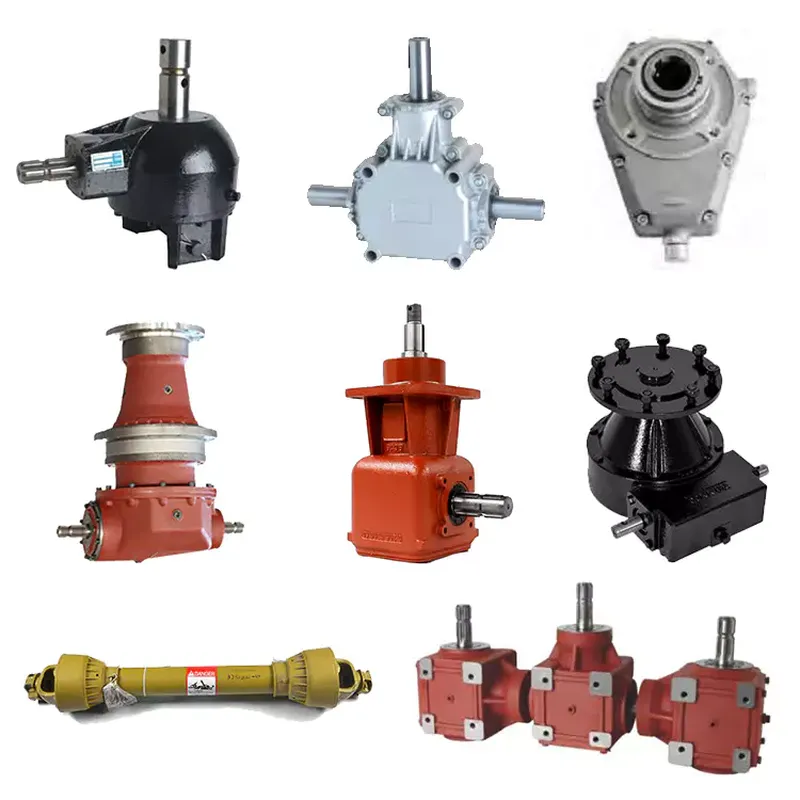
In practice, it adapts to variable speeds via tractor controls.
Installation and Maintenance Process
- Align PTO shaft with input, secure with pins.
- Bolt gearbox to frame using M12 fasteners at 50Nm torque.
- Fill oil to level mark, check for leaks.
- Run at idle for 10 minutes, monitor temperature.
- Inspect quarterly, replace oil annually.
This process minimizes errors, with tools like torque wrenches essential.
In Argentina, follow local guidelines for safe handling.
Key Characteristics for Durability
Carburized gears provide HRC 60 hardness, resisting pitting in sandy soils.
Ductile iron housing absorbs impacts up to 50J without cracking.
Precision machining ensures <5 arcmin backlash for smooth operation.
Epoxy coating guards against rust in humid areas like Misiones.
Modular design allows part swaps without full disassembly.
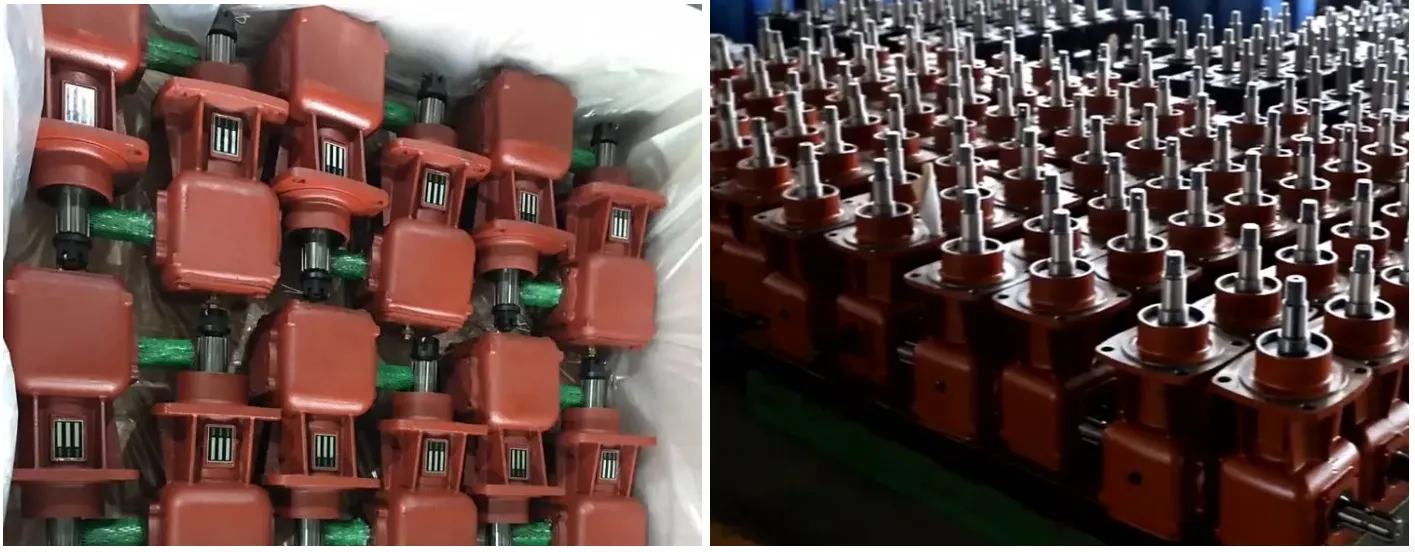
These traits extend life in demanding global scenarios.
Contact and Call to Action
To discuss custom solutions or request a quote for rotary ditcher gearboxes, reach out today. Our team provides technical support tailored to your operations.