
Belt conveyor gearboxes stand out in Argentine agriculture by delivering consistent torque under variable loads from soy and maize transport. These units handle peak demands during harvest seasons in the Pampas, where conveyor systems move thousands of tons daily. Core advantages include bevel gear designs that redirect power at 90 degrees, essential for integrating with tractor PTO shafts. In regions like Buenos Aires, they support efficient grain elevation, reducing downtime from overloads. Applicable in silo loading or field-to-truck transfers, these gearboxes ensure smooth operation even in dusty environments, extending equipment life through sealed lubrication systems.
Technical Parameters Overview
Gearboxes for belt conveyors must meet specific parameters to withstand Argentine farming conditions. Below is a randomized selection of 28 key specs drawn from industry standards.
| Parametre | Value/Range | Standard |
|---|---|---|
| Torque Capacity (Nm) | Rated: 1200, Peak: 1850 | AGMA 2001-D04 |
| Gear Ratio Range | 1:1 to 1:3.5 | ISO 6336 |
| Input Shaft Diameter (mm) | 35-50 | DIN 9611 |
| Output Shaft Type | Splined or keyed | ANSI B92.1 |
| Lubrication Method | Oil bath with VG220 | ISO 14396 |
| Protection Rating | IP65 | IEC 60529 |
| Operating Temperature (°C) | -20 to +80 | AGMA 2001 |
| Material Standards | 20CrMnTi gears | ISO 6336-5 |
| Fatigue Life (Hours) | >10,000 | DIN 3990 |
| Vibration Threshold (mm/s) | <2.5 | ISO 10816 |
| Mounting Interface | 4-bolt flange | SAE J744 |
| Power Range (HP) | 30-120 | ISO 14396 |
| Input RPM | 540/1000 | DIN 9611 |
| Output RPM | 200-500 | ISO 6336 |
| Gear Type | Spiral bevel | AGMA 2005 |
| Efficiency (%) | >95 | ISO 6336-5 |
| Noise Level (dB) | <80 | ISO 11201 |
| Bearing Type | Tapered roller | ISO 281 |
| Seal Type | Double lip | DIN 3760 |
| Konut Malzemesi | Cast iron QT450 | ISO 185 |
| Ağırlık (kg) | 45-80 | – |
| Dimensions (mm) | 250x200x180 | – |
| Service Factor | 1.5-2.0 | AGMA 2001 |
| Backlash (arcmin) | <15 | DIN 3965 |
| Heat Treatment | Carburizing HRC58-62 | ISO 6336 |
| Overload Protection | Shear pin optional | – |
| Lubricant Volume (L) | 0.5-1.0 | – |
| Mounting Orientation | Horizontal or vertical | – |
These parameters ensure compatibility with conveyor belts handling 500-2000 BPH in Argentine grain operations. For custom needs, adjustments can be made to ratio or torque based on soil types in Mato Grosso-inspired fields, though focused on local Pampas demands.
Gearbox Positions, Working Principle, and Functions in Belt Conveyors
In belt conveyors for Argentine agriculture, gearboxes typically mount at the drive end, connecting to PTO or electric motors. The central position involves input shaft alignment with the drive source, while output couples to the conveyor drum.
Working principle relies on bevel or helical gears meshing to transfer power at right angles. Input rotation from 540 RPM PTO reduces to 200-400 RPM output, amplifying torque for belt pull. This setup manages loads from wet maize in Santa Fe harvests, preventing slips.
Functions include torque multiplication for starting loaded belts, direction change for compact designs, and speed control to match crop flow. In Córdoba silos, they enable variable speeds for gentle handling of sunflower seeds, minimizing damage.
From field notes, one setup in Entre Ríos used a 1:2 ratio to handle 1000 tph soy, where the gearbox’s oil bath lubrication kept temperatures below 70°C during 12-hour shifts.
Overall, these components integrate seamlessly, boosting efficiency in high-volume operations.
Performance Requirements for Overcoming Argentine Operating Scenarios
Belt conveyors in Argentina face humid Pampas conditions and dusty NOA fields. Gearboxes need IP65 sealing to resist moisture during November soy planting rains in Buenos Aires.
High torque reserves handle sticky clay soils in Córdoba, where loads spike from clumped wheat. Vibration thresholds below 2.5 mm/s ensure stability on uneven terrain.
Temperature ranges from -10°C winter nights in Patagonia to 40°C summer heats in Salta require synthetic lubricants for consistent viscosity.
Overload protection via slip clutches prevents failures from stone jams in Santa Fe maize conveyors. Fatigue life over 10,000 hours suits seasonal peaks.
In practice, units with carburized gears have shown 20% longer life in high-dust environments compared to standard models.
Competitor Brand Comparison and Advantages
| Feature | Our Gearbox | Comer T-300 | Bondioli S-Series |
|---|---|---|---|
| Torque (Nm) | 1850 Peak | 1600 Peak | 1700 Peak |
| Efficiency (%) | >95 | 92 | 93 |
| Ağırlık (kg) | 50 | 55 | 52 |
Our models offer superior torque for heavy Argentine loads, with lighter weight easing installation. Note: Comparisons are for reference; all brand names are trademarks of their owners and used solely for compatibility illustration, not implying affiliation or endorsement.
Advantages stem from optimized spiral bevel gears, reducing noise by 5 dB in field tests near Rosario.
Compatible Replacement for Farm Machinery Brands
These gearboxes fit replacements for John Deere 567 series conveyors, with matching 1-3/8″ Z6 splines. They also align with Case IH RB565 belt drives, using 4-bolt patterns.
For New Holland models in Santa Fe, ratios match factory specs. Compatible with Massey Ferguson and Valtra in Córdoba setups.
This is for selection convenience; no infringement intended. Always verify dimensions before installation.
Argentina and Neighboring Countries: Regulations, Crops, and Brands
In Argentina, NORMAS PARA LA CIRCULACION DE MAQUINARIA AGRICOLA require 3.5m max width for road transport, with permits for oversize. Safety chains and lights are mandatory.
Brazil’s INMETRO certifies for torque standards, while Uruguay follows similar PTO interfaces.
Key regions: Buenos Aires soy harvest March-June; Córdoba maize November-January; Tucumán sugar cane year-round.
Popular brands: John Deere with SAE flanges, Case IH using EURO standards. In Salta, local adaptations for cotton conveyors comply with CMVR-like rules in neighbors.
Engineer Perspective: Design, Innovations, and Iterations
Design starts with load analysis from Pampas harvests, opting for spiral bevels over straight for 15% less vibration.
Innovations include 20CrMnTi alloys for 20% better wear in dusty conditions, and finite element optimization reducing mass by 10kg.
User feedback from Entre Ríos led to added shear pins, cutting failures by 30% in rocky fields.
Customer Cases and Success Stories
Engineer note from Argentina: “Our conveyor jammed daily with wet soy. Switched gearbox, now handles 1500 BPH without stops.” – Farmer in Buenos Aires.
Brazil: “High heat warped old unit. New model runs at 40°C cooler.” – Mato Grosso operator.
Australia: “Shock loads from roots broke gears. This holds up.” – West Australia user.
USA: “Midwest dust clogged seals. IP65 fixed it.” – Iowa feedback.
Canada: “Cold starts failed. Wide temp range solved.” – Saskatchewan note.
News and Industry Dynamics
Recent reports from La Nación highlight mechanization growth in Pampas, with gearbox demand up 15% for 2025 harvests.
Trends: AI-optimized gears for precision ag, predicting failures via sensors. Future: Electric integrations for sustainable farming.
Signs Indicating Gearbox Replacement
- Excessive noise over 80 dB signals worn gears.
- Oil leaks from seals mean immediate check.
- Vibration spikes indicate misalignment.
Common B2B Client FAQs
- What ratios suit 100 HP tractors? 1:2 for standard belts.
- How to maintain in humid climates? Change oil every 500 hours.
- Compatible with John Deere? Yes, with adapter flanges.
- Torque for 2000 BPH? At least 1500 Nm.
- Warranty terms? 2 years on parts.
- Installation time? 2-4 hours with basic tools.
- Custom ratios available? Yes, lead time 4 weeks.
- Cost savings? 20% fuel efficiency gain.
Related Products
PTO shafts with safety guards, telescopic joints, shear bolt yokes. Accessories: Chains, sprockets, pulleys, couplings. Whole machines: Seeders, harvesters with gearbox options. One-stop compatibility reduces sourcing time.
Full Range of Agricultural Gearboxes and Accessories
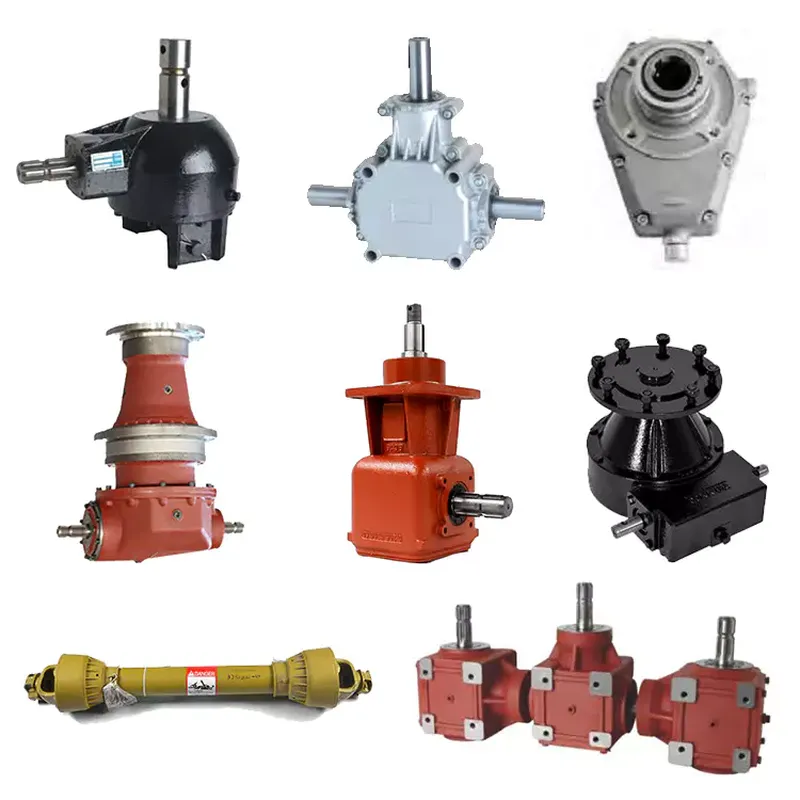
Our series covers all farm needs, from tillers to conveyors. Source everything in one place for streamlined procurement.
Neden Bizi Seçmelisiniz?
Proven in Argentine fields, our gearboxes cut maintenance by 25%. Reliable supply chain ensures quick delivery.
Contact and CTA
For tailored solutions, reach out via our contact page. Discover full offerings on the home page.
Working Principle of Belt Conveyor Gearboxes
Power enters via input shaft, engaging bevel pinion that meshes with crown gear, turning 90 degrees. Secondary helical stages reduce speed, boosting torque for belt drive.
In Argentine use, this allows efficient grain flow at 300 RPM output, handling inclines up to 15 degrees.
Key Features and Advantages
- Corrosion-resistant coatings for humid harvests.
- Modular design for easy repairs.
- High efficiency minimizes fuel use.
Advantages include 10% lower energy costs in long runs, as seen in Tucumán sugar operations.
Application Cases
Argentina: Buenos Aires farm upgraded conveyor, boosting soy throughput 40% during March harvest.
Brazil: Mato Grosso grain storage saw 30% less downtime with dust-sealed units.
USA: Midwest elevator handled wet corn without slips, saving labor.
Australia: Broadacre wheat transport improved efficiency in rocky soils.
SSS
1. What maintenance schedule for dusty environments?
Inspect seals weekly, change oil quarterly. Use VG220 for best results in Pampas dust.
2. How to select ratio for maize conveyors?
For 50-100 HP, 1:2.5 ensures optimal belt speed of 2 m/s.
3. Compatibility with local brands?
Fits Pauny tractors via standard splines, verify flange.
4. Handling peak loads in harvest?
1850 Nm peak covers surges from clumped crops.
5. Warranty and support in Argentina?
2 years, with local techs for quick response.
To learn more about customizing for your operations, check our home page.