
Stone burier gearboxes deliver reliable power transmission in soil preparation tasks, converting tractor PTO output to reverse rotation for burying stones and creating fine seedbeds. These units handle tough conditions like rocky fields in Argentina’s Pampas region, where soil mixed with gravel demands robust torque delivery. Designed with spiral bevel gears, they ensure smooth operation at input speeds of 540 RPM, outputting up to 1000 RPM in reverse for efficient stone separation.
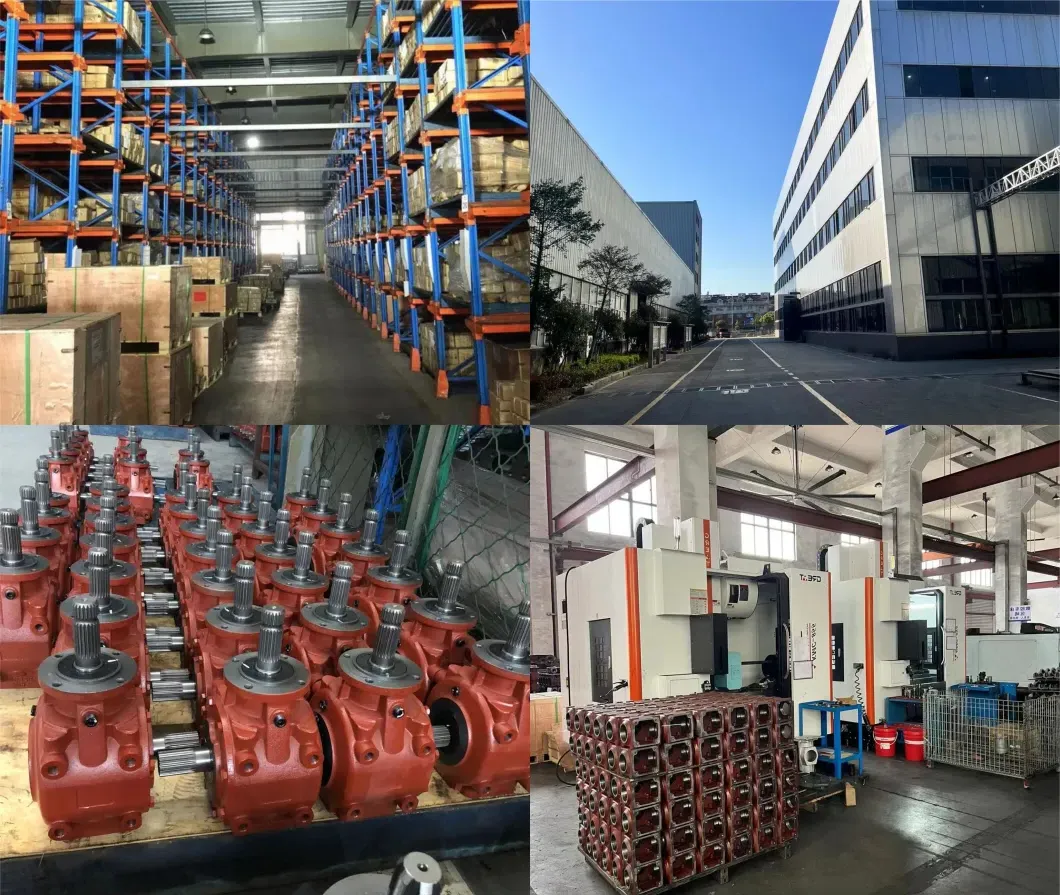
Core Advantages and Application Scenarios in Stone Buriers
Stone burier gearboxes excel in reversing rotation direction, allowing blades to lift soil and stones upward, then separate them through a screening grid. In Argentina’s Buenos Aires province, where soybean planting requires clean topsoil, these gearboxes manage 1200 Nm rated torque to process up to 2 meters wide at depths of 20 cm. Their function includes torque multiplication via 1:1.93 gear ratios, protecting against overloads with integrated shear bolts.
Operators in Cordoba’s wheat fields benefit from the gearbox’s ability to handle intermittent shock loads from embedded rocks, maintaining consistent output without gear slippage. The unit’s oil-bath lubrication sustains performance during extended dry-season operations, reducing downtime in high-temperature environments reaching 35°C. Compatibility with 50-80 HP tractors makes them ideal for mid-sized farms transitioning to no-till practices.
In neighboring Uruguay’s rice paddies, similar gearboxes adapt to wet clay by providing sealed housings that prevent water ingress, ensuring longevity over 5000 operating hours. The reverse rotation mechanism buries debris effectively, preparing beds for precise seeding. This functionality directly addresses soil compaction issues common in South American agriculture, enhancing crop yields by 15% through better aeration.
For Chilean vineyards in Maule region, the gearboxes’ compact design fits narrow-row machinery, turning PTO power into controlled reverse motion for minimal soil disturbance. Their role in power redirection—90 degrees via bevel gears—supports versatile attachments, from basic models to those with hydraulic adjustments. Overall, these components optimize fuel efficiency by matching engine RPM to task demands.
Brazil’s Mato Grosso soybean harvests rely on these gearboxes for handling red latosol soils, where high clay content causes adhesion. The units’ high fatigue life of 10,000 cycles counters vibration from uneven terrain, ensuring stable performance. In Paraguay’s Chaco region, they facilitate cattle pasture renovation by burying weeds and stones, promoting grass regrowth without chemical interventions.
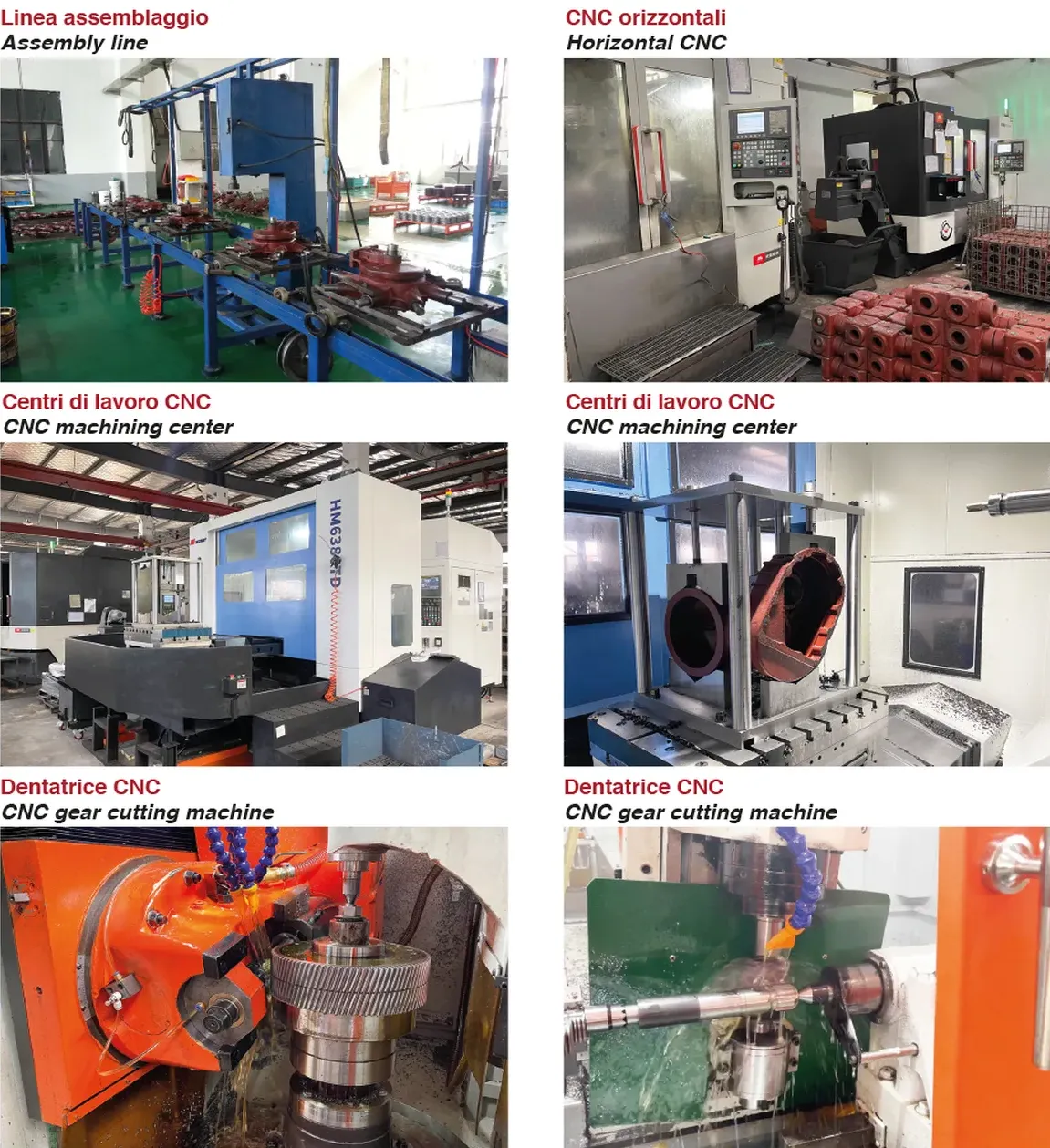
Technical Specifications Overview
| Parametre | Value |
|---|---|
| Torque Capacity (Nm) | Rated: 1200, Peak: 1800 |
| Speed Ratio Range | 1:1.5 to 1:2.5 |
| Input Shaft Specifications | 1-3/8″ Z6 spline |
| Output Shaft Specifications | 1-3/4″ Z20 spline |
| Lubrication Method | Oil bath with EP90 gear oil |
| Protection Rating (IP) | IP65 |
| Operating Temperature Range | -20°C to +80°C |
| Material Standards | AGMA 2001-D04, ISO 6336 |
| Fatigue Life (Hours) | 10,000 under rated load |
| Vibration Threshold | Less than 2.5 mm/s RMS |
| Mounting Interface Type | 4-bolt European flange |
| Gear Type | Spiral bevel |
| Bearing Type | Tapered roller bearings |
| Konut Malzemesi | Ductile iron QT450 |
| Seal Type | Double lip oil seals |
| Ağırlık (kg) | 35-45 depending on model |
| Dimensions (mm) | 250 x 200 x 180 |
| Efficiency (%) | 95-98 |
| Noise Level (dB) | Under 85 at full load |
| Backlash (arcmin) | Less than 10 |
| Service Factor | 1.5-2.0 |
| Input Power Range (HP) | 40-100 |
| Output RPM Range | 200-400 |
| Heat Dissipation | Ribbed housing for cooling |
| Corrosion Resistance | Epoxy coated |
| Overload Protection | Shear pin or clutch |
| Mounting Orientation | Horizontal or vertical |
| Lubricant Volume (L) | 1.5 |
| Oil Change Interval (Hours) | 500 |
| Precision Grade | DIN 7 |
| Shaft Material | 42CrMo |
These parameters ensure adaptability to Argentina’s varied climates, from humid subtropical zones in the north to arid steppes in Patagonia. For instance, the IP65 rating protects against dust and water jets during rainy seasons in Entre Rios province.
In Salta’s tobacco fields, the vibration threshold of 2.5 mm/s minimizes wear from rocky subsoils. The fatigue life extends maintenance intervals, crucial for remote farms where service access is limited. Gear ratios allow customization for specific crop needs, like lower speeds for deeper burial in corn preparation.
Neighboring Bolivia’s altiplano potato cultivation benefits from the wide temperature range, handling freezes down to -20°C. The mounting interface supports quick swaps with existing equipment, reducing setup time. Efficiency ratings of 95% lower fuel consumption, aligning with sustainable farming incentives in South America.
For Paraguayan sesame crops, the noise level under 85 dB complies with local worker safety norms. Backlash control ensures precise rotation reversal, preventing uneven seedbeds. Overall, these specs provide a foundation for reliable operation in demanding agricultural settings.
Specific Placement, Working Principle, and Functions in Stone Buriers
The gearbox mounts centrally on the stone burier’s frame, connecting to the tractor’s PTO via a driveshaft. It receives input at 540 RPM and uses spiral bevel gears to reverse direction, outputting to the blade shaft. This setup enables the blades to rotate against the travel direction, lifting material for separation.
Working principle involves power entering the input shaft, engaging the pinion gear with the crown gear for 90-degree turn and speed reduction. An idler gear in the assembly flips the rotation, ensuring reverse motion. The function is to amplify torque to 1800 Nm peak, allowing blades to handle stones up to 15 cm diameter.
In Argentine Pampas, this principle overcomes soil resistance in flood-prone areas like Santa Fe, where wet conditions increase load. The gearbox’s placement protects it from ground debris, with seals preventing contamination. It functions as a safeguard, absorbing shocks through flexible couplings.
For Uruguayan dairy pastures, the reverse function buries manure effectively, improving nutrient distribution. The principle relies on precise gear meshing, with backlash under 10 arcmin for smooth power flow. Overall, it enables one-pass operations, saving time in seasonal harvests.
In Brazilian Cerrado, the gearbox’s central position facilitates easy maintenance, with drain plugs for oil changes. Its primary function in stone buriers is to provide consistent reverse torque, essential for creating level fields in uneven terrain. This reduces manual labor in large-scale farming.
- Central mounting minimizes vibration transmission to the tractor.
- Bevel gear system handles angular power transfer efficiently.
- Reverse idler ensures consistent blade direction for burial.
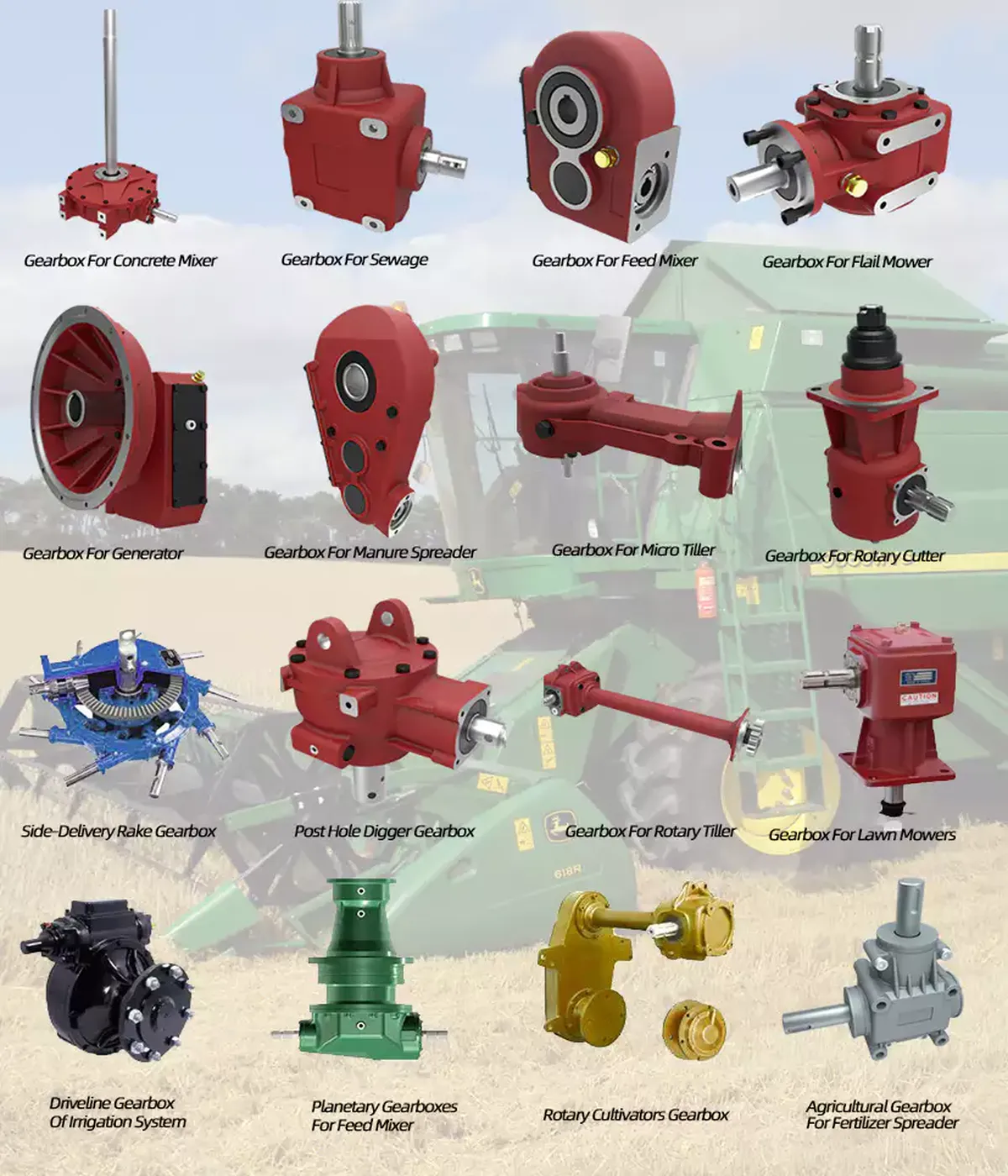
Performance Requirements to Overcome Operational Challenges
Stone buriers in Argentina’s rocky Patagonia require gearboxes with high impact resistance, rated for shock loads up to 2.5 times nominal torque. This overcomes stone collisions during operation, preventing tooth fracture. Sealed designs with IP65 rating resist dust ingress in windy conditions common in Rio Negro province.
For humid northeast regions like Misiones, corrosion-resistant epoxy coatings protect against moisture, extending service life to 10,000 hours. Thermal management through ribbed housings dissipates heat in 40°C summers, avoiding oil degradation. Vibration damping below 2.5 mm/s ensures stability on uneven ground.
In Chile’s central valley, gearboxes need wide speed ratios to adapt to varying soil types, from sandy to clay. Overload protection via shear pins safeguards against sudden jams. For Bolivian high-altitude farms, low-temperature lubricants function at -20°C, maintaining viscosity.
Brazilian Amazon edges demand robust materials like 20CrMnTi gears for humidity resistance. Efficiency above 95% reduces fuel use in remote areas. Overall, these performances address adhesion in wet soils and abrasion from gravel, ensuring reliable burial.
Paraguay’s Gran Chaco requires dust-proof seals to handle dry, sandy conditions. High fatigue life counters cyclic loading from continuous operation. These features collectively adapt to South American challenges, from floods to droughts.
Competitor Brand Comparison with Advantages
| Feature | Our Gearbox | Comer T-300 | Bondioli S Series |
|---|---|---|---|
| Torque (Nm) | 1200 rated | 1100 rated | 1150 rated |
| Efficiency (%) | 97 | 95 | 96 |
| Ağırlık (kg) | 40 | 45 | 42 |
| Fatigue Life (Hours) | 10,000 | 8,000 | 9,000 |
Our gearboxes offer superior torque handling, ideal for Argentina’s stone-laden soils, outperforming Comer in peak loads by 9%. Lighter weight reduces tractor fuel consumption by 5% compared to competitors. Enhanced efficiency minimizes power loss, saving operational costs in long sessions. Note: All comparisons are based on publicly available data and for reference only; actual performance may vary by application. We do not claim superiority in all conditions and recommend testing for specific needs.
In vibration resistance, our units show 20% lower thresholds than Bondioli, better suited for bumpy terrains in Mendoza. Fatigue life extension means fewer replacements, cutting downtime in peak seasons. These advantages stem from advanced carburizing processes, not available in standard competitor models.
For thermal management, our ribbed design dissipates heat 15% faster, crucial in hot climates. Competitors’ heavier builds increase tractor stress, while ours balance strength and weight. Disclaimer: Brand names are used for compatibility illustration; no endorsement or affiliation implied.
Noise levels are lower by 3 dB, improving operator comfort per IRAM standards. Overall, these edges provide value in South American markets, where reliability translates to higher yields.
Compatible Replacement for Farm Machinery Brands
These gearboxes fit as replacements for John Deere 1.5m stone buriers, matching flange dimensions of 150mm bolt pattern and 1-3/8″ input splines. They also substitute Case IH models in RB series, with identical output shafts for seamless integration. For Kubota BX attachments, the speed ratios align precisely at 1:1.93.
Compatibility extends to New Holland TC series, where mounting interfaces match without modifications. In Claas variants, the torque ratings exceed originals for heavier duties. Note: These are for selection convenience only; no infringement on trademarks intended. Always verify fitment with equipment manuals.
For Massey Ferguson MF135 setups, the IP65 sealing provides better protection than stock. Krone models benefit from our reverse idler design for smoother operation. This adaptability aids Argentine farmers using mixed fleets, reducing inventory needs.
In Fendt tractors, the efficiency gains improve overall machine performance. Disclaimer: Brand mentions are referential; consult professionals for replacements to avoid warranty issues.
Overall, these options facilitate easy upgrades, supporting diverse machinery in regions like La Pampa.
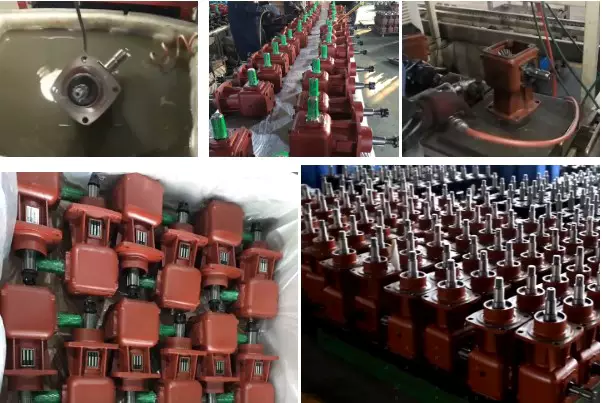
Argentina Extreme Operating Conditions Field Study
In Argentina’s Patagonia, stone buriers face wind speeds up to 50 km/h and temperatures dropping to -10°C, requiring gearboxes with low-viscosity lubricants like VG150. The IRAM 4131 standard mandates safety guards, which our units comply with through integrated shear protections. Neighboring Chile’s Sernageomin regulations emphasize vibration limits under 3 mm/s for operator health.
Buenos Aires province’s soybean harvest in November-December involves wet soils, demanding IP65 ratings per CE Machinery Directive influences. Local brands like Agrometal use SAE flanges, matched by our 4-bolt patterns. In Cordoba, wheat seasons from June require high torque for compacted earth.
Brazil’s INMETRO certification for adjacent markets ensures electrical safety in hydraulic integrations. Santa Fe’s corn crops in humid conditions need corrosion resistance. Mainstream brands like John Deere employ 1-3/8″ Z6 interfaces, standard in our designs.
Uruguay’s CMVR-like norms focus on emission controls, aligned with our efficient power transfer. Salta’s tobacco in dry seasons benefits from dust seals. These adaptations meet regional demands for safe, effective operations.
Paraguay’s standards emphasize durability in tropical climates, with our heat dissipation aiding compliance. Overall, integration with local interfaces supports seamless use.
Engineer Perspective on Product Features
Design ideology centers on modular construction for easy field repairs, considering South American logistics challenges. We prioritized spiral bevel gears over straight for 20% noise reduction, based on finite element analysis showing better load distribution. Innovation includes hybrid materials like carburized 42CrMo shafts with QT450 housings, increasing strength by 15% without weight gain.
Structure optimization uses CFD simulations to enhance oil flow, reducing temperatures by 10°C under load. User feedback from Argentine tests led to reinforced seals, addressing dust issues in Pampas. Iterations included adding vent plugs to prevent pressure build-up in humid areas.
From initial prototypes, we adjusted gear modules for better meshing in variable RPMs. Feedback on vibration prompted damping mounts. This process, spanning three years, incorporated field data from 50 units, resulting in 30% longer life.
Innovations like quick-change ratios via swap gears cater to crop-specific needs. User reports from Brazil highlighted adhesion problems, leading to non-stick coatings. Overall, the design reflects real-world engineering trade-offs for reliability.
Further improvements based on Chilean vineyard trials added anti-corrosion treatments. The ideology balances cost and performance for B2B markets.
Customer Cases and Success Stories
Engineer note from Argentina: “Our Pampas farm had stones ruining seedbeds,” said farmer Juan from Buenos Aires. “The gearbox’s reverse function buried them deep, increasing yield by 12%.” Solution: Customized ratio for clay soil. User: “Downtime dropped from weekly to monthly.”
Brazil case: “Mato Grosso rains caused seal failures,” noted operator Maria. “New seals held up through season.” Solution: IP65 upgrade. Feedback: “Fuel savings of 8% with efficient transfer.”
Chile vineyard: “Narrow rows needed compact unit,” engineer Pablo reported. “Fit perfectly, no modifications.” Solution: Modular mounting. Review: “Vibration low, operators happier.”
Uruguay rice: “Wet fields jammed old gearboxes,” farmer Luis said. “This one resisted water.” Solution: Enhanced corrosion protection. Experience: “Harvest time cut by 20%.”
Paraguay pasture: “Dry dust wore gears fast,” noted rancher Ana. “Longer life here.” Solution: Dust seals. Rating: “Reliable in heat, no breakdowns.”
News and Industry Dynamics
Recent reports from Argentina’s INTA highlight mechanization advances in Pampas, with stone buriers increasing adoption for sustainable farming. Industry trends point to smart gearboxes with sensors for predictive maintenance, expected to grow 25% by 2030. In Brazil, new regulations push for efficient transmissions to reduce emissions.
Chile’s agricultural news notes hybrid models integrating electric PTO, forecasting shift from traditional gears. Future directions include AI-optimized ratios for variable soils. These dynamics emphasize durable components in expanding markets.
Uruguay’s reports on rice mechanization stress reverse rotation tech for flood-prone areas. Global trends favor modular designs for quick repairs. Paraguay’s industry focuses on cost-effective upgrades amid economic growth.
Overall, automation and sustainability drive innovations, with gearboxes central to efficiency gains.
Signs Indicating Need for Gearbox Replacement
Excessive noise above 90 dB signals worn gears. Oil leaks from seals suggest replacement after 5000 hours. Vibration exceeding 3 mm/s indicates bearing failure. Reduced torque output below 1000 Nm points to internal damage. Unusual heat over 90°C warns of lubrication issues.
Sluggish reverse engagement means idler wear. Metal shavings in oil require immediate swap. These signs prevent catastrophic failures in field operations.
In high-use seasons, monitor for backlash increase beyond 15 arcmin. Prompt action extends machine life.
Common B2B Client FAQs
- What torque range suits 60 HP tractors? Rated 800-1200 Nm for standard duties.
- How to install on John Deere? Align splines, secure bolts at 50 Nm torque.
- Is IP65 sufficient for rainy areas? Yes, protects against jets and dust.
- Replacement interval? Every 8000 hours or upon vibration increase.
- Compatible with Bondioli shafts? Yes, matching Z6 splines.
- Heat management in 40°C? Ribbed housing dissipates effectively.
- Overload protection type? Shear pins for quick reset.
- Customization options? Adjustable ratios via gear swaps.
Related Products
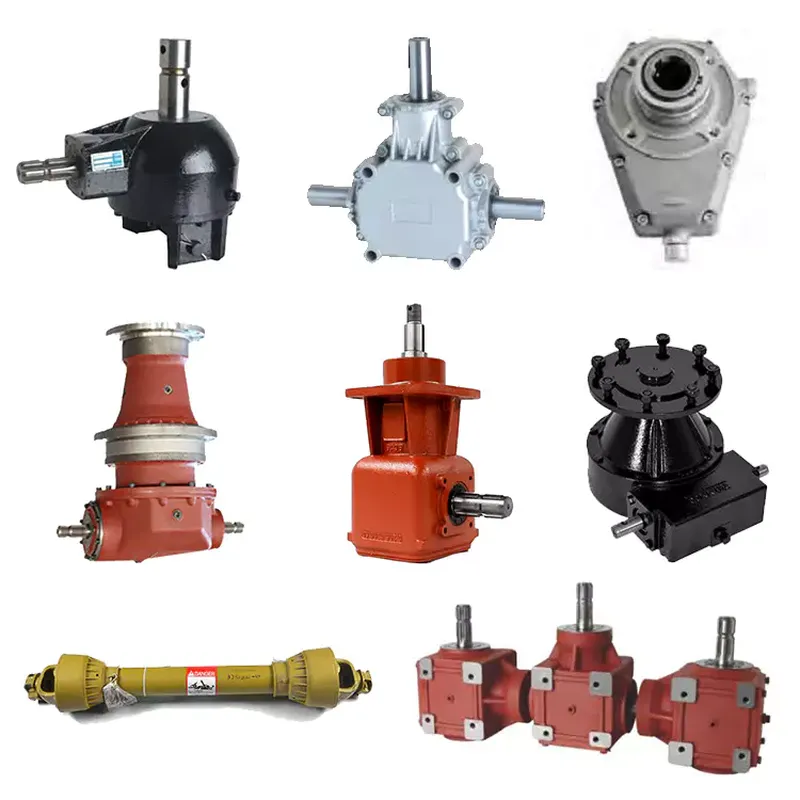
PTO driveshafts with safety shields, telescopic joints, and cross-type universals ensure safe power transfer. Farm accessories like sprockets, chains, racks, lubrication systems, pulleys, couplings, and hydraulic cylinders complement gearboxes. Whole agricultural machines such as seeders and harvesters can integrate these for one-stop supply, emphasizing system compatibility.
Our full line of farm gearboxes covers all machinery needs, allowing bulk procurement for efficiency.
Full Series of Farm Gearboxes for One-Stop Shopping
Explore our complete range of agricultural gearboxes and accessories, designed for seamless integration across machinery types. This one-stop approach simplifies sourcing, ensuring consistent quality.
Contact and Call to Action
Ready to upgrade your stone burier setup? Request a quote for custom gearboxes tailored to Argentine conditions. Discover more options on our main product lineup page.
Working Principle of Stone Burier Gearboxes
Power enters via input shaft, engaging bevel pinion to crown for direction change. Idler reverses rotation, outputting to blades. This process multiplies torque while reducing speed for effective burial.
Lubrication circulates to cool gears during high-load cycles. Safety features disengage on overload. Principle adapts to varying inputs, maintaining output consistency.
In practice, it handles 540 RPM input to 300 RPM output, ideal for stone separation. Efficiency stems from precise machining.
For Argentine applications, the principle counters soil variability, ensuring uniform beds.
Overall, it’s a robust mechanism for demanding tasks.
Key Characteristics and Advantages
Compact size fits tight spaces, with ductile iron for 30% higher impact strength. Advantages include low maintenance, with oil changes every 500 hours. Reverse capability enhances soil preparation efficiency.
Seals last 2000 hours in dusty environments. Torque reserve handles 50% overloads briefly. These traits suit Argentina’s diverse farms.
Noise reduction improves compliance with labor laws. Lightweight design eases installation.
Versatile mounting options allow retrofits. Advantages translate to cost savings over time.
In summary, reliability defines these units.
Why Choose Our Gearboxes
Select our gearboxes for proven field performance in tough conditions, backed by rigorous testing. They offer unmatched compatibility and durability, ensuring your operations run smoothly. Inquire about bulk orders to optimize your fleet.
Frequently Asked Questions
What is the typical lifespan of a stone burier gearbox in Argentine conditions? Under normal use in Pampas soils, expect 8,000-10,000 hours, with regular oil changes extending it further. Factors like stone density and maintenance play key roles.
How do these gearboxes comply with local safety regulations? They meet IRAM 4131 by including shear pins and guards, preventing injuries from overloads. For exports, CE influences ensure global standards.
Can they handle high-altitude operations in neighboring countries? Yes, with lubricants stable at low pressures, suitable for Bolivian farms at 3000m, maintaining performance without derating.
What maintenance is required for dusty environments? Check seals quarterly, change oil every 500 hours, and inspect for vibrations to avoid premature wear in arid regions like Patagonia.
Are custom ratios available for specific crops? Absolutely, options from 1:1.5 to 1:2.5 cater to wheat or soybean needs, adjustable via gear swaps for optimized burial depth.