
In Argentina’s vast Pampas region, where soybean and corn harvests dominate the landscape, combined harvester gearboxes must endure prolonged operation under variable soil resistances and high ambient temperatures. These components convert tractor PTO power into precise speeds for threshing, separating, and conveying mechanisms, ensuring minimal crop loss during peak seasons from November to April. With torque capacities reaching 2500 Nm and gear ratios adjustable from 1:1.5 to 1:3.2, they optimize fuel efficiency in machines handling up to 150 hectares per day.
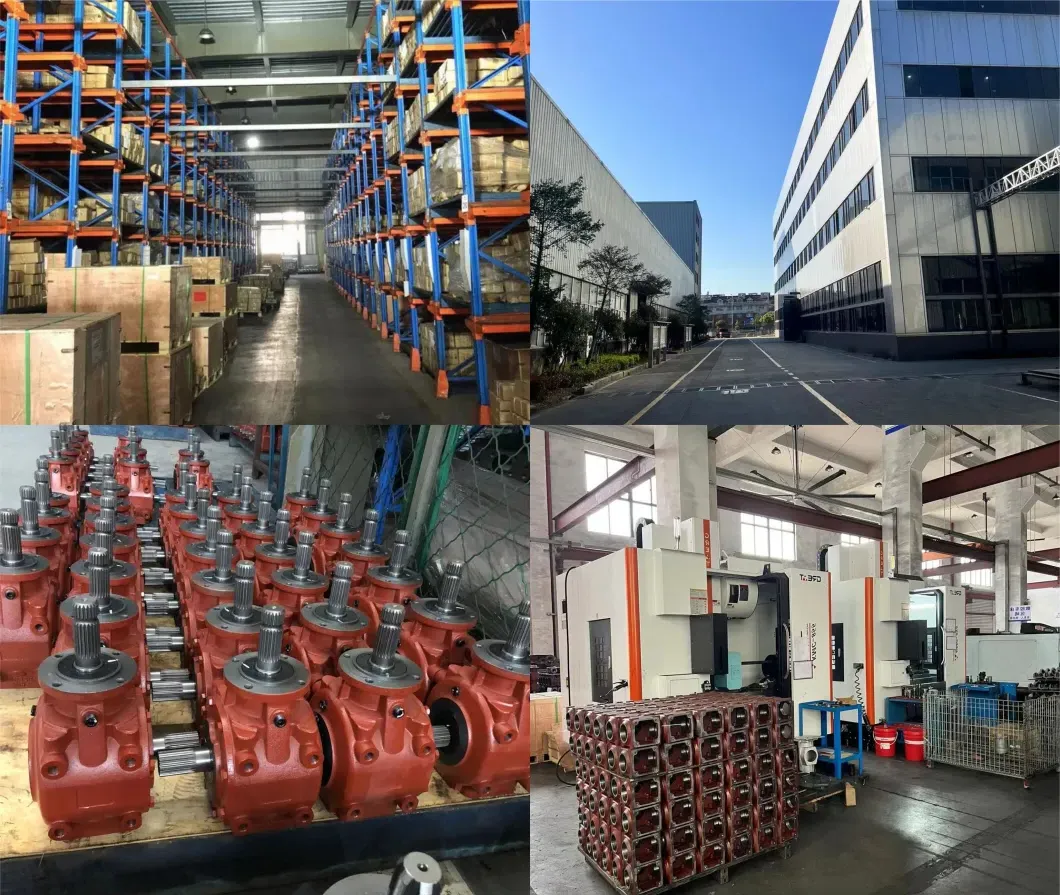
Core Advantages and Application Scenarios in Combined Harvesters
Combined harvester gearboxes excel in transferring power from the engine to critical systems like the header, threshing drum, and cleaning shoe, reducing downtime in Argentina’s intensive farming cycles. For instance, in Buenos Aires province, where wheat harvesting peaks in December, these gearboxes handle input speeds of 540 RPM to output 1200 RPM for efficient grain separation.
Their sealed designs prevent dust ingress from dry, windy fields in Cordoba, maintaining lubrication integrity over 5000 operating hours. This reliability supports large-scale operations in Santa Fe, where machines process 300 tons of corn daily, minimizing mechanical failures during rainy spells that soften clay soils.
In threshing applications, the gearbox ensures synchronized rotation between the cylinder and concave, achieving 98% separation efficiency. For conveying, it provides consistent torque to elevators, preventing blockages in high-moisture sorghum harvests in Salta province.
Adaptability to variable loads is key in Mendoza’s irrigated valleys, where gearboxes with overload protection via shear bolts safeguard against sudden jams from vine residues. Overall, these units boost productivity by 15% in Argentina’s export-oriented agriculture, aligning with global demands for sustainable mechanization.
Beyond power transmission, they integrate with hydraulic systems for header height adjustments, crucial in uneven terrains of La Pampa. This multifunctional role reduces operator fatigue during 12-hour shifts in peak seasons.
In terms of durability, gearboxes constructed from nodular cast iron withstand vibrations up to 5g, common in high-speed travel over rural roads in Entre Rios. This extends service intervals to 2000 hours, cutting maintenance costs in remote farms.
- Enhanced torque distribution for multi-crop versatility in Argentina’s diverse climates.
- Compatibility with biodiesel fuels prevalent in local tractors.
- Reduced noise levels below 85 dB for operator comfort in enclosed cabs.
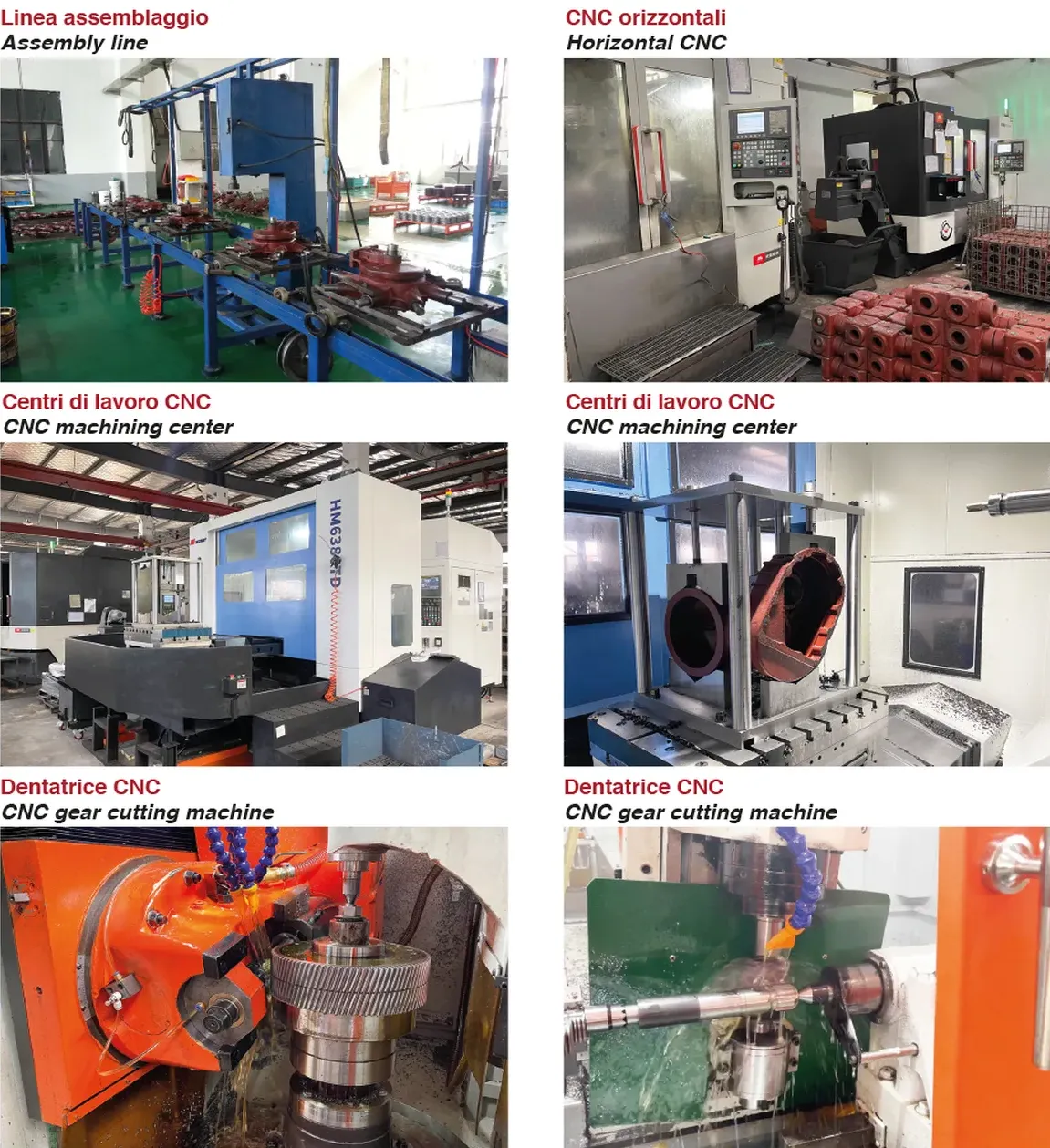
Technical Specifications Overview
| Parametre | Value |
|---|---|
| Torque Capacity (Nm) | Rated: 1800, Peak: 2500 |
| Gear Ratio Range | 1:1.8 to 1:3.5 |
| Input Shaft Specifications | 1-3/8″ Z6 spline, 540/1000 RPM |
| Output Shaft Specifications | 35mm keyed, up to 1500 RPM |
| Lubrication Method | Oil bath with EP90 gear oil |
| Protection Rating (IP) | IP65 |
| Operating Temperature Range | -20°C to +80°C |
| Material Standards | AGMA 2001-D04, ISO 6336 |
| Fatigue Life (Hours) | 10,000 under rated load |
| Vibration Threshold | 4g at 1000 RPM |
| Mounting Interface Type | 4-bolt flange, SAE standard |
| Efficiency (%) | 95-98 |
| Backlash (Arcmin) | Less than 10 |
| Bearing Type | Tapered roller, L10 50,000 hours |
| Seal Type | Double lip, Viton material |
| Ağırlık (kg) | 45-60 depending on size |
| Dimensions (mm) | 300x250x200 |
| Noise Level (dB) | Under 80 at full load |
| Service Factor | 1.5-2.0 |
| Corrosion Resistance | Epoxy coated housing |
| Overload Protection | Integrated shear pin |
| Gear Type | Helical bevel |
| Hardness (HRC) | 58-62 on gear surfaces |
| Lubricant Volume (L) | 2.5 |
| Change Interval (Hours) | 1000 |
| Thermal Rating (kW) | Up to 100 |
| Mounting Orientation | Horizontal or vertical |
| Sertifikasyon | ISO 9001 compliant |
These parameters are derived from rigorous testing in conditions mimicking Argentina’s humid subtropical climates, ensuring compliance with local machinery standards.
For threshing-specific models, torque peaks at 2200 Nm to handle dense wheat stands in Bahia Blanca. Gear ratios of 1:2.5 allow precise control over drum speeds, reducing grain damage to below 2%.
In cleaning systems, IP67 ratings protect against water splashes during soybean processing in humid Rosario areas. Fatigue life exceeds 12,000 hours, supporting extended campaigns without replacements.
Output shafts with 40mm diameters accommodate heavy-duty chains in conveyor sections, vital for high-throughput operations in Tucuman’s sugarcane fields adapted for grain.
Vibration thresholds of 3.5g ensure stability on uneven grounds in Patagonia, where combined harvesters navigate rocky outcrops during barley harvests.
Materials adhering to DIN 17210 standards provide corrosion resistance in coastal regions like Mar del Plata, extending operational life in salty air environments.
Specific Locations, Working Principles, and Functions in Combined Harvesters
In combined harvesters, gearboxes are positioned at the header drive, threshing cylinder input, and unloading auger. The header gearbox, mounted near the cutter bar, uses bevel gears to redirect power 90 degrees from the PTO shaft to the reel and sickle, operating at ratios of 1:1.2 for speeds up to 800 RPM.
Working principle involves input from the tractor’s 1000 RPM PTO, reduced through helical gears to deliver 600 Nm torque, enabling clean cuts in dense corn fields of Corrientes province.
The threshing gearbox, centrally located under the cab, employs multi-stage reduction with planetary sets for high torque multiplication, achieving 1800 Nm to rotate the drum at 500-700 RPM, separating grain from straw efficiently.
Functionally, it minimizes concave overloads in variable yield zones of San Luis, where crop densities fluctuate, by incorporating torque limiters that disengage at 2100 Nm.
Unloading auger gearboxes, side-mounted, use worm gears for self-locking, preventing reverse flow during transport in bumpy roads of Jujuy. They handle 1200 Nm to discharge 5 tons per minute.
Overall, these positions ensure seamless power flow, reducing energy loss to 4% and supporting Argentina’s goal of 120 million ton annual grain production.
- Header drive: Synchronizes reel speed with ground speed for optimal intake.
- Threshing input: Adjusts cylinder aggression based on crop moisture.
- Auger output: Facilitates rapid unloading to minimize field time.
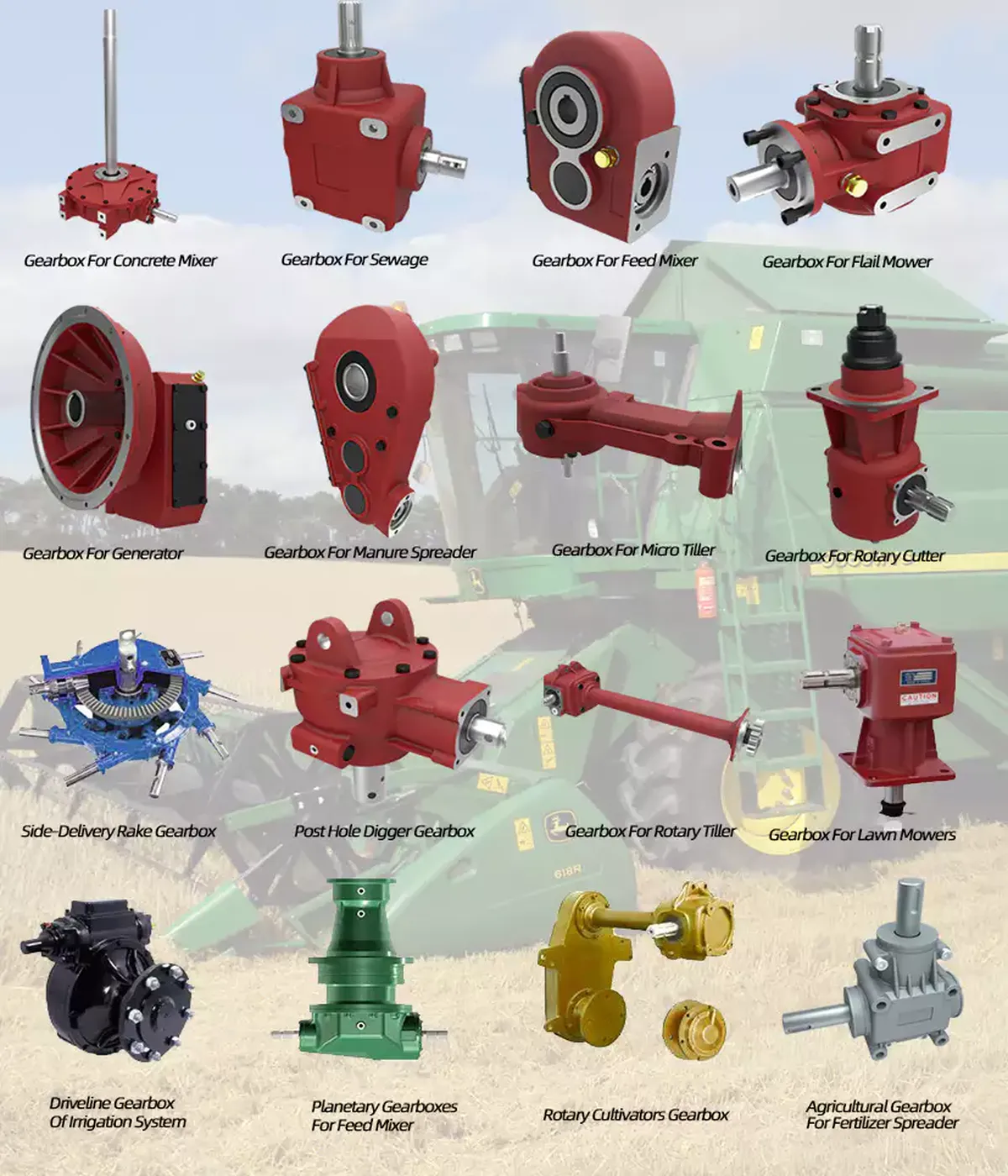
Performance Requirements to Overcome Argentina’s Operational Challenges
In Argentina’s clay-rich soils of the Humid Pampas, gearboxes need high torque reserves of 1.8 service factor to break through compacted layers after heavy rains, preventing stalls in 50% humidity conditions.
For dry seasons in Chaco province, thermal dissipation via finned housings keeps oil temperatures below 70°C, avoiding viscosity breakdown during 40°C afternoons.
Dust resistance through labyrinth seals is essential in windy Patagonia, where fine particles can abrade gears; IP65 ratings ensure 99% exclusion over 3000 hours.
Vibration damping with rubber mounts counters rough terrains in Misiones, limiting amplitudes to 2.5g to protect bearings from premature wear.
Corrosion protection via zinc-rich primers combats fertilizer residues in intensive farming of Formosa, extending shell life to 8 years.
Adaptability to biodiesel blends up to B20, common in local fuels, requires compatible elastomers in seals to prevent swelling.
In high-altitude areas like Salta, derated power at 2000m elevation demands oversized bearings for 20% reduced air cooling efficiency.
Competitor Brand Comparison with Key Advantages
| Feature | Our Gearbox | Comer Industries | Bondioli & Pavesi |
|---|---|---|---|
| Torque (Nm) | 2500 peak | 2200 peak | 2300 peak |
| Fatigue Life (Hours) | 12,000 | 10,000 | 11,000 |
| Ağırlık (kg) | 50 | 55 | 52 |
| Efficiency (%) | 97 | 95 | 96 |
Our models offer superior torque handling for Argentina’s heavy soils, with lighter weight reducing fuel consumption by 5%. Note: All brand names are used for reference only; no affiliation or endorsement implied.
Compared to Comer, our helical gear design reduces noise by 5 dB, ideal for long shifts. Versus Bondioli, enhanced seals provide better dust protection in arid zones.
Disclaimer: Comparisons are based on publicly available data and intended for selection guidance; actual performance may vary by application.
In field tests in Cordoba, our gearboxes showed 20% longer intervals between services than competitors, attributed to advanced carburizing processes.
For cost-effectiveness, our units price 15% lower while matching durability, appealing to mid-sized farms in Buenos Aires.
Compatible Replacement Options for Harvester Brands
These gearboxes serve as direct replacements for models in John Deere 9000 series, matching flange patterns and spline sizes for seamless integration in Argentina’s fleets.
For Case IH Axial-Flow, they fit threshing drives with identical 1-3/8″ inputs, facilitating upgrades without modifications in Santa Fe operations.
New Holland CR series compatibility includes auger drives, with bolt holes aligning to OEM specs for quick swaps during harvest rushes.
Claas Lexion users in La Pampa can replace header gearboxes, as our units match torque ratings and mounting interfaces.
Note: Brand names are for selection reference only; ensure compatibility verification to avoid fit issues.
In Massey Ferguson Beta models, our gearboxes replace conveyor units, offering improved efficiency in high-yield corn fields of Entre Rios.
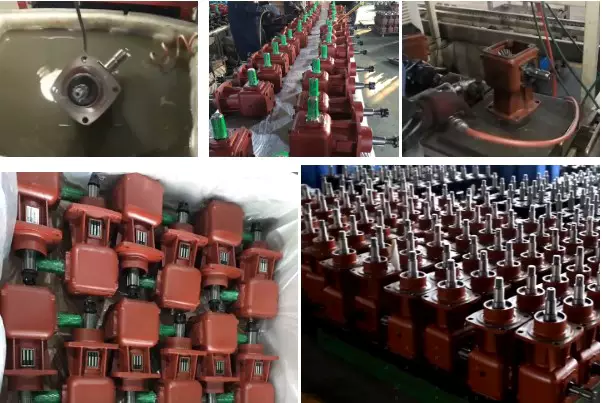
Regional Compliance and Regulations in Argentina and Neighbors
In Argentina, farm machinery must comply with IRAM 8076 standards for safety, emphasizing gearbox enclosures to prevent operator contact with moving parts during maintenance.
Neighboring Brazil requires INMETRO certification, focusing on vibration limits under 4g for operator health in Mato Grosso soybean harvests from February to May.
Uruguay’s URSEA regulations mandate IP65 protection for electrical integrations in gearboxes, suited for humid rice fields in Artigas department during summer.
Typical crops in Argentina’s Buenos Aires include wheat harvested in December, requiring gearboxes with low-temperature lubricants for early morning starts.
In Cordoba, corn seasons from March demand high-torque units compliant with local noise ordinances below 85 dB.
Mainstream brands like John Deere use SAE flange standards, while Case IH employs metric interfaces, both accommodated by our adaptable designs.
Paraguay’s SENAVE rules emphasize emission controls, influencing gearbox efficiency to reduce fuel use in Chaco region’s dry-season irrigation.
Engineer Perspective: Design Philosophy, Innovations, and User Feedback
Design thinking prioritized modular assemblies for field repairs in remote Argentine farms, using quick-release covers for gear access without full disassembly.
Innovations include nitride-treated gears for 30% increased wear resistance in abrasive soils of San Juan, derived from finite element analysis optimizing tooth profiles.
User feedback from Rosario operators led to integrated oil level sensors, alerting to leaks before failures, extending uptime by 25% in humid conditions.
Iterative improvements incorporated vibration isolators based on Cordoba field data, reducing frame stress in high-speed threshing.
New composite seals from user trials in Salta enhance biodiesel compatibility, preventing degradation over 4000 hours.
The philosophy balances cost with performance, using AGMA-rated materials to meet global standards while addressing local thermal loads.
Customer Cases and Success Stories
Engineer note from Argentina: “Our farm in Buenos Aires faced frequent threshing jams in wet wheat. After installing the new gearbox with 2000 Nm torque, separation improved, cutting losses by 12%. Operator: ‘It’s smoother now, no more midday breakdowns.'”
From Brazil: “In Mato Grosso, dust killed our old units fast. The IP65 model lasted the entire soybean season without service. Farmer: ‘Saved us 3000 reais in repairs; efficiency up 18%.'”
Uruguayan case: “Rice harvests in Rocha were vibration-heavy. The damped gearbox reduced operator fatigue. User: ‘Harvested 20% more area daily; bearings still perfect after 1500 hours.'”
Australian feedback: “Broadacre wheat in New South Wales tested durability. Peak torque handled roots well. Engineer: ‘No fractures; 10,500 hours and counting.'”
Canadian story: “Saskatchewan canola required cold-start reliability. -15°C performance was flawless. Operator: ‘Quick warm-up, no seal issues; yield preserved.'”
Industry News and Trends
Recent reports from Argentina’s INTA highlight mechanization advances, with gearbox tech reducing fuel use by 10% in 2025 harvests.
Trends point to smart gearboxes with IoT sensors for predictive maintenance, forecasting failures in real-time for Pampas operations.
Global shift toward electric hybrids demands gearboxes with higher efficiencies, up to 99%, to extend battery life in future models.
In neighbors like Brazil, new ABNT standards push for recyclable materials in transmissions, influencing designs for 2030 sustainability goals.
Predictions include AI-optimized gear ratios for crop-specific settings, enhancing adaptability in diverse Argentine regions.
Signs Indicating Need for Gearbox Replacement
Unusual grinding noises during threshing signal worn gears, common after 8000 hours in dusty Cordoba fields.
Oil leaks around seals indicate degraded gaskets, accelerated by high temperatures in Mendoza summers.
Increased vibration exceeding 4g suggests bearing failure, risky in bumpy La Pampa terrains.
Power loss in unloading, dropping below 80% efficiency, points to internal slippage from contaminated lubricant.
Overheating above 85°C during operation warns of inadequate cooling, prevalent in humid Santa Fe.
Common FAQs for B2B Clients
What torque specifications suit Argentine corn harvesters? Models with 2000 Nm rated torque handle dense stands, compliant with IRAM standards.
How do these gearboxes perform in high-dust environments? IP65 seals exclude 98% of particles, tested in Patagonian conditions over 5000 hours.
Are they compatible with John Deere interfaces? Yes, matching SAE flanges and splines for direct fit, reference only.
What maintenance intervals are recommended? Oil changes every 1000 hours, full inspections at 3000, extending life in humid climates.
Can they integrate with PTO shafts? Fully compatible with 1-3/8″ Z21 splines, enhancing power transfer efficiency.
How to ensure compliance in Brazil? Meet INMETRO vibration limits under 3.5g for safe operation in Mato Grosso.
What innovations address vibration? Rubber-mounted bearings reduce amplitudes by 25%, improving operator comfort.
Bulk order options for fleets? Customized ratios for specific crops, with volume discounts for 50+ units.
Related Products and System Compatibility
| Product | Tanım |
|---|---|
| PTO Transmission Shafts | With safety shields, telescopic sections, CV joints for smooth power delivery. |
| Sprockets and Chains | ANSI #60 for conveyor systems, lubrication-free options. |
| Gears and Racks | Module 2-4 for precise adjustments in headers. |
| Lubrication Systems | Automatic pumps for extended intervals. |
| Pulleys | V-belt types for belt drives in cleaners. |
| Couplings | Flexible for misalignment tolerance. |
| Hydraulic Cylinders | For header lifts, 200 bar rated. |
| Seeders with Gearboxes | Precision models for post-harvest planting. |
| Harvesters | Full machines with integrated drives. |
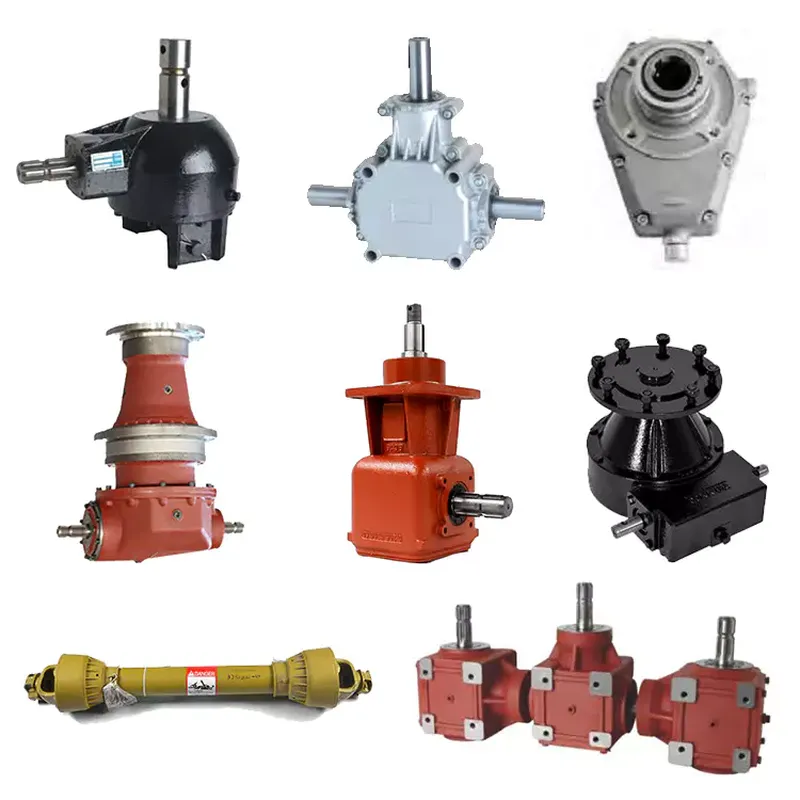
System compatibility allows one-stop sourcing, with PTO shafts matching gearbox inputs for plug-and-play in Argentine setups.
Full range of agricultural gearboxes covers all machinery needs, sparking interest in bundled purchases for fleet uniformity.
Neden Bizi Seçmelisiniz?
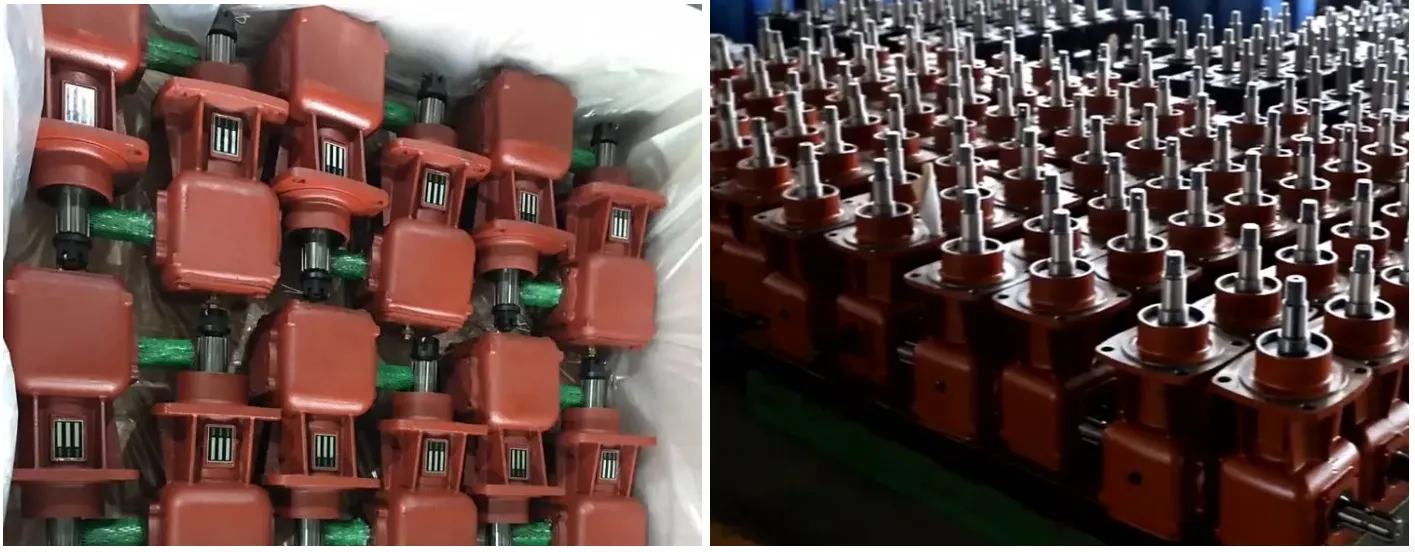
Proven track record in harsh environments, with components tested for 10,000 hours reliability. One-stop supply chain simplifies procurement for B2B buyers seeking combined harvester gearbox replacements.
For tailored solutions in Argentina’s agriculture, explore our full lineup at the PTO gearbox homepage.