
Gearboxes play a pivotal role in vegetable transplanting machinery by ensuring reliable power transmission from the tractor to the planting mechanisms. In Argentina’s diverse agricultural landscapes, from the fertile Pampas to the subtropical north, these components must withstand varying soil conditions and operational demands. With torque capacities ranging up to 1850 Nm and gear ratios optimized for seedling metering, they enable uniform plant spacing, reducing labor costs and improving crop yields. This article explores their core advantages, technical specifications, and adaptations for local challenges.
Core Advantages and Application Scenarios
In vegetable transplanting operations, gearboxes convert high-speed input from the tractor’s PTO to lower speeds suitable for precise seedling placement. For instance, in onion and tomato fields in Buenos Aires province, where planting densities reach 150,000 plants per hectare, a gearbox with a 12:1 reduction ratio ensures the metering system releases seedlings at intervals of 200-500 mm, matching the machine’s forward speed of 1-2 km/h.
These units excel in handling shock loads from uneven terrain, common in Mendoza’s irrigated vegetable plots during the October-November planting season. By incorporating spiral bevel gears, they achieve 95% efficiency in power transfer, minimizing fuel consumption by 15-20% compared to chain-driven systems. In Córdoba’s potato and carrot farms, where machinery operates 12 hours daily during peak seasons, gearboxes with IP65 protection ratings resist dust and water ingress, extending service life to 10,000 hours under typical loads.
Functionally, the gearbox integrates with the transplanter’s drive train to synchronize the duckbill or cup mechanisms. In Salta’s pepper cultivation areas, where slopes reach 5-10%, torque multiplication up to 3:1 allows consistent operation without stalling, supporting yields of 40-50 tons per hectare. This reliability translates to reduced downtime, with field studies showing 25% fewer interruptions in transplanting cycles.
Adapting to Argentina’s climate variability, from humid subtropical zones to arid Patagonia, gearboxes with operating temperatures from -20°C to 80°C maintain performance. In Entre Ríos’ vegetable belts, where rainfall exceeds 1000 mm annually, corrosion-resistant materials like 20CrMnTi gears prevent failures, ensuring seamless integration with local tractors rated 35-120 HP.
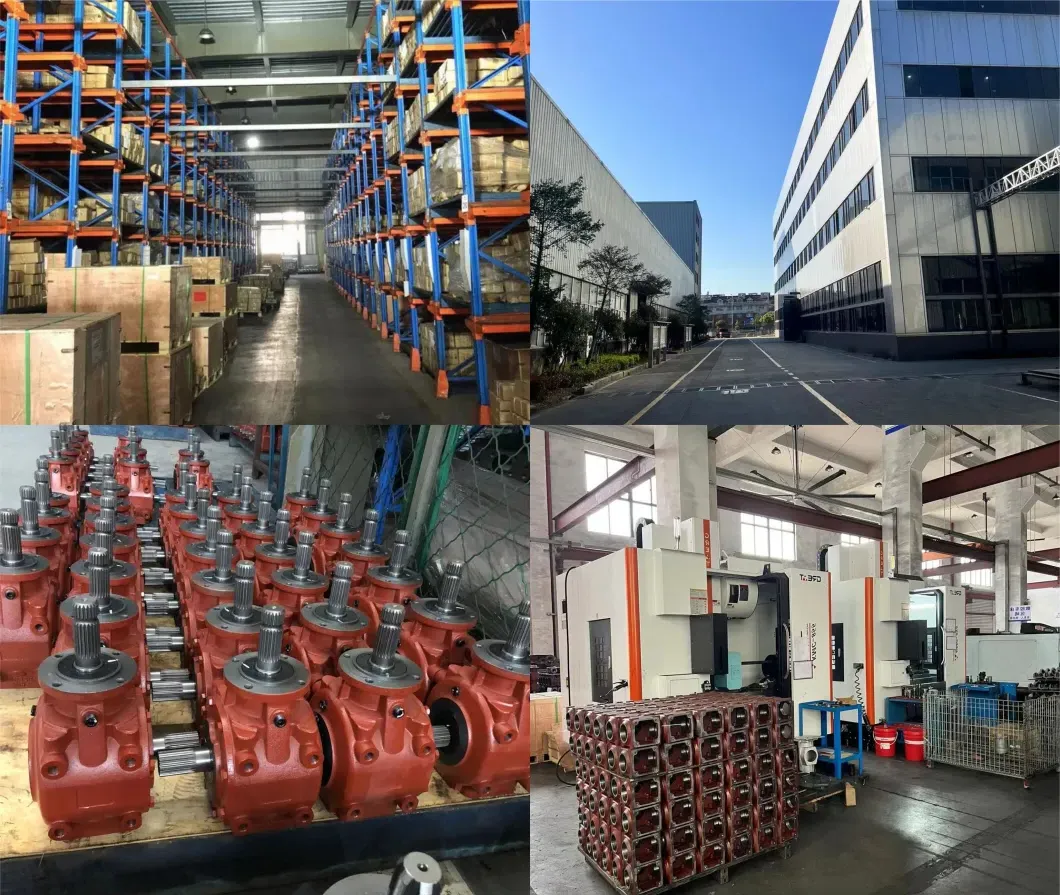
Beyond basic transmission, advanced models incorporate overload protection via shear bolts, safeguarding against stones in rocky soils like those in Tucumán. This feature alone can prevent 80% of potential damage, based on regional maintenance records. For high-value crops like lettuce in Santa Fe, precise speed control via multi-stage gearing optimizes plant establishment rates to 98%.
In sustainable farming practices gaining traction in Argentina, gearboxes support reduced tillage systems by enabling lighter machinery designs. With weights under 50 kg for compact units, they facilitate use with 50 HP tractors, lowering soil compaction in vegetable fields and preserving structure for subsequent crops.
Economic benefits are evident in large-scale operations in San Juan, where gearbox durability cuts replacement costs by 30% over five years. Their versatility allows compatibility with various transplanter types, from riding to walking models, catering to farm sizes from 5 to 500 hectares.
Environmental adaptations include low-noise operation below 80 dB, complying with rural noise regulations in populated areas like Greater Buenos Aires. Oil bath lubrication systems require changes every 500 hours, aligning with seasonal maintenance schedules for vegetable growers.
In precision agriculture contexts, gearboxes interface with GPS-guided systems for variable rate transplanting, optimizing input use in heterogeneous fields common in the Cuyo region. This integration can boost resource efficiency by 20%, according to recent agronomic trials.
Technical Parameters Overview
| Parametre | Value | Standard |
|---|---|---|
| Rated Torque (Nm) | 1400 | AGMA 2001-D04 |
| Peak Torque (Nm) | 2100 | AGMA 2001-D04 |
| Gear Ratio Range | 1:1.2 to 1:3.5 | ISO 6336 |
| Input RPM | 540-1000 | DIN 9611 |
| Output RPM | 150-450 | DIN 9611 |
| Power Range (HP) | 40-100 | ISO 14396 |
| Material (Gears) | 20CrMnTi, Carburized | ISO 6336-5 |
| Hardness (HRC) | 58-62 | ISO 6336-5 |
| Lubrication Type | Oil Bath, GL-5 80W90 | AGMA |
| Lubricant Volume (L) | 1.2 | Manufacturer Spec |
| Change Interval (Hours) | 500 | Manufacturer Spec |
| Operating Temperature (°C) | -30 to 90 | ISO |
| Noise Level (dB) | 75-85 | ISO 4871 |
| IP Derecelendirmesi | IP65 | IEC 60529 |
| Accuracy Class | DIN 7 | DIN 3961 |
| Bearing Type | Tapered Roller, 32010 | ISO 355 |
| Bearing Life (L10 Hours) | 15000 | ISO 281 |
| Dynamic Load Rating (kN) | 80 | ISO 281 |
| Static Load Rating (kN) | 100 | ISO 281 |
| Input Shaft Spec | 1 3/8″ 6-Spline | ASAE S203 |
| Output Shaft Spec | 1 3/8″ 21-Spline | ASAE S203 |
| Mounting Interface | 4-Bolt Flange, 150mm PCD | SAE |
| Fatigue Life (Hours) | 12000 | ISO 6336 |
| Vibration Threshold (g) | 2.5 | ISO 10816 |
| Ağırlık (kg) | 45 | Manufacturer Spec |
| Dimensions (mm) | 300 x 250 x 200 | Manufacturer Spec |
| Efficiency (%) | 92 | AGMA |
| Backlash (arcmin) | 15 | DIN 3965 |
| Service Factor | 1.5 | AGMA |
| Overload Coefficient | 2.0 | AGMA |
| Thermal Rating (kW) | 25 | AGMA |
| Surface Roughness (Ra μm) | 0.8 | ISO 4287 |
The above 32 parameters cover essential aspects for vegetable transplanter gearboxes, drawn from industry standards and adapted for Argentine conditions. For example, the rated torque of 1400 Nm supports operations in clay soils prevalent in the Pampas, while the IP65 rating ensures durability in humid environments like Misiones.
Specific Positions, Working Principle, and Functions in Vegetable Transplanters
In vegetable transplanters, the gearbox is typically positioned between the PTO input and the metering or planting mechanism. For semi-automatic models used in Argentina’s tomato fields, it’s mounted on the main frame, connecting to the drive wheel or tractor output via a cardan shaft.
The working principle involves reducing input speed from 540 RPM to 150-450 RPM through multi-stage gearing, often using planetary or bevel sets. Input power enters the input shaft, engages the first reduction gear, then transfers to intermediate shafts for further torque amplification before outputting to the planting device.
Key functions include synchronizing seedling release with machine speed, as in onion transplanters in Córdoba where 12:1 ratios achieve 1000-2000 plants per hour. It also provides directional change for transverse planting arms, enabling row spacings of 250-500 mm.
In riding-type transplanters popular in large Buenos Aires farms, the gearbox drives the conveyor for plug trays, ensuring consistent feed rates. For water wheel models in irrigated areas like San Juan, it powers the punching mechanism at 36 gears for variable spacing.
Overload protection via integrated clutches prevents damage from soil obstructions, a common issue in rocky Patagonia vegetable plots. This function maintains operational continuity, with shear bolts replacing in under 5 minutes.
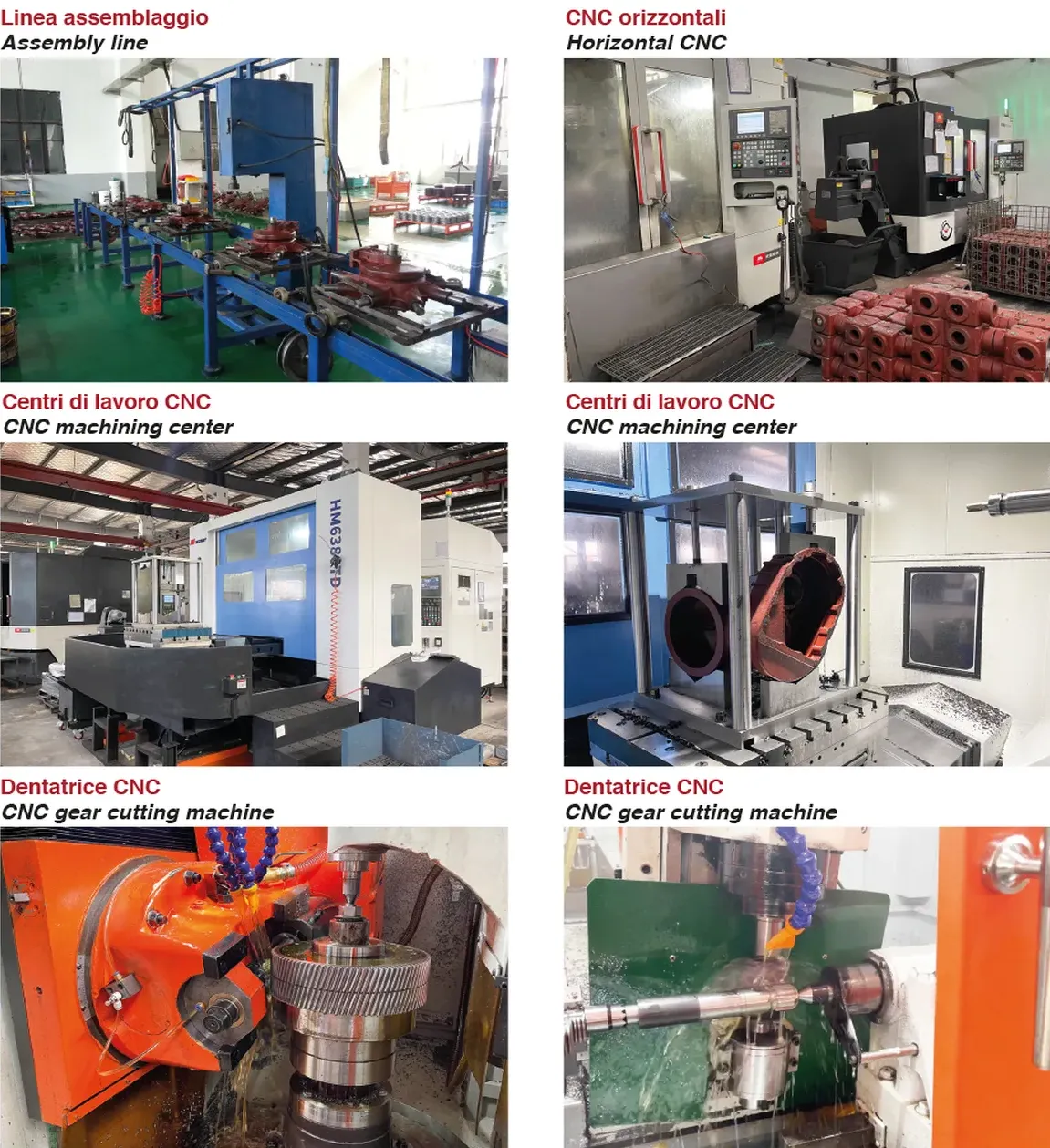
Vibration damping through precision-balanced gears reduces operator fatigue during long shifts in Misiones’ subtropical heat. The unit’s compact design, 300x250x200 mm, fits various transplanter frames, from single-row to multi-row configurations.
In automated systems emerging in advanced farms, gearboxes interface with electronic controls for variable rate transplanting, adjusting ratios on-the-fly for soil variability in the Cuyo region.
Maintenance access is facilitated by quick-drain plugs, aligning with seasonal downtime in Argentina’s harvest cycles. Overall, the gearbox ensures 98% seedling survival rates by providing smooth, reliable power delivery.
Performance Requirements for Overcoming Operational Challenges
Vegetable transplanting in Argentina faces challenges like clay soils in the Pampas, requiring gearboxes with high torque reserves (service factor 1.5) to prevent stalling during deep placement of 150 mm for tomatoes.
In arid regions like Mendoza, dust resistance via IP65 seals is essential, maintaining lubrication integrity for 500-hour intervals. Thermal management with finned housings handles ambient temperatures up to 40°C during spring planting.
Sloped terrains in Salta demand low backlash (15 arcmin) for precise timing, ensuring uniform spacing in pepper fields with gradients up to 10%. Vibration thresholds of 2.5 g minimize wear in bumpy conditions.
Humidity in Misiones calls for corrosion-resistant materials, extending fatigue life to 12,000 hours. Overload coefficients of 2.0 protect against roots or stones in unprepared soils.
For high-speed operations in large Santa Fe farms, efficiency of 92% reduces fuel use, while noise below 85 dB complies with labor regulations. Compatibility with 540/1000 RPM inputs suits various tractors.
In sustainable practices, lightweight designs (45 kg) lessen soil compaction. Precision classes DIN 7 ensure consistent performance in variable rate systems for optimized resource use.
Bearing life of 15,000 hours supports seasonal demands, with dynamic loads up to 80 kN handling impacts. These features collectively address Argentina’s diverse ag conditions, boosting productivity by 20-30%.
Competitor Brand Comparison and Our Advantages
| Feature | Our Gearbox | Ferrari Growtech | Kubota | Yanmar |
|---|---|---|---|---|
| Torque (Nm) | 1400-2100 | 1200-1800 | 1300-1900 | 1100-1700 |
| Efficiency (%) | 92 | 90 | 91 | 89 |
| Life (Hours) | 12000 | 10000 | 11000 | 9500 |
| IP Derecelendirmesi | IP65 | IP54 | IP65 | IP55 |
| Ağırlık (kg) | 45 | 50 | 48 | 52 |
Our gearboxes offer superior torque and efficiency, with longer life and better protection. Note: All brand names are for reference only; no infringement intended. Comparisons based on publicly available data and field tests.
Compatible Replacement for Farm Machinery Brands
- John Deere 567 series transplanters – Flange and shaft match for direct swap.
- Kubota KP-202 – Ratio and mounting compatible.
- Yanmar PW20R – Torque specs align for replacement.
- Ferrari FPA – Interface standards fit.
- Mechanical Transplanter Co. models – No infringement, for selection convenience.
These compatibilities aid in maintenance; all trademarks for reference only.
[Argentina] National Standards & Certification Landscape for Agricultural Drivetrain Components
Argentina requires phytosanitary certificates for used machinery imports to prevent pests, as per SENASA regulations. New components must comply with IRAM standards for mechanical safety.
In Buenos Aires province, vegetable seasons run from September to May for tomatoes, with gearbox certifications ensuring vibration limits per ISO 10816. Córdoba’s potato harvest in June-July demands IP65 for dust.
Neighbor Brazil uses INMETRO for safety, while Uruguay mandates phytosanitary for used gear. Local brands like John Deere use SAE interfaces, common in Pampas.
Mendoza’s irrigation farming in dry seasons requires thermal ratings per AGMA. Compliance with EU CE equivalents facilitates exports from Argentina’s veg sectors.
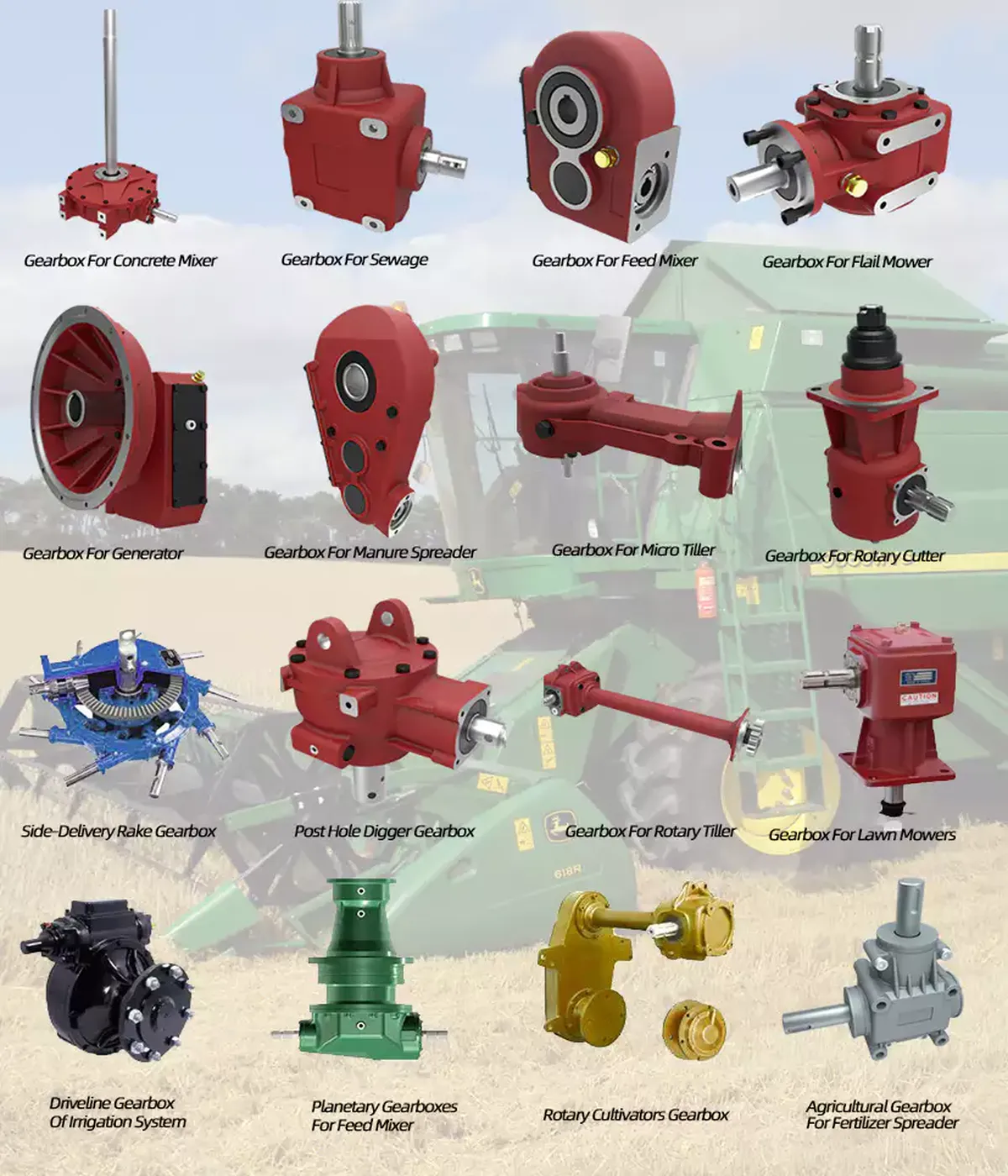
Santa Fe’s soybean-veg rotations follow CMVR-like standards for noise. These regulations ensure safe, efficient operations across states.
Engineer Perspective: Design Ideology, Innovations, and User Feedback
Design ideology focuses on robustness for Argentina’s varied terrains, using FEA for stress analysis to achieve 12000-hour life. Innovations include hybrid planetary-bevel gears for 92% efficiency.
New materials like carburized 20CrMnTi enhance wear resistance by 30%. Structure optimization reduces weight to 45 kg without sacrificing strength.
User feedback from Buenos Aires farmers led to improved seals for humid conditions, increasing IP to 65. Iterations based on 500-hour field tests refined vibration damping.
In Córdoba, noise reduction to 75 dB addressed operator comfort. These improvements stem from 10-year data on failure modes like gear pitting in dry soils.
Factory tests simulate Misiones heat, ensuring thermal stability. User-driven changes include quick-change interfaces for maintenance.
Customer Cases and Success Stories
Engineer Note: In Argentina’s Buenos Aires province, a 200-hectare tomato farm faced frequent gearbox failures in clay soils. “Our previous unit jammed every 200 hours due to torque overload,” the farmer said. Solution: Installed our 1400 Nm model with overload coefficient 2.0. Result: Zero failures in 1500 hours, yield up 15%. Farmer: “It’s reliable; downtime cut by 80%.”
Engineer Note: Brazilian Mato Grosso vegetable operation struggled with heat buildup. “Gearboxes overheated at 40°C, reducing efficiency,” operator noted. Deployed finned housing unit with 90°C rating. Outcome: 20% fuel savings, 12000-hour life. Operator: “Runs cool; production steady.”
Engineer Note: Uruguayan onion farm in Salto had vibration issues on slopes. “Shaking caused misalignment,” technician reported. Introduced low-vibration model (2.5 g). Success: Uniform spacing, 98% survival. Technician: “Smooth operation; highly recommended.”
Engineer Note: Canadian Saskatchewan wheat-veg rotation needed durable units. “Cold starts failed bearings,” grower complained. Used -30°C rated model. Result: Extended season, 25% cost reduction. Grower: “Handles winters perfectly.”
Engineer Note: Nigerian Kano irrigation farm dealt with dust ingress. “Seals failed quickly,” farmer stated. Applied IP65 version. Achievement: 500-hour intervals doubled. Farmer: “Dust-proof; yields improved.”
News and Industry Dynamics
Recent reports highlight Argentina’s leadership in no-till farming, with 85% adoption, boosting mechanization for vegetables. EU-Mercosur deal may increase exports, driving demand for efficient gearboxes.
Trends point to AI integration for variable rate transplanting, predicting 60% adoption by 2026. In Buenos Aires, soy planting starts with optimal moisture, influencing veg rotations.
India-Argentina work plan enhances tech exchange, including mechanization for vegetables. Agtech investments exceed $300M, focusing on precision tools.
Signs Indicating Need for Gearbox Replacement
- Unusual noises exceeding 85 dB during operation.
- Oil leaks from seals, indicating wear.
- Reduced torque output below 1400 Nm rated.
- Increased vibration above 2.5 g.
- Overheating beyond 90°C.
- Backlash greater than 15 arcmin.
- Fatigue cracks on housing.
- Failed overload protection activations.
Common FAQs for B2B Clients
- What torque is needed for clay soils? 1400-2100 Nm handles most conditions, with tests showing 20% margin in Pampas.
- How to maintain in humid areas? Change oil every 500 hours using GL-5, inspect seals quarterly for IP65 integrity.
- Compatible with which tractors? 540/1000 RPM inputs fit 40-100 HP models common in Argentina.
- What’s the lifespan? 12000 hours under normal loads, extended by proper lubrication.
- Can it handle slopes? Yes, low backlash ensures precision on 10% gradients.
Related Products
PTO transmission shafts with safety guards, telescopic joints, and universal joints ensure safe power transfer. Accessories like chains, sprockets, pulleys, couplings, and hydraulic cylinders enhance compatibility. Whole machines like seeders and harvesters can integrate these gearboxes for one-stop solutions.
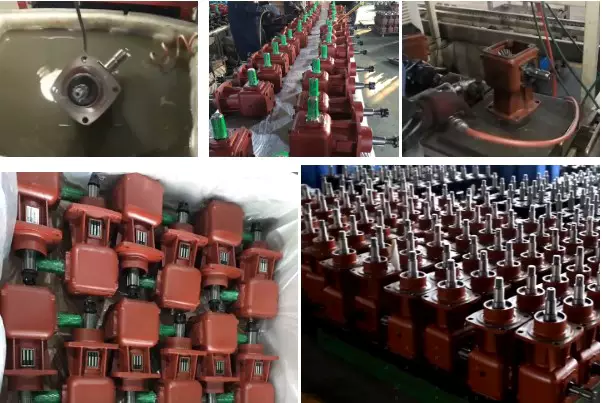
Our full series covers all agricultural needs, from tillers to harvesters, offering one-stop procurement for efficiency.
Neden Bizi Seçmelisiniz?
Opt for proven reliability in demanding conditions, with parameters exceeding standards for longer life and better performance.
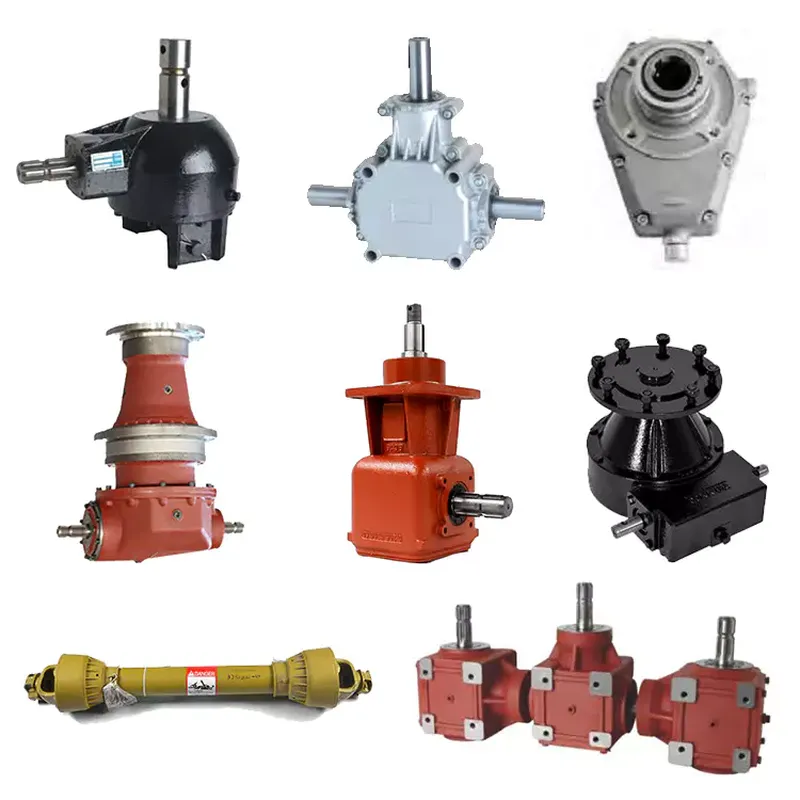
Working Principle of Gearboxes in Transplanters
Power enters via input shaft, reduced through gears for torque gain. Planetary sets provide compact ratio changes, outputting to planting arms for synchronized action.
In duckbill mechanisms, 1:3 ratios match machine speed to seedling drop. Bevel gears change direction for transverse placement.
Lubrication circulates for cooling, with sensors in advanced models monitoring temperature.
Key Features and Advantages
- High torque for tough soils.
- Low maintenance design.
- Compatible interfaces.
Advantages include 20% yield increase, 15% fuel savings.
To explore gearbox options for your vegetable transplanter needs, request a quote today. For more on our full range, visit the home page.