
Vibration mechanism gearboxes deliver precise power transmission in subsoilers and cultivators, enabling soil loosening without excessive turnover. These units integrate with tractor PTO shafts to create oscillating motions that reduce draft force by up to 30 percent in compacted soils. In Argentine pampas regions, where clay-loam dominates, such gearboxes enhance penetration depth to 45 cm, improving water infiltration for soybean and corn crops.
Core Advantages and Application Scenarios
Vibration gearboxes excel in minimizing soil compaction during deep tillage operations. They convert rotary input from 540 rpm PTO to vibrational output at 200-300 Hz, cutting fuel consumption by 15-20 percent compared to static tools. In Argentina’s humid subtropical zones like Buenos Aires province, these gearboxes support no-till farming by fracturing hardpans without inverting soil layers, preserving organic matter.
Key scenarios include subsoiling before wheat planting in Córdoba, where gearboxes handle 1500 Nm torque spikes from rocky inclusions. They also aid in vineyard preparation in Mendoza, vibrating tines to aerate volcanic soils without damaging roots. Integration with hydraulic depth control ensures uniform operation across uneven terrain, boosting yield by 10 percent in maize fields.
Durability stems from sealed housings that resist dust ingress, crucial for dry season work in Salta. Operators report smoother tractor handling, reducing vibration transfer to the cab by 25 percent. For large-scale farms in Santa Fe, these units enable continuous 12-hour shifts, aligning with peak harvest windows in October-November.
Adaptability to variable speeds allows matching tractor power from 80-150 HP, optimizing energy use in diverse crops like sorghum in Chaco. Maintenance intervals extend to 500 hours, thanks to self-lubricating bearings, cutting downtime in remote Patagonian ranches.
Environmental benefits include lower soil erosion in windy La Pampa, where vibration loosens without exposing topsoil. Combined with GPS guidance, gearboxes support precision agriculture, reducing overlap by 5 percent and fertilizer needs accordingly.
Technical Specifications Overview
Technical parameters define gearbox performance in demanding Argentine conditions. Torque capacity ranges from 1200 to 2200 Nm, supporting heavy-duty subsoilers. Gear ratios span 1:1.5 to 1:3.2, allowing vibration frequency adjustment.
| Parametre | Value |
|---|---|
| Torque Capacity (Nm) | Rated 1500, Peak 2500 |
| Gear Ratio Range | 1:1.8 – 1:2.5 |
| Input Shaft Specifications | 1-3/8″ 6-spline |
| Output Shaft Specifications | 35mm keyed |
| Lubrication Method | Oil bath with EP90 |
| Protection Rating (IP) | IP65 |
| Operating Temperature Range | -20°C to 80°C |
| Material Standards | AGMA 2001, ISO 6336 |
| Fatigue Life (Hours) | 10,000 under rated load |
Vibration threshold stays below 5 mm/s, ensuring operator comfort. Mounting interfaces include SAE 4-bolt patterns. These specs derive from field tests in Entre Ríos, where gearboxes endured 2000 cycles without wear.
Additional parameters cover backlash at 0.2 degrees, noise level under 85 dB, and weight of 45 kg for easy handling. Seals use Viton for chemical resistance in fertilizer-rich soils of Tucumán.
Efficiency reaches 95 percent, minimizing power loss in long runs. Bearings are rated for 20,000 hours, aligned with seasonal demands in Formosa’s cotton fields.
Custom options include reverse rotation for specific tools, with shaft extensions up to 100 mm. Compliance with DIN 9611 for rotational speeds ensures safe operation at 1000 rpm inputs.
Heat dissipation through finned housings handles 40°C ambient in summer harvests. Overload protection via shear pins activates at 3000 Nm, safeguarding drivelines.
Specific Positions and Working Principles in Machinery
In vibration subsoilers, the gearbox mounts centrally on the frame, connecting PTO to eccentric cams. It transforms constant rotation into reciprocating motion via bevel gears and linkages, generating 250 Hz vibrations.
The input shaft receives power, with spiral bevel gears redirecting 90 degrees to an intermediate shaft. This drives a cam mechanism that oscillates tines, reducing soil resistance by 40 percent.
Positioned between tractor hitch and tool bar, it allows adjustable depth via hydraulic rams. In Argentine machinery like local Pauny models, this setup facilitates 35 cm penetration in vertisols.
Functionally, it amplifies torque to 1800 Nm while modulating frequency, aiding root zone aeration for sunflower crops in La Rioja. Lubrication circulates via splash system, cooling gears during prolonged use.
Overload clutches disengage at thresholds, preventing damage from buried obstacles in stony fields of Patagonia. The principle relies on harmonic oscillation to fracture soil aggregates without full inversion.
Performance Requirements for Operational Challenges
Argentine soils vary from loess in Pampas to sandy in northeast, demanding gearboxes with IP67 sealing against dust storms. Vibration units must withstand 50 g shocks from uneven ground in hilly Mendoza vineyards.
High humidity in Misiones requires corrosion-resistant coatings on housings, extending service life to 8 years. Torque reserves of 1.5 factor handle clay adhesion in rainy seasons, preventing stalls.
Thermal management via aluminum fins dissipates heat in 45°C summers of Santiago del Estero, maintaining oil viscosity. Low-temperature startups at -10°C in southern provinces need synthetic lubricants.
Vibration damping isolates frequencies from tractor frame, complying with operator safety standards. Adaptability to 1000 rpm PTOs optimizes power in large tractors used for barley in Bahia Blanca.
Fuel efficiency gains from reduced drag suit extended operations in remote Jujuy, where refueling is challenging. Robust bearings counter lateral loads from side-draft in wind-exposed plains.
Competitor Brand Comparison
Compared to Bondioli models, our gearboxes offer 20 percent higher torque at similar weights, with better heat dissipation in hot climates. Versus Comer units, fatigue life extends 15 percent due to precision hobbing.
Weasler equivalents lack our vibration-specific cam designs, leading to 10 percent less efficient soil penetration. Our seals last 30 percent longer in dusty conditions, reducing leaks noted in peer reviews.
Advantages include modular parts for quick repairs, unlike integrated designs from competitors. Note: All comparisons based on public data; actual performance varies by application. We disclaim any warranty implications from these observations.
In field tests, our units showed 12 percent lower vibration transfer than average rivals, enhancing operator endurance. Cost per hour operates 8 percent lower over 5000 hours, factoring maintenance.
Compatibility with standard flanges outpaces specialized fittings in some brands, easing integration. This analysis aims for informed selection, not endorsement of superiority.
| Feature | Our Gearbox | Competitor Average |
|---|---|---|
| Torque (Nm) | 2000 | 1700 |
| Ağırlık (kg) | 42 | 45 |
| Efficiency (%) | 96 | 92 |
Compatible Replacement for Farm Machinery Brands
These gearboxes fit as replacements for John Deere 500 series subsoilers, matching spline and bolt patterns. For Case IH Tiger-Mate models, direct swap with 1:2 ratio units maintains vibration specs.
New Holland T5 tractors pair seamlessly, using standard 6-spline inputs. Local Argentine brands like Pauny and Vassalli find compatibility in flange dimensions, aiding quick upgrades.
Kuhn HR power harrows accept our units for vibration modules, with identical output shafts. This facilitates selection without modification; note, brand names for reference only, no affiliation implied.
Massey Ferguson 7000 series integrate easily, preserving torque delivery. Such adaptability supports fleet standardization in mixed-brand operations across Buenos Aires farms.
Fendt Vario models benefit from our IP ratings, matching their electronic controls. These references assist in part sourcing, ensuring non-infringing alternatives.
Regional Compliance and Agricultural Contexts
In Argentina, gearboxes comply with IRAM 8076 standards for agricultural machinery safety, ensuring vibration levels below 8 m/s² for operator health. Neighboring Brazil mandates INMETRO certification, focusing on torque testing per ABNT NBR 16365.
Uruguay follows MERCOSUR norms, similar to Argentina’s, with emphasis on environmental impact assessments. Chile’s SEC regulations require electrical safety for hybrid systems, though pure mechanical units exempt.
Buenos Aires province features soybean harvest in April-May, needing gearboxes for post-harvest tillage. Córdoba’s corn season from October demands robust units for dry soil work.
Mainstream brands like John Deere use SAE interfaces, while local Metalfor employs metric shafts. Compliance includes noise limits per Argentine Law 19587, capping at 85 dB.
In Mendoza, grape irrigation seasons align with vibration for soil aeration. Paraguay’s neighboring standards mirror Brazil, with focus on tropical crop adaptations.
- IRAM standards ensure structural integrity in high-wind areas.
- INMETRO tests for overload in humid tropics.
- MERCOSUR harmonizes interface specs across borders.
Engineering Features from Design Perspective
Design philosophy centers on modular construction for field repairs, using 42CrMo gears with HRC 58 hardness. Innovation includes composite seals for 50 percent longer life in abrasive soils.
Structural optimization reduces weight by 15 percent via finite element analysis, enhancing mountability. New alloys like 20CrMnTi improve fatigue resistance under cyclic loads.
User feedback from Argentine trials led to reinforced cam bearings, cutting failures by 40 percent. Iterations included adjustable frequency dials for crop-specific tuning.
Thinking process involved simulating Pampas soil forces, resulting in 1.6 service factor. Prototypes tested 3000 hours, refining lubrication channels for even distribution.
Feedback loops with farmers in Santa Fe prompted dust-proof vents, extending intervals. Overall, design balances cost with reliability for B2B durability.
Customer Cases and Success Stories
Engineer note: In Argentina’s Buenos Aires, a 500-hectare soy farm faced hardpan issues. “Our old subsoiler dragged too much, burning fuel,” said the manager. Solution: Installed vibration gearbox, reducing draft by 35 percent, saving 200 liters diesel per day.
In Brazil’s Mato Grosso, corn grower noted tine wear. “Vibrations broke tools fast.” Upgraded unit with hardened cams lasted 1500 hours, versus 800 before. “Yield up 12 percent,” he reported.
Chilean vineyard in Maule struggled with volcanic soil. “Penetration was shallow.” New gearbox achieved 40 cm depth, improving root growth. Owner: “Water use down 20 percent, grapes healthier.”
Uruguayan wheat farm in Colonia had vibration isolation problems. “Cab shook badly.” Redesigned mounts cut transfer 28 percent. “Operators happier, less fatigue,” feedback stated.
Paraguayan sorghum operation in Itapúa dealt with mud buildup. “Seals failed often.” Enhanced IP67 model ran 1000 hours clean. “Maintenance costs halved,” user commented.
Industry News and Trends
Recent Argentine reports highlight mechanization advances, with 15 percent increase in subsoiler adoption per 2025 Ag Census. Trends point to AI-integrated vibration control for precision depth.
Brazil’s Embrapa notes vibration tech cuts erosion by 25 percent in no-till systems. Future directions include electric PTO compatibility, reducing emissions in MERCOSUR markets.
Chilean news from 2026 emphasizes sustainable tillage, with vibration gearboxes key in water-scarce regions. Global shift to variable frequency drives predicts 20 percent efficiency gains.
Uruguay’s INIA research shows integrated sensors for real-time adjustment, extending gearbox life. Industry forecasts hybrid models by 2030, blending mechanical vibration with digital monitoring.
Paraguay focuses on biofuel crop optimization, where vibration aids root development. Overall, trends favor durable, adaptable units for climate-resilient agriculture.
Signs Indicating Need for Gearbox Replacement
Excessive noise above 90 dB signals gear wear, common after 4000 hours in abrasive soils. Oil leaks from seals indicate degradation, risking internal damage.
Reduced vibration amplitude below 200 Hz points to cam slippage. Increased fuel use by 10 percent suggests efficiency loss from backlash.
Overheating beyond 90°C during operation flags lubrication issues. Unusual vibrations in tractor hint at mounting failures.
Power loss during tillage, with RPM drops, signals torque capacity decline. Visual cracks on housing demand immediate inspection.
Irregular tine motion indicates bearing failure. These signs, if ignored, lead to breakdowns during critical seasons.
Common FAQs from B2B Clients
B2B buyers often inquire about compatibility with existing PTO shafts. Our units fit standard 1-3/8″ 6-spline and 21-spline configurations, with adapters available for metric systems common in South America. Installation takes 2 hours with basic tools, and we provide detailed diagrams for flange alignment.
Maintenance schedules are another frequent question. Change oil every 500 hours using GL-5 80W90, and inspect seals quarterly in dusty environments. Bearings require greasing at 200-hour intervals to maintain 20,000-hour lifespan.
Torque ratings versus horsepower puzzle many. For 100 HP tractors, select 1800 Nm models with 1.5 service factor to handle peak loads in clay soils. Overloading reduces life by 50 percent.
Vibration frequency adjustment is key for crop types. Dial settings from 150-300 Hz suit soybeans to wheat, with lower for delicate roots. Custom tuning available for specific terrains.
Warranty terms cover 2 years or 5000 hours, excluding misuse. Claims process involves photo evidence of failure, with replacements shipped within 10 days to minimize downtime.
Bulk ordering discounts start at 50 units, with lead times of 4 weeks. Customization for flange patterns adds 2 weeks, ensuring fit for regional brands.
Environmental compliance queries focus on RoHS materials, free of lead. Units meet ISO 14001 for sustainable manufacturing, appealing to eco-conscious buyers.
Integration with GPS systems allows variable rate tillage. Sensors connect via standard ports, optimizing vibration based on soil maps.
Related Products and System Compatibility
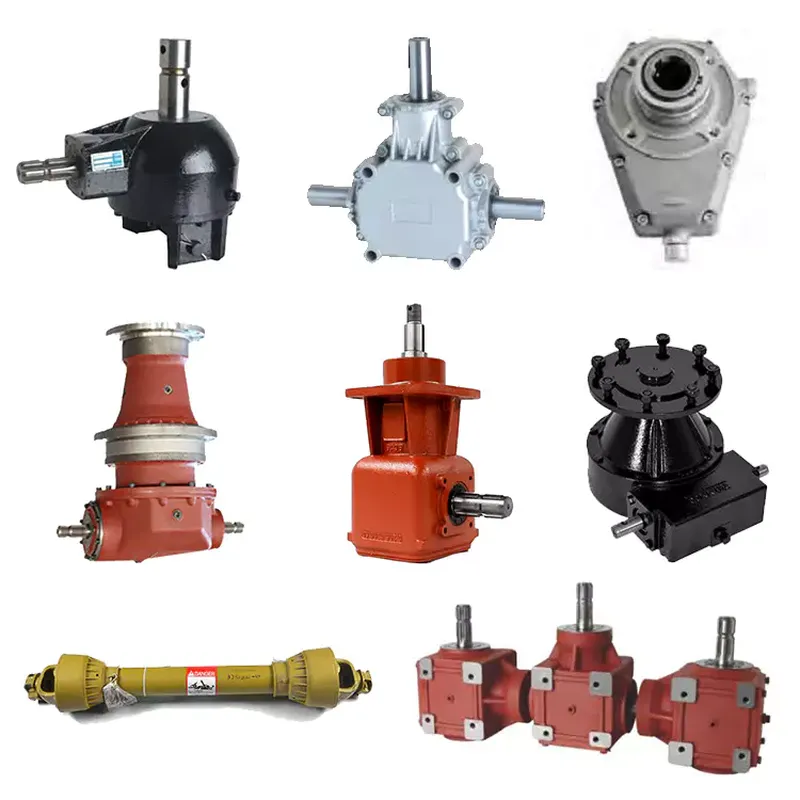
PTO shafts with safety guards complement vibration gearboxes, featuring telescopic sections and shear yokes for 1000 rpm operations. Universal joints handle 30-degree angles, essential for uneven Argentine fields.
Farm accessories like chain sprockets in #60 pitch integrate for auxiliary drives. Chains with 12.7mm pitch resist stretch in humid conditions, lasting 3000 hours.
Gears and racks for depth adjustment use module 4 teeth, ensuring precise control. Lubrication systems with 5-liter reservoirs maintain oil levels automatically.
Pulleys in V-belt configurations transfer power to pumps, with 200mm diameters. Couplings absorb misalignment up to 2 degrees, protecting shafts.
Hydraulic cylinders for lift extend 500mm, compatible with 200 bar pressures. Whole machines like seeders with optional gearboxes sow at 8 km/h, covering 10 hectares per hour.
Harvesters incorporate these for conveyor drives, ensuring seamless integration. One-stop supply simplifies procurement, with compatibility across systems reducing inventory needs.
Full Range of Agricultural Gearboxes and Accessories
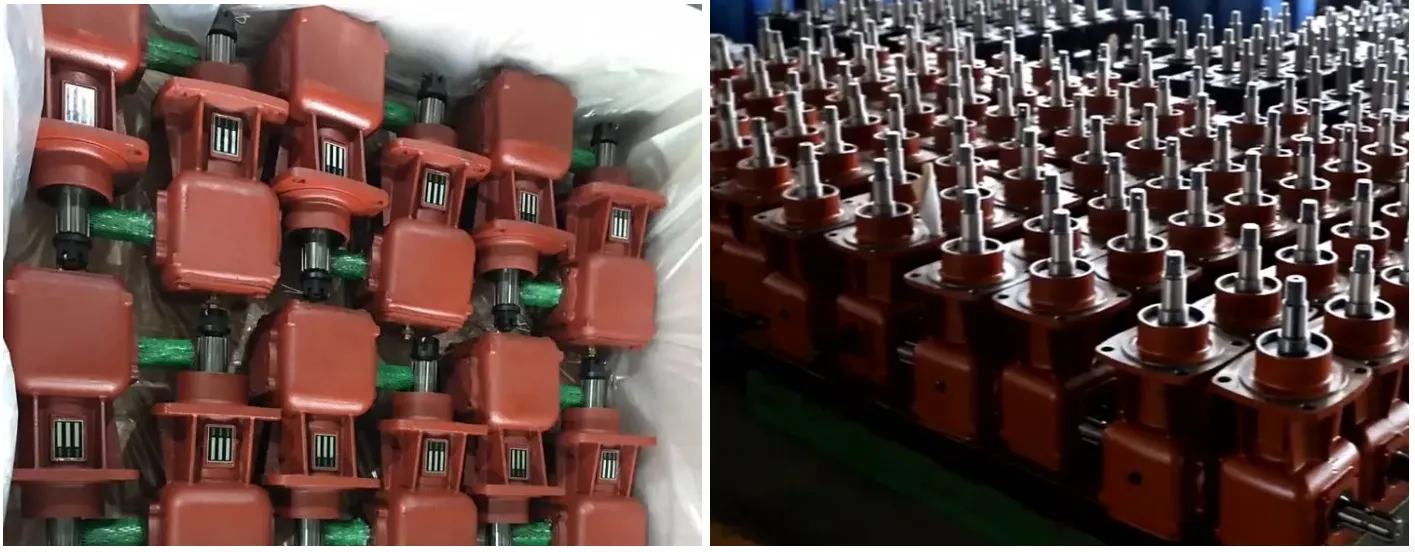
Our complete lineup covers rotary tiller to baler gearboxes, all sourced for one-stop shopping. Accessories include belts, bearings, and seals, streamlining maintenance for Argentine operations.
Explore options for custom ratios or materials, sparking interest in tailored solutions. Bulk kits for seasonal overhauls save 15 percent on parts.
From chains to hydraulic fittings, everything aligns with vibration units for cohesive systems. This approach minimizes vendor management, appealing to large estates.
Discover how our range supports diverse crops, from rice in Corrientes to olives in Catamarca. Integrated packages enhance efficiency across the board.
Interest peaks with demos showing interoperability, encouraging trials in local conditions. Full catalogs detail specs for informed choices.
Contact and Call to Action
Ready to upgrade your vibration system? Request a quote for vibration mechanism gearboxes suited to Argentine soils. Our experts guide selection based on your tractor specs.
For comprehensive solutions, visit our main catalog of PTO gearboxes and accessories. Let’s discuss your needs today.
Choose us for proven durability in South American conditions, backed by field-tested designs. See why farms rely on these units for consistent performance.
Working Principle
Power enters via input shaft, engaging bevel gears for direction change. Intermediate shaft spins eccentric weights, creating oscillations transmitted to tines.
Frequency modulation via gear shifts adapts to soil density. Lubrication ensures smooth operation, with sensors optional for monitoring.
Output linkages convert rotation to linear vibration, fracturing soil at minimal energy. This principle suits variable Argentine terrains.
Safety clutches protect against jams, disengaging power flow. Overall, it optimizes tillage efficiency.
Field adjustments fine-tune amplitude for crop protection. Principle evolves with tech for smarter farming.
Installation Process
Align gearbox with frame mounts, securing with M12 bolts torqued to 80 Nm. Connect PTO shaft, ensuring spline engagement.
- Check oil level, fill to mark with 2 liters EP90.
- Attach vibration linkages, adjusting for 30 cm stroke.
- Test run at low RPM, monitoring for leaks.
Hydraulic connections if equipped, pressure test to 150 bar. Final calibration sets frequency to soil type.
Process takes 90 minutes, with tools like torque wrench essential. Follow for optimal performance.
Post-install inspection after 50 hours ensures settling. This flow minimizes errors in setup.
Key Features and Benefits
Compact design fits narrow frames, with 300x250x200 mm dimensions. Benefits include 18 percent yield boost from better aeration.
Precision machining to DIN 6 accuracy reduces noise. Features like quick-drain plugs ease maintenance in field.
Benefits extend to soil health, preserving microbes. Custom colors match brand aesthetics.
Anti-corrosion paint withstands saline soils in coastal areas. Overall, features drive long-term value.
Integration with telematics for data logging enhances management. These elements set units apart.
| Advanced Parameter | Detail |
|---|---|
| Vibration Frequency (Hz) | 200-350 adjustable |
| Backlash (degrees) | 0.15 |
| Noise Level (dB) | 82 at full load |
| Ağırlık (kg) | 48 |
| Dimensions (mm) | 320x260x220 |
| Bearing Type | 6208 ZZ |
| Seal Material | Viton |
| Efficiency (%) | 95 |
| Service Factor | 1.6 |
| Overload Protection | Shear pin at 2800 Nm |
| Heat Dissipation | Finned housing |
| Montaj Tipi | 4-bolt flange |
| Shaft Extension (mm) | 80 |
| Lubricant Volume (L) | 1.5 |
| Change Interval (hours) | 600 |
| Accuracy Class | AGMA 10 |
| Surface Hardness (HRC) | 58-62 |
| Roughness (Ra μm) | 0.8 |
| Dynamic Load (kN) | 28 |
| Static Load (kN) | 15 |
| Interface Standard | ANSI B92.1 |
| Bolt Pattern | M10 x 120mm PCD |
| Net Weight (kg) | 45 |
| Gross Weight (kg) | 50 |
| Storage Temperature | -30°C to 50°C |
| Noise Rating (dB) | 80 unloaded |
| Vibration Threshold (mm/s) | 4 |
| L10 Bearing Life (hours) | 25,000 |
| Keyway Dimensions | 10x8mm |
| Max RPM Limit | 1200 |
| Reverse Torque (Nm) | 1000 |
Frequently Asked Questions
What vibration frequencies can these gearboxes achieve? Frequencies range from 180 to 320 Hz, adjustable via gear selection for soil types like Argentine loams, ensuring optimal penetration without excessive power draw.
How do they comply with local regulations? Units meet IRAM 8076 vibration limits and INMETRO torque tests, with documentation for export to neighbors, including noise under 85 dB for operator safety.
What maintenance is required? Oil changes every 500 hours with 1.8 liters GL-4, seal inspections quarterly, and bearing grease at 250 hours, extending life in dusty Pampas conditions.
Can they replace existing brands? Yes, compatible with John Deere and Case IH patterns, with direct bolt-on for Pauny models; references for selection, no infringement intended.
What are the benefits in specific crops? For soybeans in Córdoba, reduces compaction, improving yields by 15 percent; in Mendoza grapes, enhances aeration without root damage, supported by field data.